Difference Between SAT and PSAT
When comparing the SAT vs. PSAT, many students want to know what actually sets these tests apart. While the SAT is no longer an acronym, it was originally known as the Scholastic Aptitude Test before the name was shortened as the exam evolved. The PSAT, which stands for Preliminary SAT, refers to a group of related assessments, including the PSAT 8/9, PSAT 10, and PSAT/NMSQT. The difference between the SAT and PSAT ultimately comes down to purpose, structure, and how each test fits into the college admissions process.
| Factors | SAT | PSAT |
|---|---|---|
| Main purpose | College admissions exam used by schools | Practice test and National Merit scholarship qualifier |
| Who should take it | 11th and 12th graders applying to college | 10th graders for practice; 11th graders for scholarships |
| Where it’s taken | Approved test centers or schools | At your high school during the school day |
| When it’s offered | Multiple test dates throughout the year | Once a year in the fall (October) |
| Scholarship impact | No direct scholarship qualification | Yes, National Merit (juniors only) |
| Score range | 400–1600 | 320–1520 |
| How scores are used | Sent to colleges for admissions decisions | Used for feedback, benchmarking, and scholarships |
| Difficulty level | More challenging with higher-level questions | Easier than the SAT |
| Test length | Slightly longer | Shorter than the SAT |
| Format | Fully digital and adaptive | Fully digital and adaptive |
| Retake options | Can be taken multiple times | Offered once per year |
Why the PSAT Still Matters
The PSAT is not a college admissions test, which means colleges never see your PSAT scores. However, that does not make it pointless. The PSAT is designed to help students prepare for the SAT and, in some cases, earn scholarships. For juniors, the PSAT matters the most. High-scoring 11th graders may qualify for National Merit recognition, which can lead to scholarships and increased visibility with colleges. For sophomores, the PSAT works more like a practice run, helping you understand the test format without the pressure of college applications.
Even beyond scholarships, the PSAT offers detailed score reports that show how you perform in Reading and Writing, and Math. These insights help clarify how your current skills compare to SAT-level expectations and where you may struggle on the actual SAT. Instead of guessing what to study, you can use PSAT feedback to focus on specific skills and topics.
When used strategically, the PSAT becomes a low-stress way to build confidence, sharpen test-taking skills, and create a smarter SAT study plan. Think of it as a checkpoint that shows you where you are and what you need to improve before taking the SAT.
How the SAT and PSAT Are Similar
When comparing the SAT vs. PSAT, the similarities are easy to notice, and that is by design. The PSAT is built to match the SAT format, allowing students to experience the real test before taking the exam used for college admissions.
Both the SAT and PSAT are fully digital and test the same core academic skills. The Reading and Writing sections on both exams focus on understanding passages, improving sentence clarity, and applying grammar rules. The Math sections also overlap heavily, covering algebra, problem-solving, and data analysis that appear on the official SAT Exam.
The testing experience is similar as well. Both tests use adaptive testing, meaning the difficulty of the questions can change based on your performance. There is also no penalty for guessing on either exam, so students are encouraged to answer every question they can.
Because the SAT and PSAT share so much content and structure, preparation overlaps significantly. Using a SAT preparation book or taking a full practice test helps build skills.
When Should You Take the SAT and PSAT?
Most students take the PSAT before the SAT and use it as a low-pressure way to experience SAT-style testing. The timing of each exam depends on your grade level and how early you plan to start the college application process.
Many students take the PSAT in 10th grade to build familiarity with the test format and pacing. In 11th grade, the PSAT can still play a role by helping students explore scholarship opportunities and assess college readiness. Thereafter, most students take their first SAT in the spring of junior year, with additional test dates available in senior year if they want to improve their scores.
Starting with the PSAT helps students gain confidence and better understand how SAT-level questions are structured before taking the exam used for college admissions.
Benefits of Combining SAT and PSAT Prep
Studying for the SAT and PSAT together is one of the most efficient ways to prepare. Since both exams test similar skills, a single, well-structured study plan can support both tests without doubling your workload.
Key benefits of combining SAT and PSAT prep include:
- Smarter focus: PSAT score reports highlight strengths and weaknesses, helping you prioritize what to study for the SAT instead of reviewing everything.
- Better use of prep tools: Resources like an online SAT course, targeted math practice, and proven SAT Reading and Writing strategies apply to both exams.
- Less test-day stress: Familiarity with the format and question types makes the SAT feel routine rather than overwhelming.
By the time you take the SAT, you are more confident, prepared, and focused on performance rather than pressure.
PSAT versus SAT: FAQs
Are the PSAT and SAT both digital in 2024?
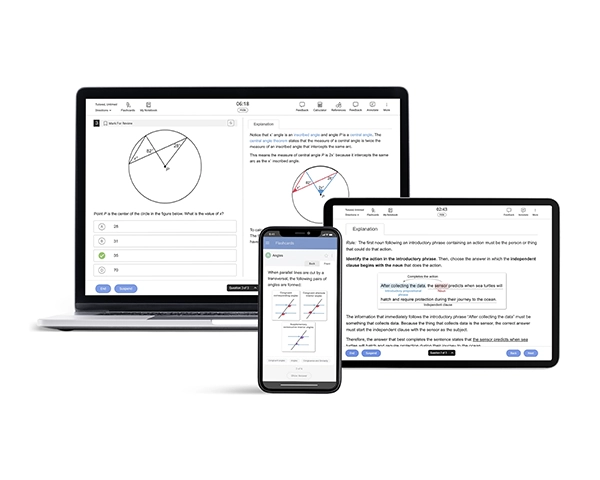
Yes. Both the SAT and PSAT are fully digital and taken on a computer or tablet. The digital format is designed to feel more student-friendly, with shorter testing time and built-in tools like calculators, where allowed. Both exams also use adaptive testing. This means the difficulty of later questions can change based on how you perform earlier in the test, making preparation even more important. Because the format is the same, practicing with realistic digital practice questions helps students feel comfortable on both exams and avoid surprises on test day.
Is the PSAT easier than the SAT?
Yes. The PSAT is easier than the SAT overall, but the difference is subtle. Both tests cover the same subjects, but the PSAT questions are slightly less complex, and the test is shorter. The PSAT is meant to introduce students to SAT-style questions without the pressure of college admissions. That is why many students use it as a confidence-building step. If you perform well on the PSAT, focused prep using a study guide or structured SAT Practice Question Bank can help turn that early success into a strong SAT score.
Does the PSAT count for college admissions?
No. Colleges do not see PSAT scores, and the PSAT is not used in the admissions process. Only SAT scores are sent to colleges and considered during applications. However, the PSAT still plays an indirect role. For juniors, high scores may qualify for National Merit recognition, which can lead to scholarships and added attention from colleges. More importantly, PSAT results highlight skill gaps early. Using those insights to guide SAT prep can save time, reduce stress, and lead to better results when the SAT actually counts.
When should I take my first SAT after the PSAT?
Most students take their first SAT in the spring of 11th grade, after completing the PSAT earlier that school year. This timing allows you to use PSAT feedback to prepare more effectively. Taking the SAT in junior year also leaves room for retakes in the fall of senior year if you want to improve your score before college deadlines. Students who review PSAT results and practice with targeted SAT Math, Reading, and Writing questions often feel more confident and prepared when they sit for the exam.
References
- College Board. “The Difference Between the SAT and PSAT.” College Board Blog, College Board, https://blog.collegeboard.org/difference-between-sat-and-psat
- Get Schooled. “SAT, ACT, and PSAT: What’s the Difference?” Get Schooled, https://getschooled.com/article/4967-sat-act-psat/