How SAT Study Groups Help with the Digital SAT
A focused SAT® study group can make digital SAT prep feel more manageable and less confusing. Instead of guessing what to work on next, a SAT prep group can organize practice around specific Reading and Writing or Math skills, then use group discussion to clear up tricky concepts. When you regularly explain your thinking, listen to others, and compare approaches, you build flexible strategies that are more useful on an adaptive exam.
Study groups also help you practice in conditions that feel closer to test day. Your SAT preparation group can run short, timed digital practice sets, then review the questions everyone missed and look for patterns in errors. Over time, this builds better pacing, stronger time management, and more realistic expectations about how hard certain questions will feel on the real test.
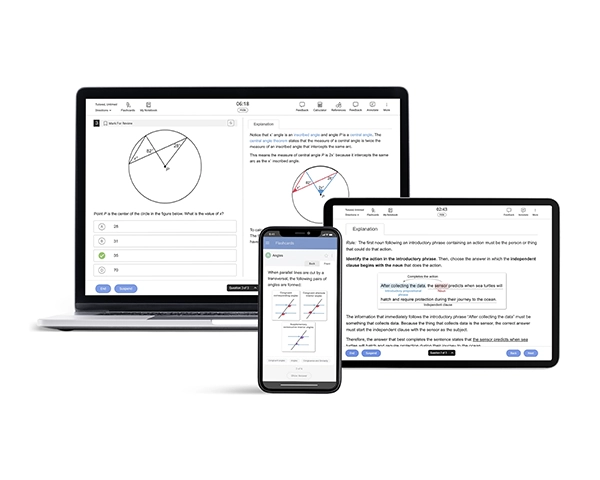
For many students, online SAT study groups are constructive. Meeting virtually makes it easier to fit sessions into busy schedules and keeps your practice screen-based, just like the exam. You can share screens to walk through questions, annotate problems together, and get comfortable reading and answering everything on a device. Combined with consistent independent practice, this kind of group support can make the digital SAT feel less intimidating and your prep more efficient.
Should You Join or Start an SAT Study Group?
Before you jump into an SAT study group, ask whether group prep actually matches your personality, your schedule, and the way you like to learn. For some students, a structured prep group becomes the backbone of their digital SAT prep and keeps them consistent week after week. For others, it simply adds extra noise on top of schoolwork and individual practice.
Think about how close you are to your target SAT scores, how much time you have before your exam, and whether you are willing to commit to other people. Your answers will tell you if you should join an existing group, start your own, or focus on independent prep first.
If you already prefer to study with structure, you can build your SAT study group around a clear plan so meetings are not random. You can map out weekly topics, practice goals, and timed drills that your group follows together.
Who Benefits Most From SAT Study Groups
You are a strong candidate for an SAT study group if you:
- Stay more motivated when other people are studying with you.
- Like talking through problems out loud instead of working silently.
- Are you comfortable sharing what you know and asking questions when you are stuck?
- Can commit to a consistent schedule for several weeks before your exam.
An SAT preparation group is especially helpful if you already understand the basics but need a better strategy, timing, and confidence. In that case, a prep group lets you:
- Practice explaining your reasoning, which deepens understanding.
- Hear different approaches to the same Reading and Writing or Math questions.
- Get encouragement when practice scores temporarily stall.
Students who combine a focused SAT study group with clear personal goals and a solid independent SAT study plan usually see the best results.
Who May Struggle With SAT Study Groups
Some students are better off limiting or skipping group study. You may struggle in an SAT study group if you:
- Get distracted easily when friends are around.
- Feel too shy or anxious to speak up when you do not understand something.
- Have a very unpredictable schedule that makes regular meetings difficult.
- Prefer working at your own pace without waiting for others to finish.
You might also find group study frustrating if your starting level is very different from the rest of the group. If everyone else is far ahead, you may feel lost. If you are far ahead, you might spend most of your time teaching instead of improving your own skills.
In these cases, you may do better with a self-directed plan that fits your schedule and learning style, then use an SAT prep group only for occasional review sessions or moral support rather than as your main study method.
How to Build an Effective SAT Study Group
A helpful SAT study group does not happen by accident. It works because everyone knows why they are there, what they are working on, and how each meeting will run. Use these steps to set up an SAT prep group that actually improves your digital SAT performance instead of just filling your calendar.
Step 1: Form the right group
Start by choosing the right people, not just the closest friends. Aim for a small prep group of 3 to 5 students who:
- Are you taking the SAT around the same time
- Have similar commitment levels, even if scores are slightly different
- Are willing to show up on time and come prepared
Have a quick “screening” conversation before you commit. Ask about target scores, test dates, and how many hours per week each person can realistically study. This helps you avoid building a group where a few members are serious while others mostly want to hang out.
Decide upfront whether your SAT study group will meet in person or function as one of the many study groups online. Online meetings work well if members live far apart or have limited transportation.
Step 2: Set shared goals + ground rules
Once you have your group, set clear expectations from the beginning. As a group, decide:
- How many points does each person want to gain by the test day
- Which test dates are you all working toward
- How many hours per week will you spend on SAT work outside of meetings
Then agree on ground rules that keep sessions focused, such as:
- Phones on silent and out of reach during practice
- Everyone brings at least 2 questions or problems they struggled with
- Respectful behavior and not making fun of wrong answers
You can also outline what “prepared” means before each meeting, such as finishing a specific practice set or reviewing notes on a shared topic, so no one shows up unsure of what they were supposed to do.
Step 3: Lock a consistent schedule
An inconsistent SAT study group quickly loses momentum. Choose:
- A regular meeting day and time, such as Tuesdays and Thursdays from 6 to 7:30 p.m.
- A meeting length that fits your energy levels, usually 60 to 90 minutes
- A fixed location or online platform that everyone can access
Try to schedule at least 8 to 10 weeks of meetings leading up to your SAT exam date. Put all meetings on a shared calendar and treat them like any other important appointment. If someone cannot attend, the rule should be that the group still meets, so progress does not stall for everyone.
For SAT study groups online, also agree on tech expectations, such as cameras on, joining on time, and testing microphones or shared screens before the first real session.
Step 4: Use a repeatable meeting format
A consistent format keeps your prep group organized and efficient. For example:
- Check-in (5 minutes)Each person shares what they worked on since the last meeting and one specific challenge they faced.
- Timed practice (20 to 30 minutes)Complete a mini section of Math or Reading and Writing, or a set of questions designed to mimic part of an SAT Practice Test.
- Group review (25 to 30 minutes)Compare answers, walk through difficult questions, and have different members explain why the correct answer works.
- Skill focus (10 to 15 minutes)Spend time on one topic the group struggles with, such as punctuation, linear equations, or reading graphs.
- Plan homework (5 minutes)Assign a small, specific task, such as a short practice set or a chapter in your notes, for everyone to complete before the next meeting.
Using a repeatable format saves time on planning and helps everyone know what to expect, which makes it easier to stay on task.
Step 5: Track progress and adjust
An effective SAT preparation group treats meetings like experiments. You try a structure, measure progress, and adjust as needed.
Have each member record:
- Scores and timing from any practice sets or mini tests.
- Question types or topics they miss most often.
- Weekly goals, such as “complete 40 Math practice questions”.
Review this information as a group every few weeks. If practice scores are not improving, change something:
- Shift more time toward problem areas
- Increase the amount of timed work
- Use more targeted practice from tools like an SAT QBank instead of only working on mixed sets
The goal is not to keep the same routine forever. The goal is to keep adjusting your SAT study group so that every meeting brings you a little closer to your target score.
Pros and Cons of SAT Study Groups
SAT study groups can be powerful when they are structured well, and frustrating when they are not. Before you commit, it helps to be clear about what you actually gain from a SAT study group and where the risks are.
A focused SAT study group can:
- Boost motivation and consistencyWhen you know others are showing up and doing the work, it is easier to stick to your own plan and avoid putting off practice.
- Provide accountabilityRegular check-ins on what everyone completed between meetings make it harder to skip homework or ignore weak areas.
- Deepen understanding through discussionExplaining how you solved a problem or hearing someone else’s approach helps you see patterns and fix misunderstandings, especially in tricky Reading and Writing or Math questions.
- Offer emotional supportPreparing for a major exam can be stressful. A SAT prep group gives you people who understand what you are going through and can celebrate small wins with you.
- Exposes you to different strategiesGroup members often use slightly different techniques for pacing, guessing, or breaking down problems. Seeing a variety of approaches can help you refine your own.
The same SAT preparation group can work against you if it is not managed well. Common drawbacks include:
- Scheduling conflicts Finding a time that works for everyone is hard. Frequent cancellations or partial attendance break momentum.
- Distractions and off-topic talk If the group treats meetings more like social time than study time, you spend an hour together with very little real practice.
- Uneven commitment levelsWhen some students take the group seriously, and others do not, the motivated members often feel held back or annoyed.
- Mismatched skill levels If one person is far ahead, they may end up teaching more than improving. If someone is far behind, they may feel lost and stop participating.
- False sense of productivity It is easy to feel “busy” in a group without actually improving your score, especially if you spend more time talking about the test than working through challenging questions.
Understanding these pros and cons helps you decide not only whether to join or start a SAT study group, but also how to design one that plays to the strengths and avoids the common pitfalls.
When Group Study Might Not Be the Best Choice
Even a well-organized SAT study group will not work for everyone. At some point, you may realize that group meetings are not helping you move closer to your target score. Knowing how to spot that early saves you time and stress so you can switch to a better approach.
Red Flags Your Study Group Isn’t Helping
Watch for these warning signs:
- Your scores are not improvingYou are consistently attending meetings, but your practice scores stay flat or even drop over several weeks. This usually means the group is not spending enough time on targeted practice and review.
- Meetings feel chaotic or unfocusedSessions start late, run over time, or constantly change plans. You spend more time deciding what to do than actually working through questions.
- You leave more confused than when you arrivedGroup explanations feel rushed or unclear, and you walk away unsure about key concepts. If you are regularly confused after meetings, the structure is not working.
- Most people are unpreparedGroup members show up without having done any practice. You end up reviewing the same basics instead of building new skills.
- You rarely work under timed conditionsMeetings focus on talking about the test instead of practicing in a way that reflects real timing. Without timed work, it is hard to build pacing and stamina.
- You feel drained or discouraged afterwardA good SAT prep group should leave you feeling focused and motivated. If you consistently feel stressed, judged, or unproductive, that is a sign that something needs to change.
If several of these red flags sound familiar, your current SAT preparation group is probably not the best use of your time.
What to Do If Your Group Isn’t Working
You do not have to give up on group study entirely, but you should make intentional changes.
- Have an honest conversation with the groupShare what is not working, such as a lack of structure or constant distractions, and suggest specific changes. For example, propose a fixed agenda, a time limit on chat, or required prep work before each meeting.
- Tighten the formatShift your meetings toward a predictable pattern that includes check-ins, timed practice, and focused review. When everyone knows what will happen each session, it is easier to stay on task.
- Reduce group size if neededIf large meetings feel unmanageable, move to a smaller group or a two-person study partnership. Fewer people usually means fewer distractions and more time for each person’s questions.
- Limit how often you meetIf frequent unproductive meetings are draining you, cut back to one focused session per week and spend more time on individual practice that follows your own SAT study plan.
- Change your role in the groupIf you are always teaching, ask the group to rotate who leads explanations. If you feel left behind, request that the group dedicate time to your question types or adjust the difficulty level.
- Know when to leaveIf you have tried to improve things and the group still does not support your goals, it is okay to step away. At that point, you will likely benefit more from a self-directed plan or structured resources and treat group study, if you use it at all, as a small supplement rather than your main strategy.
The key is to remember that your goal is not to stick with the group no matter what. Your goal is to prepare for the digital SAT in a way that gives you the best chance of reaching your target score.
Alternatives to Group Study for SAT Prep
Group study is only one way to prepare for the digital SAT. If your schedule, personality, or learning style does not match a SAT study group, you can still build a strong prep routine with other options. The key is choosing an approach you can stick to consistently and adjusting it as you learn what works best for you.
Self-Study With a Structured Plan
Self-study for the SAT works best when it is organized, not random. Instead of studying when you feel like it, you:
- Set a clear test date and score goals.
- Break your prep into weekly tasks for Reading and Writing, and Math.
- Mix content review, timed practice, and detailed review of mistakes.
A good self-study plan works best when you combine targeted practice with clear explanations and review. High-quality SAT Books can give you structured content review and curated practice sets that you then reinforce with timed drills and careful error analysis.
Partner / Buddy Study (2 people)
If large groups are distracting, a two-person partnership can be a good middle ground. With one study buddy, you can:
- Coordinate schedules more easily.
- Spend more time on each person’s questions.
- Hold each other accountable without the pressure of a big group.
Buddy study works well when both students are serious about improving and at similar levels. You can meet once or twice a week to review mistakes, take short timed sections at the same time, and explain solutions to each other.
Online Digital SAT Prep Course
A focused SAT Course can act as your main structure if group study is not working. A strong course typically provides:
- Practice that matches the format and difficulty of the digital SAT.
- Clear explanations that show why each answer is right or wrong.
- Progress tracking so you can see which topics need more work.
You can combine a course with your own schedule. For example, you might watch a short lesson, complete a set of practice questions, then revisit any you miss until you understand the error.
1-on-1 Tutoring
Tutoring can be useful if you:
- Have a large gap between your current score and your goal.
- Struggle with specific topics that do not click on your own.
- Need someone to design a custom plan and keep you on track.
A tutor can diagnose your strengths and weaknesses quickly, choose the right difficulty level for practice, and adjust lessons based on your progress. This option is usually more intensive and focused than group study.
School-Led or Counselor-Run Programs
Many schools offer structured SAT support, such as:
- After-school prep clubs
- Weekend workshops
- Counselor-led information sessions and practice days
These programs often provide access to practice materials, test-taking tips, and a built-in routine without you needing to organize anything yourself. You can attend these sessions and still follow your own study plan at home, using school time for guided practice and home time for targeted review.
Exploring these alternatives helps you build a prep approach that matches how you learn best, whether that involves other people, a structured course, or an independent plan you control yourself.