FREE Ground Shipping on Courses $149+ | Code: SANTASENDSFREE

AP® World History: Modern Unit 6 Review and Practice Test

Consequences of Industrialization

AP® World History Unit 6 examines how industrialization reshaped global power, fueled imperial expansion, transformed economies, and inspired new resistance movements. These ideas can feel complex without a clear structure, but UWorld helps you break them down, making your AP World History Unit 6 review easier, more focused, and more efficient.

AP World History: Modern prep course suite by UWorld

Prepare Smarter and Score High with Our AP World History Unit 6 Review

Unit 6 explores the intersection of industrial growth, imperial ambitions, global markets, political reactions, and shifting labor systems. UWorld helps you understand how these developments connect so you can answer AP® World History Unit 6 MCQ, SAQ, and DBQ questions with clarity and confidence.

Watch

Easy to Follow Walkthroughs of Unit 6’s Most Important Themes

These videos simplify major topics, including industrial expansion, new global markets, imperial control, and anti-colonial movements. Each lesson focuses on clear cause-and-effect patterns, helping you understand how the Industrial Revolution reshaped global relationships. You learn how technology, economics, and power dynamics changed in ways that students often struggle to explain on AP World History Unit 6 review assignments.

Read

Interactive Guides That Clarify How Industrialization Changed the World

These study guides help you understand why new imperial strategies formed, how social and economic systems shifted, and how communities responded to foreign control. You explore major empires, industrialized states, resistance movements, resource extraction, and global migration. Each guide highlights clear themes so you can prepare effectively for the AP World History Unit 6 study guide tasks.

Practice

Build Confidence With Exam Style Unit 6 Practice That Reinforces Every Skill

Unit 6 practice questions help you apply what you learned to evidence-based prompts, maps, charts, and excerpts. UWorld’s AP World History Unit 6 practice test questions mirror the logic of the AP exam, helping you build strong historical reasoning and interpretive skills.
Try these sample practice questions with detailed answer explanations:
Consequences of Industrialization Practice Tests

Passage

Source 1

"Seizing Kankan in 1879, [Samory Touré*] imposed his authority on the whole of the Wassoulou and the greater part of the Mandingo countries. He first came into contact with the French early in 1882 when he attacked Keniera, south-east of Siguiri….

[By] 1898 Samory's forces were driven out of Kong…. Samory had kept the whole of West Africa, from the Gold Coast to Sierra Leone and from the Niger to the forest of the Ivory Coast, in a ferment for twenty-four years, during sixteen of which he was in direct conflict with the French. With him the last major obstacle to the peace of French West Africa disappeared."

Kenneth Mason, British professor of geography, 1943

Source 2

"I** have no intention at all of being an indifferent spectator, if the distant Powers hold onto the idea of dividing up Africa. For the past fourteen centuries Ethiopia has been an island of Christians in a sea of Pagans. Since the All-Powerful has protected Ethiopia up until now, I am hopeful that He will keep and enlarge it also in the future, and I do not think for a moment that He will divide Ethiopia among the distant Powers."

Emperor Menelik II of Ethiopia, letter to the leaders of France,
Germany, Great Britain, Italy, and Russia, 1891

Question

In the late nineteenth century, which of the following faced anti-imperial resistance most similar to the types described in the two sources?

A. The Soviet Union
B. The Holy Roman Empire
C. The Malacca Sultanate
D. The United States

Explanation

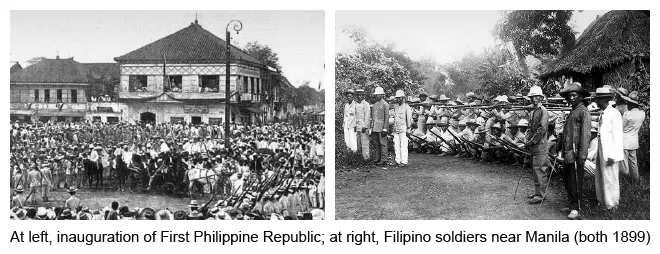
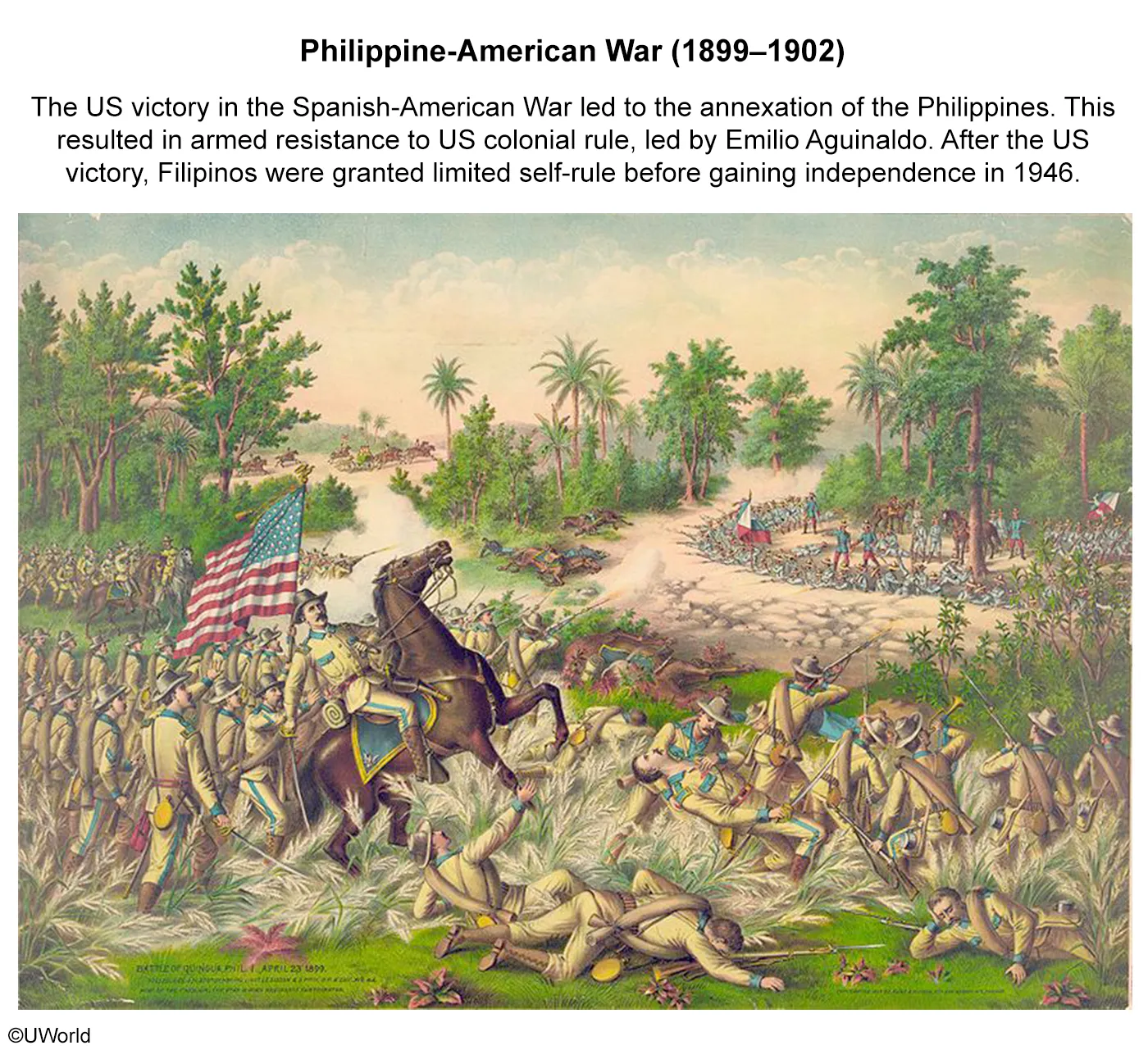
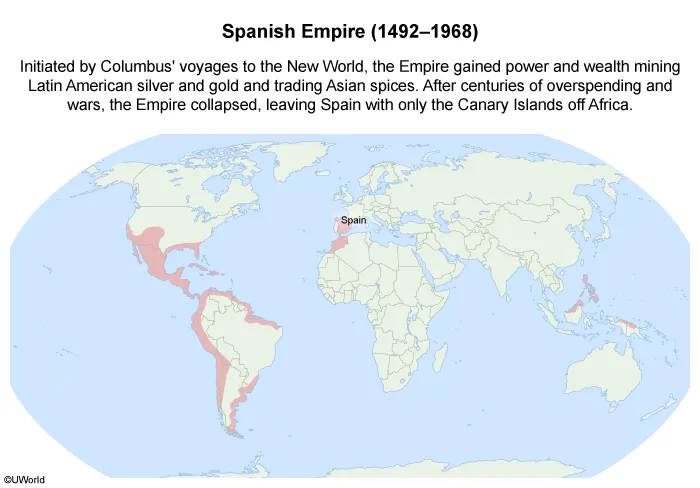
In 1895, thousands of armed Filipino nationalists aimed to establish self-government in the Philippines by launching the Philippine Revolution against Spanish colonial rule. To keep its colony, Spain committed significant resources to end the rebellion and exiled its leader, Emilio Aguinaldo, to Hong Kong in 1897.

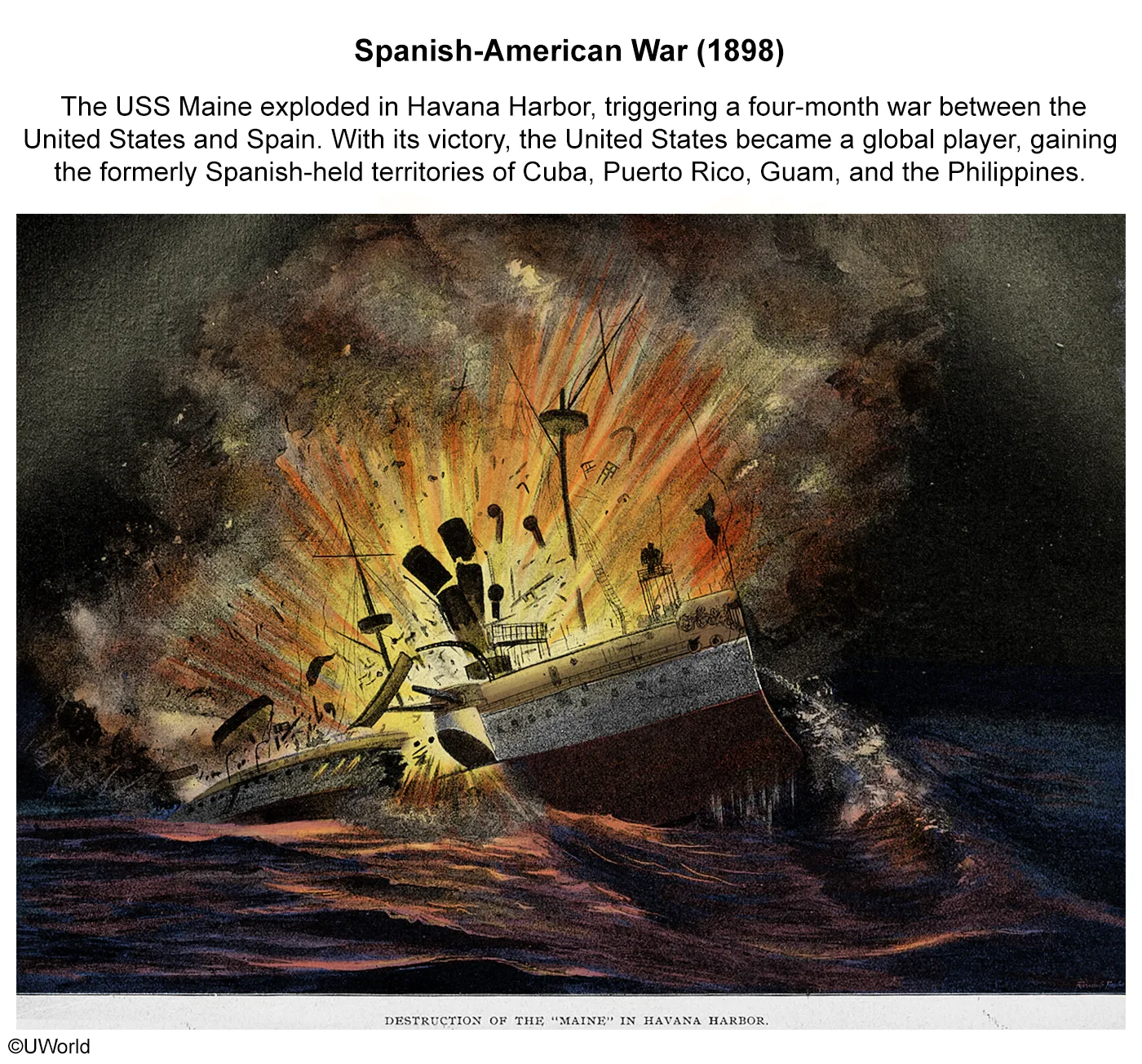
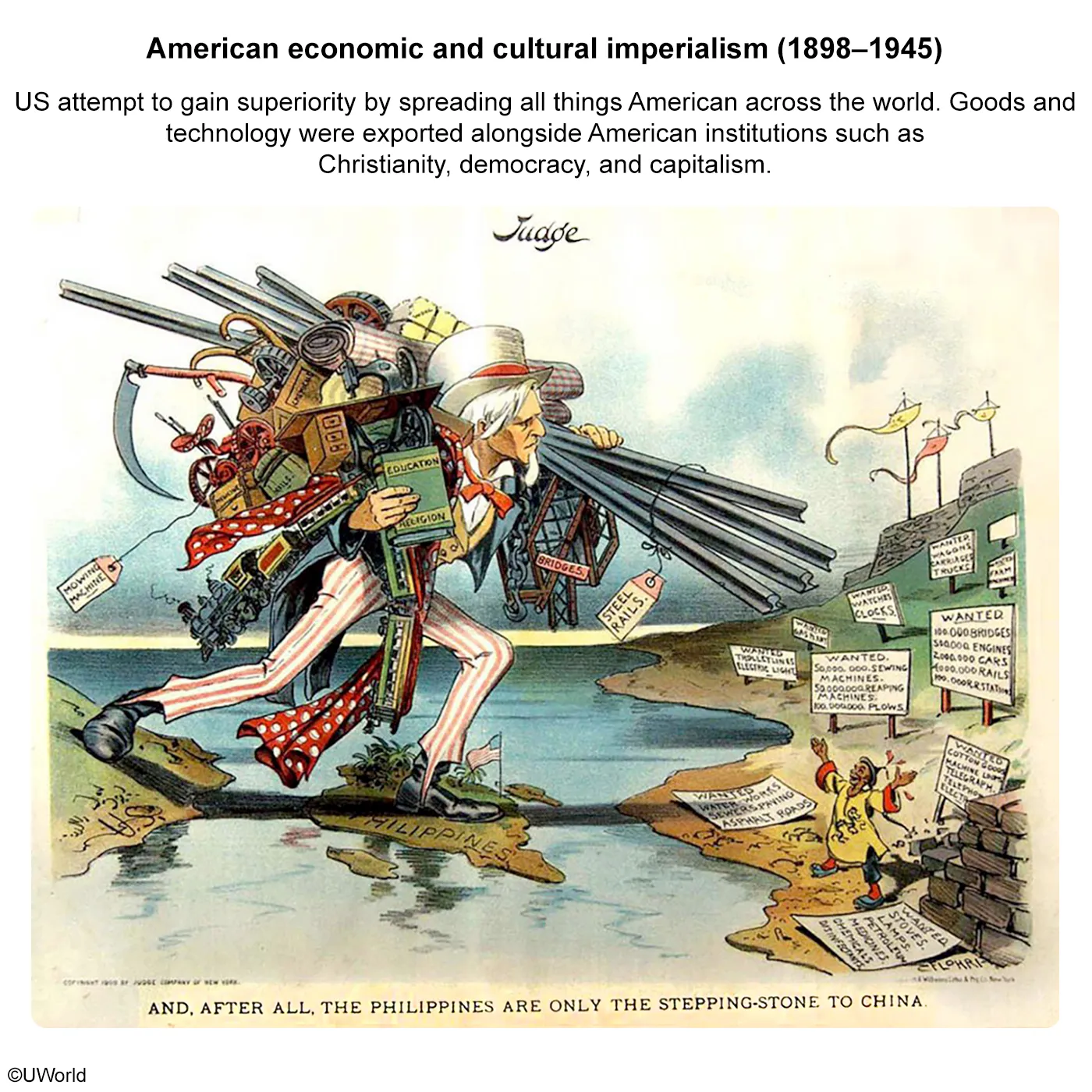
However, when the Spanish-American War began in 1898, the US enlisted Aguinaldo's support and returned him to the Philippines. After Spain's defeat, many Filipinos expected independence. Instead, driven by imperialist policies, the US purchased the islands from Spain in December 1898.

Refusing to accept the exchange of one colonial ruler for another, Filipinos' anti-imperial resistance turned against the US. After declaring independence in January 1899, Filipinos continued to resist the US, igniting the Philippine-American War in February.

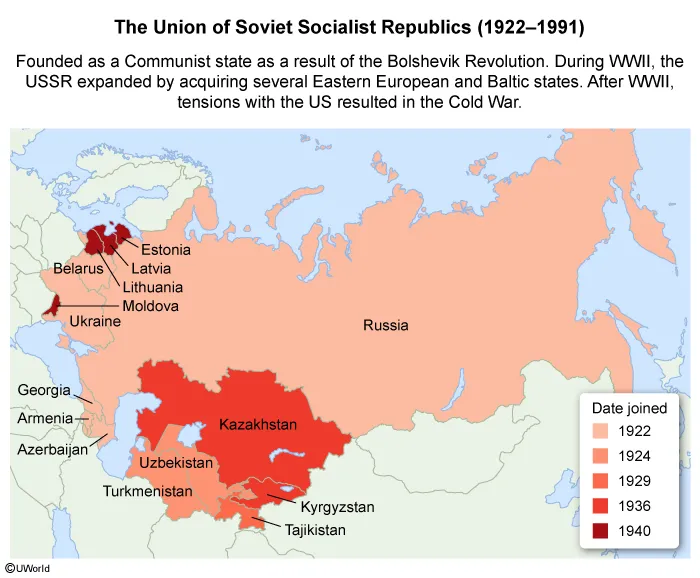
(Choice A) The Soviet Union was established in 1922, so resistance against it could not have occurred in the late 1800s.

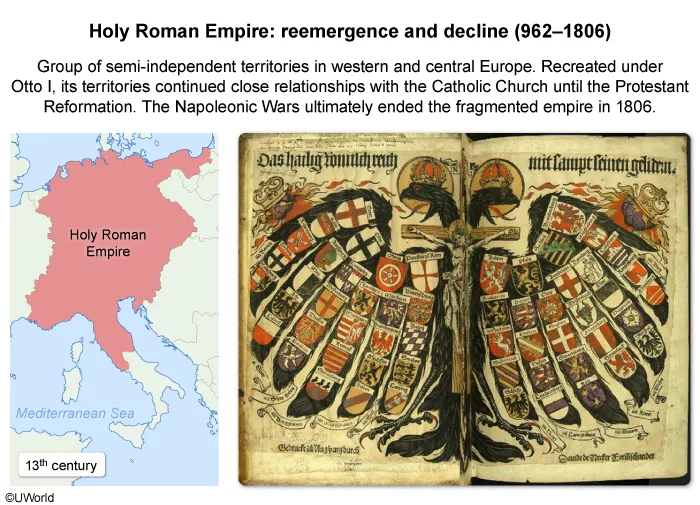
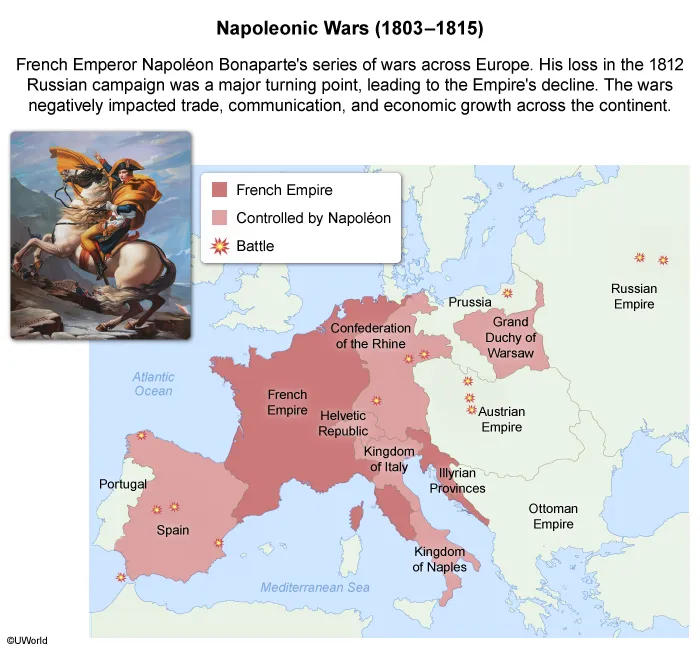
(Choice B) The Holy Roman Empire fell in 1806 during the Napoleonic Wars; therefore, it could not have faced resistance in the late 1800s.

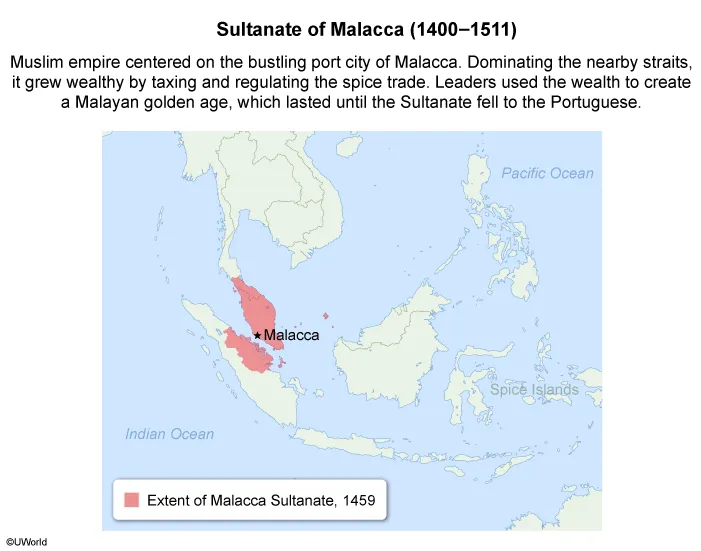
(Choice C) The Malacca Sultanate collapsed due to external pressures in 1511, centuries before the late 1800s.

Things to remember:
In the late 1800s, Filipinos expected independence after the Spanish were driven out. However, when the US purchased the islands, Filipino anti-imperial resistance turned against the US, culminating in the Philippine-American War.

Passage

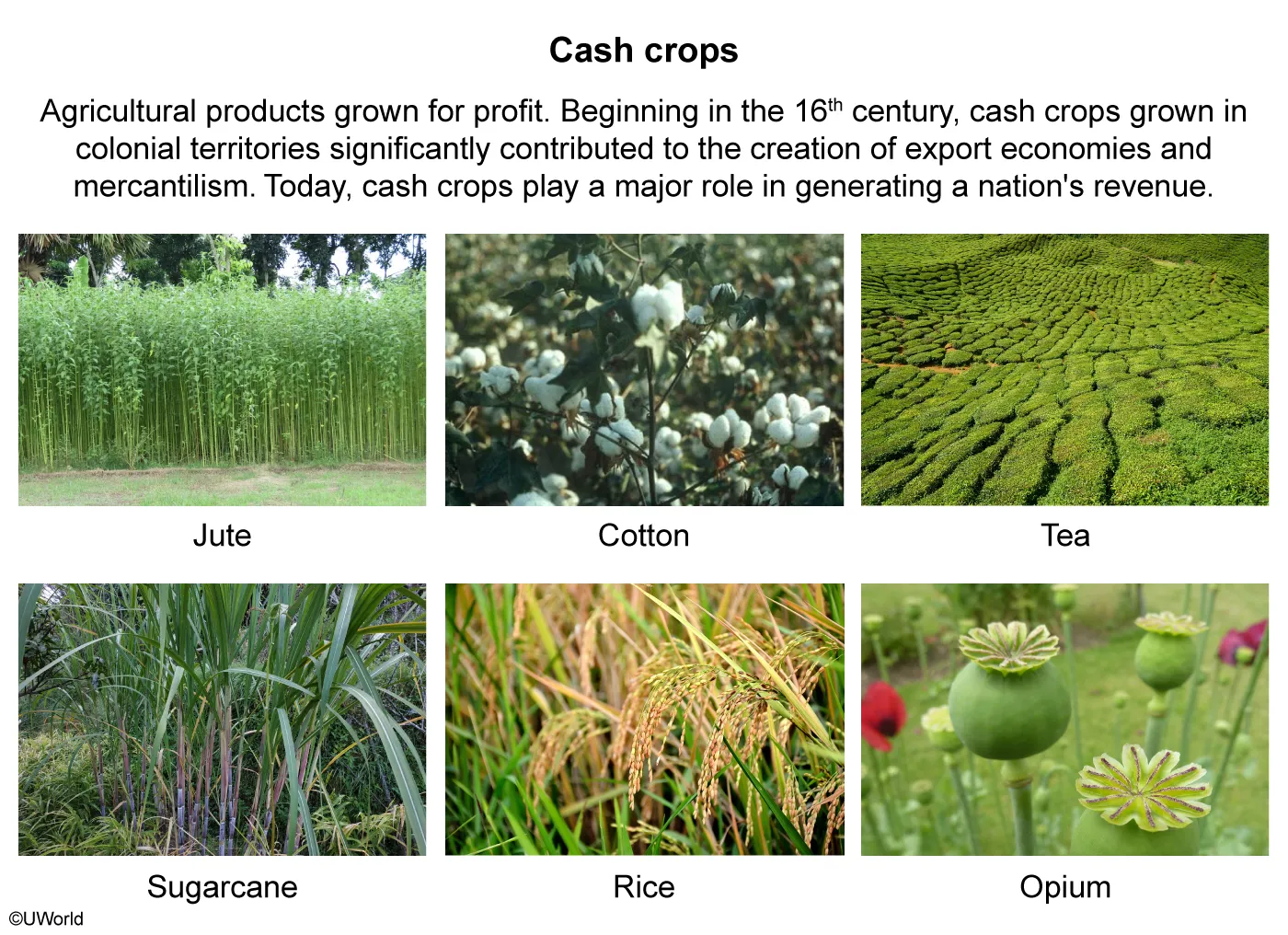
"Muhammad Ali's* development strategy was based on agriculture. He expanded the area under cultivation and planted crops specifically for export, such as long-staple cotton, rice, indigo,** and sugarcane. The surplus income from agricultural production was used for public works, such as irrigation, canals, dams, and [diversion dams], and to finance industrial development and the military. The development plans hinged on the state's gaining a monopoly over the country's agricultural resources. In practical terms, this meant the peasants were told what crops to plant, in what quantity, and over what area. The government bought directly from the peasants and sold directly to the buyer, cutting out the intermediaries or merchants.

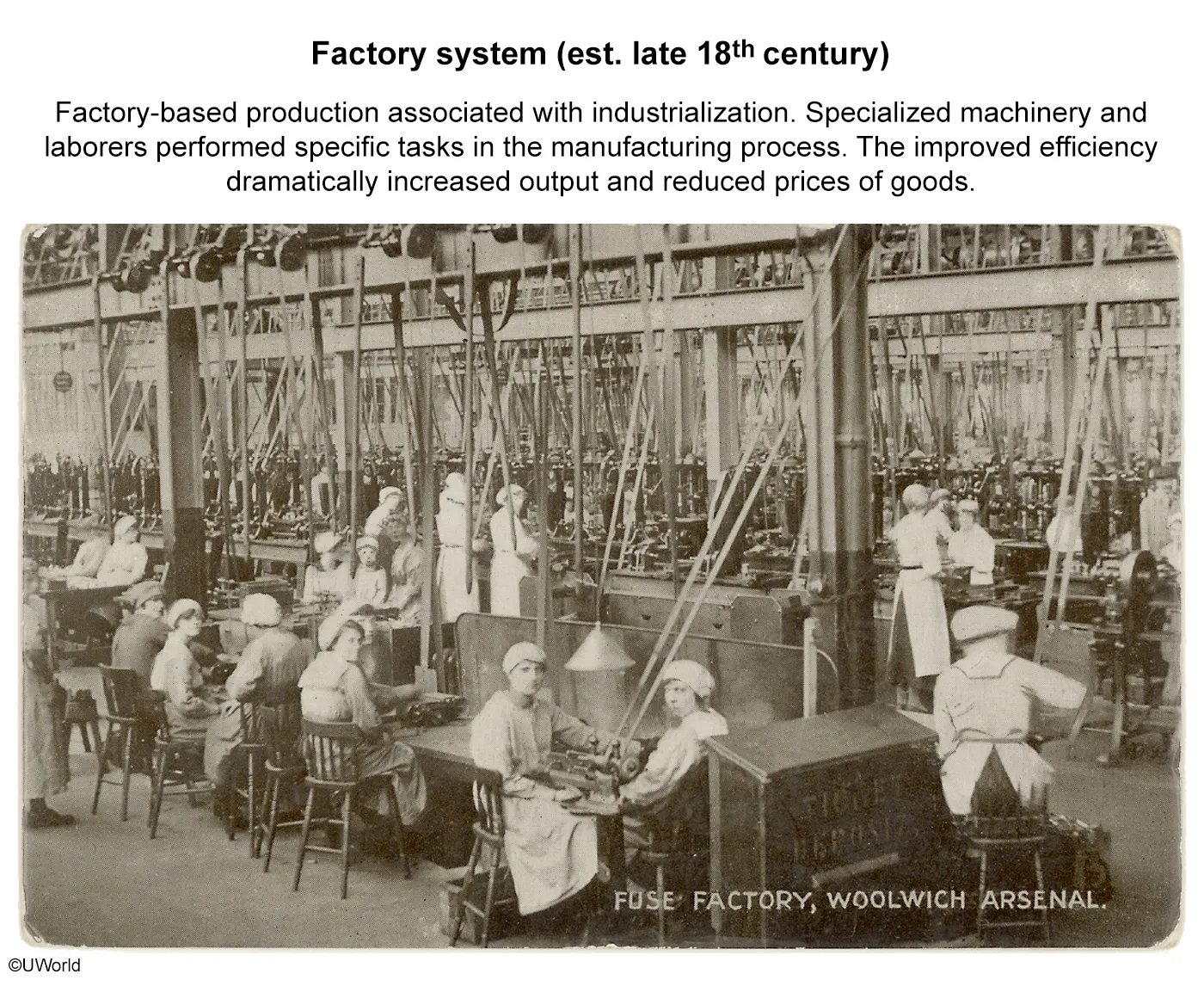
Muhammad Ali was also committed to the industrial development of Egypt. The government set up modern factories for weaving cotton, jute, silk, and wool. Workers were drafted into factories to weave on government looms. Factories for sugar, indigo, glass, and tanning were set up with the assistance of foreign advisers and imported machinery."

Helen Chapin Metz, American historian, 1991

1. Metz, Helen Chapin, ed. Egypt: A Country Study. Washington, D.C.: Library of Congress, Federal Research Division, 1991.

Question

The passage can best be used as evidence for which of the following world historical trends that took place during the nineteenth century?

A. The development of the four-field system by Egyptians
B. The expansion of Ottoman authority in North Africa
C. Governments using armed trade to access ports in the Mediterranean
D. The extraction of agricultural resources in export-based economies

Explanation

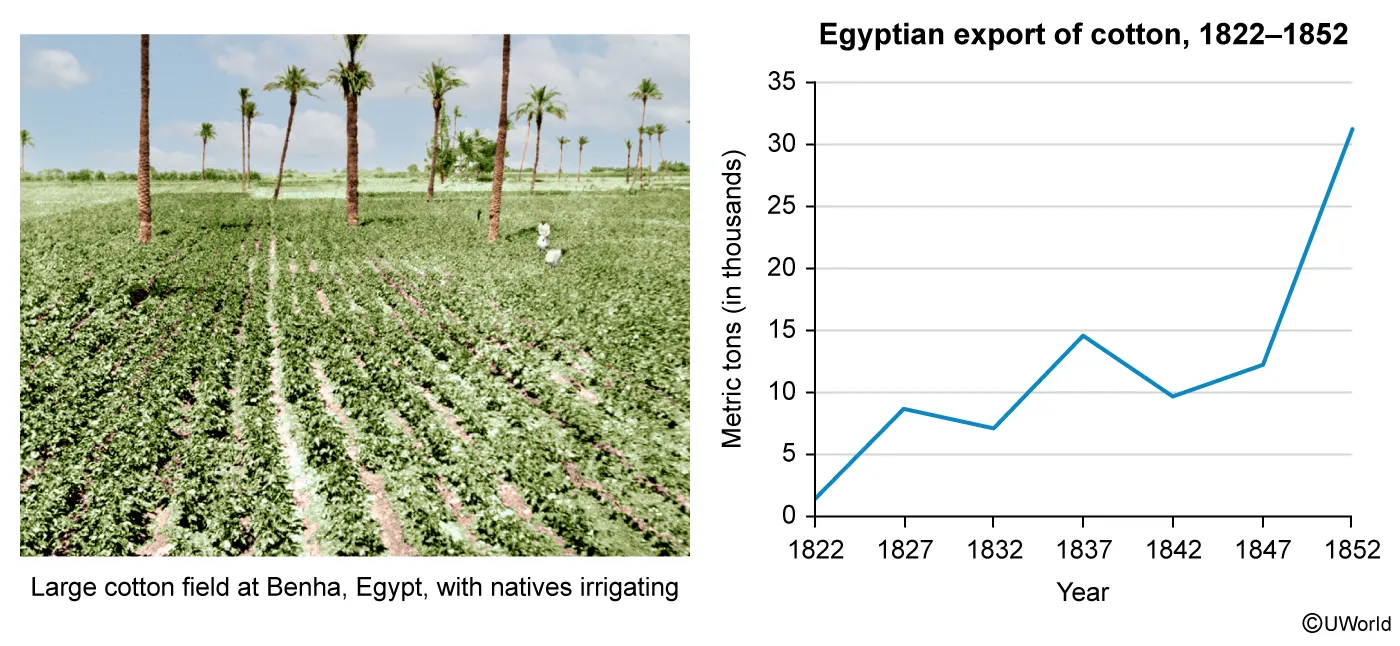
"Muhammad Ali's development strategy…expanded the area under cultivation and planted crops specifically for export, such as long-staple cotton…. In practical terms, this meant the peasants were told what crops to plant, in what quantity, and over what area. The government bought directly from the peasants and sold directly to the buyer, cutting out the intermediaries or merchants…."

In the early 1800s, French textile engineer Louis Jumel discovered a cotton variety with extra-long fibers that thrived in Egypt's climate. Seeking to profit from his discovery, Jumel convinced Egypt's governor, Muhammad Ali, that cultivating this cotton variety could revolutionize Egypt's economy through agriculture.

Following this advice, Ali expanded Egypt's agricultural sector by establishing large-scale cotton plantations, which made Jumel's cotton variety a valuable cash crop. After harvesting, raw cotton was exported to textile manufacturers in industrializing European nations.

Between 1840 and 1860, Egypt's cotton exports increased by 300%; later leaders cemented the country's status as an export economy by expanding the commercial cultivation, harvest, and export of cotton. Therefore, the passage provides evidence for the 19th-century historical trend of the extraction of agricultural resources in export-based economies.

(Choice A) The four-field system was first developed in Europe beginning in the 17th century, not in 19th-century Egypt.

(Choice B) In 19th-century North Africa, Ottoman control was declining, not expanding.

(Choice C) After the Napoleonic Wars, the 19th-century Mediterranean trade network saw a shift from armed trade to peaceful bilateral trade agreements.

Things to remember:
In the 19th century, the extraction of agricultural resources supported countries with export-based economies.

Passage

"But after the fall of the Tokugawa Government, the Korean Court…declared its determination to have no further relations with a country embracing Western civilization, and refused even to receive a Japanese embassy…. A year after the return of the Formosa expedition, that is to say, at the close of 1875, the Koreans completed their rupture with Japan by firing on the boats of a Japanese war-vessel engaged in the peaceful operation of coast-surveying.

No choice now remained except to dispatch an armed expedition against the [Korean] kingdom. In this matter Japan showed herself an apt pupil of occidental* methods, such as had been practiced against herself in former years…. They were well equipped with rifles and cannon; they numbered some thirty thousand, being thus nearly as numerous as the Government's standing army; they were all of the military class, and in addition to high training in Western tactics and in the use of modern arms of precision, they knew how to wield that formidable weapon, the Japanese sword, of which their opponents were for the most part ignorant.

Ostensibly their object was to restore the samurai to their old supremacy, and to secure for them all the posts in the army, the navy, and the administration…. Under any circumstances it would have been natural that the master-minds of the era, the men who had planned and carried out the great work of the Restoration, should lead the nation along all paths of progress."

Francis Brinkley, English newspaper owner living in Japan during the Meiji Restoration, 1901

Question

The use of "occidental methods" referred to in the second paragraph is best understood in the context of which of the following?

A. The development of trench warfare in East Asia
B. The spread of economic imperialist policies to Japan
C. The increasing demand for diplomacy by Korea
D. The adoption of a military dictatorship by Japan

Explanation

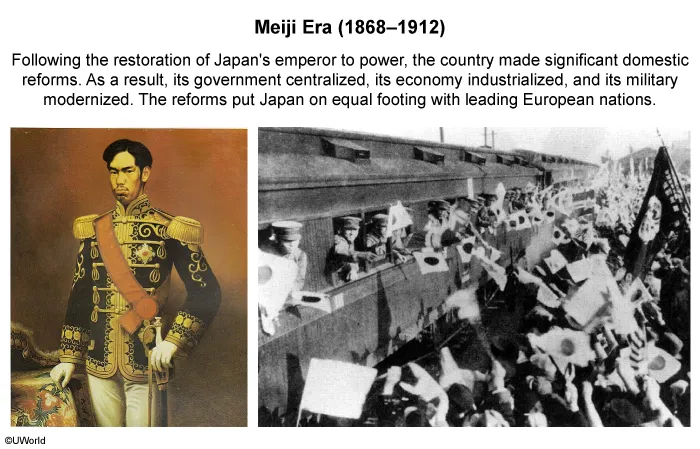
"No choice now remained except to dispatch an armed expedition against the [Korean] kingdom. In this matter Japan showed herself an apt pupil of occidental* methods, such as had been practiced against herself in former years."

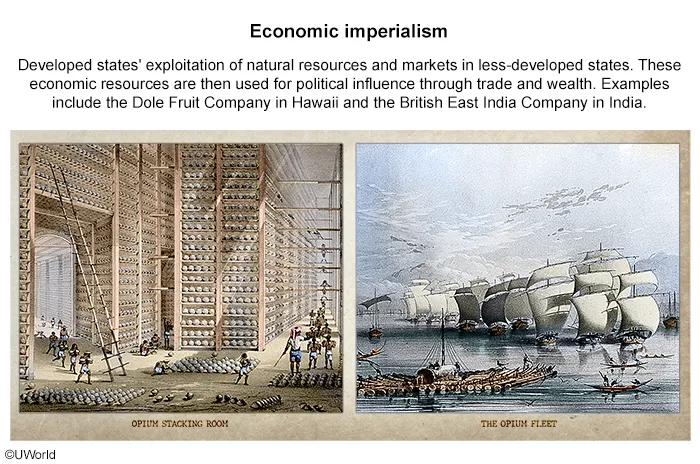
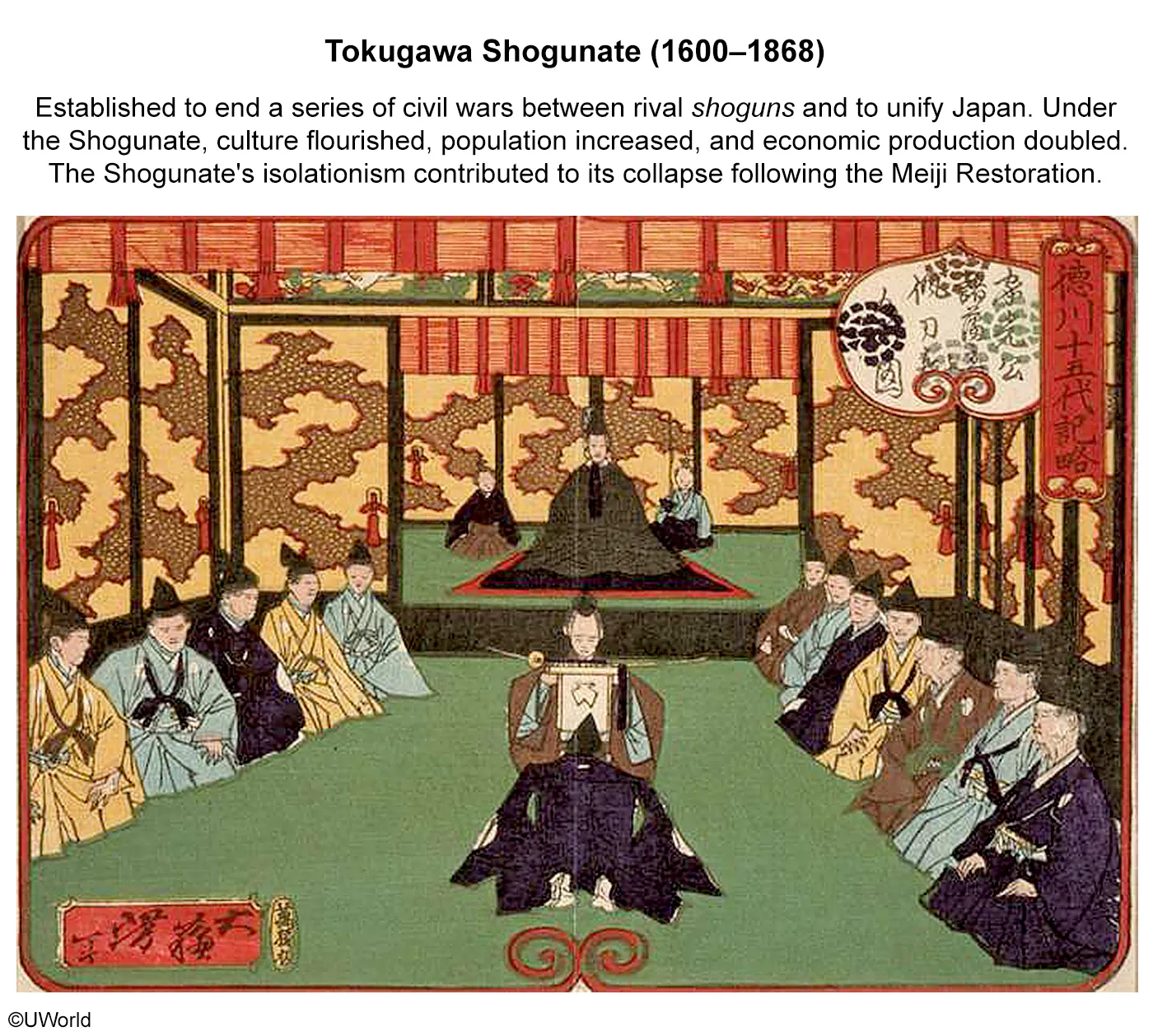
Because of increased manufacturing spurred on by industrial innovations, newly industrialized Western governments began looking to sell their surplus of goods outside their territories. Beginning in the 1830s, France, Britain, and the US sent ships to Japan in hopes of engaging in economic imperialism. In Japan, the Tokugawa Shogunate refused these advances because of its policy of near-total isolationism.

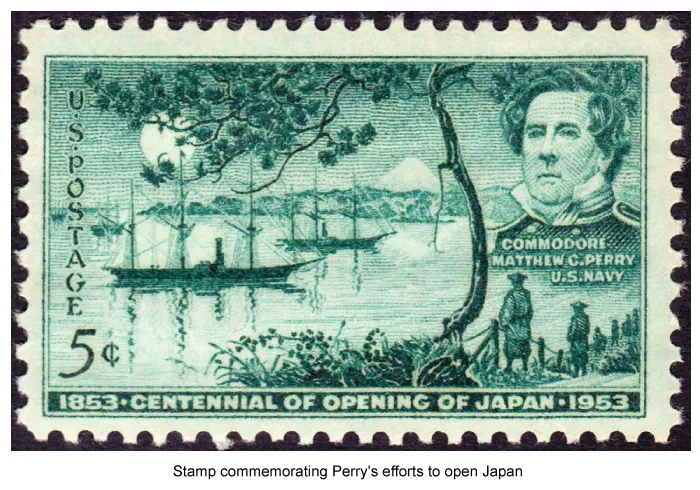
Frustrated, the US dispatched Commodore Matthew Perry and his fleet of warships to Edo Bay (present-day Tokyo Bay) in 1853 to force Japan into an economic relationship. As a result of this gunboat diplomacy, Japan opened its border to foreign influences and signed unequal treaties with several Western governments.

Due to Western influences, Japan's rapid industrialization during the Meiji Era resulted in an increased desire to gain influence and access to foreign markets. After being diplomatically rejected by Korea, Japan created a political incident on the Korean island of Ganghwa that showcased Japan's superior military. As such, "Japan showed herself an apt pupil of occidental [Western] methods" by using gunboat diplomacy to force Korea to sign an unequal treaty. This led to Japanese economic imperialism in the Korean Peninsula.

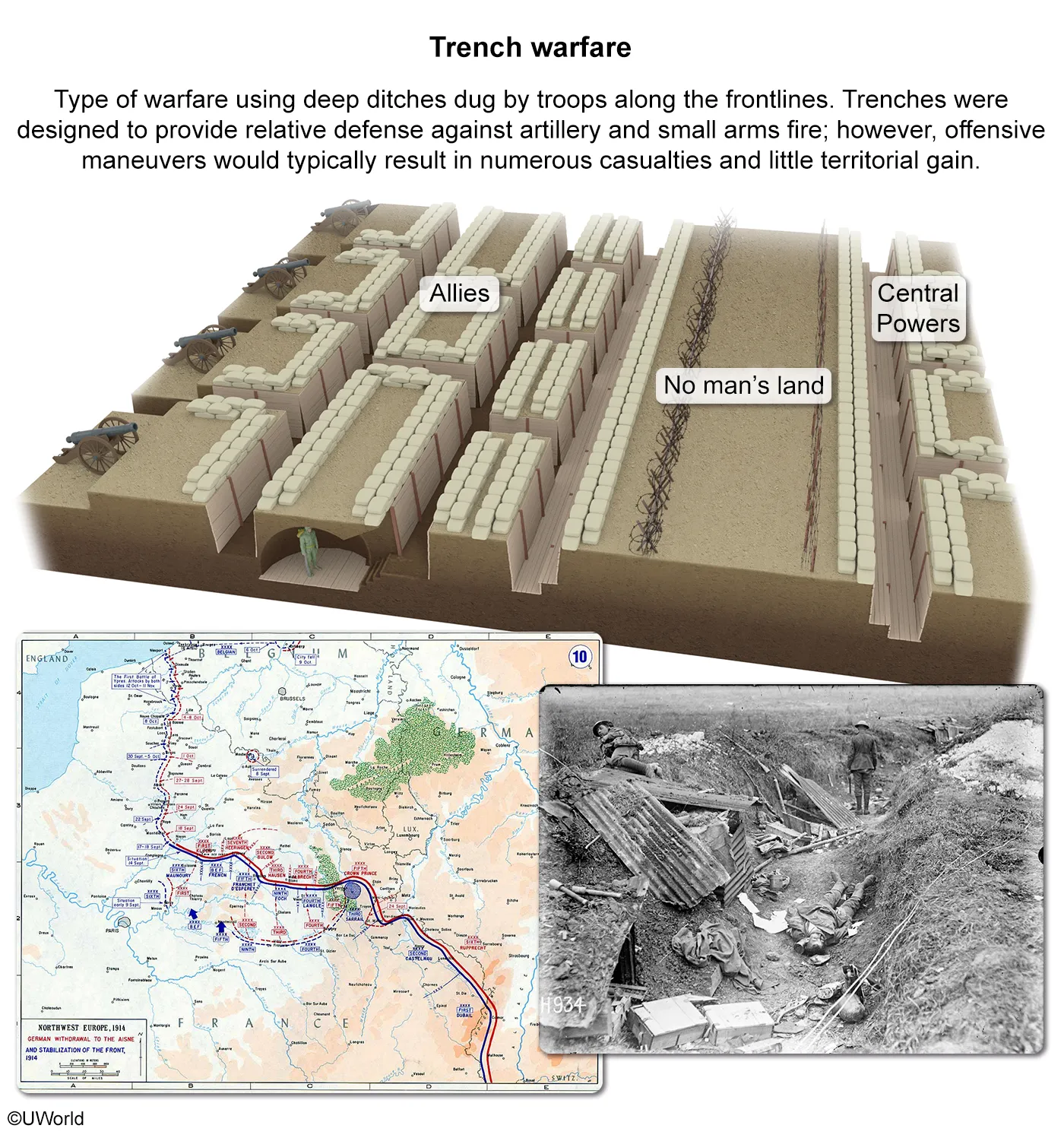
(Choice A) While trench warfare was used in East Asia prior to WWI, it isn't discussed in this passage.

(Choice C) As stated in the passage, Korea broke diplomatic ties with Japan.

(Choice D) Although the Japanese emperor was considered the supreme head of the military in Japan, he, not the military, controlled the government. Therefore, Japan wasn't a military dictatorship.

Things to remember:
In the 19th century, the US used gunboat diplomacy to introduce economic imperialism into Japan. Japan later used similar techniques against Korea.


UWorld Dark Blue logo

Study Industrialization On the Go

Short moments can become productive study sessions. Review resistance movements, work through AP World History Unit 6 MCQ sets, or revisit explanations during a break. With the UWorld app, your learning stays consistent wherever you are.

Stand Out
with a Top Score in AP World History: Modern

Finish your AP World History Unit 6 review and continue mastering all units with UWorld. Our AP World History course is designed to boost your performance and help you impress admissions.

Choose Your Subscription
Dream Score Plan
360-Day
$169
Deep Learning Plan
180-Day
$149
Score Booster Plan
90-Day (No print book, only digital)
$129
Introductory Plan
30-Day (No print book, only digital)
$99

Get our all-in-one course today!

  • Focused APWHM Videos
  • Print & Digital Study Guide
  • 500+ Exam-style Practice Questions
  • Customizable Quiz Generator
  • Adjustable Study Planner
  • Realistic Timed Test Simulation
  • Colorful Visual Explanations
  • Progress Dashboard
  • Smart Flashcards & Digital Notebook
Explore our free trial and frequently asked questions.

Hear From Our AP Students

UWorld’s service is pretty good and helps provide a lot of explanations on subjects I haven’t been confident on before.

—Bence P.

The questions here are the most realistic to the AP tests I've seen so far! I appreciate the ability to customize tests as well.

—Kaila H.

The best part is that all options are well-explained, telling clearly why they are not the right option.

—Syeda Huma Z.

Frequently Asked Questions (FAQs)

AP World History Unit 6 examines how industrialization reshaped global power between 1750 and 1900. The unit covers how industrialized states expanded their influence, how societies responded, and how new economic systems transformed labor, trade, and migrations. To succeed, you must understand how political, economic, and social forces are interconnected across the globe. A guided resource like UWorld helps you break down these concepts, making your AP World History Unit 6 review feel structured and clear.

Key themes include:

  • State expansion in the 18th and 19th centuries
  • Resistance to imperialism
  • The growth of the global economy
  • Economic imperialism
  • Causes and effects of new migration patterns

Understanding how these topics connect helps you see why industrialized nations gained global dominance, how colonized societies reacted, and how new economic patterns emerged. This prepares you well for AP World History Unit 6 MCQ items, SAQs, and DBQs.

To prepare effectively for Unit 6, you need a clear understanding of how industrialization and imperialism have shaped the modern world. This involves recognizing cause and effect, identifying patterns across regions, and understanding how nations utilize technology and economic power to expand their influence and impact. Memorizing lists of colonies or leaders will not be enough. UWorld helps because its explanations show why each event happened and how it connects to broader global changes.

A strong Unit 6 study approach includes:

  • Reviewing why industrialized states sought raw materials and new markets
  • Comparing imperial strategies across Africa, Asia, and Oceania
  • Studying resistance movements and understanding their motivations
  • Analyzing new labor systems, migration flows, and coerced work models
  • Practicing stimulus-based questions tied to charts or excerpts
  • Working through AP World History Unit 6 practice test questions consistently

Studying this way helps you build the reasoning skills the AP exam rewards. You learn to identify historical patterns rather than memorize isolated details, which improves accuracy on the test.

Yes, there are free resources you can use to begin your AP World History Unit 6 preparation, and the strongest place to start is UWorld’s free 7-day trial. This provides access to guided videos, interactive notes, and exam-style AP World History Unit 6 practice questions that clearly explain industrialization, imperial expansion, and social change. 

Alongside UWorld, teachers often share free outlines, vocabulary lists, and summary charts that cover the major developments in Unit 6. You can also find documentary clips, maps, and primary source excerpts online that help you visualize global changes. AP Classroom provides topic questions and progress checks that align directly with how Unit 6 appears on the exam, giving you insight into the test structure.

While these free tools are helpful, many fail to explain the deeper cause-and-effect logic behind global industrialization. Combining them with a reasoning-based tool like UWorld helps you understand not only what happened but also why each development matters, thereby improving your performance on MCQs, SAQs, and essays. 

The AP World History Unit 6 test assesses your ability to comprehend the concepts of industrialization, imperial expansion, and global economic transformation. You will encounter multiple-choice questions, SAQs, and essay prompts that require interpreting maps, charts, and excerpts. Rather than memorizing isolated facts, you must understand how industrialized states expanded influence, why societies resisted, and how global labor systems shifted. UWorld helps because its explanation-driven practice mirrors the exam’s reasoning style, preparing you for AP World History Unit 6 MCQ problems and writing tasks.

You can expect to see:

  • MCQs comparing imperial strategies in Africa, Asia, and Oceania
  • Map-based questions showing territorial expansion or resource extraction
  • Items involving the causes or consequences of industrialization
  • Questions on cultural, military, or political resistance movements
  • SAQs asking you to explain economic motives or labor systems
  • FRQs requiring analysis of imperialism, migration, or global markets

Understanding these formats helps you approach the test confidently. You learn to identify patterns in industrialization, connect global developments, and interpret evidence accurately.

Improving your performance on Unit 6 SAQs and FRQs requires clear historical reasoning, accurate evidence, and a strong understanding of how industrialization and imperialism reshaped global systems. Many students lose points because they describe events without explaining how or why they happened. The exam rewards direct, well-supported answers that show connections across regions and themes. UWorld helps because its explanations model how to craft concise, evidence-based responses for the AP World History Unit 6 SAQ and FRQ prompts.

A strong writing strategy includes:

  • Using specific evidence from Africa, Asia, or Oceania to illustrate imperialism and resistance
  • Connecting industrialization to the economic motives behind expansion
  • Explaining resistance movements as reactions to political or economic pressures
  • Referencing shifting labor systems, such as indentured work or cash crop economies
  • Organizing responses clearly so each point addresses part of the prompt
  • Practicing with multiple FRQ and SAQ prompts to strengthen clarity and structure

This approach helps you produce writing that is focused, logical, and aligned with AP scoring expectations. Over time, you learn how to explain cause and effect confidently, compare developments across regions, and justify your claims with accurate evidence. When you practice consistently, Unit 6 written questions become easier to manage, and your performance on the broader AP exam improves as well.

The “Consequences of Industrialization” unit, which is AP World History Unit 6, carries significant weight (12-15% of the exam score) because it covers developments that reshaped global power from 1750 to 1900. The College Board designates Unit 6 as one of the larger content blocks in the course, and it typically represents a meaningful portion of the multiple-choice section, as well as a key source of themes found in SAQs and FRQs. Industrialization explains why certain states gained economic and military advantages, why new imperial systems formed, and how global markets, migration, and social structures changed. These patterns shaped nearly every region of the world.

Unit 6 provides the foundation for many comparative and causation questions that appear throughout the exam. A large share of stimulus-based items draws from industrial growth, expansion into Africa and Asia, resource extraction, and resistance movements. The unit also frequently appears in written prompts because it connects directly to economic change, environmental influence, political power, labor systems, and cultural responses. Students who understand Unit 6 well often find the entire exam easier because they can explain how industrialization created the modern global system. 

Using UWorld helps strengthen your preparation because its explanations emphasize cause and effect, global interaction, and the types of reasoning the exam rewards. When you review Unit 6 carefully, you gain a clearer understanding of industrial power, imperial strategy, and resistance, all of which support stronger performance across the AP exam. 

A reliable AP World History Unit 6 study guide should help you understand how industrialization changed global power structures, reshaped economies, and influenced cultural and political responses across regions. Unit 6 contains many interconnected themes, so a good study guide should help you see how industrial growth fueled empire building and how communities reacted. UWorld supports this by offering clear explanations and structured visuals that make your AP World History Unit 6 study guide review more effective and manageable.

A strong Unit 6 study guide should include:

  • Clear summaries of how industrialization influenced imperial expansion
  • Charts comparing different imperial strategies across Africa, Asia, and Oceania
  • Explanations of resource extraction, cash crop systems, and global markets
  • Overviews of resistance movements and their causes
  • Visual maps that show shifting borders, spheres of influence, and trade routes
  • Practice questions that reinforce reasoning instead of memorization

When your study guide helps you connect causes, effects, and responses, Unit 6 becomes far less overwhelming. You begin recognizing patterns in global interactions and explaining them clearly on SAQs, FRQs, and AP World History Unit 6 review tasks.

Yes, there are practice tests specifically focused on Unit 6, and they are valuable for strengthening your ability to interpret evidence and identify patterns related to industrialization and imperialism. These practice tests help you apply what you know to maps, excerpts, and charts related to global expansion. UWorld supports this by offering AP World History Unit 6 practice test questions with detailed explanations that show the logic behind correct and incorrect answers.

A high-quality Unit 6 practice test should include:

  • MCQs involving the economic motives behind imperialism
  • Map-based questions showing territorial expansion and resource zones
  • Items testing labor systems, migrations, or cash crop economies
  • Evidence-based questions highlighting resistance movements
  • Chart or graph analysis tied to industrial growth or global markets
  • Explanations that make reasoning clear and easy to apply

Working through these questions strengthens your ability to interpret sources, connect global developments, and respond to AP style prompts. This builds confidence for classroom tests and the exam.

Preparing for the Unit 6 progress check requires understanding the major forces behind industrialization, imperial expansion, and global economic change. The progress check MCQs often include maps, short excerpts, or charts that test your ability to identify causes, consequences, and comparisons across regions. Start by reviewing why industrialized states expanded outward, how new economic motives shaped empire building, and how resistance movements responded to these pressures. Then use maps to study territorial control, spheres of influence, and changing trade networks. 

UWorld helps because its questions mirror the reasoning style found in AP Classroom, showing you how to identify key clues, eliminate incorrect answers, and recognize patterns in historical evidence. Reviewing your mistakes is essential because it reveals which themes need more attention. With steady practice, the Unit 6 progress check MCQs in AP World History become much easier, and your understanding of global industrialization grows stronger for the AP exam.

Students often struggle with Unit 6 because they memorize isolated imperial events rather than understanding the broader causes and effects behind global expansion. This leads to confusion on stimulus-based questions and weak explanations in written responses. UWorld helps you avoid these errors because its explanations focus on reasoning, not memorization, making AP World History Unit 6 review more intuitive.

Common mistakes include:

  • Memorizing colonizers without understanding economic motives
  • Confusing different imperial strategies used in Africa and Asia
  • Overlooking resistance movements or treating them as minor details
  • Mixing up labor systems, such as indentured work and cash crop production
  • Ignoring how industrialization shaped migration patterns
  • Misinterpreting charts or excerpts related to economic change
  • Using vague evidence in SAQs and FRQs

Recognizing these mistakes early allows you to shift your focus toward understanding patterns and building stronger historical reasoning. This makes Unit 6 easier to study and improves performance on the AP exam.

Studying effectively for Unit 6 MCQs requires understanding the economic motives, political strategies, and social consequences of industrialization and imperialism. Most questions are stimulus-based and ask you to interpret excerpts, maps, or charts rather than recall isolated facts. To perform well, you need to recognize patterns across regions and explain why industrial powers expanded their influence. UWorld supports this because its explanations show you how to approach AP World History Unit 6 MCQ items using clear reasoning instead of memorization.

A strong MCQ strategy includes:

  • Reviewing why industrialized nations sought raw materials and markets
  • Analyzing territorial maps to understand imperial expansion
  • Studying resistance movements and their causes
  • Practicing with source-based questions using charts or short excerpts
  • Comparing labor and migration systems across regions
  • Working through AP World History Unit 6 practice test problems in spaced sessions

When you build these habits, the MCQs become easier to predict and answer. You begin to see how industrialization reshaped global power and how economic and political motives are evident in evidence-based questions. This leads to stronger performance on progress checks and the AP exam.

Yes, you can study Unit 6 offline, which is helpful if you want to review industrialization themes, imperial strategies, and resistance movements without relying on constant internet access. Much of the Unit 6 content can be reinforced with printed maps, summaries, and short outlines that show how industrial powers expanded and how societies responded. 

UWorld supports offline studying because you can download question sets to practice AP World History Unit 6 MCQ problems, revisit explanations, or review global economic changes while on the go. Once you reconnect, the UWorld mobile app automatically syncs your progress, ensuring you never lose your work. Offline study also allows you to take advantage of short pockets of time, making it easier to stay consistent across the week. 

When you combine offline review with regular practice, you develop a deeper understanding of how industrialization reshaped global power, supported new economic systems, and influenced long-term patterns of migration and resistance. This helps you feel more prepared for the AP exam and more confident in your historical reasoning.

Scroll to Top

Own AP World History

Get Exam Ready
The Smart Way
No Credit Card Required
See the UWorld Difference For Yourself

Frequently Asked Questions

New Purchase: All new subscriptions go into effect from the time they are activated and not at the time of setup/purchase. A subscription can be activated immediately or any time thereafter. If your initial purchase consists of multiple courses (Qbank, Self-Assessment exam, CCS, etc.), each can be activated individually and independently via your account on our website. This process of activating a subscription after purchase allows you the flexibility to start a subscription when you are truly ready to use it.

We recommend that all subscriptions be activated within 180 days of setup/purchase. Once a subscription is activated, it cannot be paused or suspended for any reason and will run continuously for the duration of the course material.

Renewal: A renewal is an extension of time to continue access to a current activated subscription. Because a renewal is an extension to an already active subscription, it is effective from the existing expiration date, not from the day of purchase and cannot be deferred to start at a later date/time.

Note: All of our subscriptions are based on the Eastern Time Zone (GMT/UTC -5 hours or New York Time), which may be different than your local time zone.

Any of our product offerings can be purchased from our website with payment due in full at time of purchase via a credit or debit card with American Express/Discover/MasterCard or Visa logo.

You will need to register for an account in order to purchase any of our products. Once you have registered for an account or if you already have an account:

  • Log in to your UWorld account
  • Click on the Cart icon at the top of the page and then select your desired product to see a list of available packages and their prices
  • Select the package you wish to purchase
  • Verify your profile information, address, and educational status, then click the Update button
  • Enter your Billing address and credit/debit card information, then click Review Order
  • Verify that the correct product is in your cart and click Place Order
  • A purchase receipt will automatically be sent to your registered email address

If you complete your purchase but do not receive a receipt, please contact the Customer Care Team at [email protected]

You can subscribe to any of our online courses/services using a credit or debit card with a Visa, MasterCard, Discover or American Express logo. After a successful payment, your subscription will immediately be available for activation via your account on our website or available complementary mobile applications.

You can also subscribe via personal check, money order, or demand drafts taken in U.S. dollars. These types of payments should be mailed to us and should include the name of the subscription and the duration, along with the details asked for in the registration form. We will set up your account as soon as we receive your payment and notify you via email of your access credentials. All direct-mail payments must be in U.S. dollars and made payable to:

UWorld, LLC
9111 Cypress Waters Blvd
Suite 300
Dallas, TX 75019

We do not accept cash via mail, currencies other than U.S. dollars or payments via fax.

Individuals purchasing our CPA Review product may finance their purchase using Affirm during checkout process. Your eligibility depends on your credit score and other criteria, as per Affirm’s policies (outlined here). A soft credit check, a credit check that does not affect your credit score, will be performed by Affirm to determine your loan eligibility. You will need a US based bank account to qualify.

All refunds are evaluated on a case-by-case basis for products purchased directly from UWorld. One case has no bearing on another. Refund amounts determined by UWorld are final.

In-App Purchases: We are unable to process any refunds for purchases made via mobile application (in-app). Please contact Apple for all refund/credit requests for Apple in-app purchases.

USMLE Step 2 CS, Step 3 CCS, Subject Reviews & Self-Assessment Exams: These subscriptions are non-refundable, non-transferable, and cannot be converted into another subscription.

CPA Review: Students may request to cancel their CPA review product only within 10-days of activation of any of the materials. To qualify for a refund, no more than 10% of the course (lectures, Qbank, or a combination there-of) may have been used per exam section. All CPA Review refunds are subject to a cancellation fee of $75 (for single section purchases) or $250 (for package
purchases), plus any applicable shipping charges. No return of merchandise is necessary.

All other Qbanks: Refunds are considered for subscriptions of more than 30 days. Refund amounts are based on the number of days elapsed since the subscription start date or the number of questions used, whichever amounts to a higher deductible.

Example scenarion: An individual purchases a 180-day Qbank subscription and generates a few test blocks equal to 20% of the questions in the Qbank. After 45 days, he/she requests a refund. Because the elapsed duration is greater than the percentage of questions used, the refund amount will be based on a subscription converted to the closest duration (60 days) by deducting the applicable 60-day subscription fee from the refund. In the same scenario, if the individual had used 85% of the questions, the refund would be 15% of the subscription fee paid.

Note 1: A processing fee of 10% (minimum of $10 and maximum of $25) will be applied to all refund amounts.

Note 2: All refunds, pro-rated or otherwise, must be requested within 360 days of original purchase. Refunds for purchases made more than 360 days ago will be issued as non-refundable, non-transferable store credit.

Note 3: Subscribers must notify UWorld of their intent to obtain a refund before activating their subscription (or) during the active duration. If the reset option is used or all of the questions are used, no refund will be allowed (see “I want to reset/delete my Qbank test history (or) start all over again, is this possible?” below for further details). No refunds will be offered for expired subscriptions.

Note 4: For combination package purchases, individual subscription fees will be applied when calculating the refund. If any self-assessment Exam(s) is utilized from a package, the entire purchase is rendered non-refundable.

Note 5: Although access to Qbanks via certain mobile devices is provided as an additional feature, it is not intended to be a replacement for computer access, and no refunds or cancellations will be honored due to user inability to install and/or use the provided software on any mobile device (regardless of whether the device meets the minimum system requirements).

Please use the following steps to purchase a renewal for your subscription:

  • Log in to your account on our website
  • Click on the User Icon in the top right corner of the screen
  • Click on the Renew button corresponding to your subscription
  • Select the Renewal duration you wish to purchase
  • Verify your profile information, address, and educational status, then click the Update button
  • Enter your Billing address and credit/debit card information, then click Review Order
  • Verify that the correct package is in your cart and click Place Order

Upon a successful transaction, you will be sent a confirmation email receipt.

A renewal is an extension of time to continue accessing an active subscription, and it will not start the subscription over, provide a reset, or grant access to additional questions that were not previously accessible. Because a renewal is an extension to an already active subscription, it is effective from the existing expiration date, not from the date of purchase, and cannot be deferred in any way to start at a later date/time.

Please note that to qualify for renewal pricing, you will need to renew the course before it expires. Renewals are not offered to expired subscriptions. If you fail to secure a renewal before the expiration date, you will need to purchase a new subscription at the regular price directly from our website to regain access to the material.

Note: All times and dates displayed for subscription expiration correspond with the Eastern Time Zone (GMT/UTC -5 hours or New York Time), which may be different than your local time zone.

Note: If your initial purchase was a combination package, you will need to renew each active subscription individually. You do not need to renew a course that has not been activated.

You may request to upgrade or downgrade your subscription purchase as long as it has not been activated. If you purchase a combination package, all included subscriptions must be unused. Please be advised that current subscription pricing will apply.

If your subscription has been activated, unfortunately, we cannot upgrade it retroactively. If seeking to downgrade, please refer to our refund policy for available options.

We do not offer custom duration(s) or combination packages other than those outlined on the website. Please refer to our purchase page for currently available subscriptions (including discounted combination packages for some products).

Self-Assessment exam subscriptions are for 14 days each. Subscribers whose active subscription(s) have not expired can purchase renewals from 7 days or more at any time before their active subscription expires. Please refer to the respective course description page for renewal options.

We offer a demo on each of our product pages that contains a sample of the product interface and a few sample questions. We do not offer guest/trial accounts to test our software and view materials.

It is possible to purchase a subscription as a gift for someone else. However, the intended recipient will need to register an account on our website (or have an account registered for them, with their profile information entered accurately). If the user is present at the time of purchase, the purchase can be made from their account on our website using any credit or debit card with a Visa, MasterCard, American Express, or Discover logo.

If the user is not present, or you wish for the gift to be a surprise, please contact Support directly using the contact form to arrange payment for the gift subscription. You will need to provide the user’s registered email address so the account can be located.