AP® World History: Modern Unit 4 Review and Practice Test
AP® World History Unit 4 explores the dramatic expansion of maritime exploration from 1450 to 1750. This era brought new sea-based empires, global trade networks, and biological exchanges, transforming social and economic systems. UWorld helps you break down these major changes, so your AP World History Unit 4 review becomes structured, visual, and far easier to understand.
Learn and Score Higher in AP World History Unit 4 Through Our Clear, Connected Review Tools
Unit 4 can feel overwhelming because it blends maritime technology, imperial expansion, global trade, coerced labor systems, and the Columbian Exchange. UWorld helps you understand how each idea fits into a larger pattern, giving you the confidence to answer AP World History Unit 4 MCQ, SAQ, and FRQ questions effectively.
Short Videos That Explain Voyages, Empires, and Exchange Simply
These videos break down early modern exploration into simple, visual narratives. You can see how European states expanded outward, how new technology advanced navigation, and how empires consolidated control over trade routes. Each video helps you understand what drives the cause-and-effect relationships behind the AP World History Unit 4 review concepts.
Study Guide That Helps You Connect Routes, Empires, and Consequences
This study guide organizes Unit 4 into clear themes, including maritime technologies, mercantilism, global trade patterns, empire building, and labor changes. You learn why explorers traveled, how states centralized power, and how global exchange reshaped environments and societies. Each topic is broken down visually so you can prepare confidently for the AP World History Unit 4 study guide tasks.
Boost Confidence With Exam Style APWH Unit 4 Practice That Enhances Every Skill
Passage
The following questions refer to the two excerpts below from British historian Richard Henry Major's The life of Prince Henry of Portugal, surnamed the Navigator, and its results, published in 1868.
CHAPTER XX. RESULTS EASTWARD.
"The grand discovery of Bartolomeu Dias was not to remain fruitless, although it may fairly be wondered at that so long an interval should have been allowed to elapse between that discovery in 1487 and the realisation of its advantages by Vasco da Gama ten years later….
On Thursday, the 17th of May, 1498, da Gama first sighted, at eight leagues distance, the high land of India, the object of so many anxieties and of so many years of persevering effort. On Sunday, the 20th of May, he anchored before Calicut…."
CHAPTER XXI. RESULTS SOUTHWARD.
"[Magellan's] experience in navigation, and his acquaintance with the geography of the Moluccas, made him an acceptable visitor to [Spanish king] Charles V…. Magellan arrived in Seville on the 20th of October, 1517, accompanied by…a wealthy merchant, who already possessed immense commercial relations with India. The Papal Bull of Alexander VI, which had determined...the boundary between the claims of Spain and Portugal, was practically indecisive…. Nor were matters improved by the Convention of 1494*…for though Portugal thereby gained in South America, Spain became also a considerable gainer in the East, the sea way to which had been first opened up by Portugal…."
Question
Which of the following emerged in western Europe after 1500 in large part as a reaction to the expeditions mentioned in the excerpts?
| A. The development of land consolidation that relied on peasant labor | |
| B. The increased interest in transoceanic travel as a result of the trade in luxury goods | |
| C. The shift from waterpower to steam engines in most of western Europe | |
| D. The development of self-sufficient manors |
Explanation
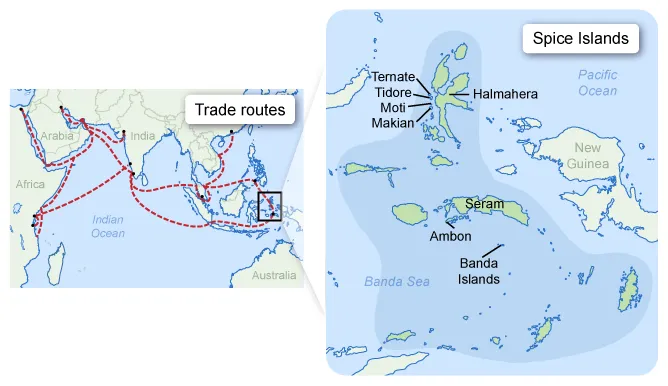
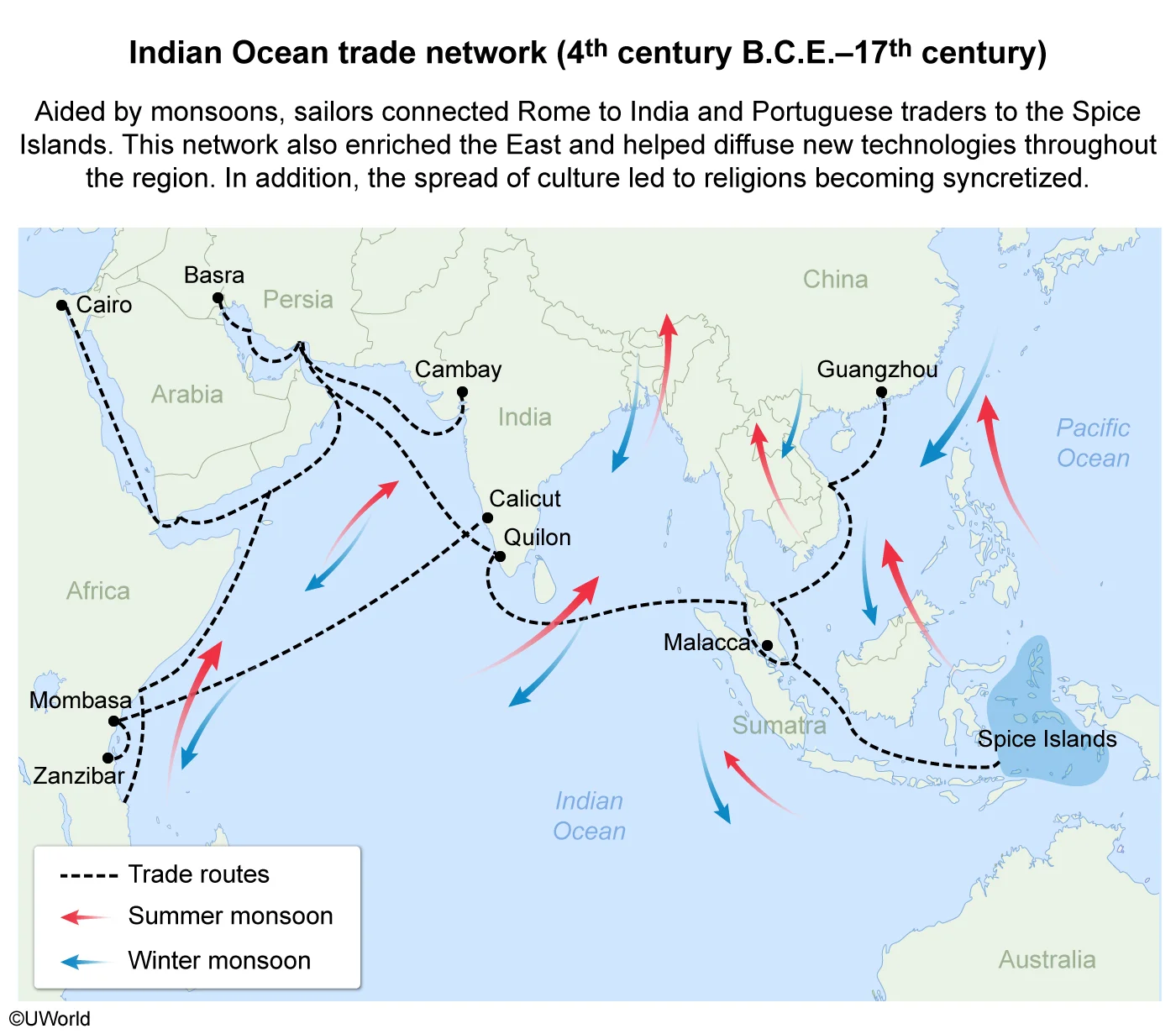
In the late 1400s, the first transoceanic voyages were successfully completed by the Portuguese. The success of these initial voyages was in large part due to the connections between the Portuguese and key foreign officials who had ties to the Indian Ocean trade network. The main draw of the Indian Ocean trade network was its lucrative spice trade.
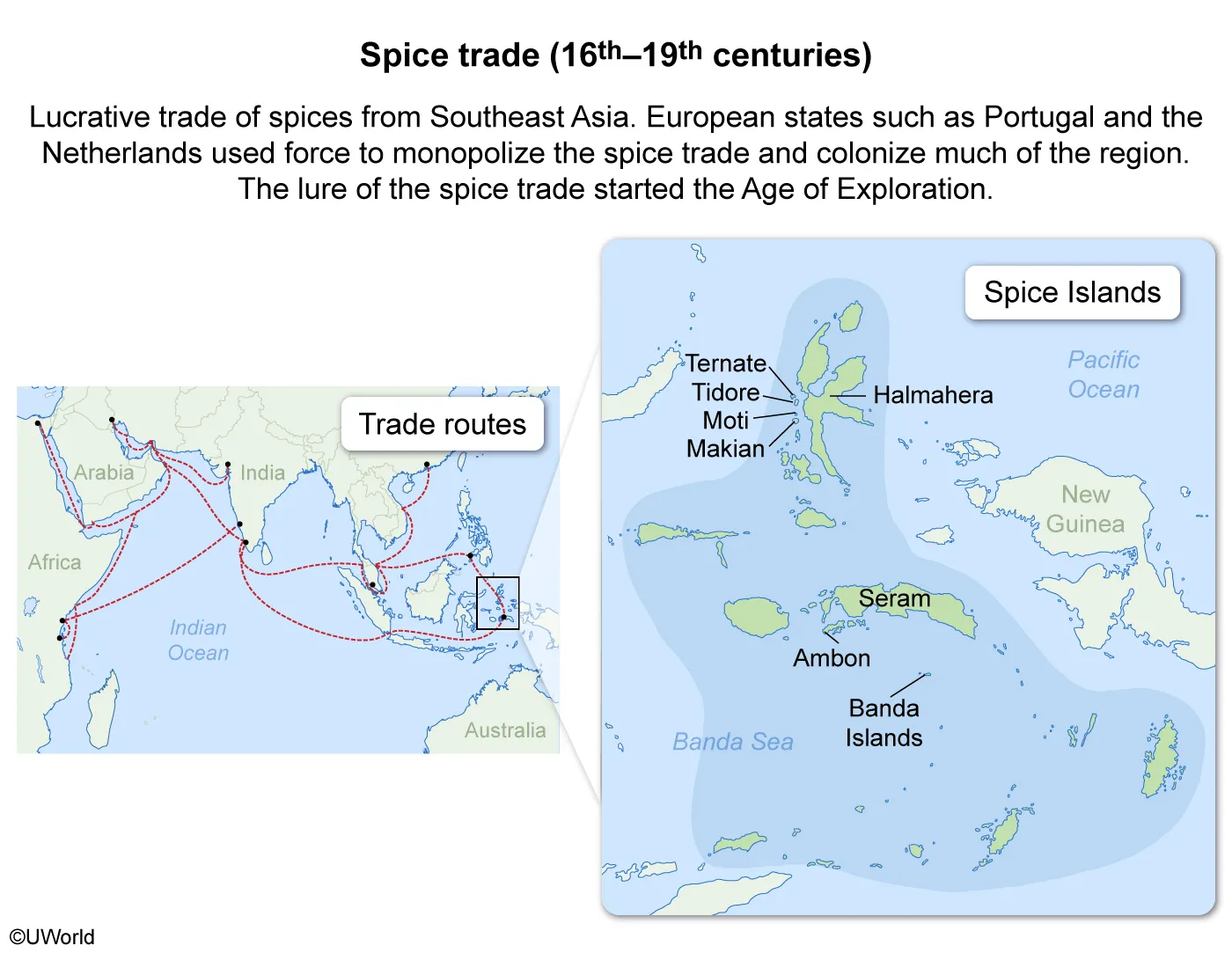
Spices were considered luxury goods that could be accessed only through the spice trade, which was centered around the Moluccas (Spice Islands) in Southeast Asia. Spices like clove, nutmeg, cinnamon, and pepper fetched high prices in European markets.
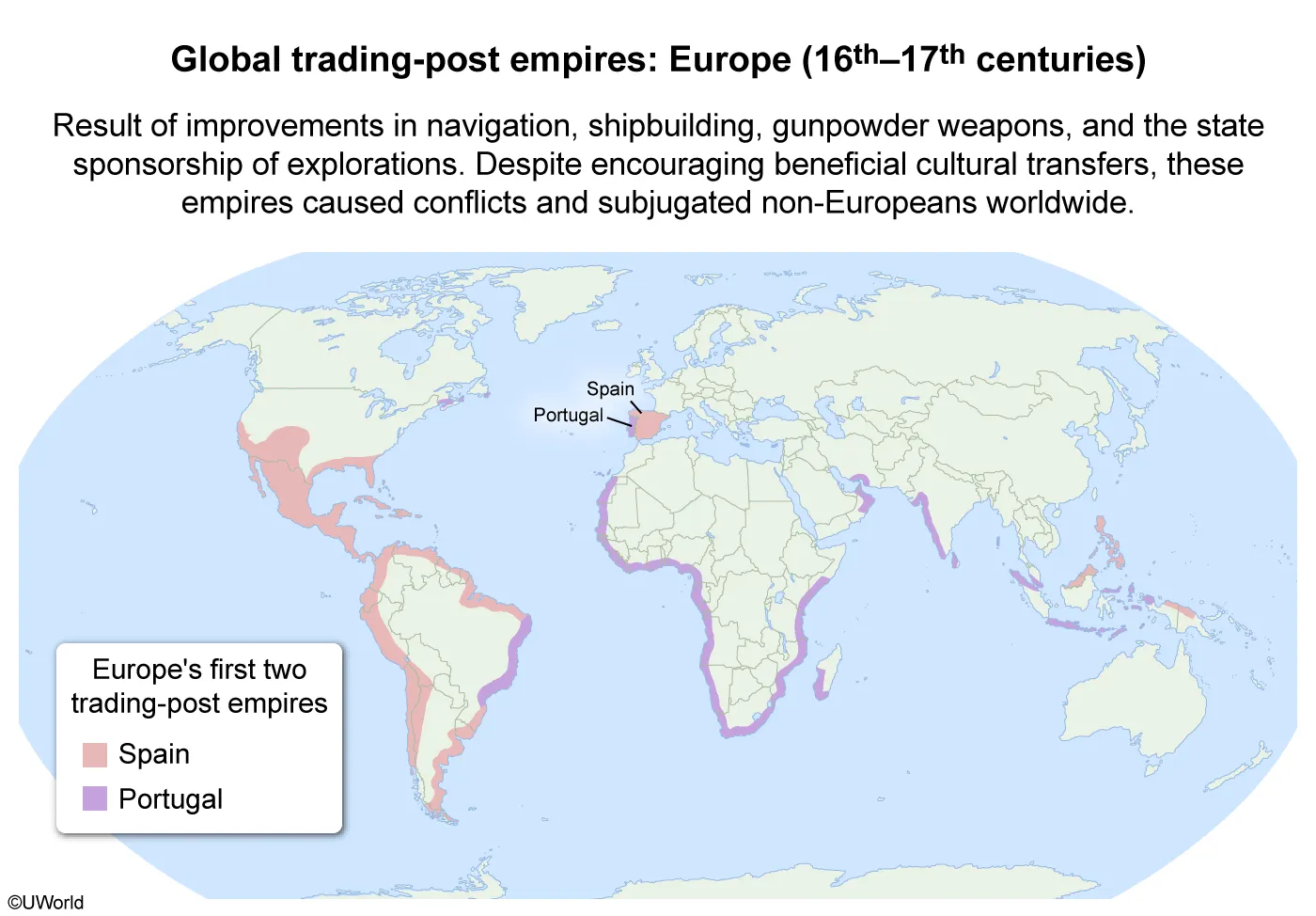
As a result of Portugal's rapid insertion into the profitable spice market, there was an increased interest in transoceanic travel. With the success of the Portuguese, other European states sponsored voyages that could take advantage of transoceanic trade, which fostered the development of Europe's global trading post empires.
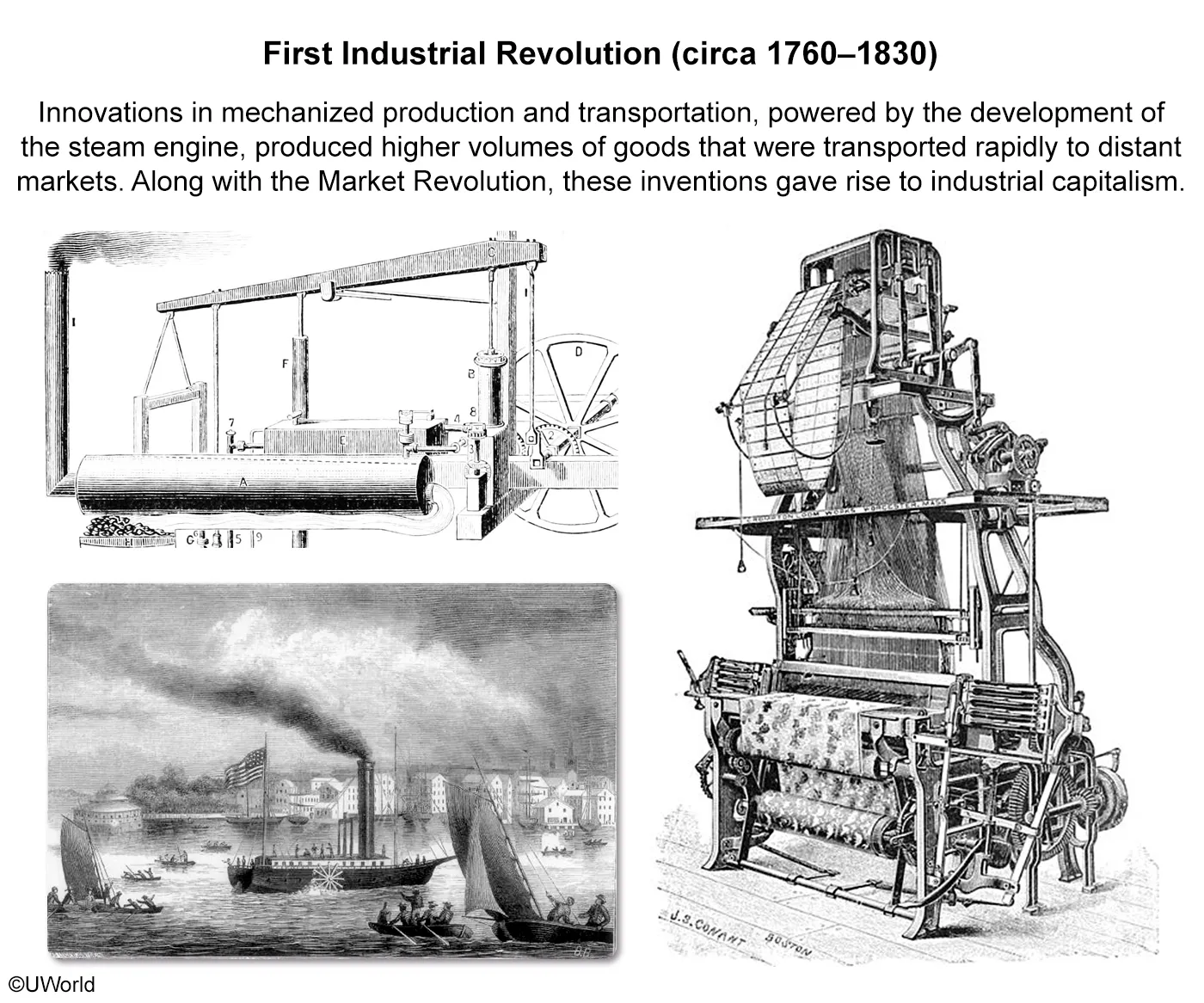
(Choices A and C) Land consolidation movements and the shift from waterpower to steam power occurred in the mid- and late 1700s. Since both occurred roughly 300 years after the voyages mentioned in the passage, they are unlikely to have been a reaction to the voyages.
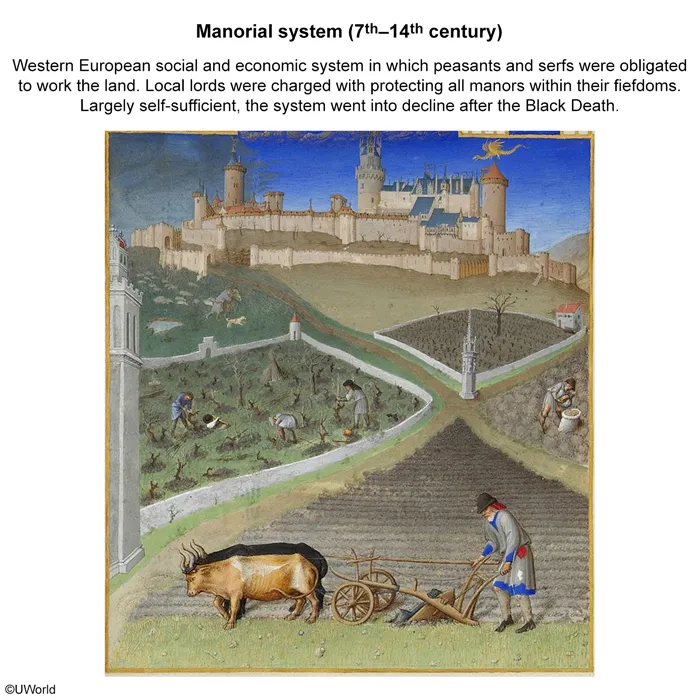
(Choice D) European self-sufficient manors were products of the Medieval era, which ended in the 14th century, nearly 200 years before the voyages mentioned in the passage.
Things to remember:
After 1500, Portugal's insertion into the profitable spice trade in the Indian Ocean trade network increased interest in transoceanic travel among other European states.
Passage
Source 1:
Source 2:
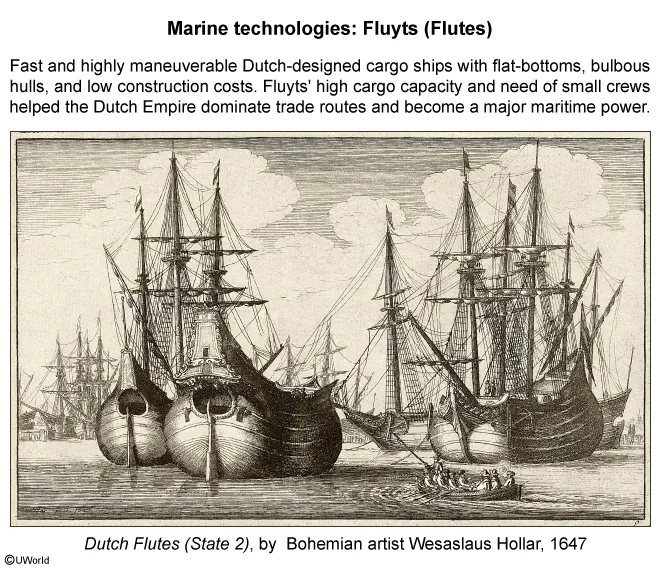
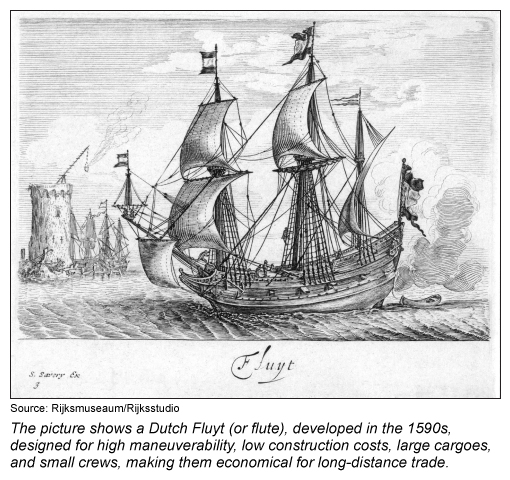
"[July] the 8th. Late in the evening there arrived [along Batavia's* shoreline], and came to anchor, the small flute de Vinck of the Zealand Chamber, which had sailed [from the Netherlands] on December 24, 1656...she came hither via the Cape of Good Hope and the South-land**…
The skipper further reports that…he had touched at the South-land, but it being the bad monsoon on the said coast, they had found it impossible to sail along the coast so far as to look after the wreck and the men of the lost ship den Draeck; for in the night of June 8 (having the previous day seen all signs of land, and the weather being very favourable) they had come to anchor in 29° 7' [south latitude], and the estimated longitude of 130° 43'…; the following morning at daybreak…they weighed anchor and continued sailing along the coast in order to keep near the land…but the weather began to become so much worse and the breakers on the coast were so violent…. On the 10th and 11th…the weather continuing very unruly with violent storms of thunder and lightning, they resolved to keep off the coast, and drifted on without sail. On the 12th they made small sail, the wind continuing to blow from the S. and S.S.W.…and shaped their course for Batavia."
Daily Register of Batavia, 1657
Question
Based on Source 2, which of the following developments facilitated the journey of the de Vinck from the Netherlands to Batavia?
| A. The creation of barter economies that financially supported European shipbuilding | |
| B. The diffusion of Asian technologies to Europeans through earlier cross-cultural interactions | |
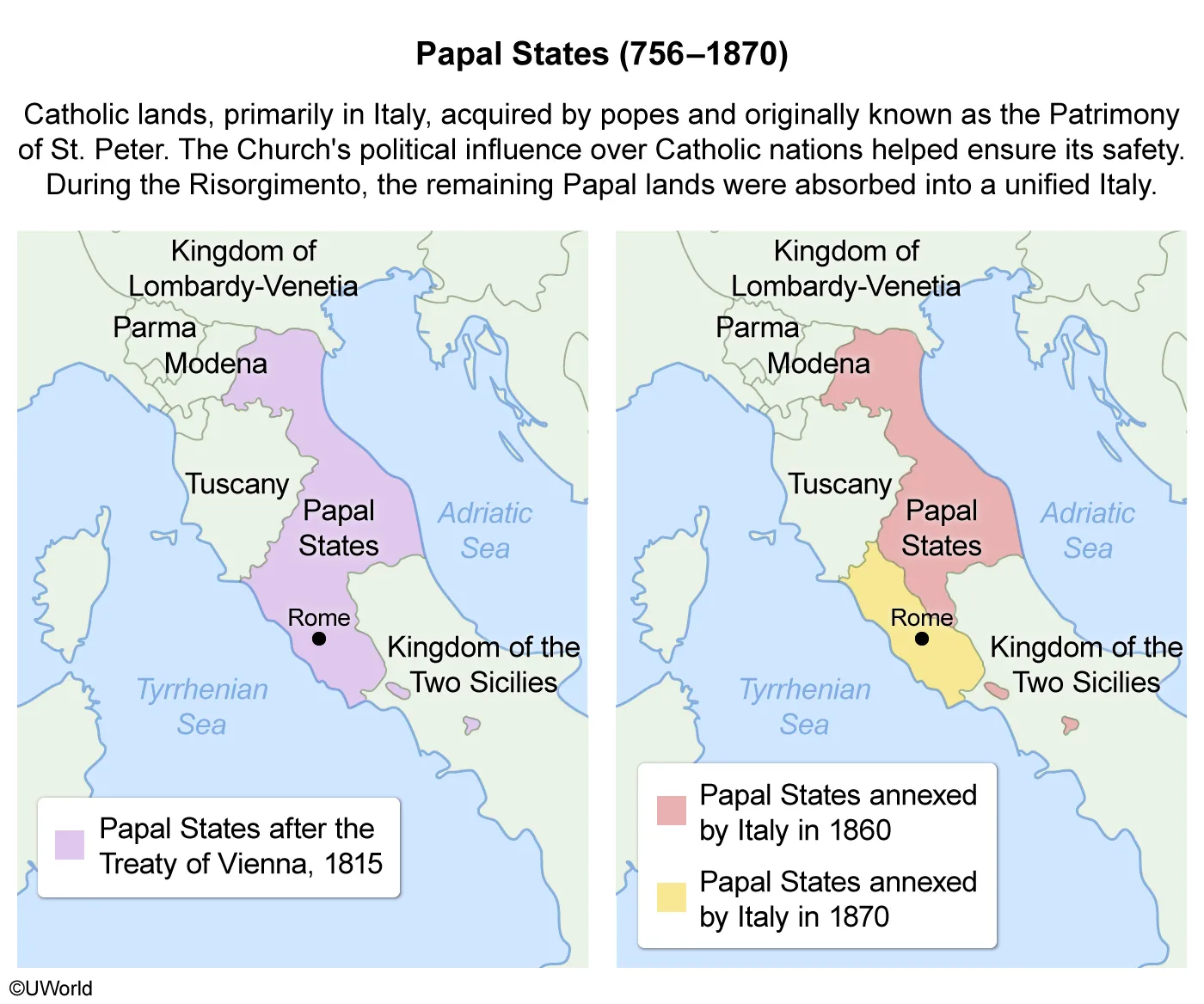
| C. The negative relationship between the Papal States and Christian converts in Asia | |
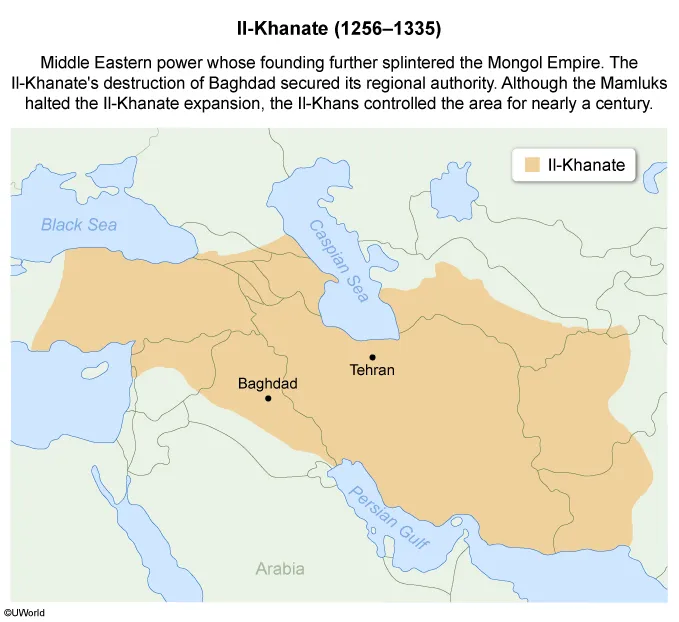
| D. The expansion of trade through the increased use of currencies in the Il-Khanate |
Explanation
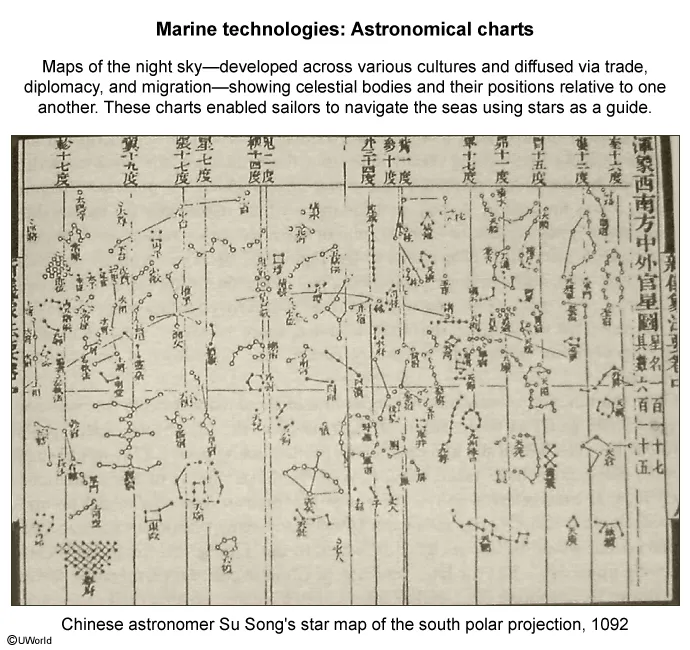
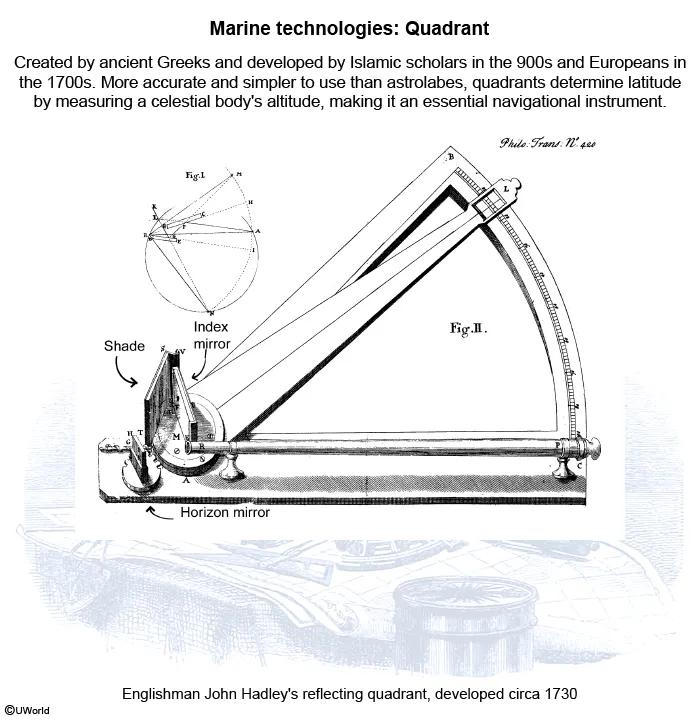
The "small flute de Vinck's" journey from the Netherlands to Batavia required specific navigational tools, among the most essential being:
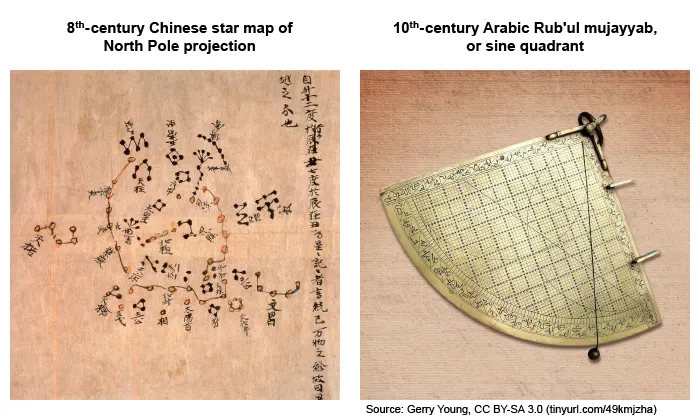
- astronomical charts, which allowed crews to plot courses using stars and planets and often provided information on tides and ocean currents.
- the quadrant, which allowed crews to determine their ship's latitude by measuring celestial bodies' altitude and was used to calculate the ship's position on astronomical charts.
By the 1300s, earlier Chinese and Muslim contributions to astronomical charts—such as star catalogs, astronomical tables, and planetary models—had spread to Europe through trade, diplomacy, and exploration. Similarly, the quadrant was diffused from the Islamic world to Europe.
Consequently, the de Vinck's journey was facilitated by navigational instruments influenced by the diffusion of Asian technologies to Europeans via earlier cross-cultural interactions. These instruments allowed the de Vinck's crew to accurately determine their position, make informed decisions about their route, and adapt to changing conditions.
(Choice A) Money-based economies, not barter, financially supported the costs of European shipbuilding.
(Choice C) Source 2 gives no indication that the Papal States' relationship with Christian converts in Asia facilitated the journey of the de Vinck.
(Choice D) The Il-Khanate collapsed in 1335, so it could not have expanded trade in the mid-1600s.
Things to remember:
Seventeenth-century Europeans used navigational tools influenced by Asian technologies that diffused to Europe through earlier cross-cultural interactions, such as trade and diplomacy.
Passage
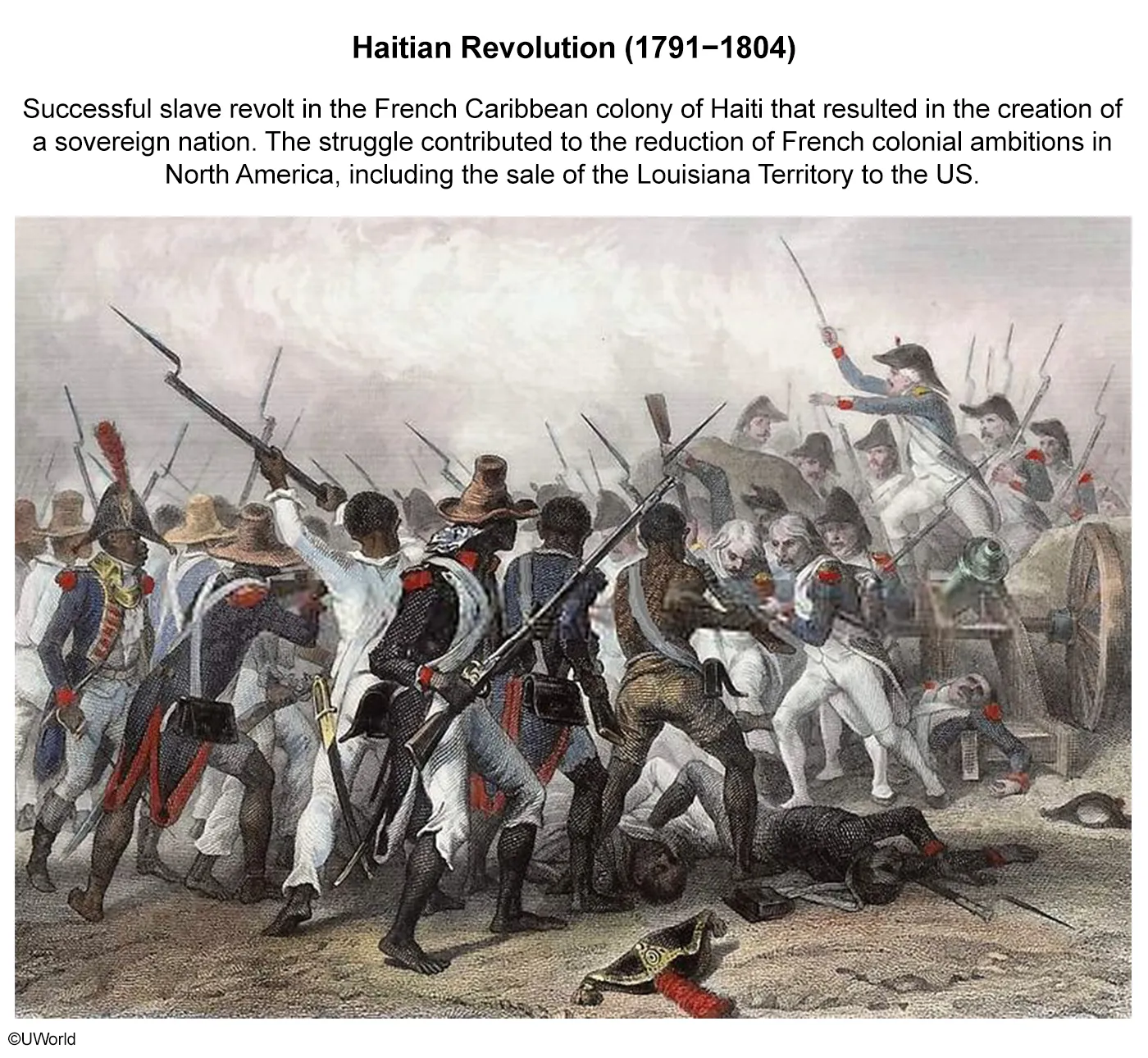
"[T]he value of St. Domingo is beyond calculation. That part of which belonged to France before the war, about one third of the island, and the least fertile, was more productive than all of the British West India islands together…. It was clear that if France could only hold St. Domingo as a colony…that alone would be worth all the colonies which the other European states possess….
There were three classes of men in the island: the whites, mulattoes*, and the blacks. Notwithstanding the levelling sentiments which prevailed in the French army, the garrisons of St. Domingo at first sided with the two former classes who were the proprietors against the claims of the blacks. The whites and the mulattoes afterwards quarreled among themselves and the French garrisons were too feeble to interfere….
When the continuance of war in Europe put it out of the power of France to send any reinforcements to St. Domingo, and the island appeared likely to become an English colony [in 1798], the republican troops were obliged to call in the aid of the blacks to repel the English. In order to make of [former] slaves' enthusiastic soldiers, no less a promise than that of liberty was held out to them. It was for liberty that they stood with fidelity to their posts, bravely met the dangers of battle, and without assistance from the mother country, defended the colony against the power of Great Britain…. "
"A Sketch of the War of St. Domingo," 1804
Question
The ethnic makeup of St. Domingo, as described in the passage, can best be used as evidence of which of the following?
| A. The development of an encomienda system as an alternative to slavery | |
| B. The economic tensions that gave rise to industrialization throughout the Caribbean | |
| C. The dependence on a plantation system that contributed to economic improvement for some mulattoes | |
| D. The emergence of ethnic tensions between Blacks and mulattoes who were fighting for the same economic benefits |
Explanation
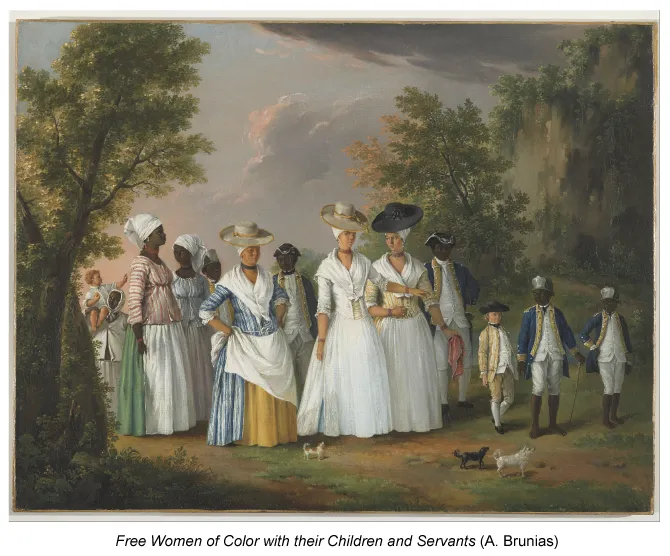
By the late 1700s, St. Domingo (Haiti) was the most economically productive European colony in the Caribbean. Haiti's enormous wealth was made possible by the plantation system, which relied on African slave labor. Over time, the forced migration of slaves created a unique ethnic and social situation. Most notably, it resulted in opportunities for economic improvement, including land and plantation ownership, for some mulattoes and former slaves (free people of color).
The population of colonial Haiti included three general social and ethnic groups:
- White plantation owners and overseers (5% of the population).
- Free people of color and mulattoes (7% of the population).
- Slaves (88% of the population).
Mulattoes and free people of color could become economically prosperous, but always held lower social status and power than White plantation owners and overseers. Prior to the Haitian Revolution, free people of color and mulattoes owned nearly one-third of Haiti's plantations and a quarter of its slaves. This enabled them to obtain a high level of economic freedom.
(Choice A) The encomienda system was an early form of coerced labor in Spanish America that used native labor and predated the slave trade.
(Choice B) The quote references plantation-based agricultural wealth and political conflicts, with no direct mention of shifts toward industrialization, which developed much later in the Caribbean, beginning in the late 19th century.
(Choice D) Tensions between mulattoes and Blacks weren't due to competition over the same economic benefits because mulattoes had access to economic benefits, such as education and property ownership, that Blacks did not.
Things to remember:
By the 18th century, the forced migration of slaves created the mixing of African and European cultures and peoples. Haitian mulattoes and free people of color were afforded a unique opportunity to own plantations and obtain a high level of economic prosperity.
Review Unit 4 Whenever You Have a Free Moment
Short pockets of time can become meaningful study sessions. Watch a quick video on new maritime technologies, work through AP World History Unit 4 MCQ sets during a break, or revisit explanations between classes. The UWorld app helps you stay consistent and confident throughout your preparation.
Stand Out
with a Top Score in AP World History: Modern
Finish your AP World History Unit 4 review and continue mastering all units with UWorld. Our AP World History course is designed to boost your performance and help you impress admissions.
Get our all-in-one course today!
- Focused APWHM Videos
- Print & Digital Study Guide
- 500+ Exam-style Practice Questions
- Customizable Quiz Generator
- Adjustable Study Planner
- Realistic Timed Test Simulation
- Colorful Visual Explanations
- Progress Dashboard
- Smart Flashcards & Digital Notebook
Hear From Our AP Students
UWorld’s service is pretty good and helps provide a lot of explanations on subjects I haven’t been confident on before.
The questions here are the most realistic to the AP tests I've seen so far! I appreciate the ability to customize tests as well.
The best part is that all options are well-explained, telling clearly why they are not the right option.
Frequently Asked Questions (FAQs)
What are the main topics covered in AP World History Unit 4: Transoceanic Interconnections?
AP World History Unit 4 explores how sea-based exploration reshaped global connections between 1450 and 1750. This era introduced major maritime technologies, long-distance voyages, centralized state control, and new trade routes that linked the world more directly than ever. Understanding these themes helps you see how global networks influenced the development of empires, economic growth, and cultural change. UWorld helps you learn these ideas through clear explanations that strengthen your AP World History Unit 4 review.
Key topics in Unit 4 include:
- The influence of scientific learning and technological innovation
- The Columbian Exchange
- Development and expansion of maritime empires
- Internal and external challenges to state power
- Changes to social hierarchies linked to the spread of empires
When you understand how these developments connect, Unit 4 becomes much easier to navigate. You begin to see why global interaction accelerated, how states competed for wealth, and why the world economy changed so dramatically. This prepares you well for AP World History Unit 4 MCQs, SAQs, FRQs, and classroom exams.
How should I prepare for an AP World History Unit 4 exam?
To prepare effectively for Unit 4, you must understand how early modern exploration transformed political, economic, and cultural systems worldwide. This unit rewards students who can connect causes and consequences rather than memorize lists of explorers or ships. A structured resource like UWorld helps because explanations guide you through the reasoning behind each development.
A strong Unit 4 study plan includes:
- Reviewing why European states began maritime exploration
- Understanding the Columbian Exchange and its global impact
- Studying how new sea-based empires formed and consolidated power
- Comparing the economic systems that supported expansion, including mercantilism
- Practicing stimulus-based questions involving maps or primary sources
- Working through AP World History Unit 4 practice test items regularly
With this approach, the unit becomes easier to understand. You start to recognize patterns in global interaction and explain how early modern expansion reshaped world history. This builds confidence for both classroom assessments and the AP exam.
Are any free resources available for AP World History Unit 4?
Yes, several free resources can help you start preparing for AP World History Unit 4, and the best first step is UWorld’s free 7-day trial. It provides access to guided videos, interactive study guides, and realistic AP World History Unit 4 practice questions that clearly explain exploration, global exchange, and maritime empire building.
Beyond UWorld, many teachers share free Unit 4 vocabulary lists, summary sheets, and timeline notes. You can also find maps, short video explainers, and article-based resources that break down the Columbian Exchange, new technologies, and the rise of global trade. AP Classroom provides topic questions and progress checks aligned with the exam, which helps you understand how the College Board tests Unit 4 content.
While these free tools are helpful, they usually lack detailed explanations, especially when it comes to cause-and-effect reasoning. That is why combining free materials with UWorld’s explanation-driven practice gives you the clarity you need to perform well on MCQs, SAQs, and FRQs.
What types of questions are on the AP World History Unit 4 test?
The AP World History Unit 4 test includes multiple choice questions, SAQs, and FRQs that ask you to interpret evidence, identify patterns, and understand the global effects of maritime expansion. Rather than memorizing the names of explorers, you need to understand why states invested in long-distance voyages and how new connections shaped economies and societies. UWorld helps you prepare because its explanation-driven questions mirror the exam style, allowing you to understand the logic behind each AP World History Unit 4 MCQ.
You can expect to see:
- Map-based questions involving maritime routes and imperial expansion
- Items testing the causes and consequences of the Columbian Exchange
- Questions about mercantilism, joint stock companies, and global commerce
- Scenarios illustrating coerced labor, plantation systems, and demographic shifts
- SAQs requiring short explanations of exploration or exchange patterns
- FRQs asking you to analyze how Transoceanic Interconnections reshaped societies
Knowing these formats helps you prepare with clarity and confidence. Instead of memorizing facts, you learn to connect voyages, empires, and exchange systems in meaningful ways. This improves performance on both practice assessments and the AP exam.
How can I improve my score on the FRQs and SAQs for Unit 4?
To perform well on Unit 4 SAQs and FRQs, you must explain cause and effect clearly, use accurate evidence, and connect developments across regions. Many students lose points by providing vague explanations that fail to address the prompt. The exam rewards short, direct answers grounded in historical reasoning. UWorld helps because its explanations model how to structure clear, evidence-based responses for AP World History Unit 4 SAQ and FRQ tasks.
A strong writing strategy includes:
- Using specific evidence from exploration, global trade, and new labor systems
- Explaining the consequences of technologies like caravels or lateen sails
- Referencing demographic and environmental shifts from the Columbian Exchange
- Using precise examples of state-sponsored exploration and empire-building
- Organizing responses clearly rather than writing long paragraphs
- Practicing with prompts until your reasoning becomes concise and consistent
Once you follow this approach, written questions become much easier. You gain confidence explaining how transoceanic connections reshaped the early modern world and learn to write answers that match AP scoring expectations.
What is the "Transoceanic Interconnections" unit's weight on the AP World History exam?
Transoceanic Interconnections form one of the most significant turning points in the AP World History course, accounting for 12-15% of the exam score, marking the beginning of a truly global world. Between 1450 and 1750, maritime exploration linked regions across the Atlantic, Pacific, and Indian Oceans, transforming economies, environments, cultural exchanges, and political systems. Understanding these connections helps you explain why European states expanded, how empires consolidated power, and how newly connected regions experienced profound demographic changes.
Many AP World History Unit 4 MCQ questions require interpreting maps, excerpts, or charts related to the Columbian Exchange, new economic systems, or maritime technologies. SAQs and FRQs often ask you to analyze cause and effect, compare global networks, or evaluate shifts in labor systems and commerce. When you understand the deeper logic behind these interactions, you can explain global change with greater confidence. UWorld reinforces this understanding by breaking down complex developments into clear, logical steps. Mastering Unit 4 gives you a foundation for the rest of the course because global connections continue to shape every subsequent unit.
What should be in your AP World History Unit 4 study guide?
A strong AP World History Unit 4 study guide should help you understand why maritime exploration expanded, how empires reshaped global trade, and how the Columbian Exchange transformed societies on multiple continents. Unit 4 contains many cause-and-effect relationships, and without a clear guide, it becomes easy to misinterpret major developments. A structured resource like UWorld supports your AP World History Unit 4 study guide review by breaking complex topics into simple, visual explanations.
A high-quality Unit 4 study guide should include:
- Explanations of key maritime technologies and why they improved navigation
- Clear summaries of European exploration motives and strategies
- Charts comparing the major maritime empires and their economic systems
- Diagrams and maps showing new routes and commercial exchange patterns
- Coverage of the Columbian Exchange and its global consequences
- Practice questions that reinforce reasoning instead of memorization
With a guide like this, the unit becomes more manageable. You stop treating voyages, empires, and economic changes as separate events and start understanding how they formed a connected global system. This prepares you well for the AP World History Unit 4 review tasks, MCQs, and essay responses.
Can I find practice tests specifically for APWH Unit 4?
Yes, you can find practice tests that focus specifically on Unit 4, and they are essential for mastering the stimulus-based format of the AP exam. These tests help you interpret maps, charts, and excerpts related to maritime exploration, global trade, and early modern empires. A resource like UWorld strengthens your preparation because its explanations break down why each answer fits historical evidence, giving you confidence as you complete the AP World History Unit 4 practice test questions.
A strong Unit 4 practice test should include:
- Map analysis questions involving new maritime routes
- Items testing motives behind European exploration
- Scenarios showing changes caused by the Columbian Exchange
- Questions about mercantilism and early global commerce
- Evidence-based items involving imperial expansion and state power
- Detailed explanations for both correct and incorrect answers
Practicing these question types helps you understand the exam’s logic. You learn how to read sources more effectively, apply historical reasoning, and accurately connect global developments. This leads to stronger performance on the AP exam and classroom assessments.
How can I prepare for the AP World History Unit 4 progress check in AP Classroom?
Preparing for the AP World History Unit 4 progress check requires a strong understanding of maritime exploration, global exchange, and the early modern economic systems that developed from these interactions. The progress check MCQs focus on cause and effect, comparisons, and interpreting stimulus materials such as maps or short passages. Start by reviewing maritime technologies, patterns of European expansion, and the consequences of the Columbian Exchange. Then work through maps showing new routes and empire building to strengthen your spatial understanding.
UWorld helps you prepare because its question explanations mirror the reasoning used in AP Classroom, showing you how to identify key clues and eliminate distractors. Once you complete a round of practice, return to any weak areas and revisit those themes in your notes or study guide. With deliberate review and strong practice habits, the Unit 4 progress check MCQs for AP World History become far more manageable and help you build exam confidence.
What are the most common mistakes students make when studying AP World History Unit 4?
Students often struggle with Unit 4 because they try to memorize every example rather than understanding the larger processes that shaped the early modern world. Many misunderstand cause and effect or confuse developments across empires. UWorld helps reduce these mistakes because explanations show how to connect evidence with broader historical changes.
Common mistakes include:
- Memorizing explorers without understanding why voyages happened
- Mixing up how different empires controlled trade and governed colonies
- Confusing the Columbian Exchange with general trade expansion
- Ignoring environmental changes caused by biological exchange
- Misunderstanding mercantilism and early commercial systems
- Providing vague examples in written questions instead of clear evidence
- Treating labor systems as separate rather than linked to global economic growth
Recognizing these mistakes early helps you avoid shallow memorization and focus on the deeper logic behind Unit 4. This improves your performance on AP World History Unit 4 practice questions and written responses.
How can I study effectively for AP World History Unit 4 MCQs?
Studying for Unit 4 MCQs requires understanding the logic behind maritime expansion rather than memorizing names or dates. Most MCQs focus on interpreting maps, analyzing primary source excerpts, or identifying cause-and-effect patterns linked to exploration, empire-building, and global exchange. The more you understand these relationships, the easier it becomes to answer questions quickly and accurately. UWorld helps because its explanations guide you through historical reasoning, making your AP World History Unit 4 MCQ practice more effective.
A strong MCQ study plan includes:
- Reviewing maritime technologies and why they encouraged exploration
- Studying the motives of European states and comparing their approaches
- Analyzing the Columbian Exchange and its demographic and environmental impact
- Practicing with maps showing new routes, empire growth, and trade flows
- Interpreting excerpts from travelers, officials, or merchants
- Working through AP World History Unit 4 practice test questions regularly
When you follow this structure, you start recognizing patterns quickly. You understand why states invested in exploration, how economic systems evolved, and how global interactions expanded. This leads to stronger accuracy on both progress checks and the AP exam.
Can I study AP World History Unit 4 offline if needed?
Yes, you can study AP World History Unit 4 offline, which is helpful if you want to review key concepts during commutes or in places with limited internet access. Much of Unit 4, including maritime technologies, exploration motives, the Columbian Exchange, and the rise of sea-based empires, can be reinforced through printed maps, summaries, and quick review sheets. UWorld supports offline studying by allowing you to download question sets and revisit explanations without needing a WiFi connection.
This lets you work through AP World History Unit 4 MCQ problems, review cause-and-effect patterns, and strengthen your understanding of global exchange while on the go. Once you reconnect, the UWorld mobile app syncs automatically, so nothing is lost. Offline study also allows you to revisit complex topics repeatedly, helping you build confidence in areas such as mercantilism, new trade networks, and demographic change. When combined with active review and spaced practice, offline studying becomes a powerful way to stay consistent and prepare thoroughly for the AP exam.