AP® World History: Modern Unit 3 Review and Practice Test
Deepen your understanding of AP® World History Unit 3 with clear lessons, detailed study guides, and realistic practice test questions that explain land-based empires, powerful rulers, and the major political and cultural developments of this period.
Strengthen Your Prep with an AP World History Unit 3 Review
Build a strong understanding of land-based empires with an AP® World History Unit 3 review that clearly explains political structures, expansion strategies, and major rulers. These resources help you connect key developments across regions so you can feel more confident heading into the AP World History exam.
Engaging Video Lessons
Explore AP World History Unit 3 with video lessons that break down the rise, expansion, and administration of land-based empires. Each lesson highlights major rulers, key conflicts, and political developments across regions. These AP World History Unit 3 videos make complex historical themes easier to understand and connect.
Interactive Study Guides
Work through AP World History Unit 3 with study guides that simplify land-based empires, governance systems, military expansion, and cultural influence. These AP World History Unit 3 study tools help you connect themes across empires and prepare confidently for exam-style questions.
AP World History Unit 3 Practice Questions for Exam Success
Passage
Source 1:
"There are about 20 different tribes or clans among the Muslims in Kashmir…. The Sunnis, or orthodox Muslims, far outnumber the Shi'as…: of the latter, who are followers of Ali,* there were said to be only 1,000 houses, numbering about five or six thousand souls…. Though so few in number, the men of this sect form the most active, industrious, and well-to-do portion of the Muslim community. The finest papier-mâché workers and shawl makers in Srinagar are Shi'as, and some of the wealthiest men in the city belong to that sect.
A deadly feud has ever** existed between these two great divisions of the Muslims…. [In] September 1872… disturbances…raged for more than a week, and…whole districts were reduced to smoldering heaps of ruins…. The Shi'as fled in every direction…. Many of the women and children of the Shi'as found asylum from the hands of their infuriated co-religionists in the houses of the Hindu portion of the community….
Here and there colonies of Pathans and Sikhs have settled in the valley of Kashmir; as might be expected, the latter are the most numerous….
The farmers are nearly all Muslims, and in Kashmir the burner of dead bodies (Hindus) is always a Muslim…. The shawl-weavers…in the valley of Kashmir, are Muslims…. A first-rate shawl-weaver will earn from four pence to five pence of our money a day…. The number of these people [Shi'as] has greatly diminished of late years. Many…have made their escape to the Punjab with their wives and families."
Source 2:
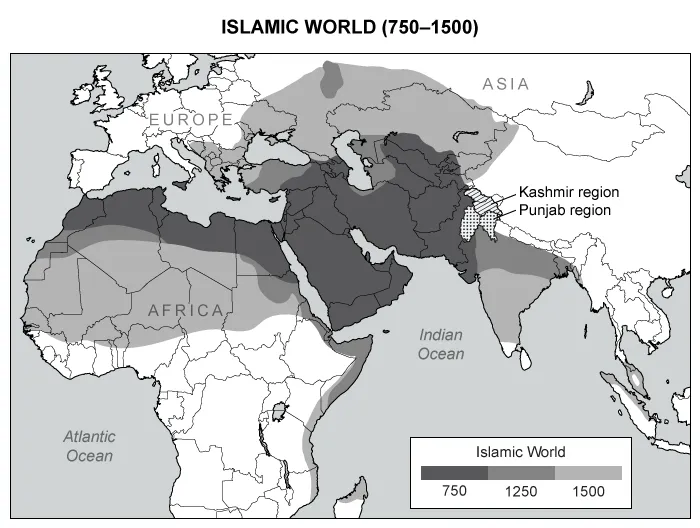
Charles Ellison Bates, British historian, 1873
Question
The eastward spread of Islam reflected in the two sources most directly contributed to which of the following?
| A. The Asian rejection of Buddhist values after circa 1500 | |
| B. The development of Sikhism caused by blending religious ideas | |
| C. The transfer of East Asian medicine and technologies through the Indian Ocean trade network | |
| D. The adoption of Ottoman tax farming methods by the Mughal Empire |
Explanation
"The Sunnis, or orthodox Muslims, far outnumber the Shi'as….
Many of the women and children of the Shi'as found asylum from the hands of their infuriated co-religionists in the houses of the Hindu portion of the community….
Here and there colonies of Pathans and Sikhs have settled in the valley of Kashmir; as might be expected, the latter are the most numerous….
The number of these people [Shi'as] has greatly diminished of late years. Many…have made their escape to the Punjab with their wives and families."
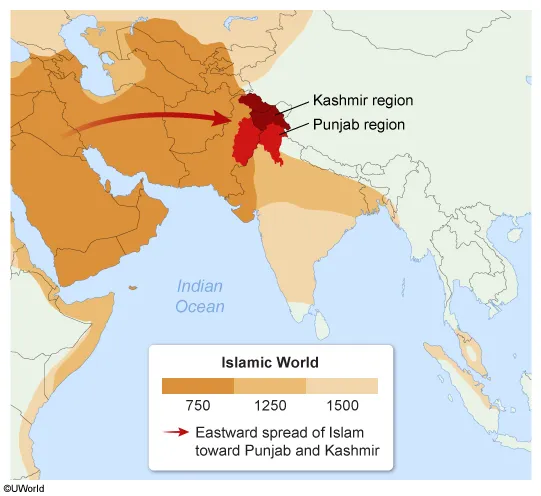
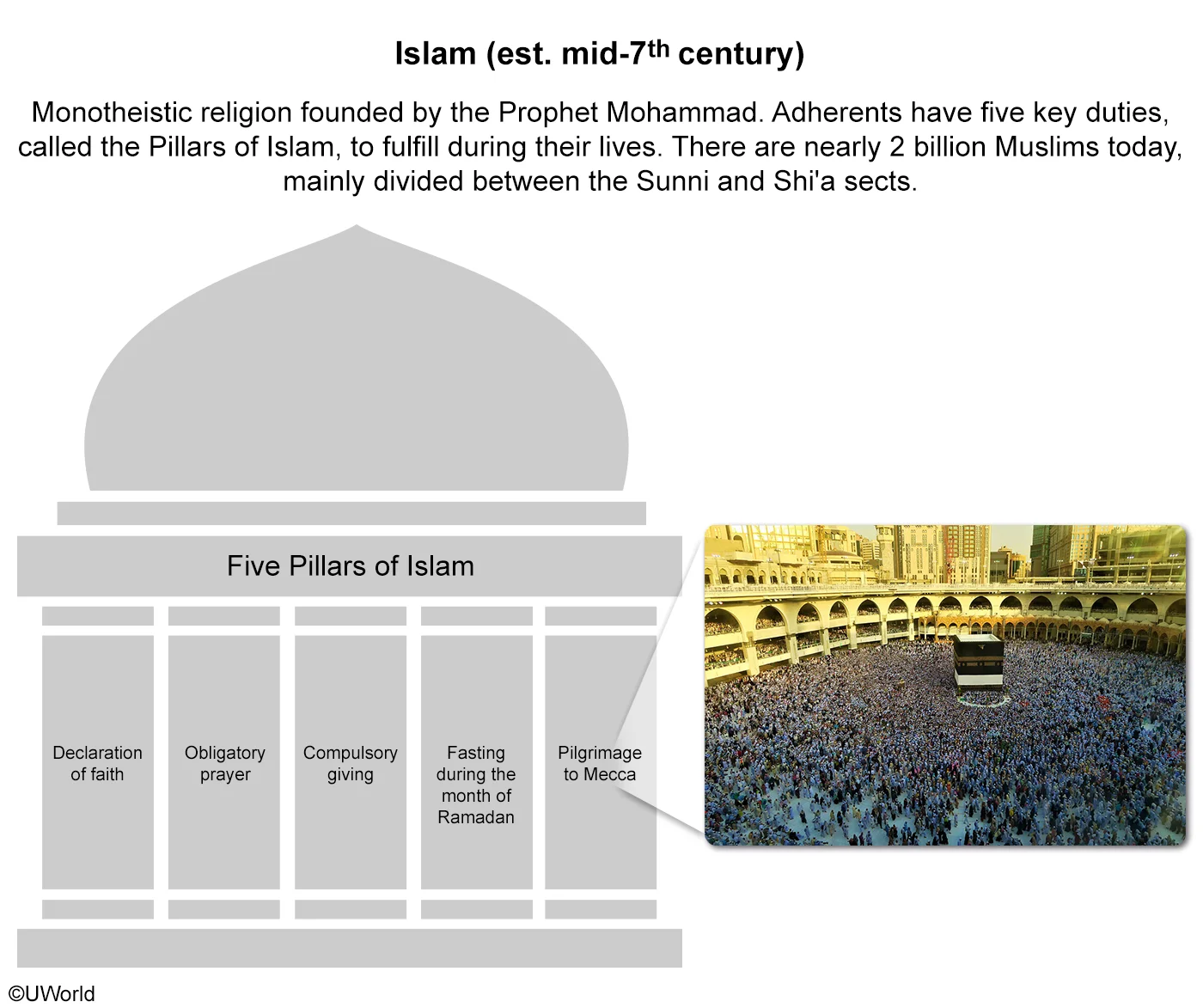
In the passage, Charles Bates highlights how Kashmir and Punjab were historical melting pots of religious traditions by referencing the regions' Muslims, Hindus, and Sikhs. Islam first reached India in the mid-700s and, by the 1100s, had integrated into northern India's Hindu-dominated culture.
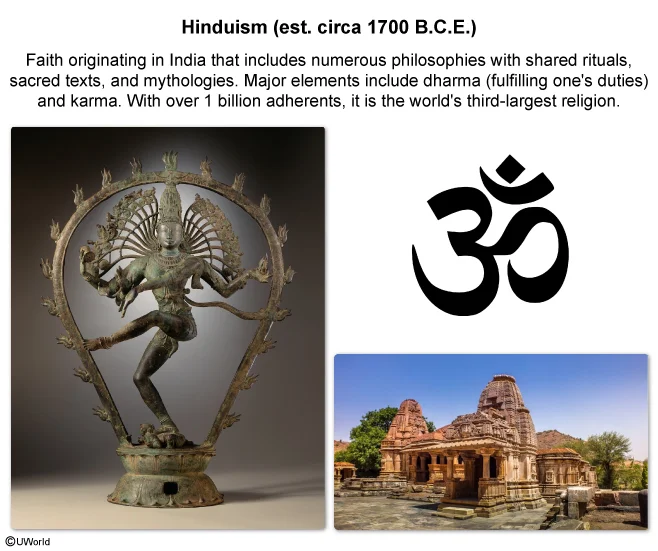
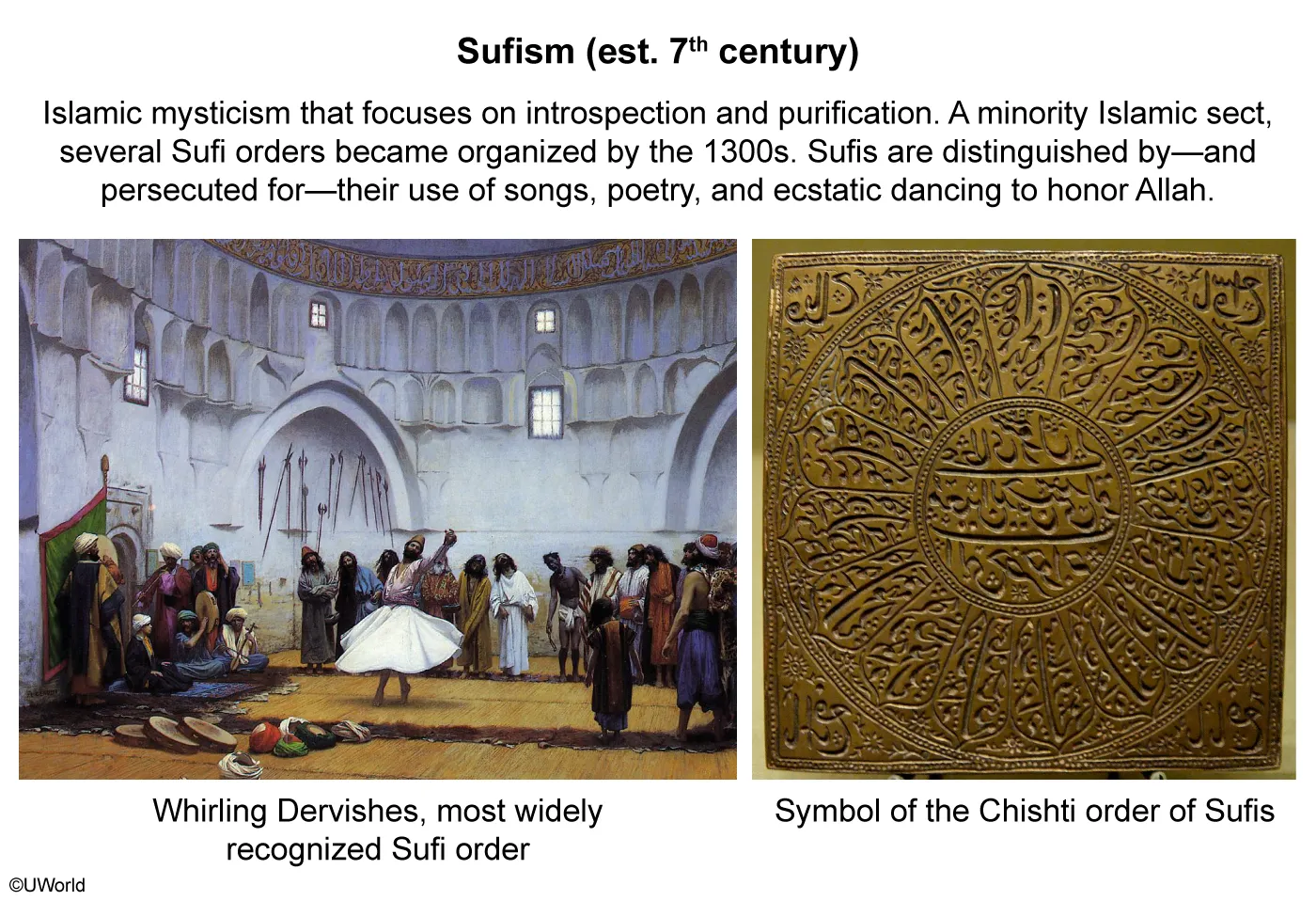
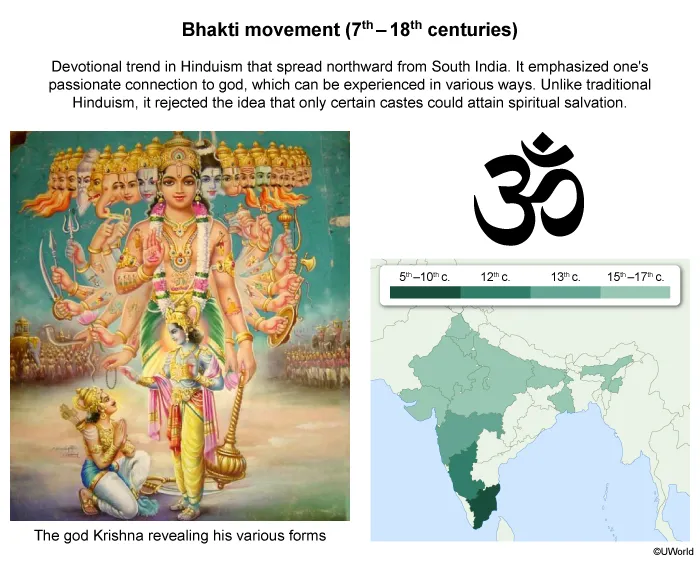
By the late 1400s, Sufism and Hinduism's Bhakti movement merged through Guru Nanak, Sikhism's founder. Born into a Hindu family in Punjab, Nanak's teachings in the Sri Guru Granth Sahib incorporated Hindu principles such as reincarnation and karma. Deeply influenced by Sufism, Nanak also incorporated Islam's:
- monotheistic view.
- rejection of idol worship.
- prophets and saints in his scriptures.
This blending of Hindu and Sufi traditions reflects the interaction of faiths within the region. Therefore, the eastward spread of Islam contributed to the development of Sikhism through the convergence of Sufism and Hinduism under Guru Nanak.
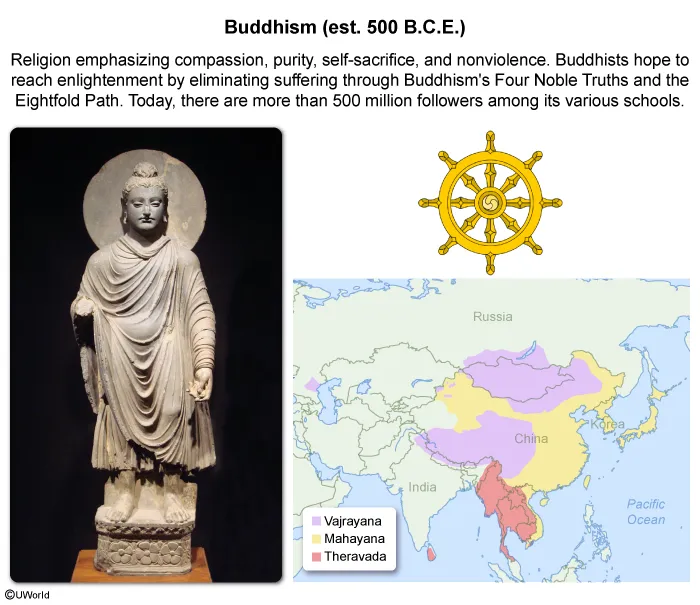
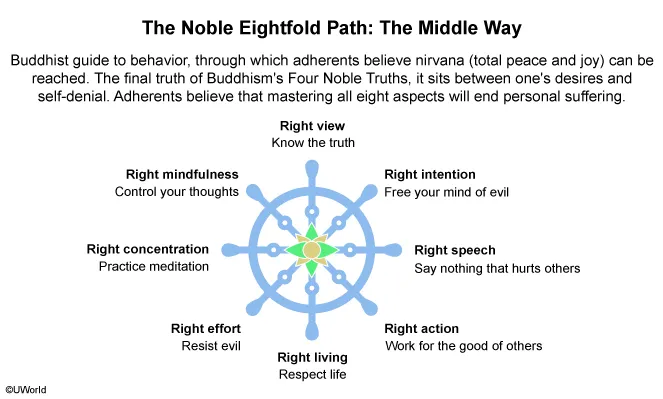
(Choice A) Although Islam had spread into South Asia before the 1500s, Buddhist values, such as the Eightfold Path, continued to be practiced there after 1500.
(Choice C) Islam spread eastward toward Asia, and East Asian medicines and technologies flowed westward.
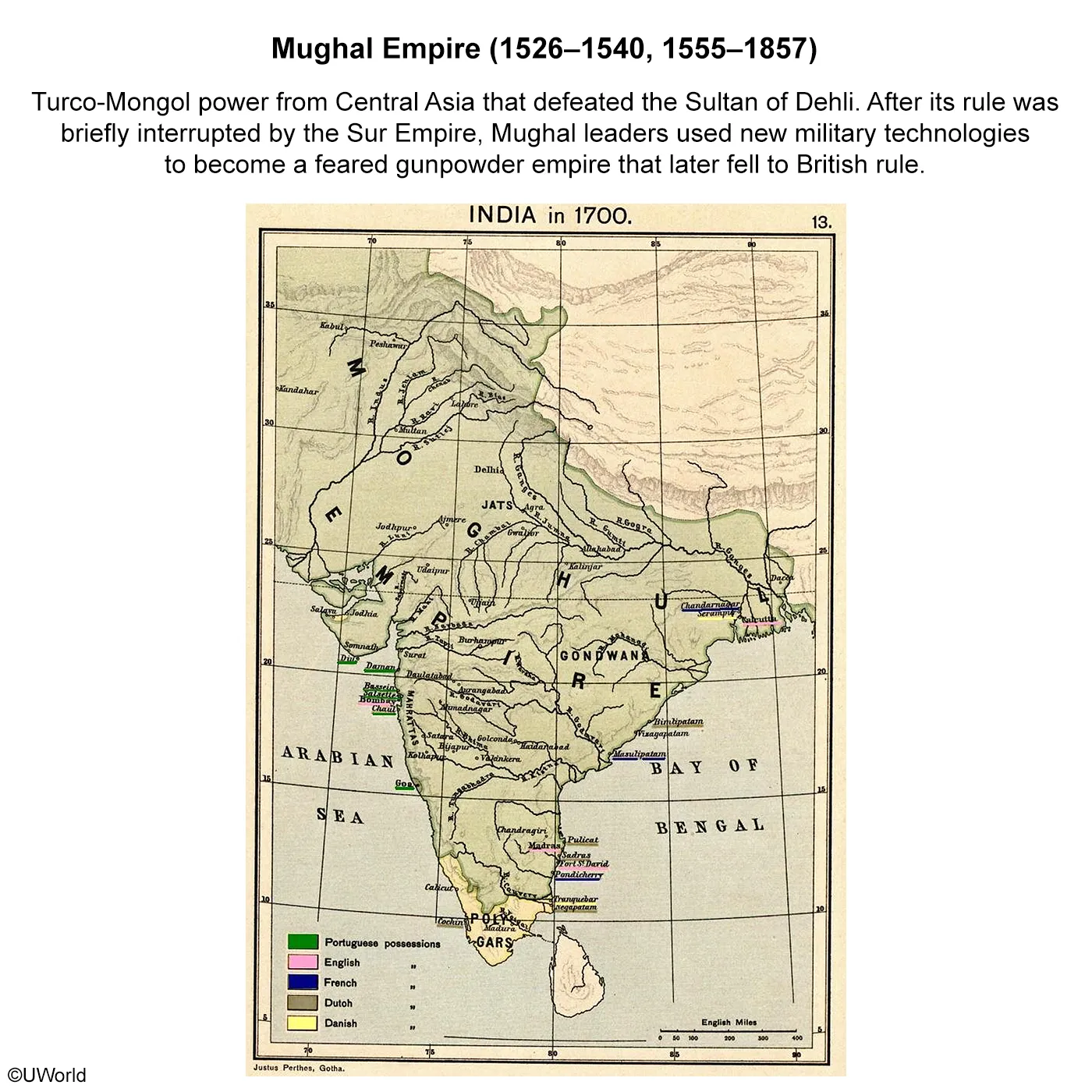
(Choice D) The Mughal's tax farming system emerged from Indian traditions, not the Ottoman's Iltizām system.
Things to remember:
Islam's eastward spread led to the development of Sikhism under Guru Nanak's blending of Sufi and Hindu principles and beliefs.
Passage
"In 1620–21, Shah Abbas I marched to recover the provinces of Kandahar and Zamīn Dāvar,* which the Mughal emperors had neglected to hand back to Iran, despite their earlier bonds of friendship with the Safavids. He wrested these provinces from Shah Salim, the son of Emperor Jalāl al-Dīn Akbar. Similarly, Shah Abbas aspired to recover the province of Arab Iraq, which had always belonged to the kings of Iran and which had been in qezelbāš** hands during the reign of [Abbas' grandfather and great-grandfather], but had then been occupied by the Ottomans. A mutiny of Ottoman troops at Baghdad gave him his chance. In 1621–22, he marched to Baghdad and brought Arab Iraq back under Safavid control."
Eskandar Beg Monshi, Iranian chronicler and court scribe, History of Shah Abbas the Great, 1629
Question
A historian would most likely use the passage to illustrate which of the following?
| A. The difficult nature of maintaining land empires in relation to neighboring powers | |
| B. The positive effects of enslaving populations for military and administrative positions | |
| C. The emergence of West Asian governments supported by the broad application of democratic ideals | |
| D. The trade advantages gained by diasporic trade communities |
Explanation
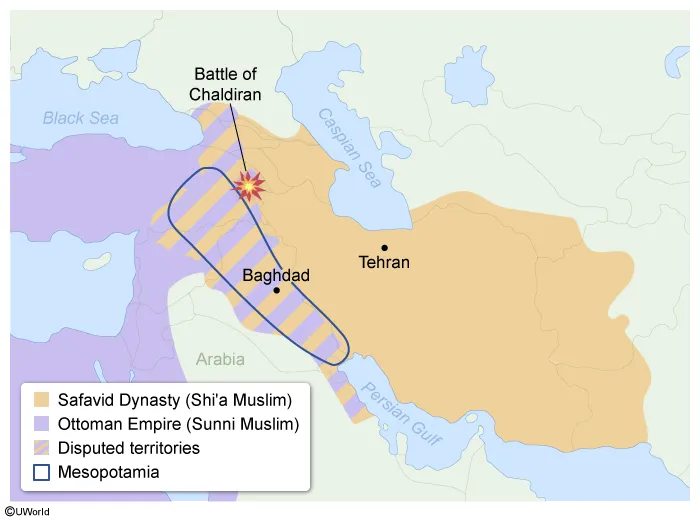
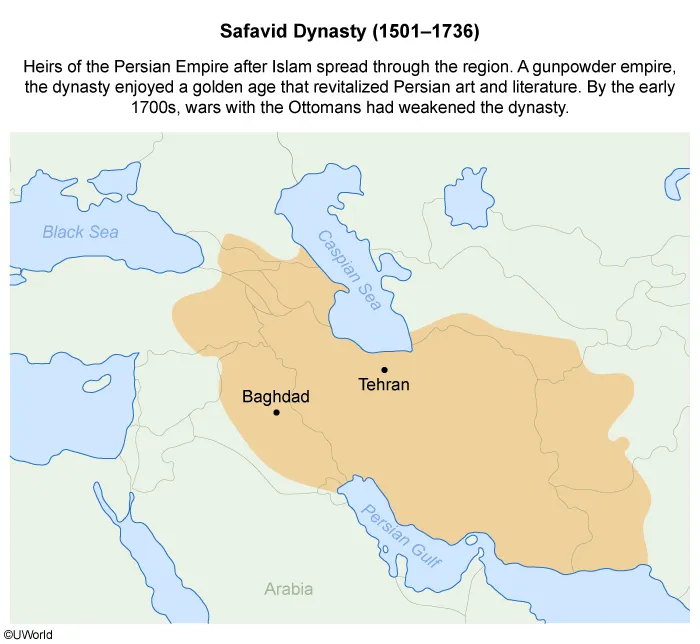
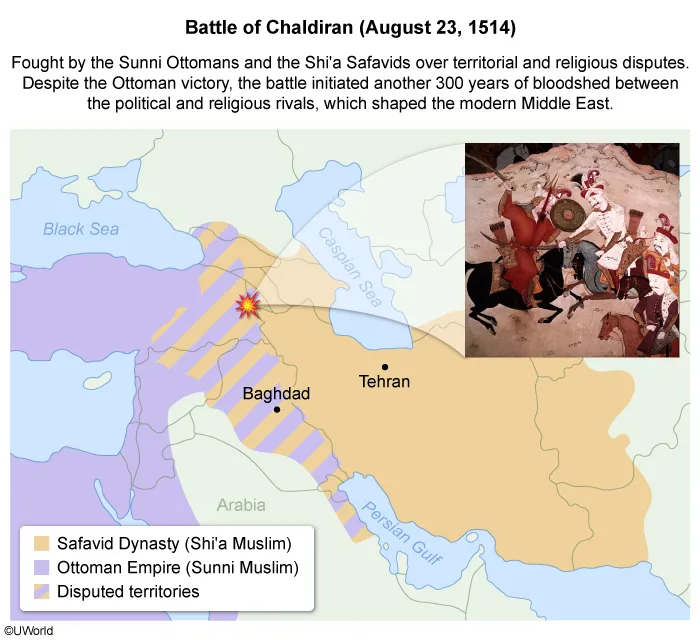
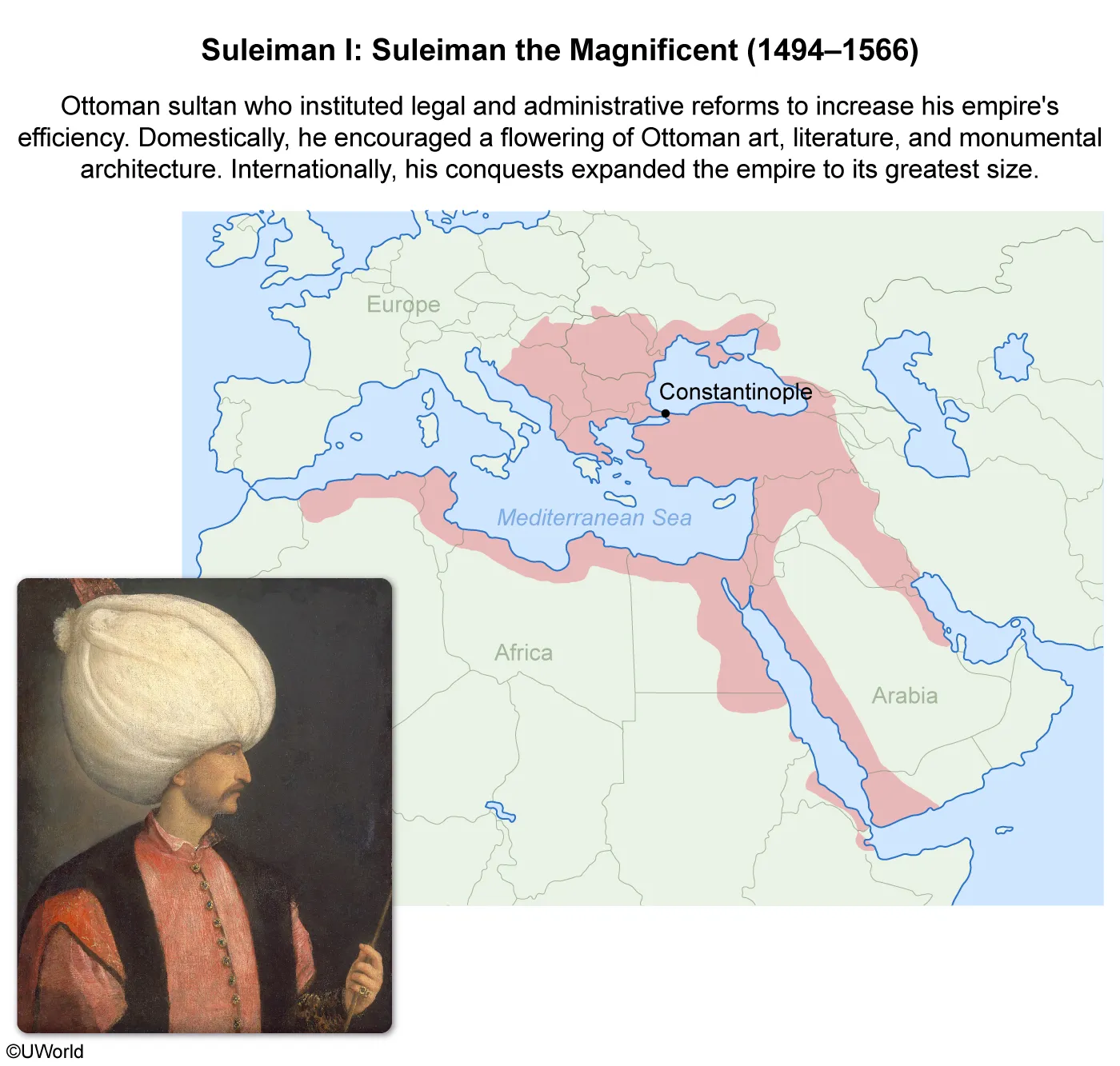
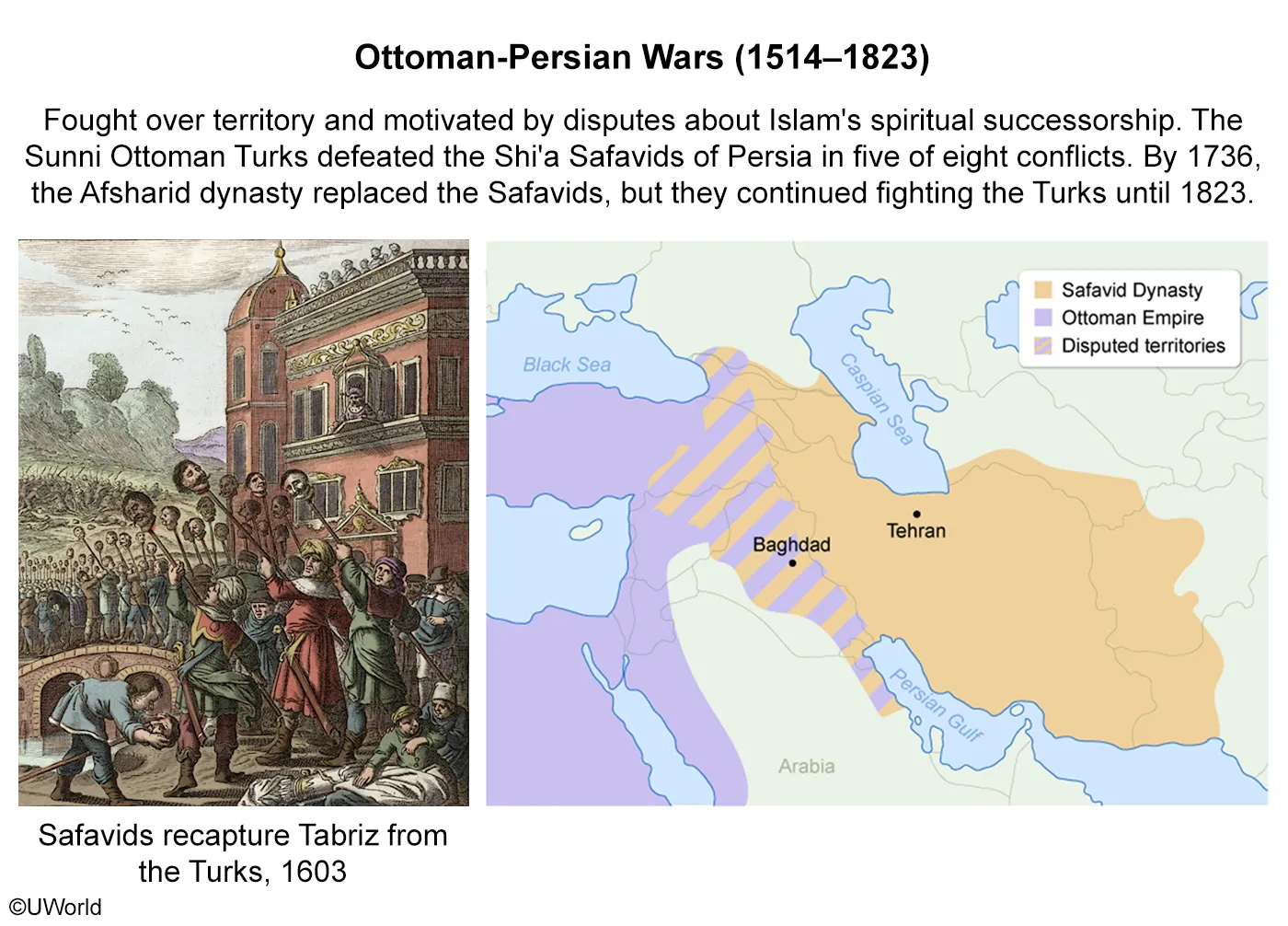
When the Safavid Empire was founded in 1501, its territories included the entire Mesopotamian region, including what Eskandar Beg Monshi calls "Arab Iraq." However, in 1514, the Safavids lost the Battle of Chaldiran to the Ottomans, who then annexed northern Mesopotamia. By 1555, Ottoman ruler Suleiman I had annexed the rest of the region.
In the early 1600s, the Safavid ruler Shah Abbas I led his armies in the fourth (1603–1612) and fifth (1616–1618) Ottoman-Persian Wars. Although the Safavids won both wars, Abbas failed to "recover the province of Arab Iraq, which had always belonged to the kings of Iran."
In 1622, Abbas captured Baghdad and took control of much of Iraq, leading to the sixth Ottoman-Persian War (1623–1639), but by 1635 the Safavids had lost the city. Therefore, the passage illustrates the difficult nature of maintaining land empires in relation to neighboring powers, a common problem for land-based powers from 1450 to 1750.
(Choice B) The Ottomans and Safavids enslaved peoples to fill military and administrative positions; however, this development is not discussed in the passage.
(Choice C) The West Asian governments mentioned in the passage relied on authoritarian structures, not democratic ideals.
(Choice D) The passage contains no information regarding diasporic trade communities.
Things to remember:
Between 1450 and 1750, land-based powers such as the Safavids faced difficulties in maintaining their empires because of neighboring powers' territorial ambitions.
Passage
"On July 26th, 1473, the lion-hearted Mehmed [II]* had crushed the Persian** ruler Uzun Hasan at Terjan and was now pressing upon his [Christian] enemies in Albania, on the Adriatic, and on the Danube*** frontier…. In June, the Genoese colony of Kassa in the Crimea fell into [Ottoman] Turkish hands; in 1478, Mehmed II appointed the Tartar Mengli Giray as Khan of the Crimea, of the north coast of Pontus, and of Tartary Minor, under Turkish supremacy. Lepanto and Leukas were vigorously assaulted in May 1477. In Albania, Kruja the capital, on June 15th, 1478, Shabljak, Alessio, and Drivasto were captured by the Turks, who repeated their devastating incursions into the Austrian Alps. The Venetian Republic, devastated by a fearful pestilence, then came to the momentous resolution to give up the bloody struggle….
Selim I (1512–1520), an imperious and warlike character, revived the plans of Mehmed II, and threatened Christianity with death and destruction. After poisoning his father Bajazet, two brothers, and five nephews, he built a powerful fleet of 500 sail; conquered the Shah Ismail of Persia at Chaldiran on August 23rd, 1514, after arousing him to fight on Turkish soil by the capture and murder of 40,000 Shiites…."
Heinrich Zimmerer, German historian, 1907
Question
The passage best exemplifies which of the following processes?
| A. The creation of an expansive land-based empire | |
| B. The creation of diplomatic relationships | |
| C. The creation of institutions to organize trade guilds | |
| D. The creation of an infrastructure to promote free trade |
Explanation
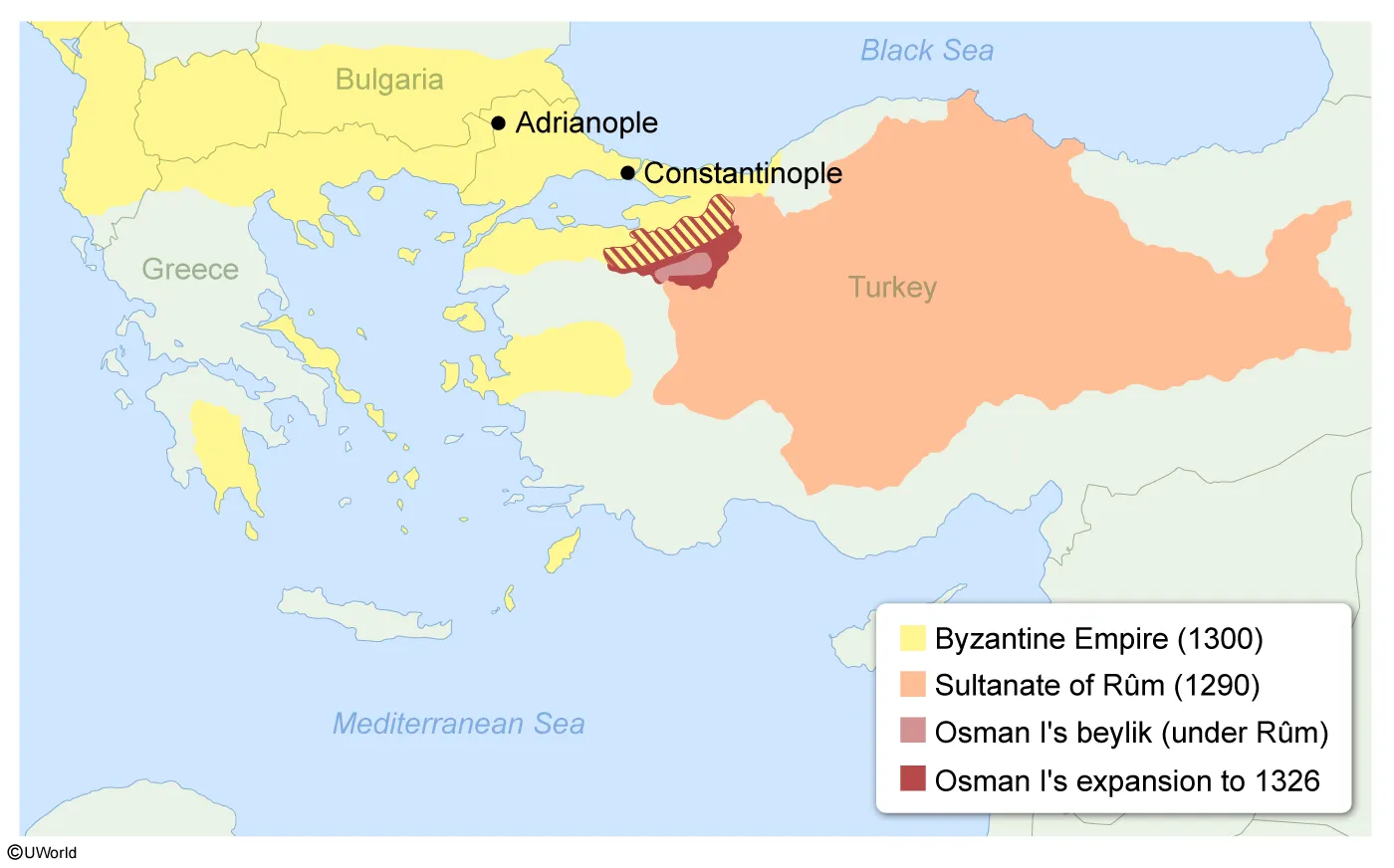
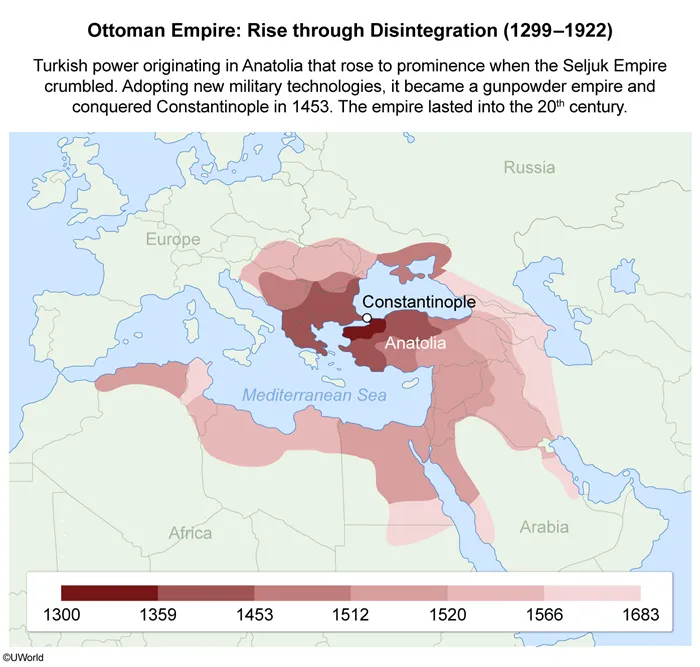
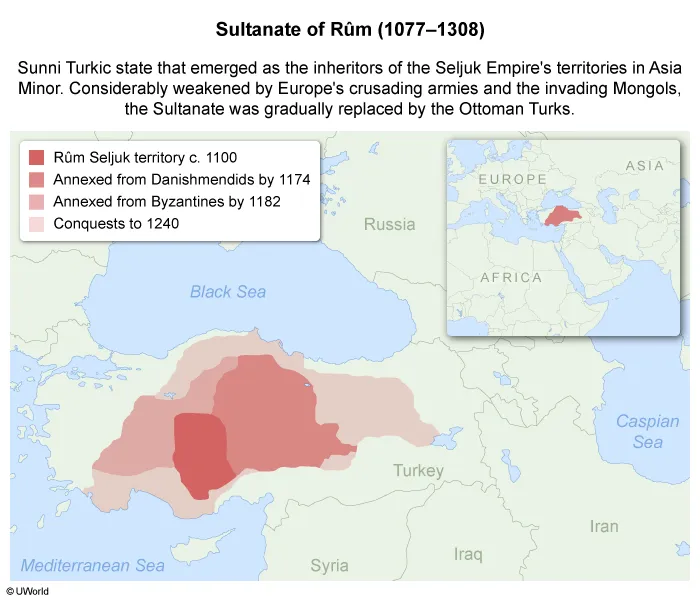
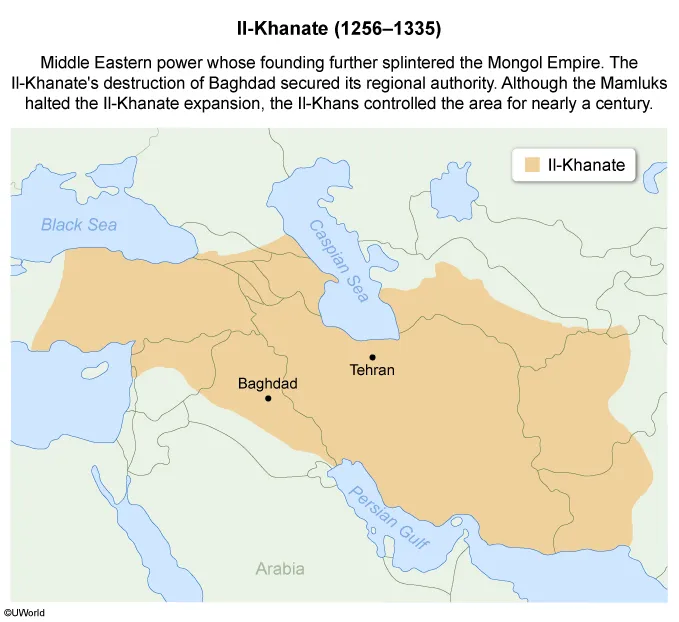
In 1299, Osman I, founder of the Ottoman Empire, was governing a beylik (small territory) in Asia Minor. At the time, Osman owed allegiance to the Sultanate of Rûm, which had been weakened by uprisings and the Il-Khanate's conquests. In the early 1300s, Osman took advantage of the political disorder in Rûm and the Byzantine Empire to expand his territory.
In 1307, the Ottoman beylik became independent, but its boundaries remained within Asia Minor until 1361, when Ottoman armies captured Adrianople. Under the later reigns of Mehmed II and Selim I, the Ottomans conquered additional Eurasian territories, including:
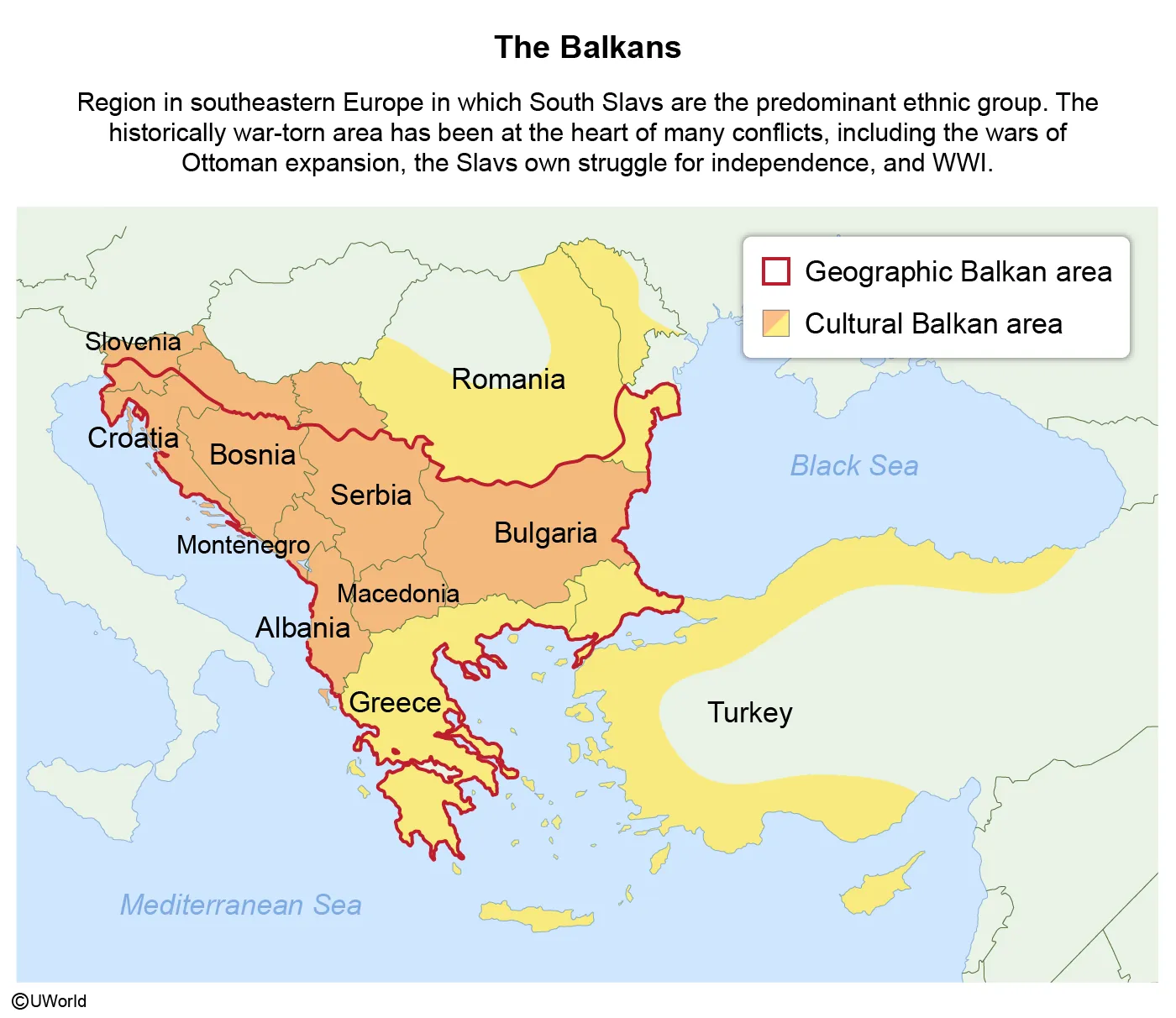
- much of the Balkans.
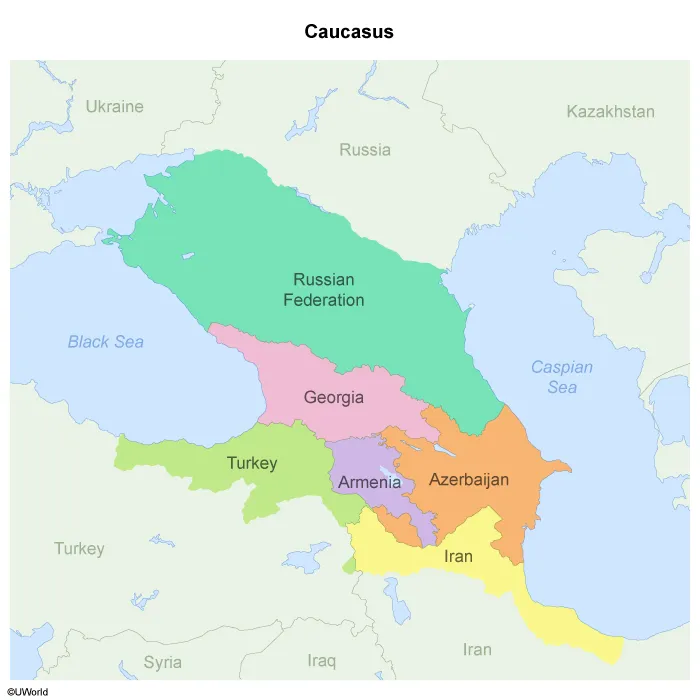
- Crimea and parts of the Caucasus.
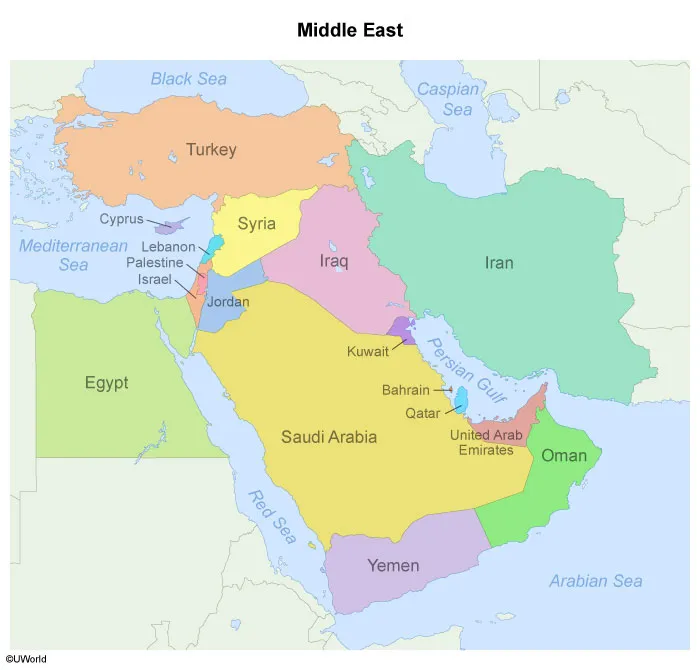
- Palestine and Syria in the Middle East.
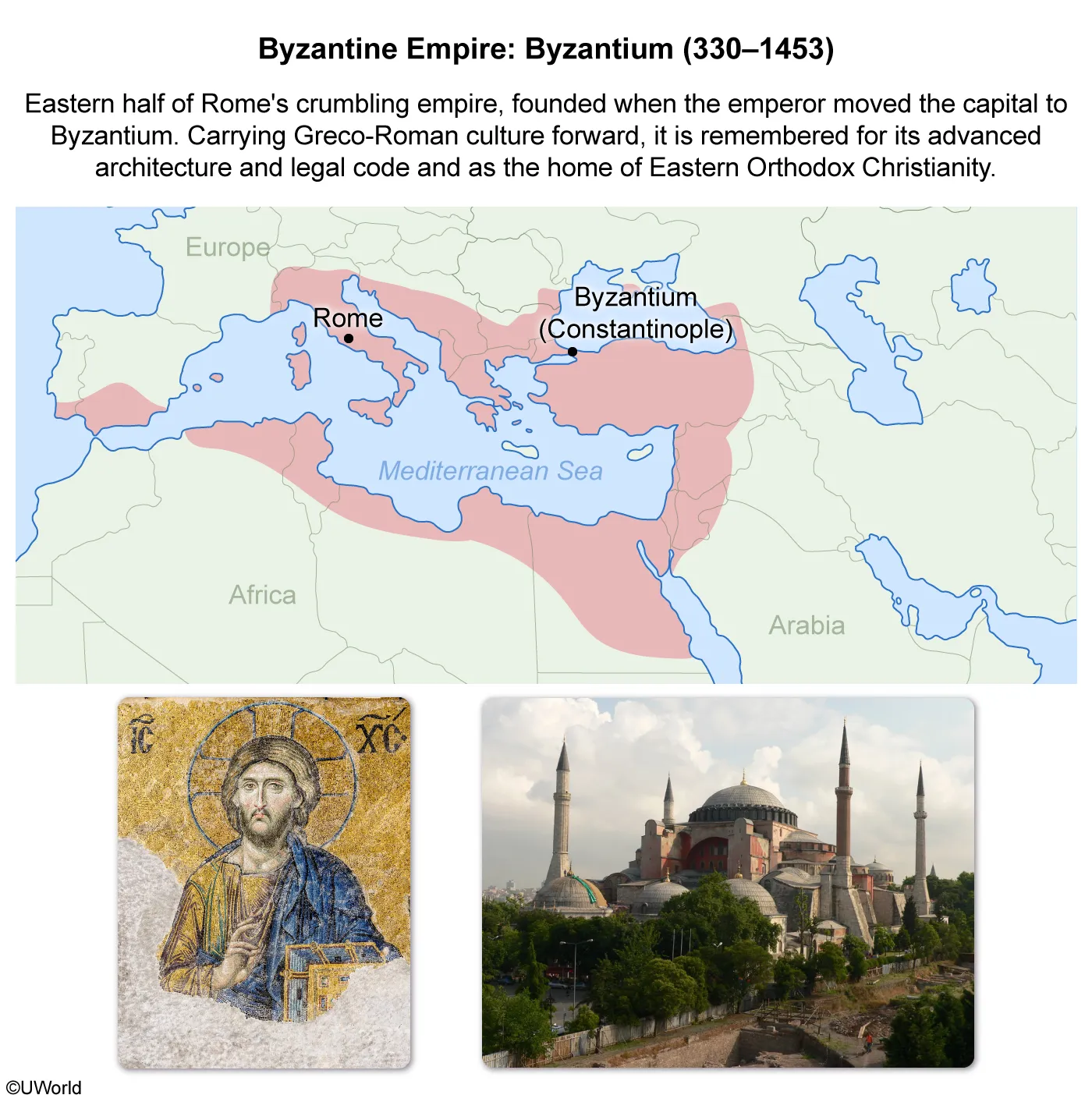
Through its continued use of warfare, including Mehmed II's conquest of Constantinople in 1453, the Ottomans became one of the world's most expansive land-based empires.
(Choice B) The passage demonstrates conquest, not the creation of diplomatic relationships.
(Choice C) The passage discusses empire building, not the creation of institutions to organize trade guilds.
(Choice D) Although the Ottomans engaged in free trade, the passage provides no evidence regarding the creation of infrastructure to promote it.
Things to remember:
Between the mid-1400s and early 1500s, Ottoman rulers conquered vast areas of Eurasia, transforming their state into one of the world's largest land-based empires.

Study Anywhere, Anytime
Study whenever it fits your schedule with quick access to AP World History Unit 3 review tools in the UWorld app. Whether you’re on the way home, between classes, or taking a short break, you can open practice questions, watch focused lessons, or review study guides on land-based empires.
Stand Out
with a Top Score in AP World History: Modern
Finish your AP World History Unit 3 review and continue mastering all units with UWorld. Our AP World History course is designed to boost your performance and help you impress admissions.
Get our all-in-one course today!
- Focused APWHM Videos
- Print & Digital Study Guide
- 500+ Exam-style Practice Questions
- Customizable Quiz Generator
- Adjustable Study Planner
- Realistic Timed Test Simulation
- Colorful Visual Explanations
- Progress Dashboard
- Smart Flashcards & Digital Notebook
Hear From Our AP Students
UWorld’s service is pretty good and helps provide a lot of explanations on subjects I haven’t been confident on before.
The questions here are the most realistic to the AP tests I've seen so far! I appreciate the ability to customize tests as well.
The best part is that all options are well-explained, telling clearly why they are not the right option.
Frequently Asked Questions (FAQs)
What are the main topics covered in AP World History Unit 3: Land-Based Empires?
Unit 3 AP World History focuses on the rise and administration of major land-based empires that reshaped global power in the early modern era. These themes appear across MCQs, SAQs, DBQs, and FRQs, making them essential for a strong Unit 3 review.
Key Topics:
- The development of the Manchu, Mughal, Ottoman, and Safavid empires: How each empire expanded through military power, leadership, and territorial consolidation.
- How rulers of empires maintained their power: Methods such as bureaucracy, taxation, elite soldiers, architecture, and religious authority.
- Religious developments in empires: The use of belief systems to unify populations, justify rule, or respond to cultural diversity.
A strong understanding of these topics helps you interpret political structures, compare empires, and analyze continuity and change skills that directly support success on the AP World History Unit 3 test.
How should I prepare for an AP World History Unit 3 exam?
Effective preparation for Unit 3 involves understanding both the political structures of land-based empires and the connections between them. Comparing rulers, military strategies, and cultural achievements helps reinforce long-term knowledge.
Approach your review by breaking topics into smaller themes and reviewing how they relate across multiple empires. Creating timelines and comparison charts can make similarities and differences easier to remember.
Using UWorld’s AP World History Unit 3 practice questions and study guides helps you apply these concepts to realistic exam scenarios, making your preparation more efficient and focused.
Are any free resources available for AP World History Unit 3?
Yes. Several reliable resources can support early review and help you get familiar with Unit 3 concepts before you begin deeper study.
Start with UWorld’s 7-Day Free Trial, which gives you access to AP World History Unit 3 practice questions, video lessons, and study guides aligned with the AP exam format. College Board AP Classroom offers AP Daily videos and Unit 3 progress checks, which introduce core ideas and test your foundational understanding.
You can also explore Khan Academy’s free AP World History tutorials for topic overviews and basic explanations. These tools create a strong starting point before committing to a full study plan.
What types of questions are on the AP World History Unit 3 test?
The AP World History Unit 3 test includes several question formats that measure how well you understand land-based empires, their political structures, and their cultural and religious developments. You’ll see a mix of stimulus-based questions and writing tasks that require strong historical reasoning skills.
Multiple-choice questions often feature maps, primary-source excerpts, images, or short historical scenarios involving the Ottoman, Safavid, Mughal, or Manchu empires. Short-Answer Questions (SAQs) ask you to explain state-building strategies, identify causes or effects, or compare systems of government. Document-Based Questions (DBQs) require analysis of historical documents tied to Unit 3 themes, while Long Essay Questions (LEQs) ask you to craft an argument about continuity, change, or comparison across empires.
Reviewing AP World History Unit 3 practice test questions helps you get comfortable interpreting evidence, organizing arguments, and responding clearly to each question type.
How can I improve my score on the Free-Response Questions (FRQs) for Unit 3?
Improving your Unit 3 FRQ performance requires clear historical reasoning and effective use of evidence. Focus on writing structured responses that directly answer the prompt while drawing from specific examples from land-based empires.
Spend time reviewing how the Ottomans, Safavids, Mughals, Chinese dynasties, and the Russian Empire legitimized authority and expanded territory. Knowing concrete examples increases your ability to write persuasive, well-supported responses.
Using UWorld’s AP World History Unit 3 explanations helps you see how evidence is integrated effectively, giving you a clearer model for high-scoring FRQs.
What is the "Land-Based Empires" unit's weight on the AP World History exam?
Unit 3 carries significant weight on the entire AP World History: Modern exam score, contributing about 12–15% of the total test. Because it focuses on state building, governance, and military expansion across major land-based empires, this unit shapes a large portion of what students are assessed on.
Multiple-choice questions routinely highlight Unit 3 concepts, and writing tasks, including SAQs, DBQs, and LEQs, often require examples or comparisons drawn from these empires. Understanding the political structures, administrative strategies, and cultural developments of the Ottoman, Safavid, Mughal, and Manchu empires also supports your ability to explain later global shifts in trade, conflict, and industrialization.
A strong AP World History Unit 3 review improves your ability to connect historical themes across periods, write clearer evidence-based arguments, and approach the exam with greater confidence. This foundation is especially helpful when responding to prompts that blend multiple units or require long-term historical thinking.
Where can I find a good study guide for AP World History Unit 3?
UWorld offers one of the most comprehensive AP World History Unit 3 study guides, designed to explain land-based empires in a clear, student-friendly way. The guide breaks down major rulers, administrative systems, religious developments, and military innovations across the Ottoman, Safavid, Mughal, and Manchu empires.
Each topic is supported with visual summaries, comparison charts, timelines, and AP-style examples that help you understand how state-building, political power, and cultural changes unfolded across regions. These tools make it easier to remember key details and connect themes across empires.
UWorld also integrates practice questions directly into its study materials, giving you instant feedback and reinforcing what you’ve learned. This combination of visuals, explanations, and exam-style practice makes UWorld a highly effective resource for mastering Unit 3.
Can I find practice tests specifically for APWH Unit 3?
Yes. UWorld provides AP World History Unit 3 practice test questions that reflect the rigor, style, and structure of real AP exam items. These questions cover land-based empires, state-building strategies, political authority, and cultural developments with detailed explanations that help you understand both the correct and incorrect answer choices.
In addition to UWorld, you can use College Board AP Classroom for Unit 3 progress checks, which include stimulus-based MCQs and short-answer practice aligned with the official curriculum. Khan Academy also offers basic review questions for broader AP World History topics, though the coverage is less detailed than UWorld.
Even with additional resources available, UWorld remains the strongest option for targeted Unit 3 practice because of its realistic questions, high-quality explanations, and exam-aligned design.
How can I compare land-based empires effectively for AP World History Unit 3?
Comparing land-based empires is essential for success on Unit 3 questions, especially SAQs, DBQs, and LEQs. A good comparison starts with identifying common themes such as state building, military systems, religion, and administrative strategies across the Ottoman, Safavid, Mughal, and Manchu empires.
One helpful approach is to create simple charts that highlight similarities and differences in leadership styles, taxation systems, and use of elite military groups. This visual method makes it easier to recall examples quickly during the exam and strengthens your ability to write comparative arguments.
UWorld’s AP World History Unit 3 study guides and practice questions reinforce these comparisons by showing how exam prompts frame relationships between empires, helping you develop stronger analytical skills.
Why is understanding religious influence important in AP World History Unit 3?
Religion played a major role in shaping political power, cultural identity, and social cohesion in Unit 3 land-based empires. Whether through Islam in the Ottoman and Safavid empires, Hindu-Muslim dynamics in the Mughal Empire, or Confucian traditions in China, belief systems had a direct impact on how rulers legitimized authority and governed diverse populations.
Recognizing these connections helps you interpret why empires adopted certain policies, supported specific architectural projects, or relied on religious scholars and advisors. These themes frequently appear in both multiple-choice questions and free-response tasks because they reveal deeper patterns of continuity and change.
Studying religious developments through UWorld’s explanations helps you clearly understand how spiritual authority shaped political power, making it easier to answer exam questions that require detailed historical reasoning.