AP® World History : Modern Unit 1 Review and Practice Test
Review AP® World History Unit 1 with clear lessons and interactive study guides. Work through AP World History Unit 1 practice test questions that explain the Global Tapestry, major states, belief systems, and cultural developments from 1200 to 1450.
Start Strong With a Focused AP World History Unit 1 Review
AP World History Unit 1 introduces the Global Tapestry, showing how regions developed political systems, cultural traditions, belief structures, and technological innovations between 1200 and 1450. With structured lessons and exam-style practice, you’ll be ready to build a solid foundation for every future unit.
Engaging Video Lessons
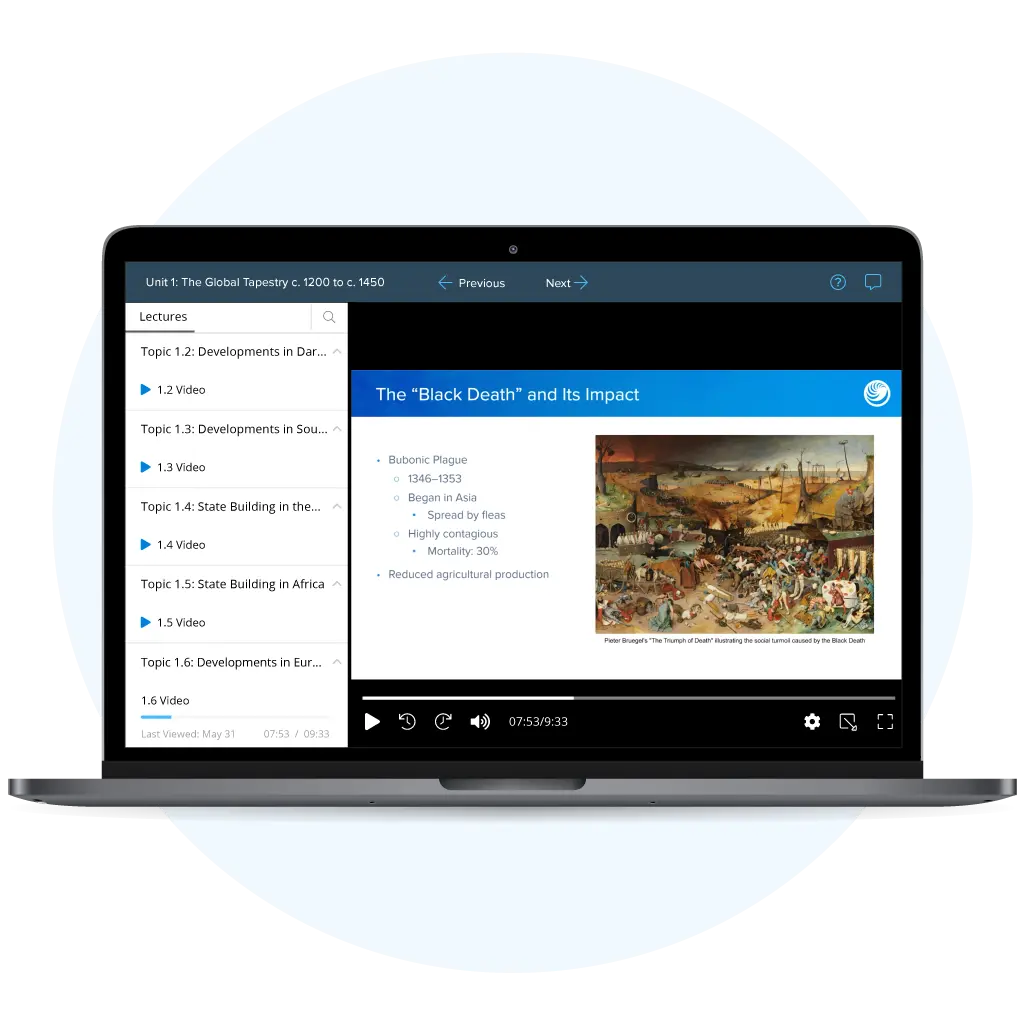
AP World History Unit 1 video lessons break down the Global Tapestry with clear explanations, visuals, and guided walkthroughs. The lessons highlight cultural developments, belief systems, and technological innovations that shaped early global networks. These videos make Unit 1 easier to grasp so you can move into deeper AP World History topics with confidence.
Interactive Study Guides
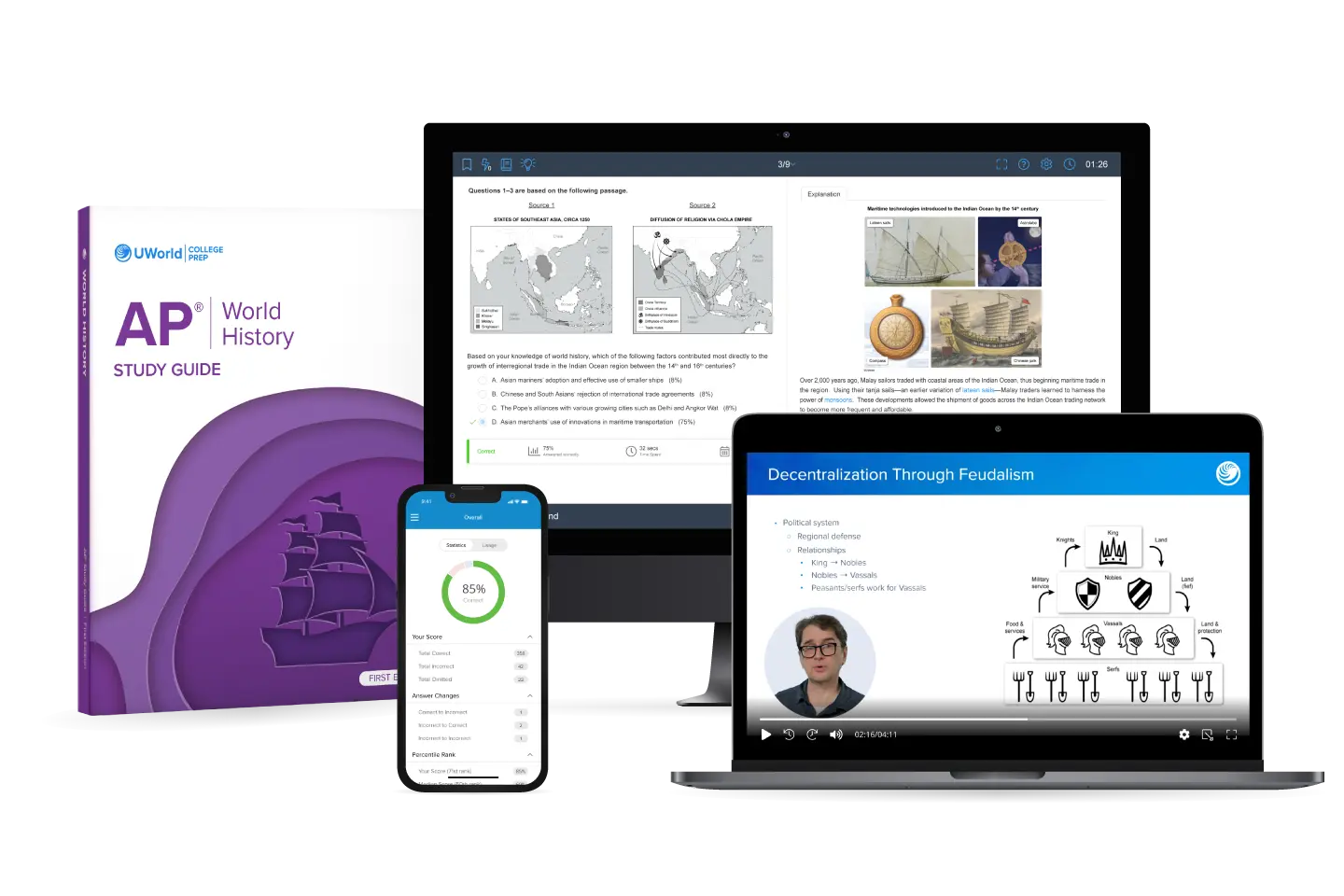
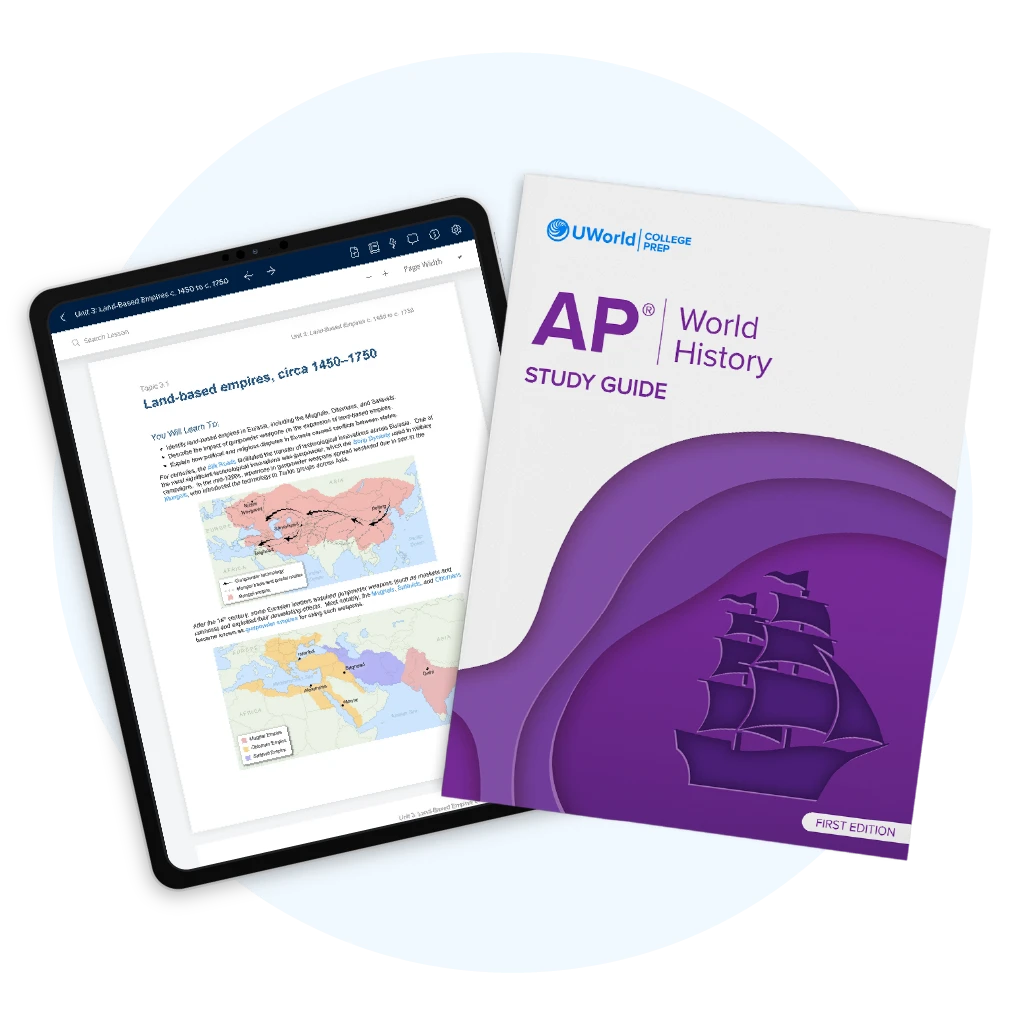
Interactive AP World History Unit 1 study guides organize complex information into simple summaries, visual charts, and clear explanations. You’ll review political structures, trade routes, cultural interactions, and AP World History Unit 1 vocab that appear on exams.
Realistic AP World History Unit 1 Practice Test Questions
Passage
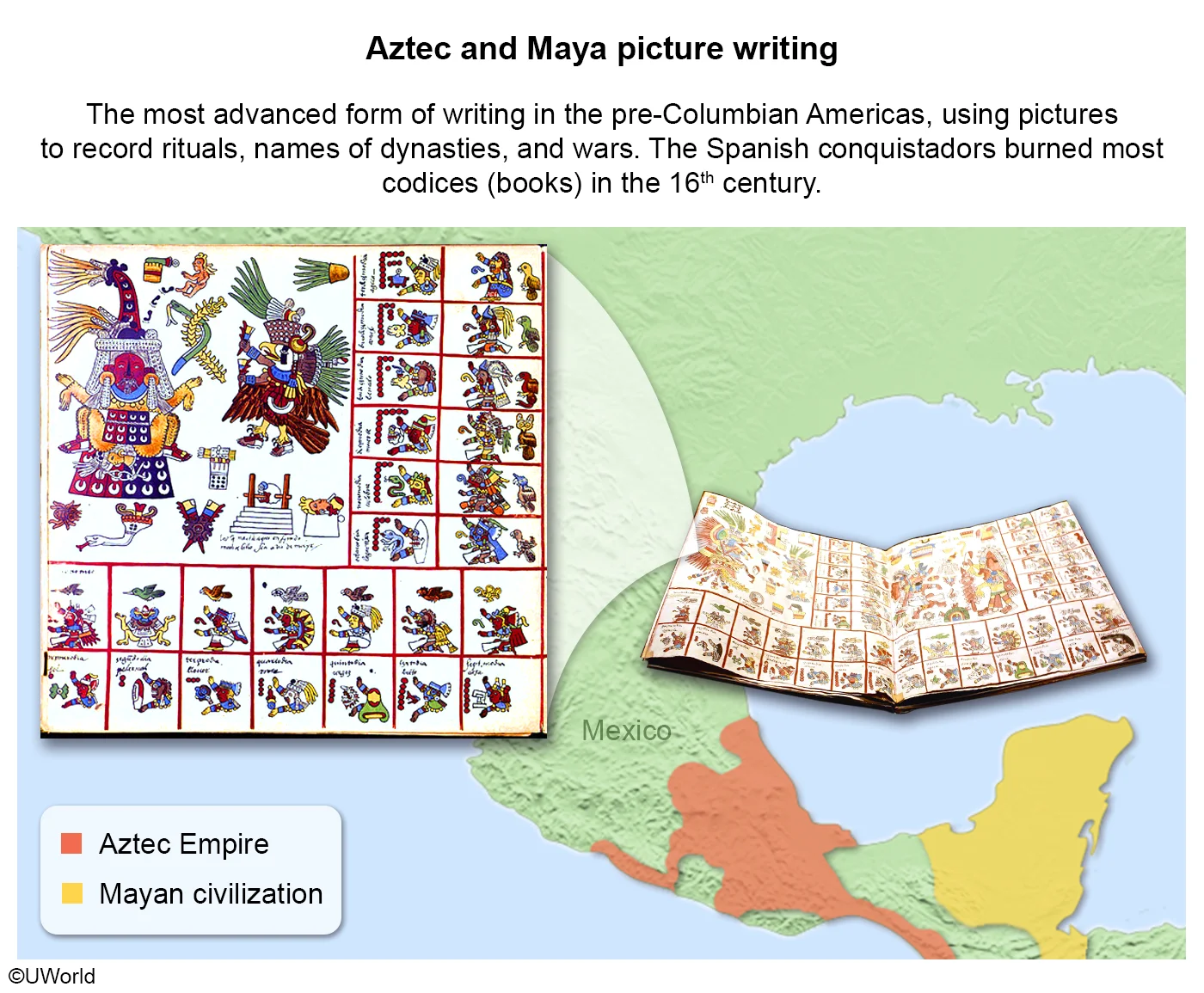
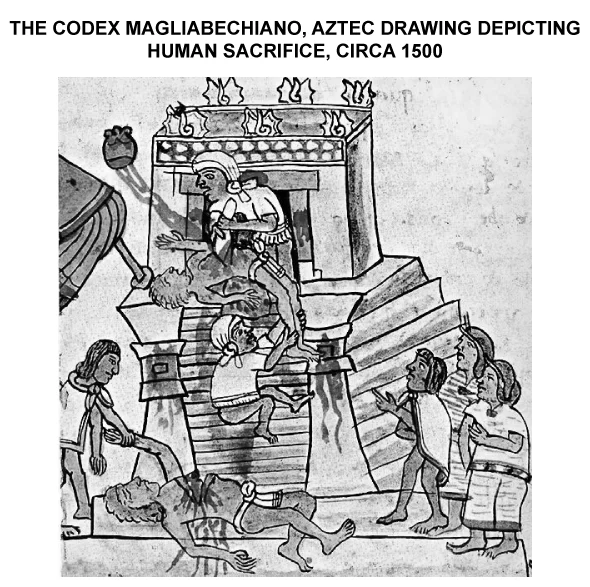
THE CODEX MAGLIABECHIANO, AZTEC DRAWING DEPICTING HUMAN SACRIFICE, CIRCA 1500
Question
Which of the following directly enabled the establishment of the empire that produced the image?
| A. The collapse of the tribute system in Mesoamerica under the stress of internal rebellions | |
| B. The prohibition of cannibalism and infanticide in Mesoamerica during Spanish colonial rule | |
| C. Prolonged drought as a result of climate fluctuations in the fifteenth century | |
| D. Rapid territorial expansion in Mesoamerica due to aggressive military campaigns during the fifteenth century |
Explanation
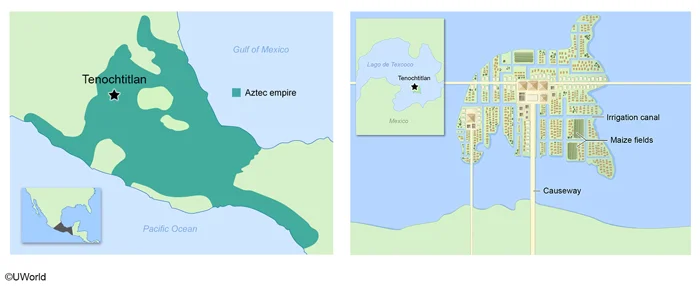
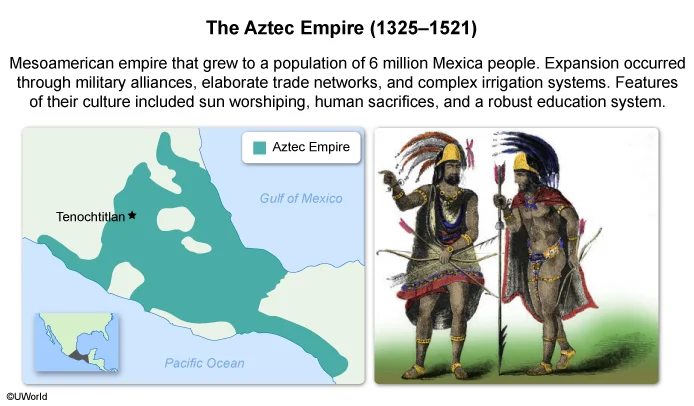
In 1325, a small band of nomadic people from northern Mexico—the Mexica—migrated south to the Valley of Mexico. They arrived in the wake of the Toltec Empire's collapse, which had created a power vacuum in the valley. The Mexica established their capital, Tenochtitlan, in the shallow waters of Lake Texcoco, where their new neighbors were warring for dominance.
During this early period the Mexica, a warlike people, acted as mercenaries for powerful groups in the valley such as the Alcohua and Tepanac. War gave the Mexica wealth and respect, and by the 15th century the Mexica dominated an alliance composed of the peoples of the Valley of Mexico. Through a series of aggressive military campaigns, the Mexica-led alliance established the Aztec Empire.
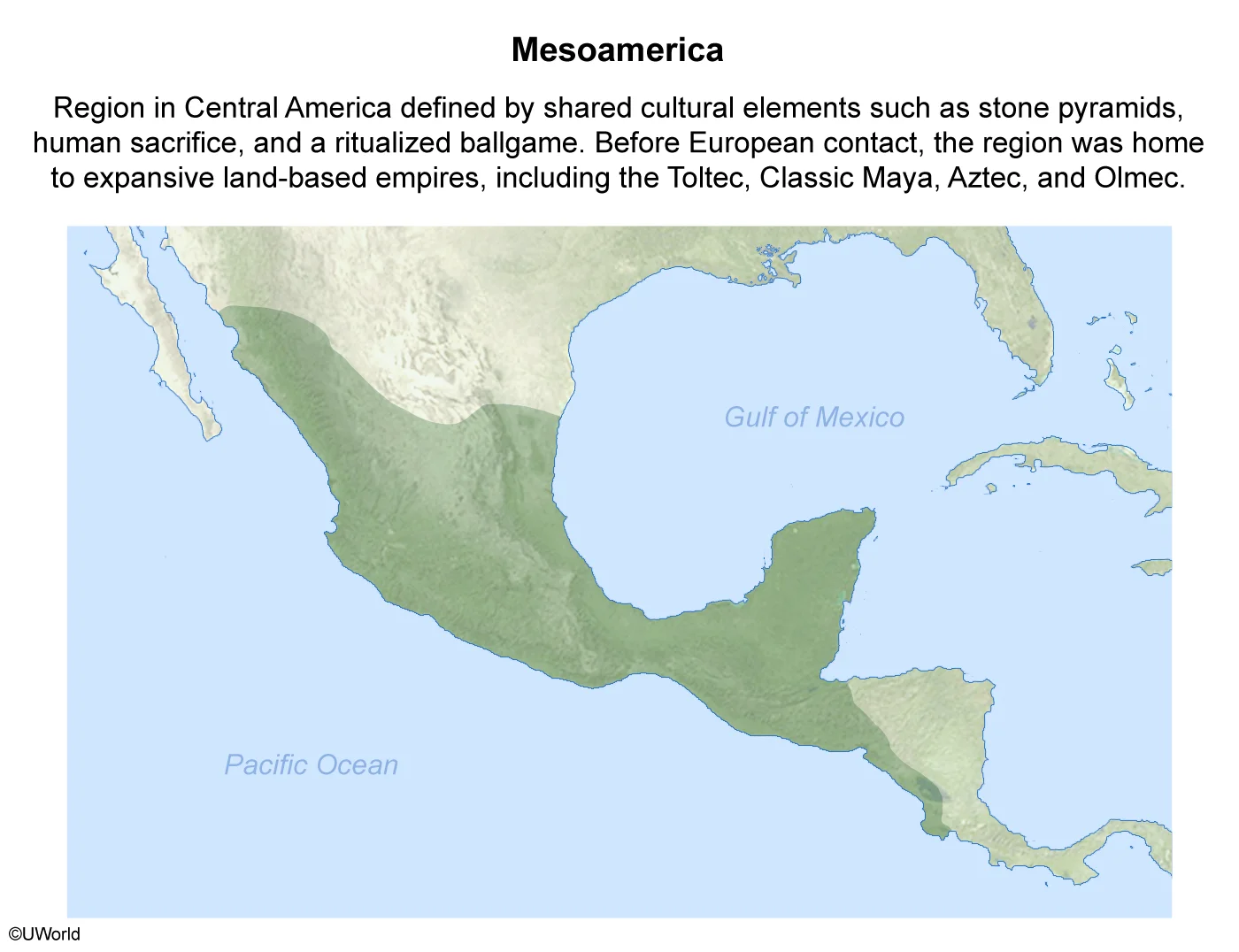
Within a hundred years, the Aztec Empire conquered most of Mesoamerica. Through rapid territorial expansion, the Empire increased its power through taxes, tribute, and trade. The city of Tenochtitlan grew, and the Aztecs recorded their accomplishments, rituals, and other empire inner workings in books known as codices.
(Choice A) Despite rebellions, the Mesoamerican tribute system grew as the Aztec Empire expanded.
(Choice B) The Aztec Empire was established prior to Spanish colonial rule, so there were no Spanish prohibitions that would have had any effect on the establishment of the Empire.
(Choice C) Although prolonged drought could have contributed to event portrayed in the image, drought was not a condition that enabled the establishment of the Aztec Empire.
Things to remember:
In 1325, the Mexica settled in the Valley of Mexico. Taking advantage of the power vacuum left by the collapse of the Toltec Empire, the Mexica formed the Aztec Empire and expanded it through aggressive military campaigns.
Passage
Chapter XVIII
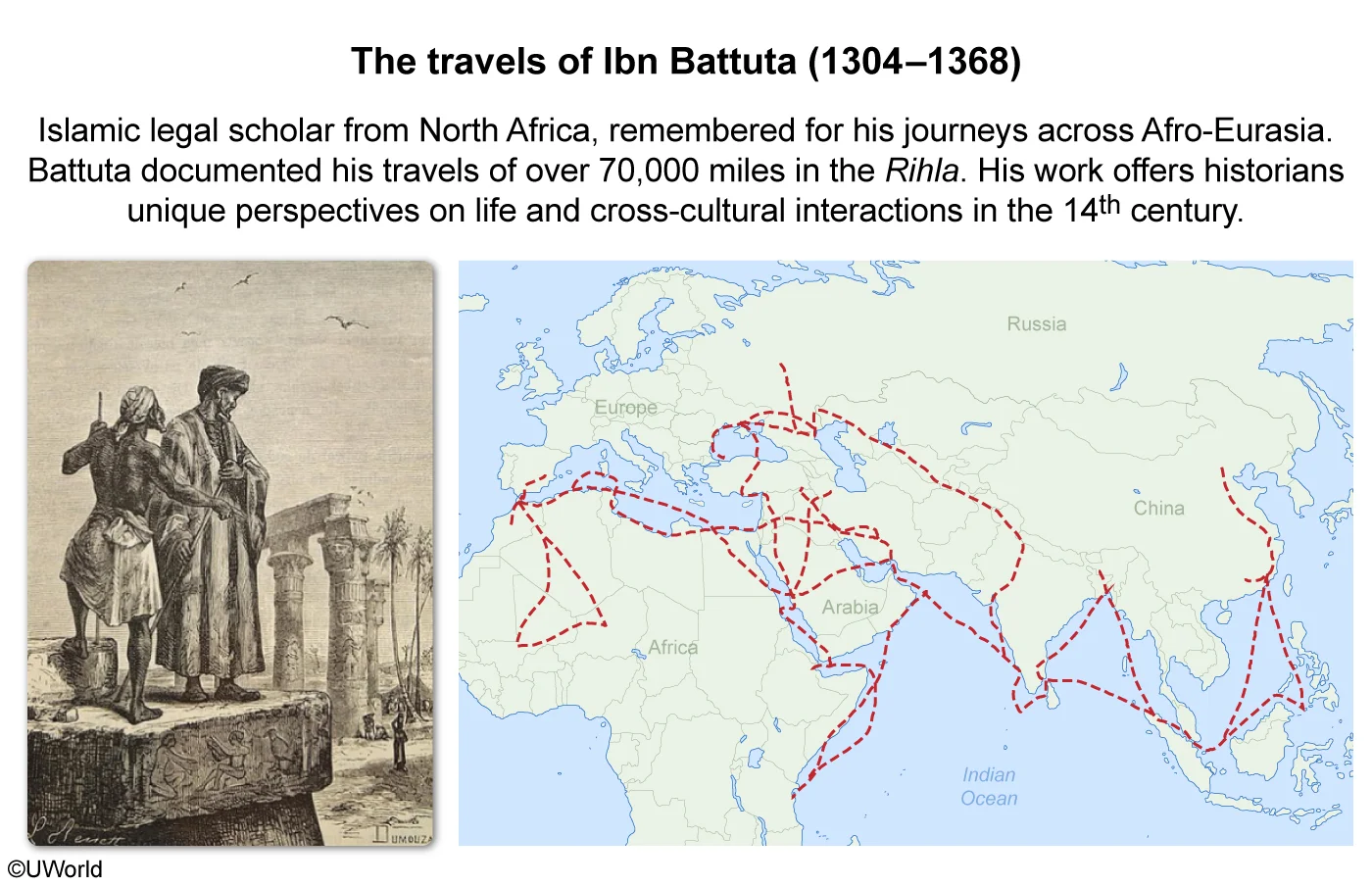
"[T]he [Hindu] Sultan of Ceylon…is Ayrī Shakarwatī, and he is a Sultan powerful on the sea. Once when I was in Malabar* I saw a hundred vessels of his there, some small, some large.…
The Sultan…sent with me four [yogis] whose custom it is to make an annual pilgrimage to the Foot [of Adam's Peak],** three Brahmans, ten other persons from his entourage.… [W]e journeyed to [Minneri-Mandel], a pretty town situated at the extremity of the Sultan's territories.…
After this we came to the town of Kunakār.… The Hindu infidels [there] have a law that anyone who kills a cow is slaughtered in the same fashion.…"
CHAPTER XXV
"The copper mine is outside Takaddā.*** They dig it from the ground and bring it to the town where they smelt it in their houses. This is done by male and female slaves. When they have smelted the red copper, they make it into rods…. The thick rods are sold at four hundred for a gold mithqal, the thin ones at six or seven hundred the mithqal. These rods are used as currency….
While I was [in Takaddā], the qādi Abu Ibrāhhīm, the preacher Muhammad, the professor Abu Hafş, and the shaikh Sa'īd bin Alī went to the Sultan of Takaddā, who is a Berber named Izār…. A dispute had arisen between him and [another] Berber Sultan. These four went out to arrange a peace between the two Sultans. I wanted to meet [Izār], so I hired a guide and set out towards him. The aforesaid persons told him of my coming and he rode to meet me…. His sister's sons were with him; it is they who will inherit his kingdom."
Excerpts regarding Ibn Battuta's travels through Ceylon
and West Africa from his book The Rihla, 1354
Question
The Sultan's possession of a fleet of "a hundred vessels" in the first excerpt can be used as evidence of which of the following?
| A. Sri Lankan kingdoms' development of urban warfare | |
| B. Kingdoms' use of naval power for trade and defense | |
| C. The negative impact of monsoons on mariners' voyages | |
| D. The expansion of the slave trade in the Indian Ocean |
Explanation
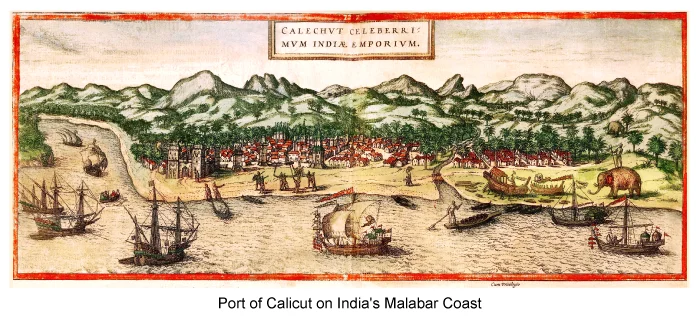
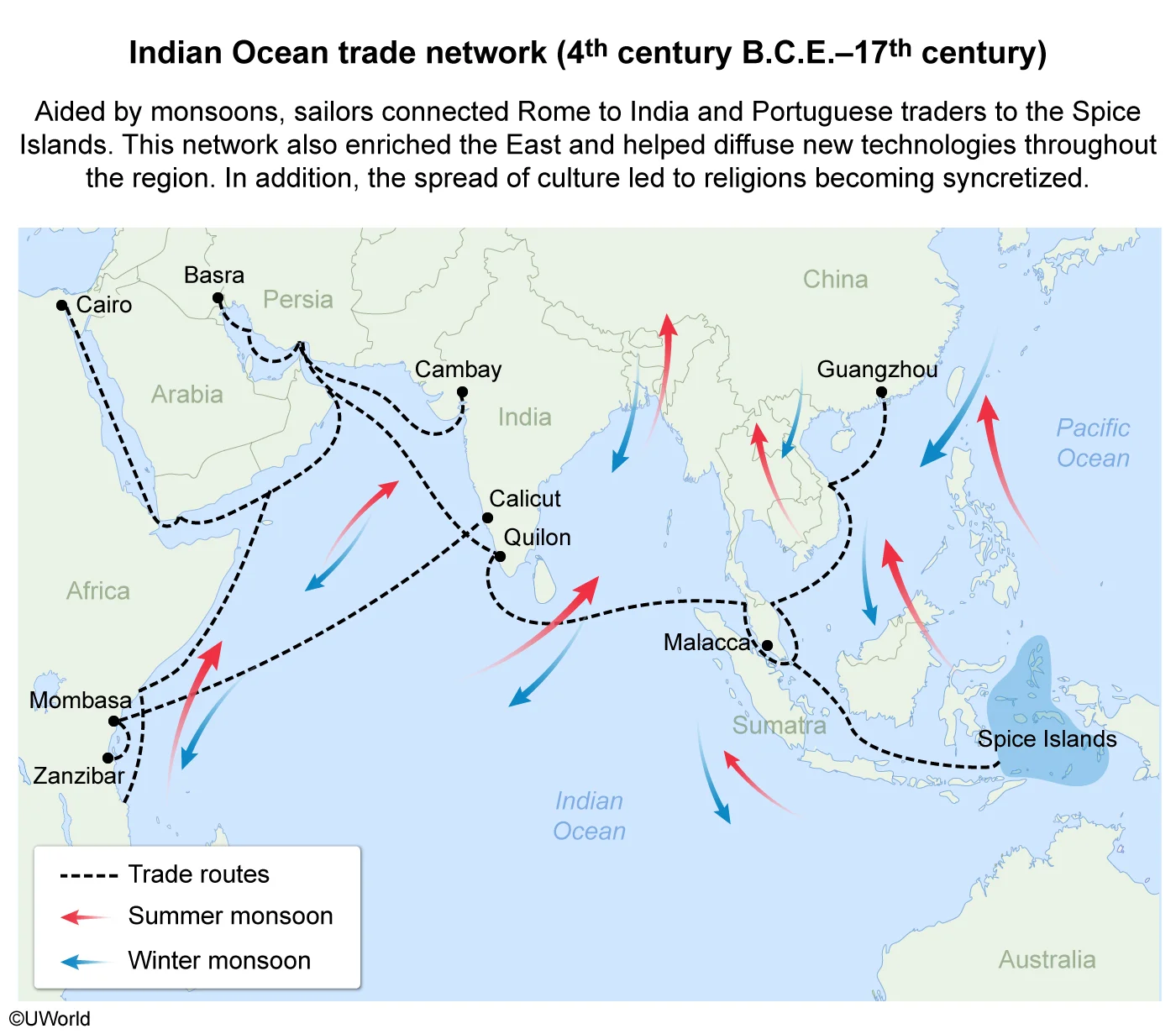
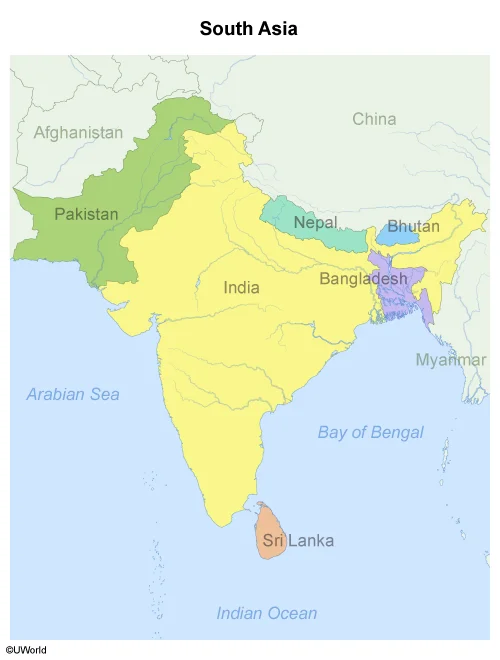
In the 1340s, the Muslim travel writer Ibn Battuta toured Malabar—an important hub of the Indian Ocean trade network on the southern strip of India's western coast. There, Battuta witnessed a hundred vessels belonging to the Sultan of Ceylon (Sri Lanka), Ayrī Shakarwatī.
The presence of the Sultan's fleet on the southwestern coast of India indicates that the Hindu kingdom there profited from the region's brisk trade. The fleet would have also assisted the kingdom in establishing trade relationships with neighboring kingdoms in South Asia.
Moreover, the Sultan's armed vessels would have protected his trading ships from piracy and patrolled Ceylon's coast, providing some security from external enemies. Therefore, Ibn Battuta's account of the Sultan of Ceylon's fleet provides evidence of kingdoms' use of naval power for both trade and defense.
(Choice A) The Sultan's vessels indicate Sri Lankan kingdoms' use of naval power for trade and defense, not urban warfare.
(Choice C) To reach India's Malabar coast from Ceylon, the Sultan's mariners would've likely harnessed the power of monsoons, showing their positive, not negative, impact on voyages.
(Choice D) The excerpt does not provide evidence to determine anything about the Indian Ocean slave trade.
Things to remember:
Ibn Battuta's account of the Sultan of Ceylon's fleet in the 1340s provides evidence of kingdoms' use of naval power for both trade and defense.
Passage
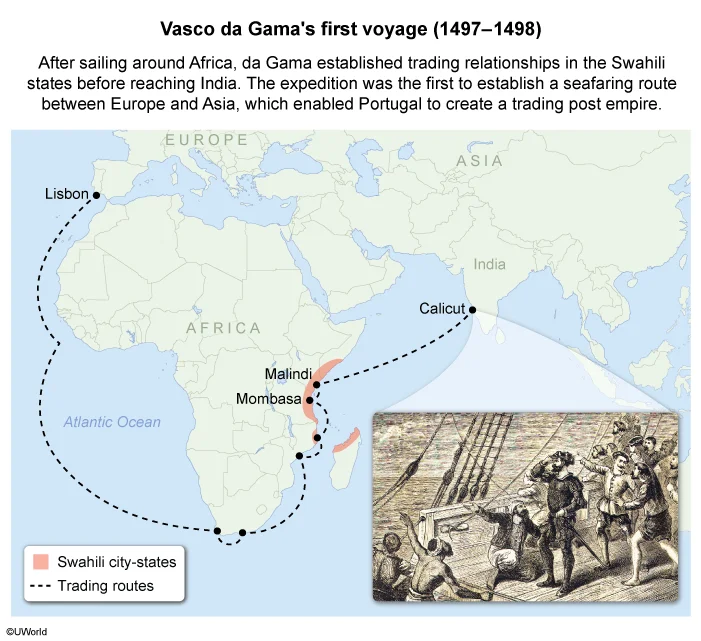
"On February 24th the vessels once more gained the open sea, and following the coast for six days arrived off Mozambique on March 2nd. During this voyage…they kept outside the islands which here skirt the coast…. The three vessels anchored in front of the town [on] the island of S. Jorge, where mass was read….
[O]n March 29th…the wind was favourable. The Moorish pilot whom Vasco da Gama had on board took him past Kilwa, which the captain would have liked to have visited, and shaped a course outside Mafia, Zanzibar and the other islands lying off that coast. [O]n April 7th Vasco da Gama cast anchor in…Mombasa, the finest port on the whole coast of Eastern Africa….
Sixty miles more brought the Portuguese to the roadstead of Malindi, where they cast anchor…. This was the only town at which they met with a cordial reception…."
Translated by E. G. Ravenstein, English-German geographer, Along the East Coast of Africa, A Journal of the First Voyage of Vasco da Gama, 1497–1499
Question
Which of the following features of Swahili city-states in the period circa 1200–1750 most directly contributed to the fact that Vasco da Gama's expedition received a cordial reception in the East African town of Malindi in the 1490s, as mentioned in the third paragraph?
| A. The existence of numerous alliances that Europeans and African cities had with one another | |
| B. The development of trade partnerships that could expand the wealth of the city-state | |
| C. The growing political influence of Mombasa following an unsuccessful military expedition | |
| D. The cultural and economic ties with Islamic culture among East African societies as a result of the Indian Ocean trade network |
Explanation
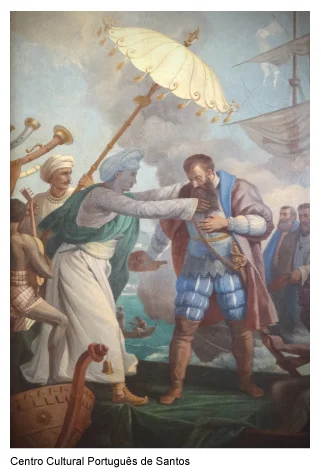
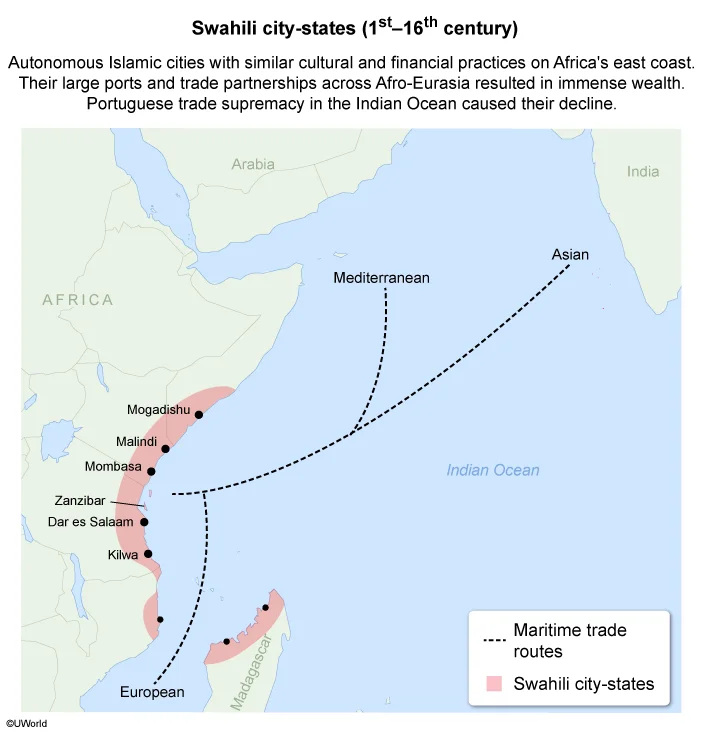
In the 1490s, Vasco da Gama's expedition sailed along the East African coast, hoping to create new trade partnerships. However, the Swahili city-state of Malindi was the only one to meet his expedition with a "cordial reception." Historically, Malindi sought to establish trade partnerships that could expand its wealth and diversity.
Founded in the 1st century, Malindi initially grew due to its deep-water port and geographic location. By the 11th century, a flourishing Indian Ocean trade network allowed Malindi to establish partnerships with Arab and Indian merchants.
In the 15th century, after establishing a trade partnership with Malindi, Admiral Zheng He returned to China with a giraffe, which the Chinese took to be proof of Malindi's wealth. These trade relations demonstrate Malindi's state system for continuity, diversity, and expansion.
(Choice A) Da Gama was the first European to reach the Swahili city-states; therefore, no previous alliances existed before he arrived.
(Choice C) Although Mombasa and Malindi were rivals, there is little evidence to suggest Mombasa's growing political influence as part of a military expedition contributed to Malindi's reception of da Gama's expedition.
(Choice D) Economic ties with the Islamic World often meant that East African city-states were unfriendly toward Christians. However, these ties had little influence in Malindi since da Gama was cordially received.
Things to remember:
Between 1200 and 1500, trade enabled Swahili city-states to grow in wealth and diversity. This was best exemplified by Malindi, which established trade partnerships with a diverse group of nations.

Stand Out
with a Top Score in AP World History: Modern
Finish your AP World History Unit 1 review and continue mastering all units with UWorld. Our AP World History course is designed to boost your performance and help you impress admissions.
Get our all-in-one course today!
- Focused APWHM Videos
- Print & Digital Study Guide
- 500+ Exam-style Practice Questions
- Customizable Quiz Generator
- Adjustable Study Planner
- Realistic Timed Test Simulation
- Colorful Visual Explanations
- Progress Dashboard
- Smart Flashcards & Digital Notebook
Hear From Our AP Students
UWorld’s service is pretty good and helps provide a lot of explanations on subjects I haven’t been confident on before.
The questions here are the most realistic to the AP tests I've seen so far! I appreciate the ability to customize tests as well.
The best part is that all options are well-explained, telling clearly why they are not the right option.
Frequently Asked Questions (FAQs)
What are the main topics covered in AP World History Unit 1: The Global Tapestry?
AP World History Unit 1 explores how states across the world developed political structures, belief systems, and cultural traditions between 1200 and 1450. These themes are central to the Global Tapestry and appear frequently in AP World History Unit 1 practice test questions, MCQs, SAQs, and DBQs.
Key topics in Unit 1 include:
- States in Africa: West African kingdoms, trade networks, and cultural exchange.
- States in Afro-Eurasia: Islamic empires, scholarship, and regional influence.
- States in East Asia: Song Dynasty innovations, bureaucracy, and Confucian systems.
- States in Europe: Feudal structures, Christianity, and economic revival.
- States in South and Southeast Asia: Hindu-Buddhist traditions, Indian Ocean trade.
- States in the Americas: Aztec, Inca, and Mississippian societies.
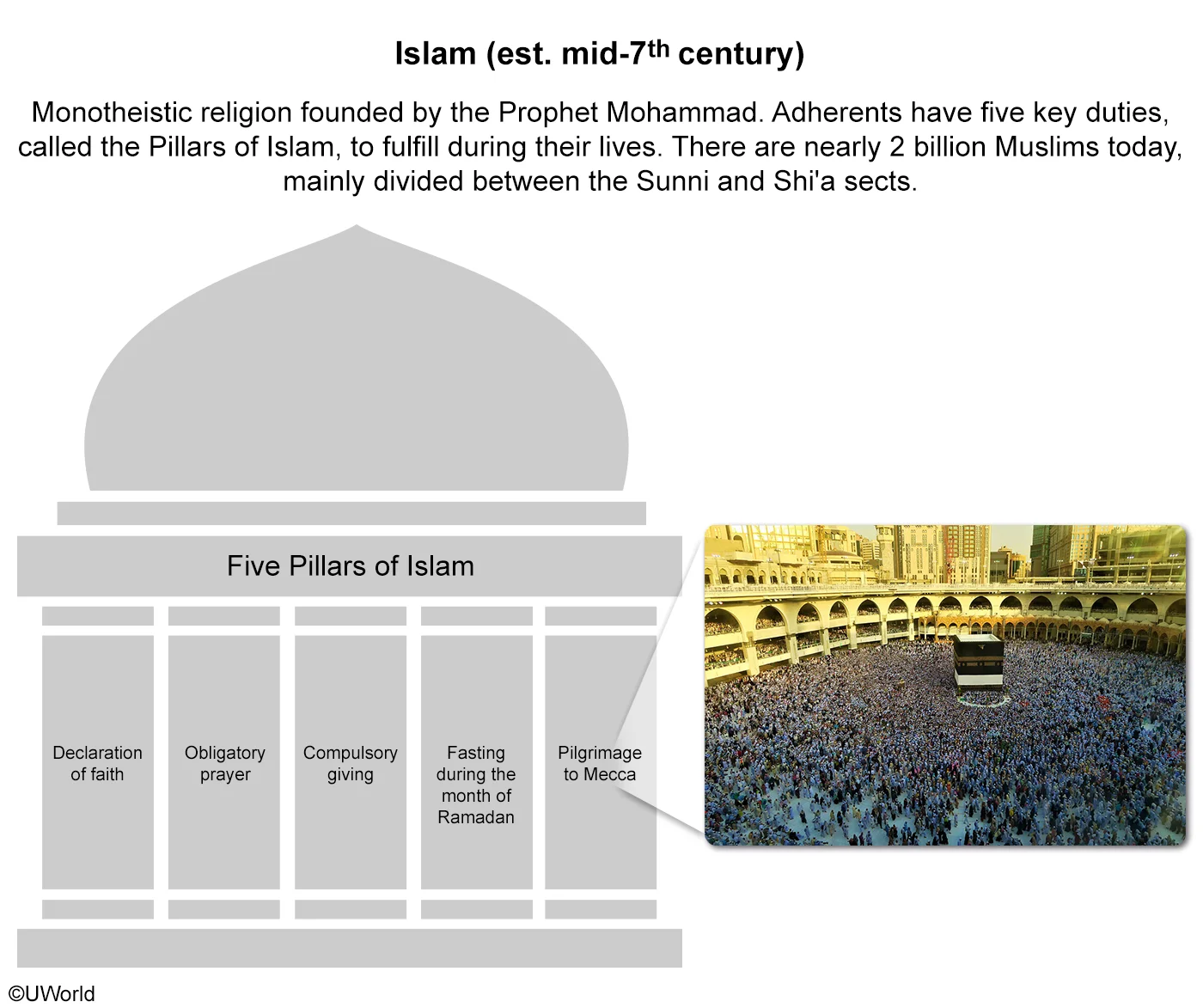
- Global and regional religions and belief systems: Islam, Buddhism, Hinduism, Christianity, Confucianism, and indigenous traditions.
Understanding these topics strengthens your AP World History Unit 1 review and supports strong performance on every part of the AP exam.
How should I prepare for an AP World History Unit 1 exam?
Preparing for AP World History Unit 1 is easier when you follow the Read–Watch–Practice method. This approach helps you move from understanding the basics to applying them on AP-style questions. Start with a structured AP World History Unit 1 study guide to review each major region and its key developments.
Read: Begin by reading summaries of political systems, cultural traditions, and belief systems across East Asia, Dar al-Islam, South Asia, Africa, Europe, and the Americas. Focus on patterns like state building, bureaucracy, and religious influence.
Watch: Use short video lessons to reinforce difficult topics such as Confucianism, Islamic empires, and the rise of major kingdoms.
Practice: Apply what you learned by completing AP World History Unit 1 practice tests, especially stimulus-based MCQs and SAQs.
This study method helps you build confidence and improve recall. Practicing with real exam-style questions strengthens your ability to interpret sources, identify key themes, and connect developments across regions. Using a mix of reading, visuals, and hands-on practice will prepare you thoroughly for the Unit 1 exam.
Are any free resources available for AP World History Unit 1?
Yes. You can start your AP World History Unit 1 review with several high-quality free resources. These tools introduce the main concepts of the Global Tapestry and help you begin studying without any cost. UWorld’s 7-Day Free Trial gives you access to Unit 1 practice questions, explanations, and select video lessons, making it easy to preview AP-style content.
College Board’s AP Classroom also provides official AP Daily videos and a Unit 1 progress check MCQ set. These resources align directly with the curriculum and help you understand what kinds of questions appear on the real exam. Khan Academy adds free summaries covering East Asia, Dar al-Islam, South Asia, Africa, and European developments.
Using these tools together gives you a strong foundation before beginning more intensive preparation. They help you identify where you feel confident and where you need more practice, making your AP World History Unit 1 review more focused and productive.
What types of questions are on the AP World History Unit 1 test?
The AP World History Unit 1 test includes multiple-choice questions, Short-Answer Questions (SAQs), Document-Based Questions (DBQs), and Long Essay Questions (LEQs). Each type assesses how well you understand the Global Tapestry and how effectively you can analyze evidence, identify patterns, and apply historical reasoning.
MCQs often use maps, religious texts, artwork, and quotes to ask about political structures, belief systems, and cultural developments across regions. SAQs may ask you to compare states in East Asia and Dar al-Islam or explain how belief systems shaped societies. DBQs require analyzing documents related to Unit 1 topics such as bureaucracy in Song China or trade in Dar al-Islam.
LEQs ask you to discuss continuity and change or compare developments across civilizations from 1200 to 1450. Practicing AP World History Unit 1 MCQs and FRQs helps you understand each question style, build writing confidence, and improve source-based analysis skills before exam day.
How can I improve my score on the Free-Response Questions (FRQs) for Unit 1?
Improving FRQ performance in AP World History Unit 1 begins with learning how to use accurate evidence and historical reasoning. FRQs require clear claims, well-selected examples, and logical explanations. Reviewing belief systems, political structures, and cultural developments from 1200 to 1450 helps you respond more effectively to SAQs, DBQs, and LEQs.
For SAQs, focus on writing concise answers that fully address each prompt. DBQs require practice interpreting documents—look for point of view, purpose, and historical context. LEQs rely on strong thesis statements and well-organized arguments that connect to broader Unit 1 themes such as state building, trade, and cultural exchange across regions.
Using UWorld’s AP World History Unit 1 practice questions and explanations helps you understand why certain evidence works better for FRQs. Regular practice improves your ability to write clearly, use strong examples, and structure essays that earn higher scores on the AP exam.
What is the "The Global Tapestry" unit's weight on the AP World History exam?
AP World History Unit 1 usually represents 8–10% of the total exam score, making it a foundational part of your APWH preparation. Even though it’s not the largest unit, the Global Tapestry introduces many political, religious, and cultural themes that reappear throughout the course.
You’ll see Unit 1 content in MCQs and often in the contextualization sections of DBQs and LEQs. Understanding developments in East Asia, Dar al-Islam, South Asia, Africa, and the Americas gives you deeper context for Units 2–6, making later topics easier to understand and connect.
A strong AP World History Unit 1 review strengthens your historical thinking and prepares you for comparisons involving state building, belief systems, and cultural exchange. These skills help you score higher across the entire exam, not just Unit 1.
Where can I find a good study guide for AP World History Unit 1?
UWorld provides a comprehensive AP World History Unit 1 study guide designed to simplify the Global Tapestry. The guide breaks down major states, belief systems, and cultural developments into clear summaries and visual charts, making complex topics easier to understand and remember.
It includes helpful AP World History Unit 1 vocab lists, timelines, and comparisons that highlight key differences across regions. You’ll review developments in Song China, Dar al-Islam, South Asia, Africa, Europe, and the Americas in a structured, approachable format that supports fast, organized studying.
The study guide is paired with AP World History Unit 1 practice tests that reinforce each concept through exam-style questions. This combination of clear explanations and instant application makes UWorld an effective tool for mastering Unit 1.
Can I find practice tests specifically for APWH Unit 1?
Yes. UWorld offers AP World History Unit 1 practice tests that closely mimic the style, structure, and difficulty of the actual AP exam. These questions cover states, belief systems, and cultural developments across regions such as East Asia, Dar al-Islam, South Asia, Africa, Europe, and the Americas.
College Board AP Classroom also provides a Unit 1 progress check MCQ and SAQ set. These official questions align with the curriculum and show you the types of sources and prompts found on the real exam. Khan Academy offers basic quizzes and summaries, though they are less detailed and exam-focused.
Even with multiple resources available, UWorld’s detailed explanations help you understand why correct answers work and how to avoid common errors. This targeted approach makes UWorld one of the strongest tools for mastering Unit 1.
How can I organize Unit 1 content to study more efficiently?
Studying AP World History Unit 1 becomes more manageable when you organize content by region, belief system, and theme. Start by grouping states in East Asia, Dar al-Islam, South Asia, Africa, Europe, and the Americas. Identify each region’s political structures, cultural traditions, and economic patterns to build a clear understanding of the Global Tapestry.
Using comparison charts helps you quickly recognize similarities and differences across civilizations. Timelines make it easier to visualize developments from 1200–1450 and understand how events relate across regions. This structure also strengthens your ability to connect information on MCQs and FRQs.
After organizing notes, complete AP World History practice test Unit 1 to apply what you’ve learned. This reinforces key knowledge, improves recall, and builds your skills for interpreting sources and answering questions effectively.
Why is understanding belief systems important for AP World History Unit 1?
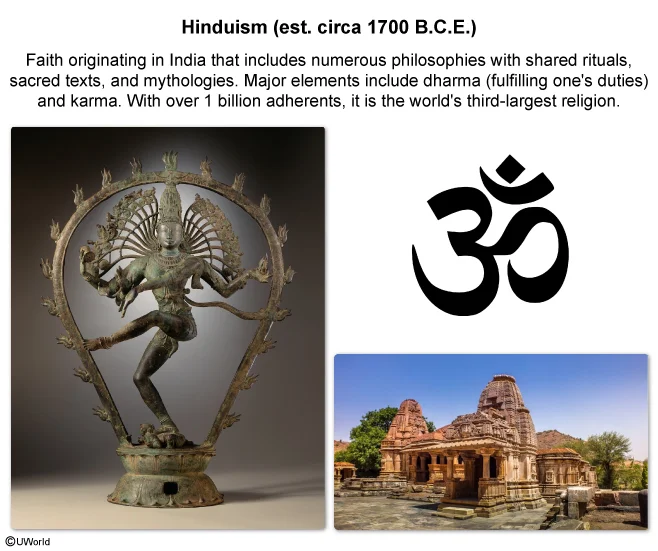
Belief systems shape political authority, cultural identity, and social structure, making them central to AP World History Unit 1. Confucianism influenced Chinese bureaucracy, Islam connected regions across Afro-Eurasia, Hinduism and Buddhism guided South Asian kingdoms, and Christianity shaped European institutions.
Understanding these religions helps you see how ideas spread through trade, migration, and conquest. Many AP World History Unit 1 practice tests ask about the impact of belief systems on state building, cultural blending, or social hierarchy. Recognizing patterns across traditions strengthens your ability to interpret documents and answer comparative questions.
Because belief systems appear in MCQs, SAQs, DBQs, and LEQs, mastering them improves your performance across the entire AP exam. Strong knowledge of religious and philosophical traditions deepens your understanding of world history and supports higher scores.