FREE Ground Shipping on Courses $149+ | Code: SANTASENDSFREE

AP® U.S. History Unit 6 Review and Practice Test

Period 6: 1865–1898

Build confidence for APUSH Unit 6 with clear explanations, helpful notes, videos, and exam-style practice. Explore major developments in the United States from 1865 to 1898, including industrialization, immigration, urban growth, and key social and political changes. Whether you're completing the Unit 6 APUSH progress check MCQ, preparing for an AP® U.S. History Unit 6 test, or reviewing essential concepts with a study guide, UWorld’s APUSH Unit 6 review provides everything you need to understand this period with clarity and confidence.

AP U.S. History prep course suite by UWorld

Master AP U.S. History Unit 6 with Confidence

Get a solid grasp of key Unit 6 events with easy-to-follow lessons, notes, and practice questions. Our review breaks down major concepts so you can study smarter and feel ready for test day.

Watch

Engaging Video Lessons

Our video lessons make Unit 6 topics easy to understand, even if you’re short on study time. Each lesson explains major events, themes, and historical shifts in a simple, engaging way. You’ll learn exactly what the AP exam expects and build the confidence to tackle any question.

Read

Interactive Study Guides

Our interactive study guides break down Unit 6 concepts into easy steps, helping you understand key events, people, and themes from 1865 to 1898. Each guide includes helpful visuals, quick summaries, and exam-focused tips. You can review at your own pace and stay organized as you prepare for your APUSH test.

Practice

Test Your Knowledge with APUSH Unit 6 Practice Questions

Get exam-ready with realistic practice questions that mirror the style and difficulty of the AP U.S. History test. Each question comes with clear, step-by-step explanations to help you understand the “why” behind every answer. Use these practice sets to strengthen your recall, sharpen your skills, and boost your Unit 6 confidence.
Try these sample practice questions with detailed answer explanations:
Period 6: 1865–1898 Practice Tests

Question

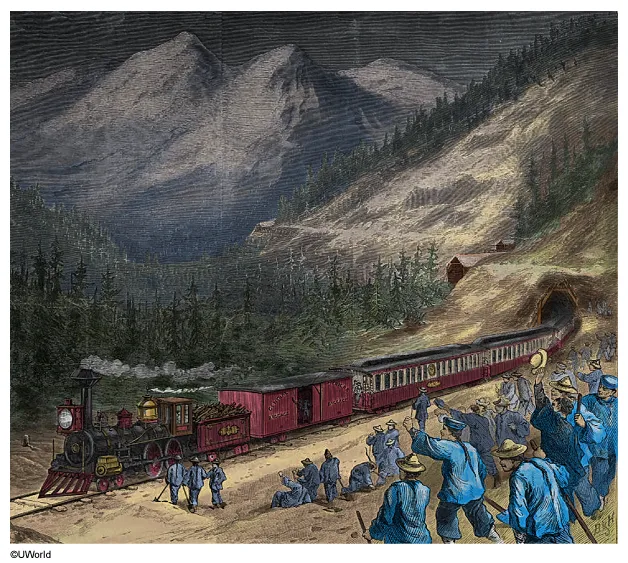
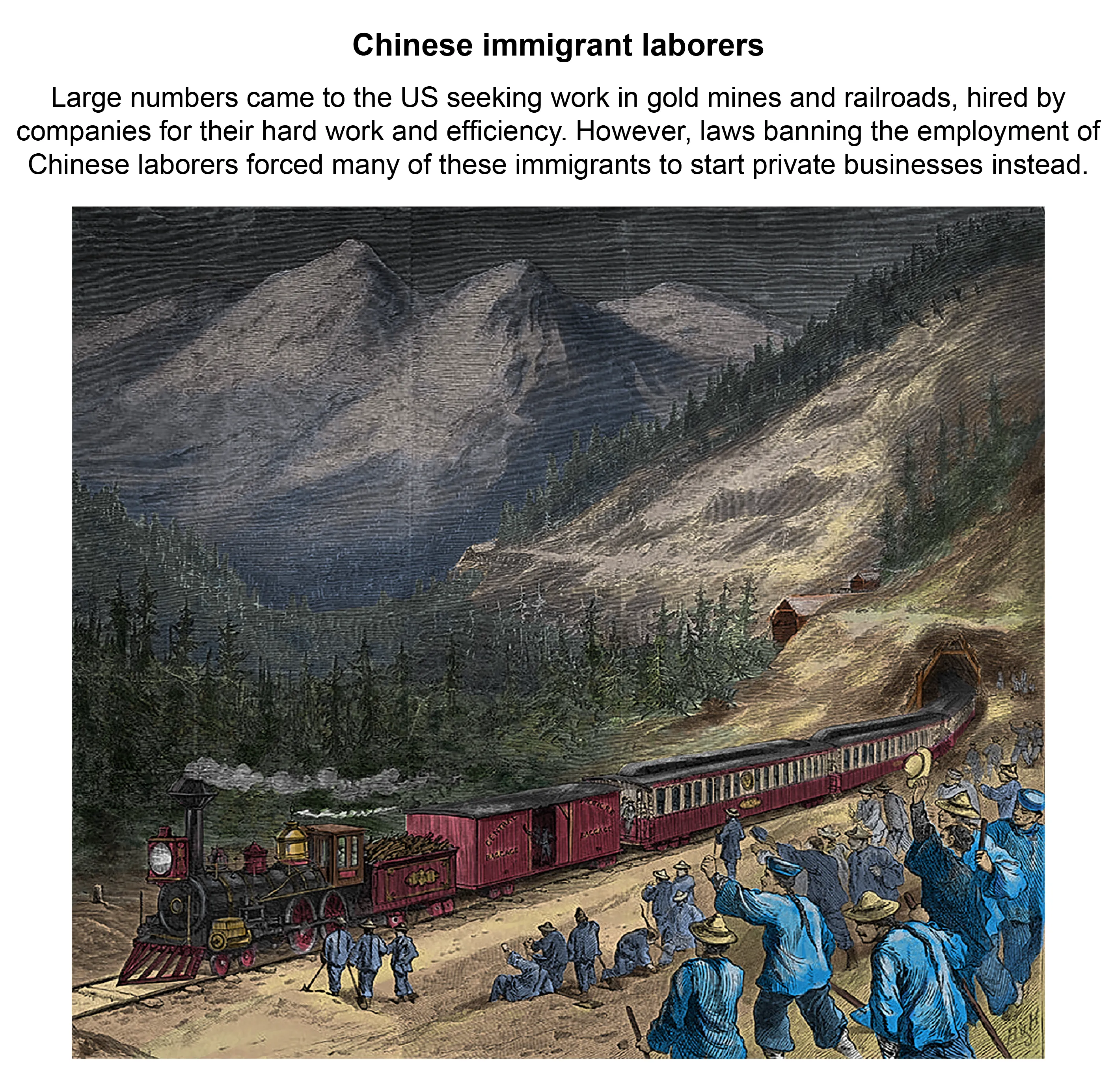
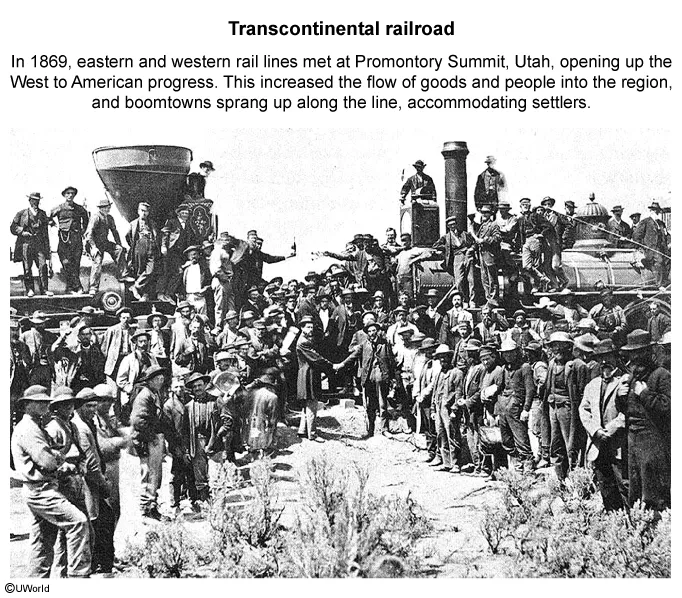
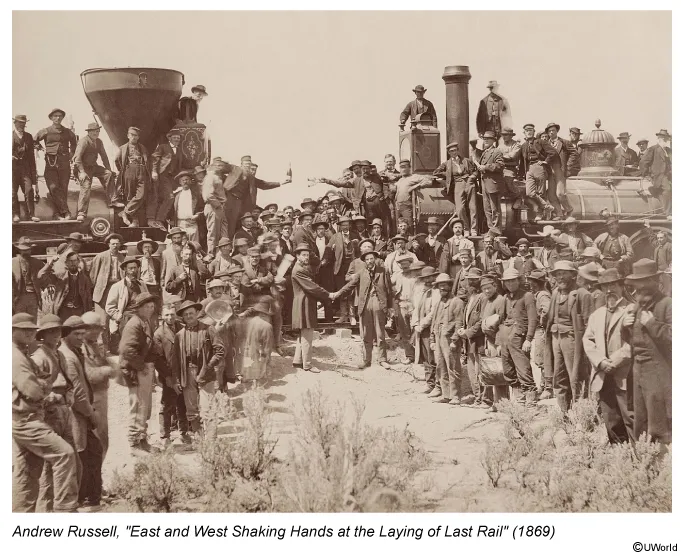
The completion of the first transcontinental railroad shown in the photograph most directly resulted from

A.The end of Native American resistance
B.The influx of Chinese immigrant laborers
C. The emergence of an antitrust movement
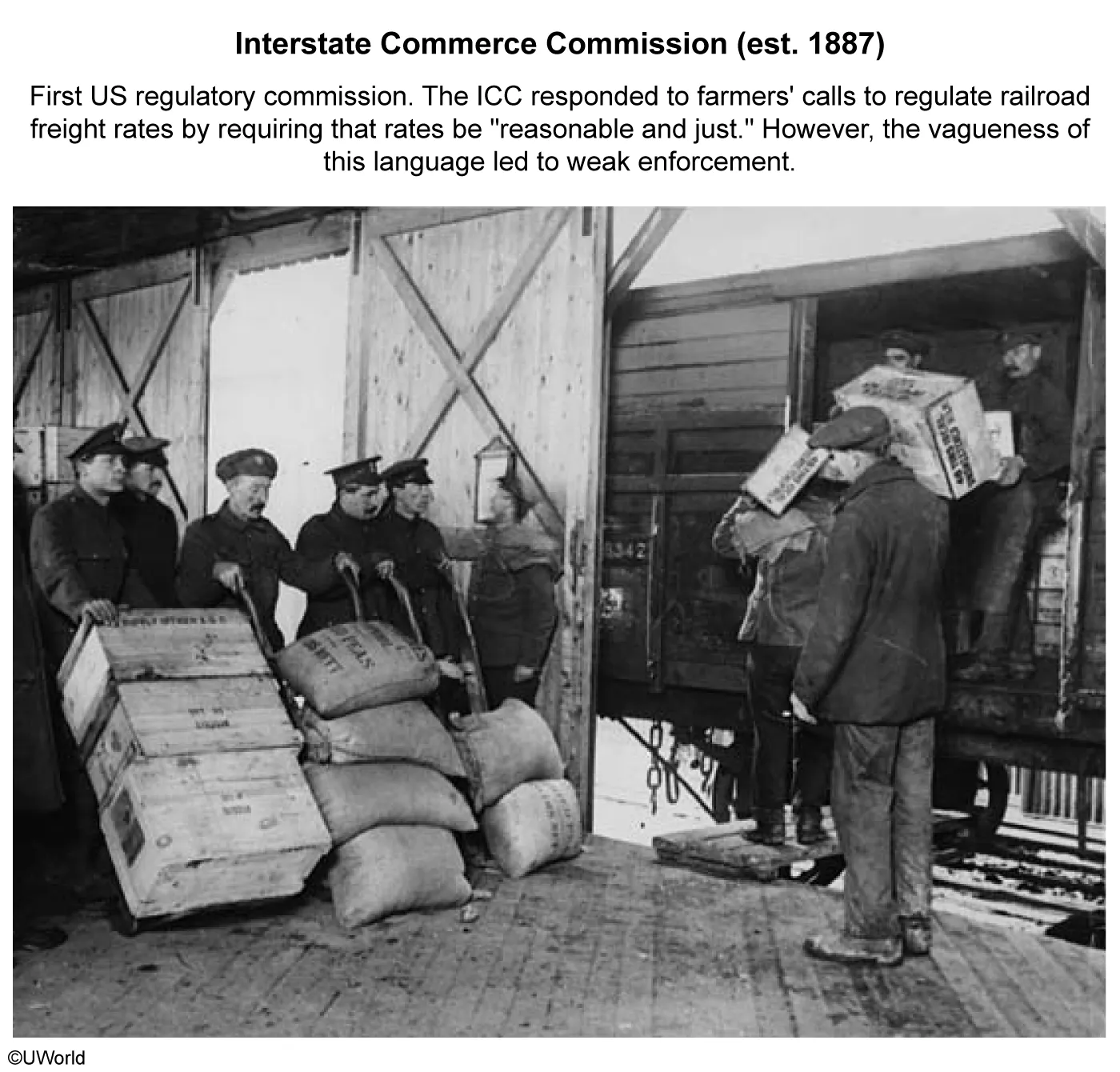
D. The enactment of the Interstate Commerce Act

Explanation

Chinese Labours

For most of the 19th century, the US essentially had open borders, with few restrictions on individuals entering the country. Beginning in the 1840s, Chinese individuals emigrated by the thousands to the West Coast to mine gold. After the gold rush declined in the 1860s, Chinese laborers provided most of the unskilled labor for construction of the transcontinental railroad.

Building the transcontinental railroad was a massive undertaking that required thousands of workers. Well over 10,000 Chinese immigrants, predominantly unmarried men, filled the jobs and worked as contract laborers. Immigrants helped lay track across virgin wilderness, across the Great Plains, and through the mountains. This backbreaking, hazardous work took place 6 days a week, year-round.

(Choice A) Native American resistance to US expansion intensified, not ended, following completion of the first transcontinental railroad in 1869.

(Choice C) The antitrust movement called for breaking up trusts which created monopolies on certain industries, including railroads. This movement didn't aid the completion of the transcontinental railroad.

(Choice D) The Interstate Commerce Act regulated the railroad industry but didn't contribute to the completion of the first transcontinental railroad.

Things to remember:
In the mid-19th century, Chinese immigrants on the West Coast provided most of the unskilled labor for construction of the transcontinental railroad.

Passage:

"With the Negro…eliminated from all participation in…elections, there could be no longer an excuse for killing Negroes to prevent 'Negro Domination.' Brutality still continued…[and] the murderers invented the…excuse…that Negroes had to be killed to avenge their assaults upon [White] women.

If the Southern people…would…admit that colored men and women are lynched for almost any offense…there would not now be the necessity for this defense.

It [now] becomes a painful duty of the Negro to reproduce a record which shows that a large portion of the American people…condone murder and defy the contempt of civilization. We plead not for the colored people alone, but for all victims…. During the year 1894, there were…197 persons…put to death by mobs who gave the victims no opportunity to make a lawful defense. No comment need be made upon a condition of public sentiment responsible for such alarming results….

[T]he pages which follow shall be…the record…made, not by colored men, but…by white men, of reports sent over the civilized world by white men in the South….

[T]he Chicago Tribune…has made a specialty of the compilation of statistics touching upon lynching. The data compiled by that journal and published to the world January 1, 1894, up to the present time has not been disputed."

Ida B. Wells, The Red Record: Tabulated Statistics and Alleged Causes of Lynching in the United States, 1895

1. The Red Record: Tabulated Statistics and Alleged Causes of Lynching in the United States, 1895

Question

The type of views expressed in the excerpt emerged most directly from which of the following trends?

A. Growing anti-Catholic sentiment
B. Racial violence against African Americans
C. The closing of the frontier
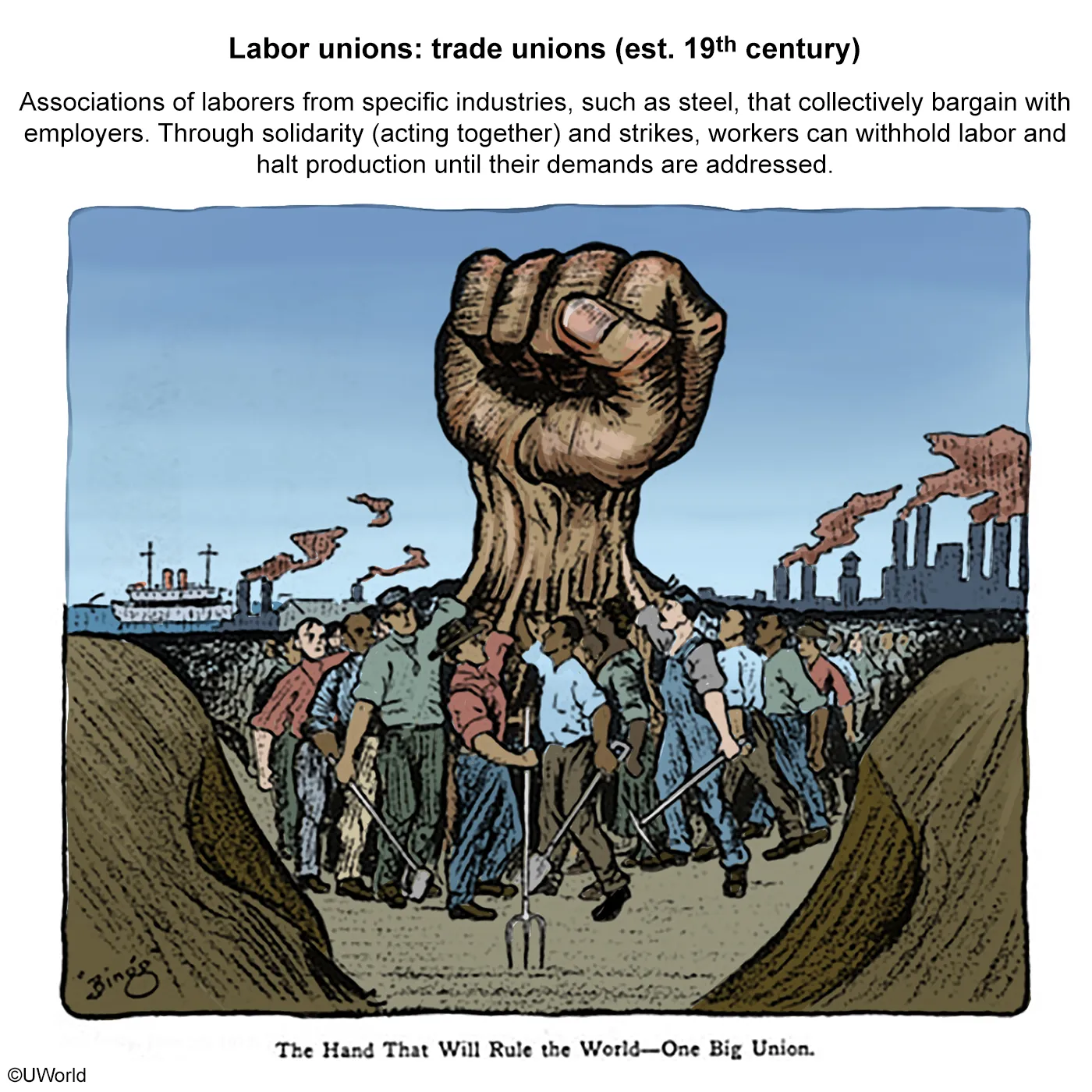
D. Support for labor strikes

Explanation

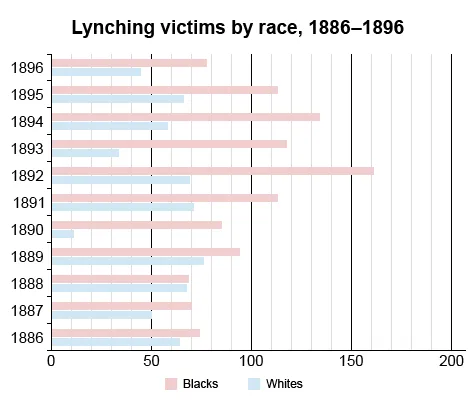
Lynching victims by race

Lynching refers to the violent killing of individuals without a legal trial. Although some people have described lynching as a form of vigilante justice for alleged crimes, during the late 19th century it was primarily used against African Americans to uphold White dominance.

As Black communities began to thrive economically during the late 19th century, the number of African Americans lynched increased. Despite comprising less than 15 percent of the population, the number of African Americans that were lynched during the 1890s far exceeded that of Whites.

The excerpt is from Ida B. Wells' The Red Record—a detailed report on the 197 instances of lynching that occurred in 1894. Wells' work emerged from a trend of racial violence against Black communities and clearly shows that lynching disproportionately impacted African Americans.

(Choice A) Anti-Catholic sentiment typically affected European immigrants, whereas the views in the excerpt pertain to racial violence against Blacks.

(Choice C) The 1890 Census declared the frontier "closed" five years before Wells wrote The Red Record, but nothing in the excerpt emerged from that development.

(Choice D) Support for labor strikes is not related to the experience of racial violence discussed in the excerpt.

Things to remember:
During the late 19th century, lynching was a common type of racial violence primarily inflicted by Whites against Blacks.
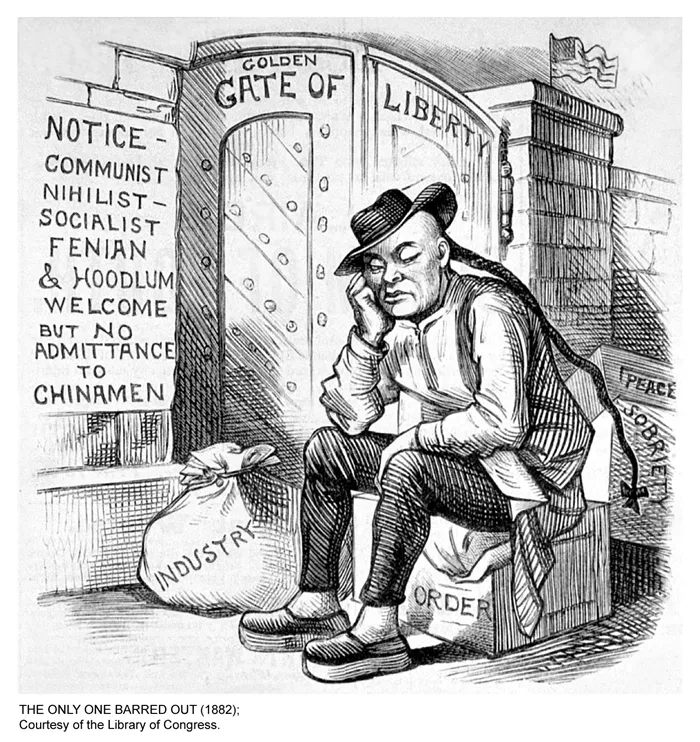
Passage:

Library of Congress

1. Library of Congress

Question

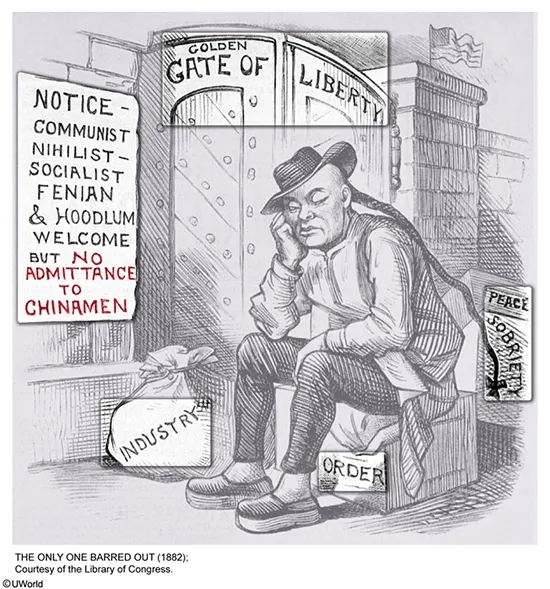
Which of the following groups would have been most likely to support the policy suggested in the image?

A. Pro-immigration union leaders
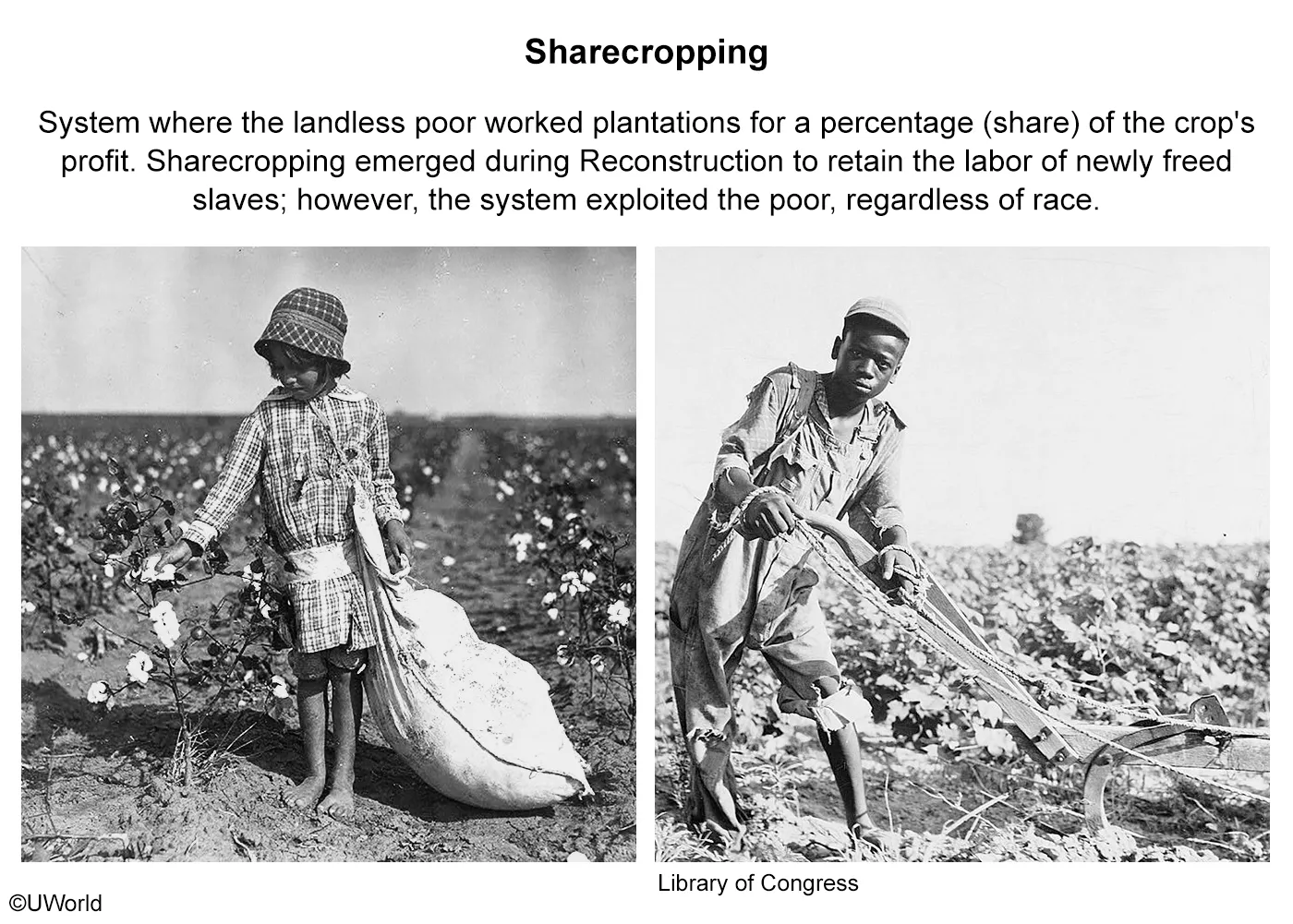
B. Southern cotton sharecroppers
C. White working class
D. Business owners and Christian missionaries

Explanation

Library of Congress

In order to answer this question, consider the following:

  • What is the policy that the cartoon is referencing?
  • Who would have supported this policy?

Policy: The 1882 cartoon, depicting a Chinese immigrant unable to enter the United States, is referencing the Chinese Exclusion Act of 1882. The Act banned Chinese laborers, skilled or unskilled, from entering the country for ten years, and also prevented any Chinese immigrant from becoming a citizen of the United States; however, Chinese immigrants who arrived before the Act and were not yet citizens were exempt.

Supporters: The white working class would have been most likely to support the Chinese Exclusion Act. Chinese laborers worked for extremely low wages, which employers preferred as it helped them earn a larger profit. The lower wages paid to the Chinese, in turn, had the effect of crowding out white laborers.

As a result, the most vocal opponents of Chinese labor and immigrants were white laborers, such as members of the Workingmen's Party of California, which opposed Chinese immigration.

(Choice A) Pro-immigrant union leaders would have opposed the Chinese Exclusion Act because they believed immigrants had a right to work in the United States.

(Choice B) Although some Chinese laborers were hired to work on sugar plantations in the South, there is little evidence to support the claim that southern sharecroppers supported the Chinese Exclusion Act.

(Choice D) A substantial number of business owners and missionaries opposed the Chinese Exclusion Act. Business owners profited from paying lower wages to Chinese laborers, and missionaries saw Chinese immigrants as potential converts to Christianity.

Things to remember:
The Chinese Exclusion Act of 1882 was supported by the white working class, who viewed the Chinese as taking away economic opportunities because the Chinese laborers were willing to work for less money.

UWorld Dark Blue logo

Study Anywhere, Anytime

Whether you’re on the bus, taking a break between classes, or hanging out on campus, you can dive into quick APUSH Unit 6 practice. The UWorld app lets you review APUSH Unit 6 lessons, check notes, and answer questions wherever you are, so your study time fits easily into your day.

Stand Out
with a Top Score in AP U.S. History

Complete your comprehensive APUSH Unit 6 review and boost your performance to make yourself a standout candidate for competitive colleges, majors, and scholarships by earning a top score.

Choose Your Subscription
Dream Score Plan
360-Day
$169
Deep Learning Plan
180-Day
$149
Score Booster Plan
90-Day (No print book, only digital)
$129
Introductory Plan
30-Day (No print book, only digital)
$99

Get your all-in-one course today!

  • Engaging APUSH Videos with Expert Instruction
  • Customizable Quiz Generator
  • Adjustable Study Planner
  • Print & Digital Study Guide with Step-by-Step Explanations
  • Realistic Timed Test Simulation
  • Progress Dashboard
  • 500+ Expert-Designed, Exam-style Practice Questions
  • Smart Flashcards
  • Mobile App
Explore our free trial and frequently asked questions.

Hear From Our AP Students

UWorld’s service is pretty good and helps provide a lot of explanations on subjects I haven’t been confident on before.

—Bence P.

The questions here are the most realistic to the AP tests I've seen so far! I appreciate the ability to customize tests as well.

—Kaila H.

The best part is that all options are well-explained, telling clearly why they are not the right option.
—Syeda Huma Z.

Frequently Asked Questions (FAQs)

AP U.S. History Unit 6 focuses on how the United States changed after the Civil War. Key topics include:

  • The settlement of the West – westward expansion, conflicts with Native Americans, and new economic opportunities
  • The “New South” – rebuilding the South, shifting economies, and ongoing racial inequality
  • The rise of industrial capitalism – big business, factories, labor unions, and growing class tensions
  • Immigration and migration – new immigrant groups, movement to cities, and changing communities
  • Reform movements – efforts to improve working conditions, politics, and society
  • Debates about the role of government – arguments over regulation, economic policy, and government power

UWorld helps you master all these Unit 6 topics with clear explanations and AP-style practice questions, so you can feel more confident going into your test.

A simple read, watch, and practice routine works best for your APUSH Unit 6 review. Start by reading clear Unit 6 notes or a study guide to understand major topics like the West, the “New South,” immigration, and industrial capitalism. Then watch video lessons to reinforce the big ideas and help you remember key themes for your Unit 6 test.

Finish by taking an APUSH Unit 6 practice test, answering MCQs, and trying a few FRQs. Practicing with real exam-style questions builds confidence and shows you what to expect on test day. UWorld combines all of this—study guides, video lessons, and realistic APUSH Unit 6 practice questions, so you can prepare more effectively and score higher.

Yes, you can begin with UWorld’s free trial, which gives you access to a sample set of APUSH Unit 6 practice questions, detailed explanations, and study tools. It’s an easy way to test your understanding of major topics like westward expansion, the rise of industrial capitalism, and the “New South.” The realistic MCQs and clear answer breakdowns help you learn faster, correct mistakes, and build confidence before taking a full Unit 6 practice test.

In addition to UWorld, the College Board offers free topic videos, progress-check questions, and past FRQs that closely match the style of the AP U.S. History exam. Khan Academy also provides helpful lessons and short quizzes that simplify important events from 1865 to 1898. When used together, these free resources give you a strong foundation for your APUSH Unit 6 review without any cost.

The AP U.S. History Unit 6 test includes the same question formats you’ll see on the full AP exam. You’ll answer multiple-choice questions based on short passages, charts, political cartoons, or images connected to themes like industrial capitalism, westward expansion, and immigration. The test also includes short-answer questions (SAQs) that ask you to explain causes, effects, or historical significance using specific evidence from Unit 6.

Depending on your teacher or practice set, you may also see DBQ- or LEQ-style prompts that ask you to build an argument about major developments from 1865 to 1898. UWorld gives you realistic Unit 6 MCQs, SAQs, and source-based questions so you can practice every format you’ll face.

To score higher on Unit 6 FRQs, start by knowing the core content—terms, events, and themes like the settlement of the West, the “New South,” industrial capitalism, and major immigration and migration patterns. Strong Unit 6 knowledge helps you pull in accurate evidence quickly. When you write, focus on creating a clear argument and connecting each point to specific historical examples from 1865 to 1898.

Practice is key, especially with prompts resembling APUSH Unit 6 SAQs, DBQs, or LEQs. Using timed writing helps you get comfortable organizing your thoughts fast. UWorld’s Unit 6 practice questions, explanations, and sample responses guide you on how to structure arguments and use evidence effectively, making your FRQs more precise and exam-ready.

Period 6 covers some of the most important changes in American history, including industrialization, westward settlement, and major shifts in immigration and the economy. Because these themes shape so many long-term developments, this unit appears regularly throughout the AP U.S. History exam. 

You’ll often see Unit 6 material in multiple-choice sets and in questions that ask you to analyze cause and effect, compare developments, or explain historical significance. Topics like the “New South,” industrial capitalism, and reform movements connect easily to broader AP themes.

UWorld’s Unit 6 practice questions help you review these high-impact topics with explanations that show how they may appear on the real test.

A strong APUSH Unit 6 study guide should make the major themes from 1865–1898 easy to understand, and UWorld’s guide is built exactly for that. It breaks down key topics like westward expansion, the “New South,” industrial capitalism, and immigration into clear, student-friendly explanations so you can review without feeling overwhelmed.

UWorld’s Unit 6 study guide also includes helpful visuals, quick summaries, and exam-style examples that show you how these themes appear on real AP questions. Everything is organized by the concepts the AP exam emphasizes most, so you always know what to focus on.

With step-by-step explanations, keyword-rich notes, and easy navigation, UWorld gives you one of the most efficient ways to master APUSH Unit 6 and feel confident heading into your test.

Yes, you can find practice tests focused entirely on APUSH Unit 6. These usually include multiple-choice questions, short-answer prompts, and source-based items tied to themes like industrial capitalism, immigration patterns, and the “New South.” 

Practicing with Unit 6-specific questions helps you see exactly where your understanding is strongest and where you need more review. Some teachers provide their own Unit 6 quizzes or review packets, while others use progress-check questions to help students prepare for assessments. These are great for building confidence before a full exam.

UWorld offers high-quality Unit 6 practice tests and MCQs that match the difficulty and style of the real AP exam, complete with clear, helpful explanations.

Understanding Unit 6 becomes much easier when you can connect themes like westward expansion, industrial capitalism, and immigration instead of memorizing each topic separately. UWorld helps with this by showing how events from 1865 to 1898 link together through clear explanations and well-organized notes. You see how changes in the economy, population growth, and regional development overlap across the period.

As you move through each concept, UWorld highlights cause-and-effect patterns and themes that the AP exam frequently tests. This helps you see why the “New South” developed the way it did or how industrialization shaped reform movements and government policies.

With visual aids, timelines, and practice questions built around these connections, UWorld makes it easier to understand Unit 6 as a whole rather than as a list of isolated facts.

Right before your Unit 6 test, the goal is to focus on quick, targeted review—not relearning everything from scratch. UWorld’s Unit 6 study guide is perfect for this because it summarizes the most important events from 1865 to 1898 in short, readable sections. You can refresh your memory on topics like the settlement of the West, new industrial systems, and rising immigration in just a few minutes.

After reviewing the notes, doing a short set of Unit 6 practice questions helps you check what you remember under light pressure. UWorld’s explanations reinforce the themes you’re most likely to see on your test.

This combination of fast notes and focused practice helps you boost confidence, sharpen recall, and walk into your APUSH Unit 6 quiz or exam feeling prepared.

Scroll to Top

Ace AP US History

Master Every Concept
The Easy Way
No Credit Card Required
See the UWorld Difference For Yourself

Frequently Asked Questions

New Purchase: All new subscriptions go into effect from the time they are activated and not at the time of setup/purchase. A subscription can be activated immediately or any time thereafter. If your initial purchase consists of multiple courses (Qbank, Self-Assessment exam, CCS, etc.), each can be activated individually and independently via your account on our website. This process of activating a subscription after purchase allows you the flexibility to start a subscription when you are truly ready to use it.

We recommend that all subscriptions be activated within 180 days of setup/purchase. Once a subscription is activated, it cannot be paused or suspended for any reason and will run continuously for the duration of the course material.

Renewal: A renewal is an extension of time to continue access to a current activated subscription. Because a renewal is an extension to an already active subscription, it is effective from the existing expiration date, not from the day of purchase and cannot be deferred to start at a later date/time.

Note: All of our subscriptions are based on the Eastern Time Zone (GMT/UTC -5 hours or New York Time), which may be different than your local time zone.

Any of our product offerings can be purchased from our website with payment due in full at time of purchase via a credit or debit card with American Express/Discover/MasterCard or Visa logo.

You will need to register for an account in order to purchase any of our products. Once you have registered for an account or if you already have an account:

  • Log in to your UWorld account
  • Click on the Cart icon at the top of the page and then select your desired product to see a list of available packages and their prices
  • Select the package you wish to purchase
  • Verify your profile information, address, and educational status, then click the Update button
  • Enter your Billing address and credit/debit card information, then click Review Order
  • Verify that the correct product is in your cart and click Place Order
  • A purchase receipt will automatically be sent to your registered email address

If you complete your purchase but do not receive a receipt, please contact the Customer Care Team at [email protected]

You can subscribe to any of our online courses/services using a credit or debit card with a Visa, MasterCard, Discover or American Express logo. After a successful payment, your subscription will immediately be available for activation via your account on our website or available complementary mobile applications.

You can also subscribe via personal check, money order, or demand drafts taken in U.S. dollars. These types of payments should be mailed to us and should include the name of the subscription and the duration, along with the details asked for in the registration form. We will set up your account as soon as we receive your payment and notify you via email of your access credentials. All direct-mail payments must be in U.S. dollars and made payable to:

UWorld, LLC
9111 Cypress Waters Blvd
Suite 300
Dallas, TX 75019

We do not accept cash via mail, currencies other than U.S. dollars or payments via fax.

Individuals purchasing our CPA Review product may finance their purchase using Affirm during checkout process. Your eligibility depends on your credit score and other criteria, as per Affirm’s policies (outlined here). A soft credit check, a credit check that does not affect your credit score, will be performed by Affirm to determine your loan eligibility. You will need a US based bank account to qualify.

All refunds are evaluated on a case-by-case basis for products purchased directly from UWorld. One case has no bearing on another. Refund amounts determined by UWorld are final.

In-App Purchases: We are unable to process any refunds for purchases made via mobile application (in-app). Please contact Apple for all refund/credit requests for Apple in-app purchases.

USMLE Step 2 CS, Step 3 CCS, Subject Reviews & Self-Assessment Exams: These subscriptions are non-refundable, non-transferable, and cannot be converted into another subscription.

CPA Review: Students may request to cancel their CPA review product only within 10-days of activation of any of the materials. To qualify for a refund, no more than 10% of the course (lectures, Qbank, or a combination there-of) may have been used per exam section. All CPA Review refunds are subject to a cancellation fee of $75 (for single section purchases) or $250 (for package
purchases), plus any applicable shipping charges. No return of merchandise is necessary.

All other Qbanks: Refunds are considered for subscriptions of more than 30 days. Refund amounts are based on the number of days elapsed since the subscription start date or the number of questions used, whichever amounts to a higher deductible.

Example scenarion: An individual purchases a 180-day Qbank subscription and generates a few test blocks equal to 20% of the questions in the Qbank. After 45 days, he/she requests a refund. Because the elapsed duration is greater than the percentage of questions used, the refund amount will be based on a subscription converted to the closest duration (60 days) by deducting the applicable 60-day subscription fee from the refund. In the same scenario, if the individual had used 85% of the questions, the refund would be 15% of the subscription fee paid.

Note 1: A processing fee of 10% (minimum of $10 and maximum of $25) will be applied to all refund amounts.

Note 2: All refunds, pro-rated or otherwise, must be requested within 360 days of original purchase. Refunds for purchases made more than 360 days ago will be issued as non-refundable, non-transferable store credit.

Note 3: Subscribers must notify UWorld of their intent to obtain a refund before activating their subscription (or) during the active duration. If the reset option is used or all of the questions are used, no refund will be allowed (see “I want to reset/delete my Qbank test history (or) start all over again, is this possible?” below for further details). No refunds will be offered for expired subscriptions.

Note 4: For combination package purchases, individual subscription fees will be applied when calculating the refund. If any self-assessment Exam(s) is utilized from a package, the entire purchase is rendered non-refundable.

Note 5: Although access to Qbanks via certain mobile devices is provided as an additional feature, it is not intended to be a replacement for computer access, and no refunds or cancellations will be honored due to user inability to install and/or use the provided software on any mobile device (regardless of whether the device meets the minimum system requirements).

Please use the following steps to purchase a renewal for your subscription:

  • Log in to your account on our website
  • Click on the User Icon in the top right corner of the screen
  • Click on the Renew button corresponding to your subscription
  • Select the Renewal duration you wish to purchase
  • Verify your profile information, address, and educational status, then click the Update button
  • Enter your Billing address and credit/debit card information, then click Review Order
  • Verify that the correct package is in your cart and click Place Order

Upon a successful transaction, you will be sent a confirmation email receipt.

A renewal is an extension of time to continue accessing an active subscription, and it will not start the subscription over, provide a reset, or grant access to additional questions that were not previously accessible. Because a renewal is an extension to an already active subscription, it is effective from the existing expiration date, not from the date of purchase, and cannot be deferred in any way to start at a later date/time.

Please note that to qualify for renewal pricing, you will need to renew the course before it expires. Renewals are not offered to expired subscriptions. If you fail to secure a renewal before the expiration date, you will need to purchase a new subscription at the regular price directly from our website to regain access to the material.

Note: All times and dates displayed for subscription expiration correspond with the Eastern Time Zone (GMT/UTC -5 hours or New York Time), which may be different than your local time zone.

Note: If your initial purchase was a combination package, you will need to renew each active subscription individually. You do not need to renew a course that has not been activated.

You may request to upgrade or downgrade your subscription purchase as long as it has not been activated. If you purchase a combination package, all included subscriptions must be unused. Please be advised that current subscription pricing will apply.

If your subscription has been activated, unfortunately, we cannot upgrade it retroactively. If seeking to downgrade, please refer to our refund policy for available options.

We do not offer custom duration(s) or combination packages other than those outlined on the website. Please refer to our purchase page for currently available subscriptions (including discounted combination packages for some products).

Self-Assessment exam subscriptions are for 14 days each. Subscribers whose active subscription(s) have not expired can purchase renewals from 7 days or more at any time before their active subscription expires. Please refer to the respective course description page for renewal options.

We offer a demo on each of our product pages that contains a sample of the product interface and a few sample questions. We do not offer guest/trial accounts to test our software and view materials.

It is possible to purchase a subscription as a gift for someone else. However, the intended recipient will need to register an account on our website (or have an account registered for them, with their profile information entered accurately). If the user is present at the time of purchase, the purchase can be made from their account on our website using any credit or debit card with a Visa, MasterCard, American Express, or Discover logo.

If the user is not present, or you wish for the gift to be a surprise, please contact Support directly using the contact form to arrange payment for the gift subscription. You will need to provide the user’s registered email address so the account can be located.