
AP® U.S. History Unit 2 Review and Practice Test
Prepare confidently for AP® U.S. History Unit 2 with clear explanations, targeted practice, and engaging visuals that break down Period 2 (1607–1754). UWorld’s APUSH Unit 2 review will help you understand regional colonial development, interactions among Europeans, Native Americans, and Africans, and the foundations of early American society. Whether you're preparing for the APUSH Unit 2 test, practicing MCQs, or building confidence for your next assessment, you’ll find everything you need in one place for efficient learning and effective practice.
Your Complete AP U.S. History Unit 2 Review for Higher Scores
Strengthen your understanding of Period 2: 1607–1754 with clear explanations, engaging lessons, and targeted APUSH Unit 2 review resources. Build confidence as you study key themes, practice test questions, and exam-style MCQs designed to help you score higher.
Engaging Video Lessons
Explore AP U.S. History Unit 2 topics through clear, engaging video lessons that break down key events, colonies, and themes from Period 2. Each lesson helps you connect concepts, review important APUSH Unit 2 content, and prepare confidently for your test.
Interactive Study Guides
Explore Unit 2 content through guides that respond to how you study, clickable sections, quick concept checks, and clear explanations of colonial growth and cultural shifts. These tools help you move from simply reading APUSH notes to truly understanding the ideas that shape Period 2.
Practice AP U.S. History Unit 2 Questions and Build Confidence
Passage:
"There were many grievances of which the Indians complained; but they had not the foresight to see the inevitable result of the constantly increasing power of the English…It was only when they felt the pressure of…persecution, that they began to think of opposition or revenge…[S]everal times the English had demanded that whole tribes should give up their arms because of the fault of one or a few…They were expert in the use of their guns and held them as the most precious of their possessions. The order to give these over to the English, with their stock of ammunition, was regarded by them as robbery…We can now see that from their standpoint there were grievances enough to drive them to rebellion."
George M. Bodge, Soldiers in King Philip's War, 1891
Question
Which of the following most shaped the events described in the excerpt?
| A. The methods of British land acquisition in North America | |
| B.The importance of the fur trade to Native American leaders for maintaining good relations with the British | |
| C. The decline of "praying towns" established by Puritans | |
| D. The number of Scots-Irish immigrants moving west of the Appalachians |
Explanation
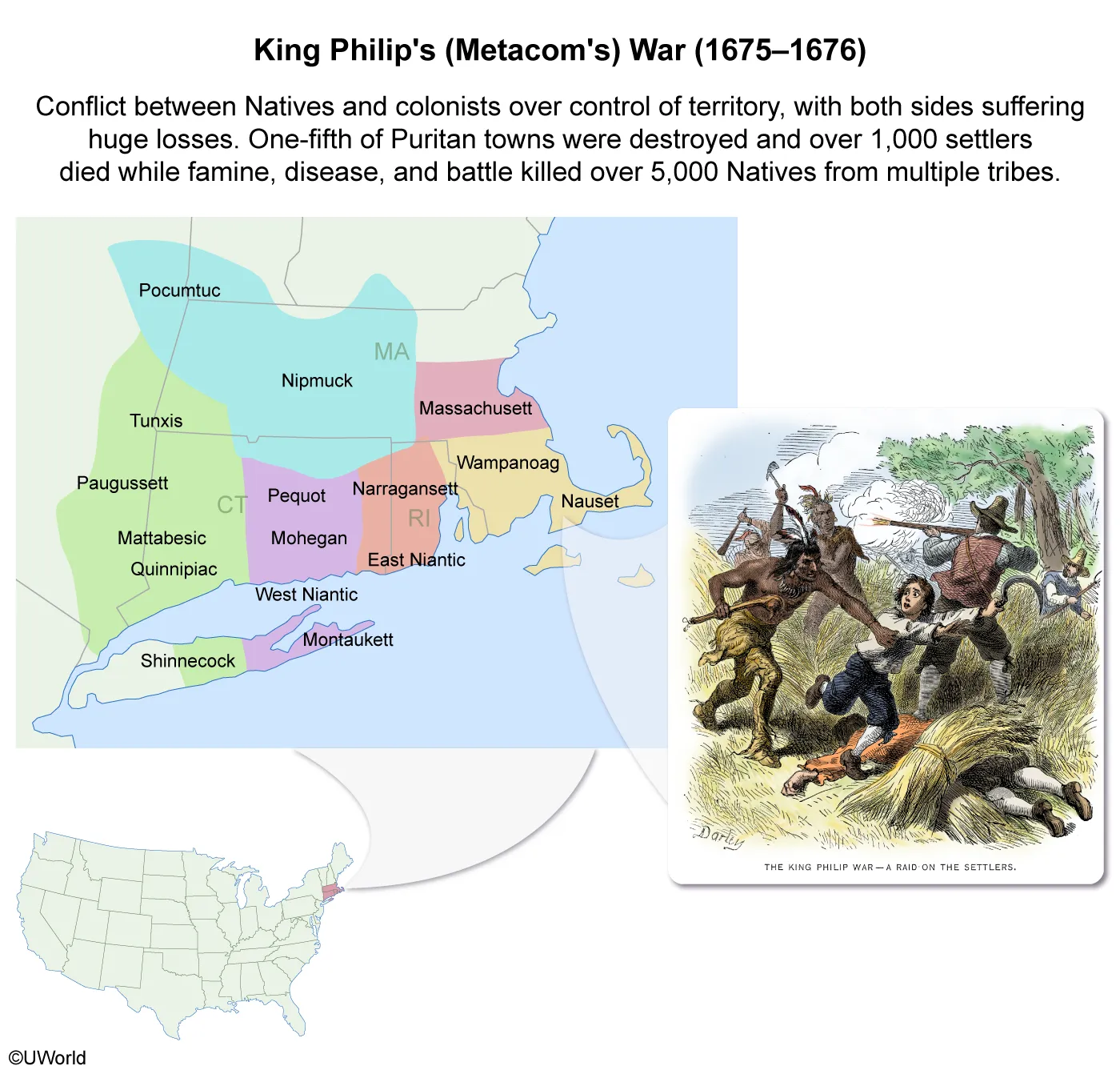
In 1675, New England Puritan colonists numbered around 60,000, and there was a growing need for additional resources to accommodate the population. To acquire these resources, English settlers forced the Natives to sell their land in exchange for English goods that Natives had grown to depend on.
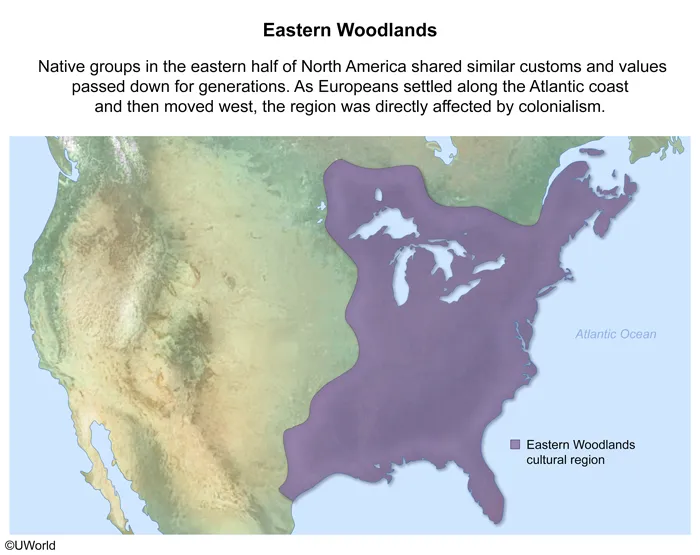
As the colonies expanded and their populations increased, Native Americans were forced to abide by English law. The colonists' quest for more resources, and the broader application of English law, slowly weakened the relationships between Puritans and Native Americans of the Eastern Woodlands.
Recognizing that the "constantly increasing power of the English" posed a threat to the Natives' survival, the Wampanoag leader Metacom, known to the English as King Philip, united several tribes and began to raid English towns throughout New England. Known as King Philip's War, the conflict lasted over a year and resulted in the deaths of thousands of colonists and Natives.
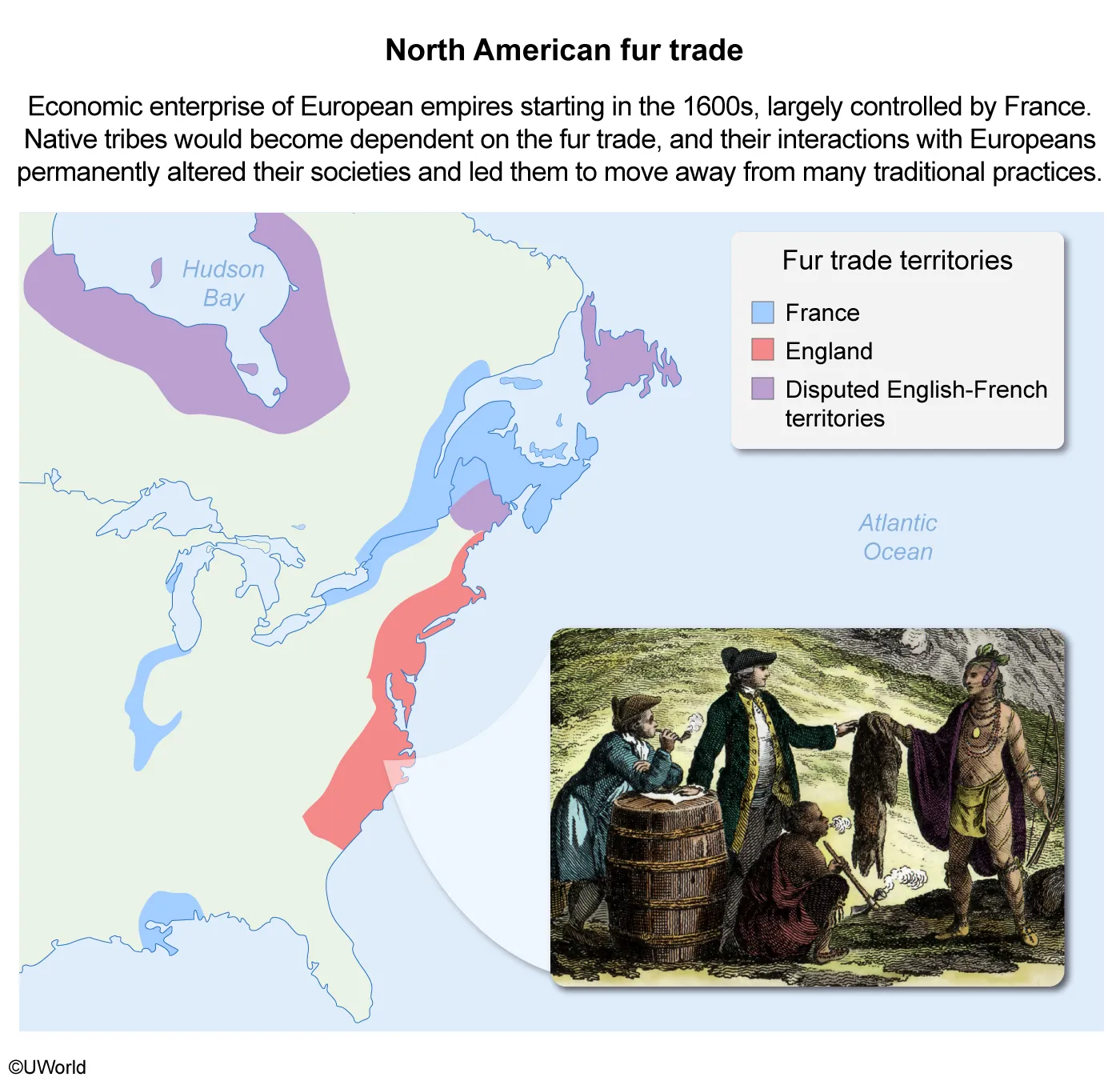
(Choice B) Although Native leaders used the fur trade for maintaining good relations with the English, the fur trade in New England declined as Puritan settlers continued to acquire Native land.
(Choice C) Puritan "praying towns" weren't on the decline prior to King Philip's War.
(Choice D) The Scots-Irish didn't begin arriving in the New World colonies in large numbers until 1717. Therefore, their eventual settlement west of the Appalachians couldn't shape the events of King Philip's War in 1675.
Things to remember:
As the population of New England continued to grow, colonists sought out Native-controlled land to accommodate this population growth, resulting in King Philip's War.
Passage:
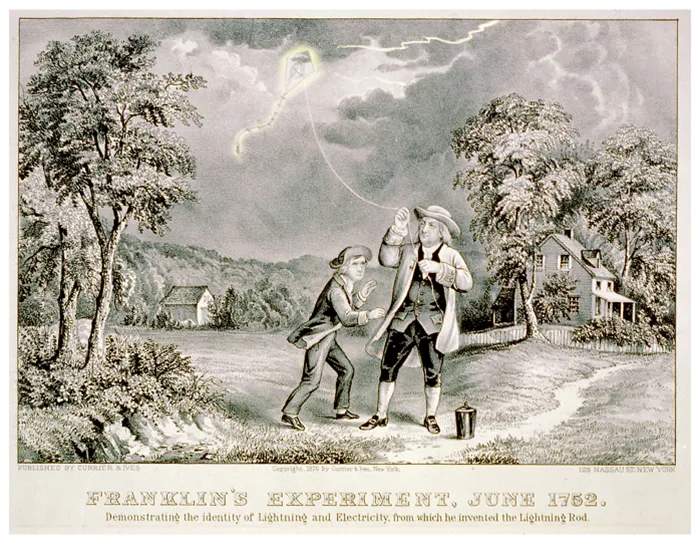
"Make a small cross of two light strips of cedar, the arms so long as to reach to the four corners of a large, thin silk handkerchief when extended; tie the corners of the handkerchief to the extremities of the cross, so you have the body of a kite; which being properly accommodated with a tail, loop, and string, will rise in the air, like those made of paper; but this being of silk, is fitter to bear the wet and wind of a thunder-gust without tearing. To the top of the upright stick of the cross is to be fixed a very sharp-pointed wire, rising a foot or more above the wood. To the end of the twine, next the hand, is to be tied a silk ribbon, and where the silk and twine join, a key may be fastened."
This kite is to be raised when a thunder-gust appears to be coming on, and the person who holds the string must stand within a door or window, or under some cover, so that the silk ribbon may not be wet…. As soon as any of the thunder clouds come over the kite, the pointed wire will draw the electric fire from them, and the kite, with all the twine will be electrified….
At this key the phial may be charged; and from electric fire thus obtained…all the electric experiments [may] be performed…thereby the sameness of the electric matter with that of lightning [may be] completely demonstrated."
The Autobiography of Benjamin Franklin, 1791
Question
The ideas expressed in the excerpt are most closely aligned with which of the following broader historical developments?
| A. The establishment of the first colleges in New England | |
| B. The spread of Enlightenment thought from Europe to the colonies | |
| C. The tightening of British authority in New England | |
| D. The hysteria over suspected witchcraft in Puritan communities |
Explanation
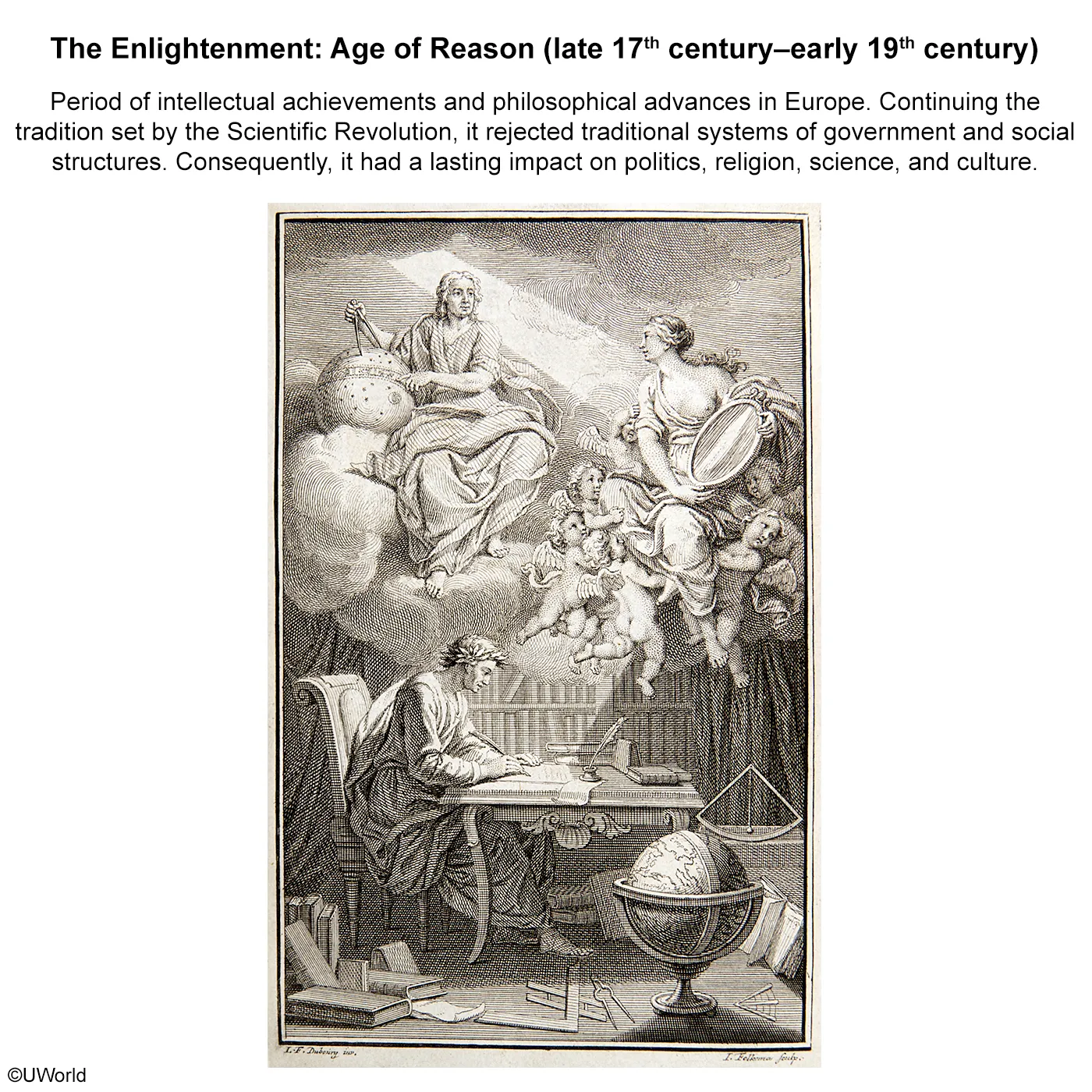
Before the 18th century, most people relied on religion and superstition to explain the world around them. By the mid-1700s, however, Enlightenment ideas were circulating, suggesting that the world could be understood and improved by reason and logic.
The spread of Enlightenment thought to the American colonies fostered intellectual exchanges among educated colonists about government, philosophy, and science. Prominent figures, such as Benjamin Franklin, hosted informal gatherings called social clubs or salons where ideas were shared and debated. A leader of the American Enlightenment, Franklin promoted the idea that natural phenomena could be explained and harnessed through reason.
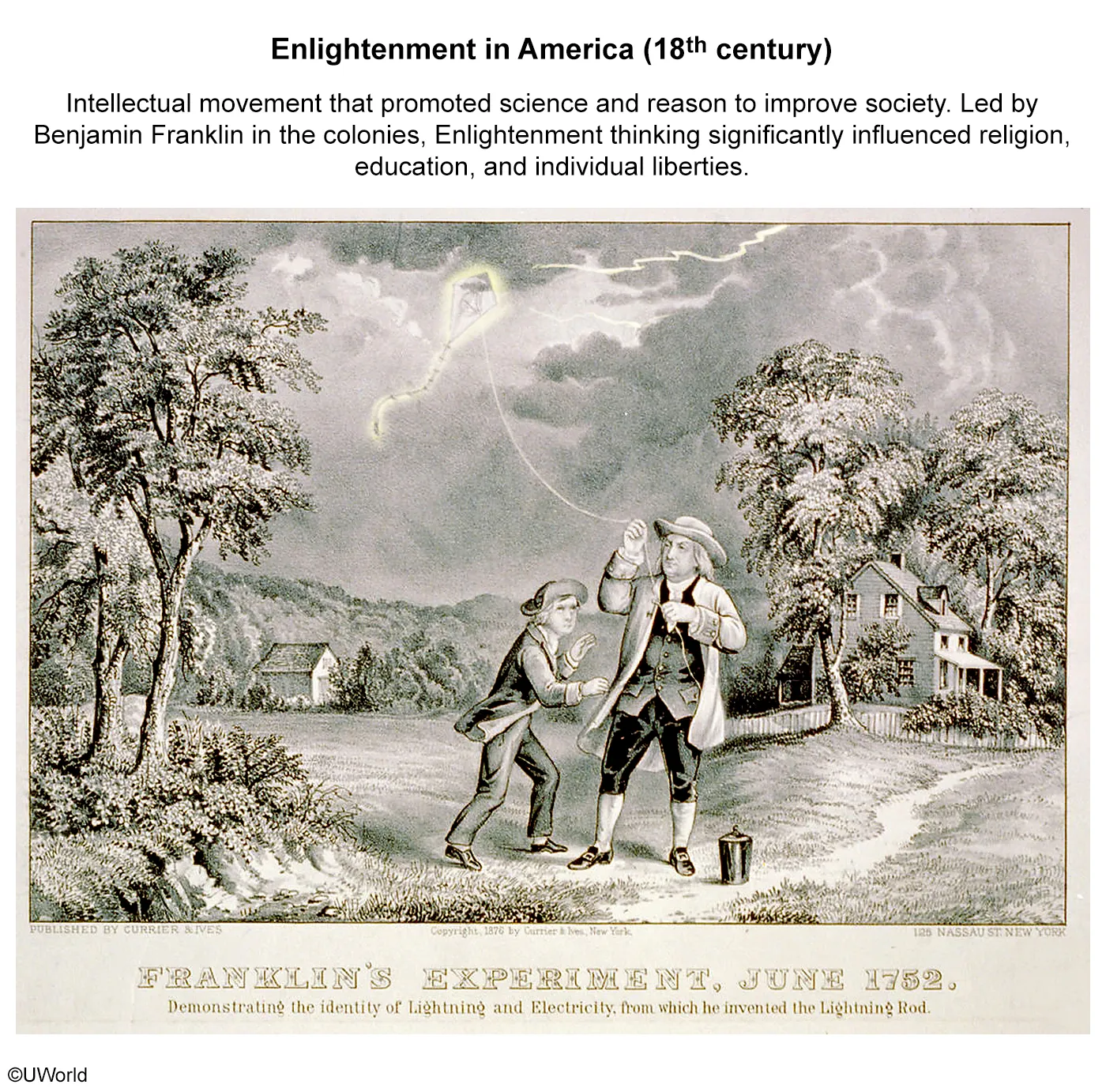
By emphasizing observation, scientific inquiry, and reason, Franklin's experiments with electricity exemplified the spread of Enlightenment thought to the colonies. His famous kite experiment demonstrated that lightning is a form of electricity, challenging superstition and promoting a rational understanding of natural phenomena.
(Choice A) The first colleges in New England were established to train Protestant ministers and did not embrace the excerpt's emphasis on scientific rationalism.
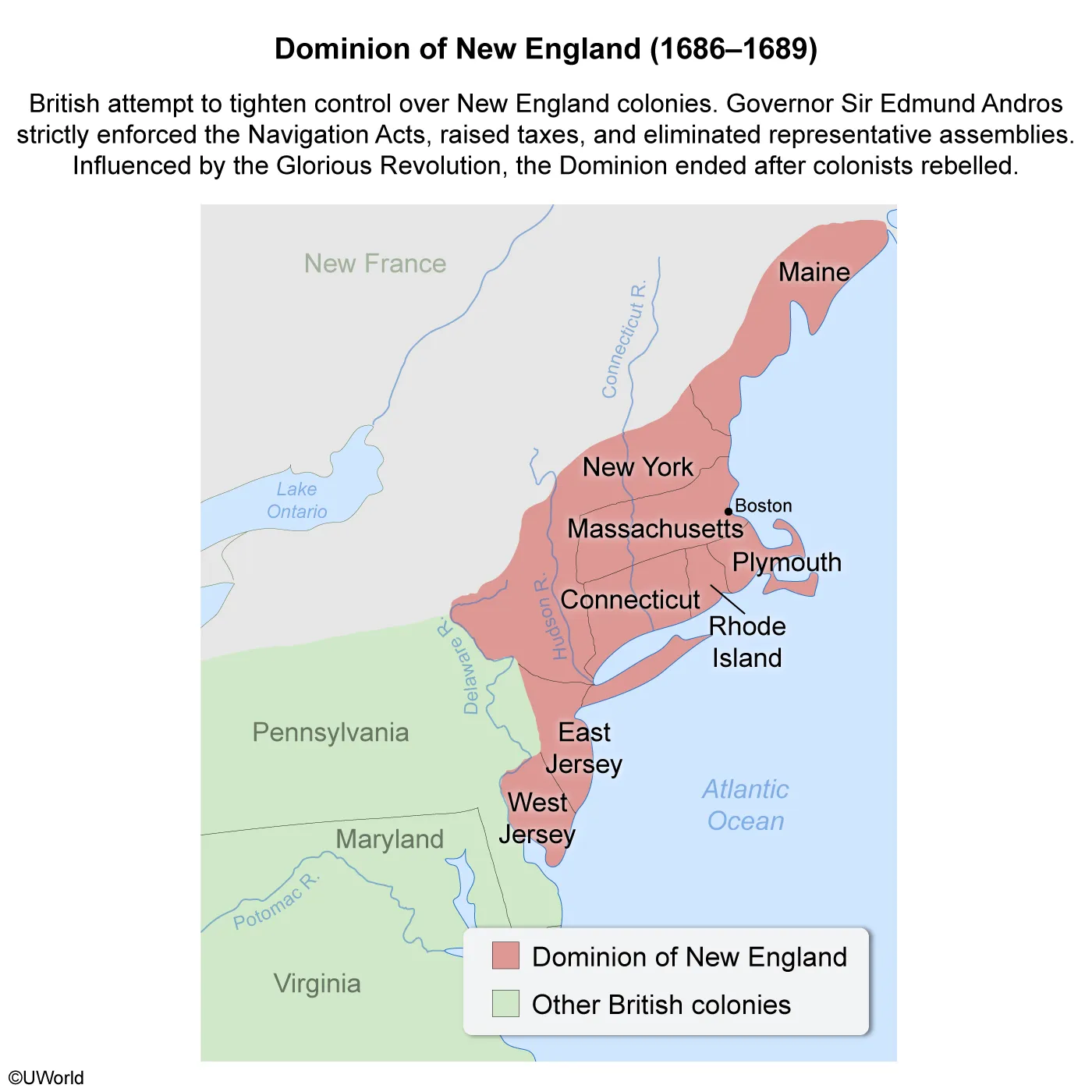
(Choice C) Franklin's experiments dealt with rationalism and scientific phenomena, not with the political attempt to tighten British authority in the Dominion of New England during the late 1600s.
(Choice D) Superstitions and religious ideas led to Puritan hysteria over perceived witches during the late 1600s, whereas the excerpt emphasizes scientific rationalism.
Things to remember:
By emphasizing reason, observation, and scientific inquiry, Benjamin Franklin's experiments with electricity exemplified the spread of Enlightenment thought to the American colonies.
Passage:
Question
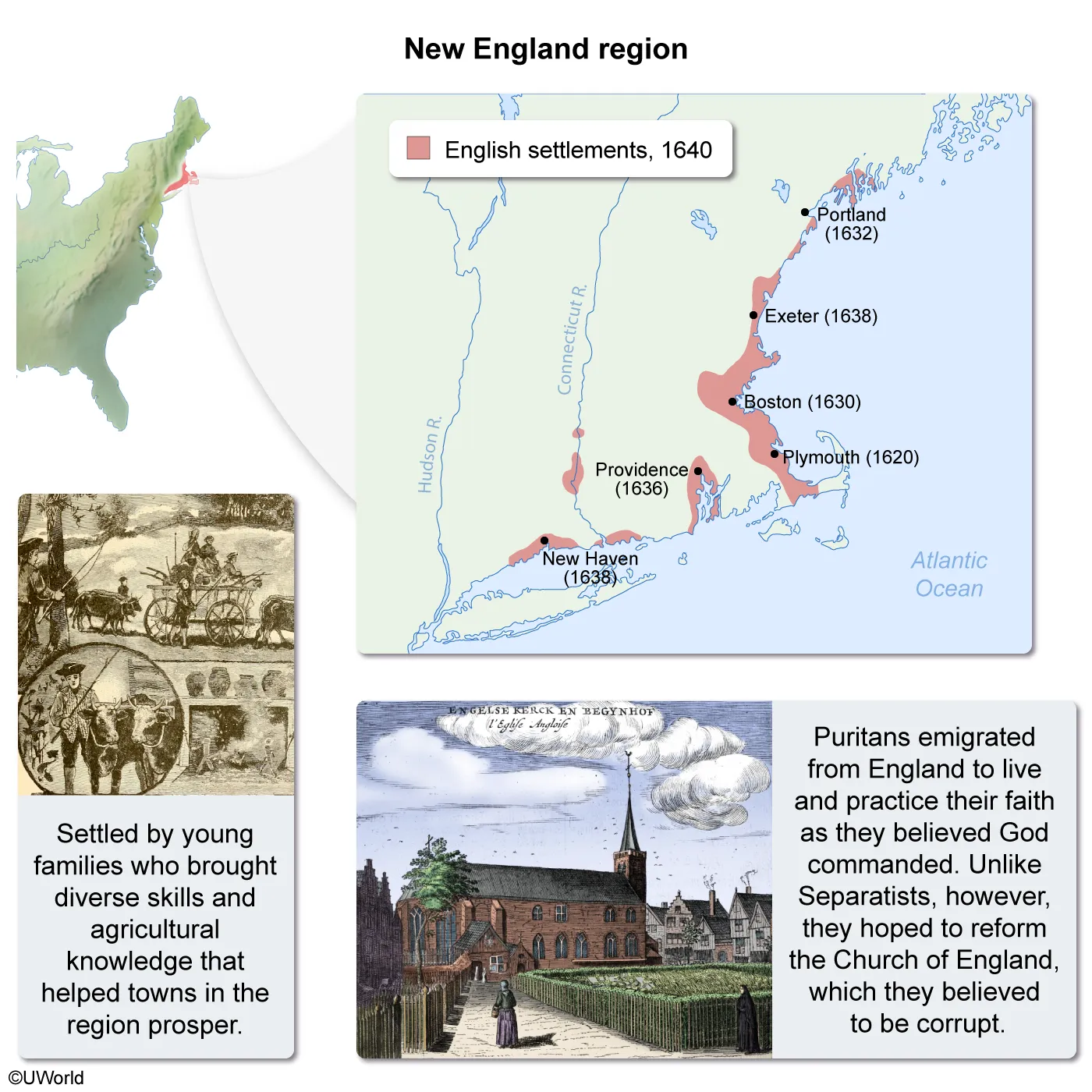
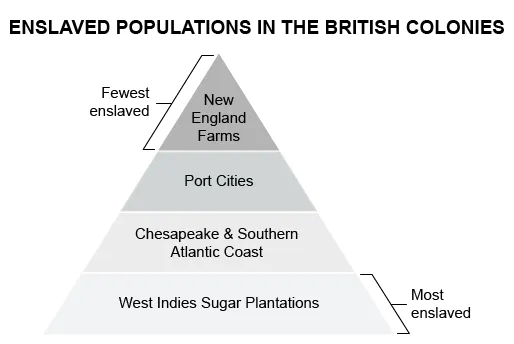
Which of the following best explains the reason for the comparatively few enslaved people working on New England farms as shown in the image?
| A. British ships avoided sailing north toward New England and favored ports in the Southern colonies | |
| B. Sermons condemning enslavement gained popular appeal in the region due to the excitement around the First Great Awakening | |
| C. Mass migration of families to New England meant that farm labor was sufficient to support the needs of Puritan communities | |
| D. Puritanism discouraged enslavement to keep its practitioners in divine favor |
Explanation
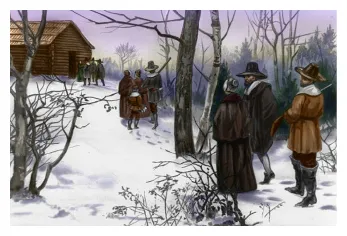
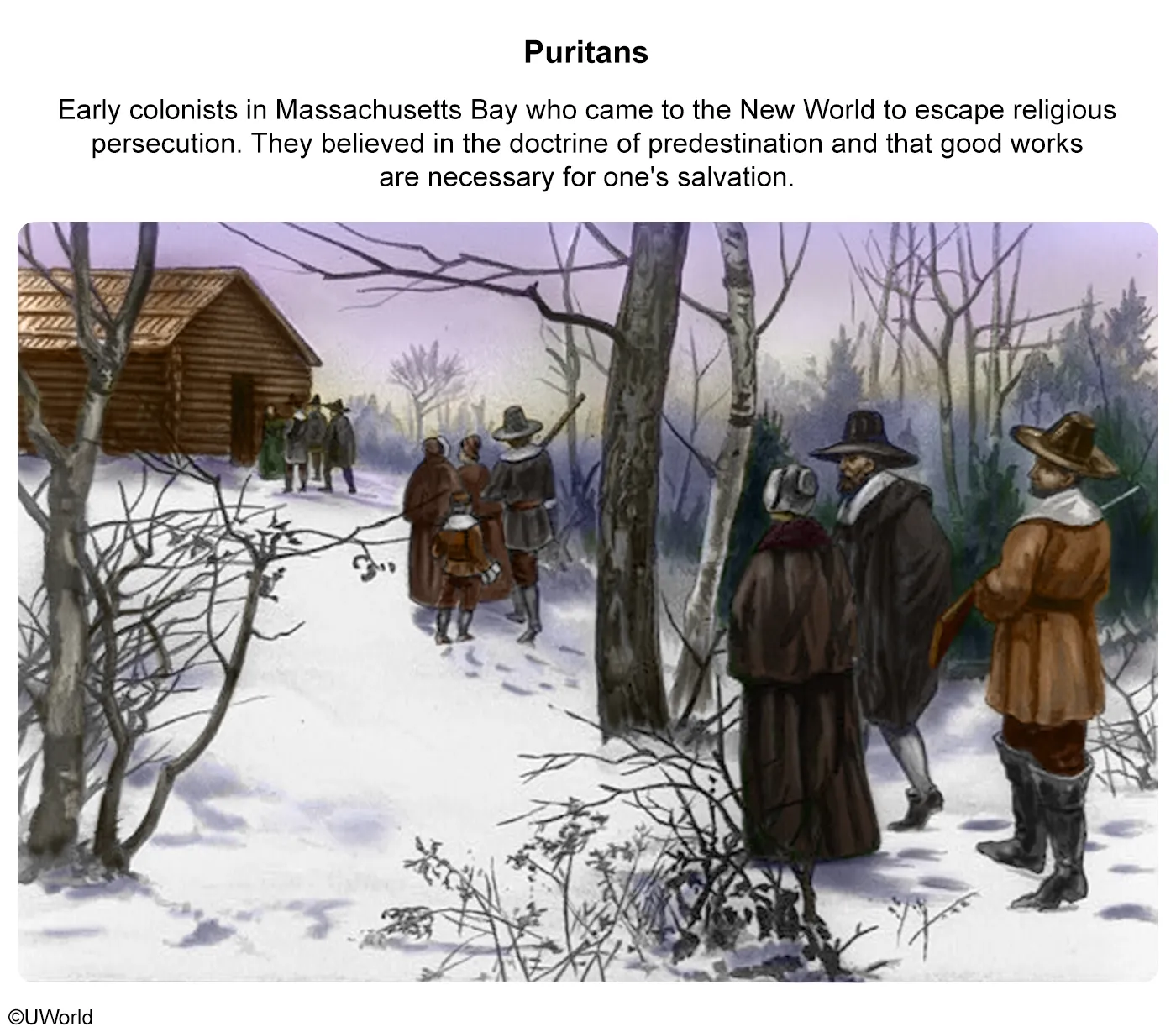
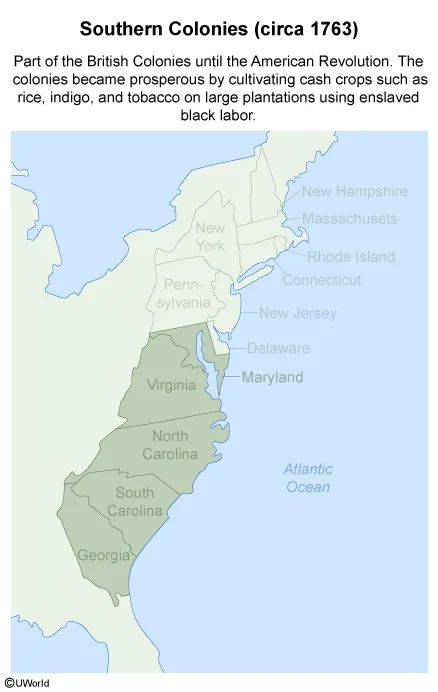
Colonial New England farms were primarily established by Puritan settlers who migrated to America for religious, rather than economic, reasons. Unlike in the Southern colonies, where cash crops created a high demand for labor, New England agriculture was based on subsistence and small-scale farming. The region's harsh climate and rocky soil made large-scale plantation agriculture challenging.
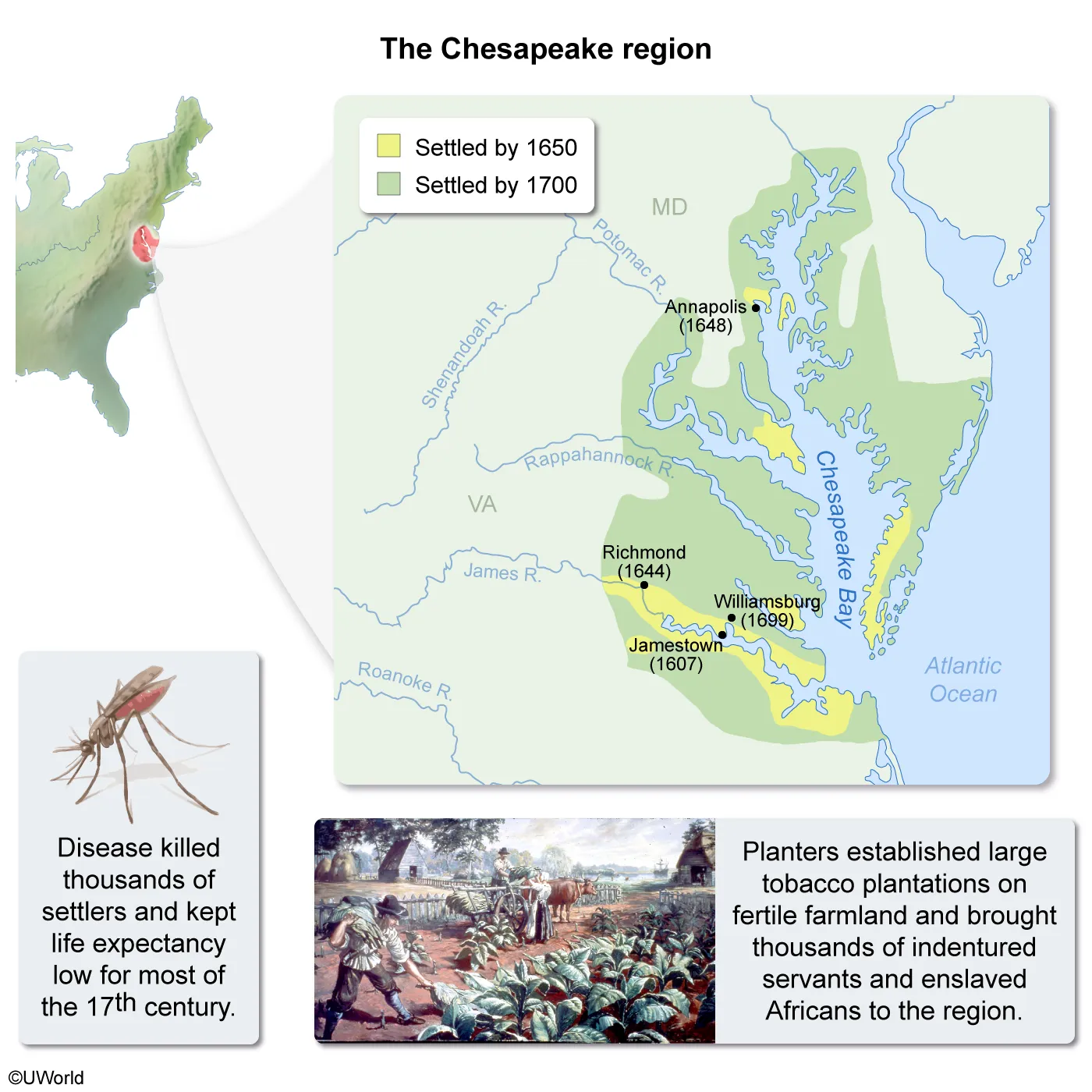
Despite these limitations, New England farms thrived. Unlike the adventurers who settled the Chesapeake, New England settlers represented a cross-section of English society, including experienced farmers. These farmers, with Native help, adapted their techniques to the new environment. Because their goal was to feed their communities rather than to profit from agricultural exports, New England farms required less labor than Southern plantations.
Therefore, New England farms had the fewest enslaved laborers because the mass migration of Puritan families to the region provided sufficient labor to support the needs of their communities.
(Choice A) British ships did not avoid New England's seaports, which were hubs of trans-Atlantic commerce.
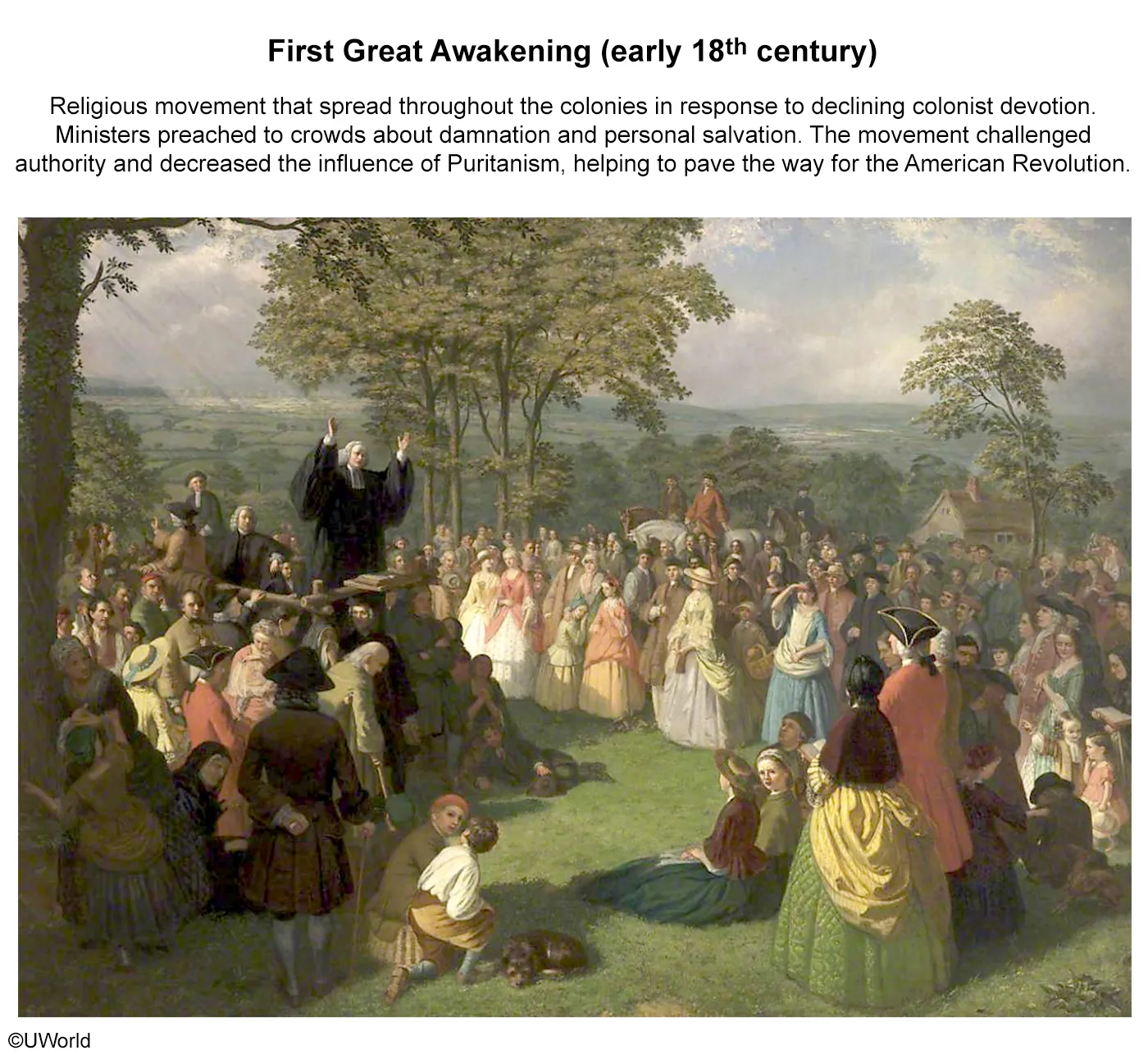
(Choices B and D) Neither sermons from the First Great Awakening nor Puritanism led New Englanders to discourage the institution of slavery.
Things to remember:
New England farms focused on subsistence and small-scale agriculture. The region's many Puritan families provided sufficient labor for these farms, thereby creating little need for enslaved laborers.

Study APUSH Unit 2 on Your Schedule
Easily incorporate your AP U.S. History Unit 2 review into even the busiest of days. Answer practice questions while you’re on the go, revisit key concepts through short videos during breaks, or skim study notes whenever you have a free minute. With the UWorld app, your APUSH Unit 2 resources are always within reach, no matter where you are.
Stand Out
with a Top Score in AP U.S. History
Complete your comprehensive APUSH Unit 2 review and boost your performance to make yourself a standout candidate for competitive colleges, majors, and scholarships by earning a top score.
Get your all-in-one course today!
- Engaging APUSH Videos with Expert Instruction
- Customizable Quiz Generator
- Adjustable Study Planner
- Print & Digital Study Guide with Step-by-Step Explanations
- Realistic Timed Test Simulation
- Progress Dashboard
- 500+ Expert-Designed, Exam-style Practice Questions
- Smart Flashcards
- Mobile App
Hear From Our AP Students
UWorld’s service is pretty good and helps provide a lot of explanations on subjects I haven’t been confident on before.
The questions here are the most realistic to the AP tests I've seen so far! I appreciate the ability to customize tests as well.
The best part is that all options are well-explained, telling clearly why they are not the right option.
Frequently Asked Questions (FAQs)
What are the main topics covered in AP U.S. History Unit 2: Period 2: 1607–1754?
In AP U.S. History Unit 2, you explore how early colonies grew, interacted, and laid the groundwork for later conflicts and revolutions. This unit often appears heavily in APUSH Unit 2 MCQs and practice tests.
Key topics include:
- How different European colonies developed and expanded: Compare Spanish, French, Dutch, and British colonial goals and settlement patterns.
- Transatlantic trade: Examine mercantilism, the Atlantic economy, and the exchange of goods, people, and ideas.
- Interactions between American Indians and Europeans: Study cooperation, conflict, displacement, and shifting alliances.
- Slavery in the British colonies: Trace the growth of chattel slavery and its economic and social impact.
- Colonial society and culture: Review religion, social hierarchies, and regional cultural differences.
A focused AP U.S. History Unit 2 review is easier with a structured AP U.S. History Unit 2 study guide, realistic APUSH Unit 2 practice questions, and exam-style explanations from UWorld’s APUSH Unit 2 course.
How should I prepare for an AP U.S. History Unit 2 exam?
Preparing for an AP U.S. History Unit 2 exam is easier when you use a simple read–watch–practice routine. Start by reading a reliable APUSH Unit 2 study guide, focusing on key themes like transatlantic trade, colonial interactions, and the growth of slavery. UWorld’s concise explanations help you break down complex ideas without getting overwhelmed.
Next, watch short APUSH Unit 2 video lessons to reinforce what you’ve read. Seeing the events and patterns of Period 2 explained visually can make it easier to remember comparisons and long-term trends.
Finally, practice with exam-style AP U.S. History Unit 2 questions, including MCQs, SAQs, and progress check items. UWorld’s realistic practice tests and detailed answer explanations show you exactly where you’re improving and where you need more review—making your Unit 2 exam prep far more effective.
Are any free resources available for AP U.S. History Unit 2?
Yes, you can use several helpful free resources to support your AP U.S. History Unit 2 review. The most engaging option to start with is UWorld’s free trial, which gives you access to a sample set of high-quality APUSH Unit 2 practice questions, detailed explanations, and interactive study tools. It’s a great way to experience the platform students often call the most realistic for AP exam prep.
You can also use College Board’s AP Classroom materials for official APUSH Unit 2 progress check MCQs and topic guides, which reinforce the key themes from Period 2.
For additional reinforcement, Khan Academy provides free videos and review notes that can help you revisit major concepts at your own pace. When you’re ready to go deeper, UWorld’s full AP U.S. History Unit 2 resources offer the strongest combination of exam-style questions, visuals, and step-by-step reasoning to boost your confidence for test day.
What types of questions are on the APUSH Unit 2 test?
The APUSH Unit 2 test follows the structure of the official AP U.S. History exam. Section IA includes multiple-choice questions (MCQs) based on short texts, maps, charts, or images that assess your understanding of Unit 2 themes like European colonization, transatlantic trade, and interactions between American Indians and Europeans.
Section IB contains short-answer questions (SAQs) that require concise, evidence-based explanations. These usually focus on comparisons, cause-and-effect relationships, and key developments across the colonies from 1607–1754.
In Section II, the Free-Response section (FRQ) includes a Document-Based Question (DBQ) and a Long Essay Question (LEQ). The AP exam usually does not cover Unit 2, it’s mostly limited to topics from 1754–1980. UWorld’s APUSH Unit 2 practice questions mirror exam formats with clear explanations, making your preparation more efficient and confidence-boosting.
How can I improve my score on the Free-Response Questions (FRQs) for Unit 2?
To improve your FRQ performance for AP U.S. History Unit 2, start by reviewing major themes from Period 2, such as colonial expansion, transatlantic trade, and the growth of slavery. Strong FRQs come from clearly connecting these themes to broader trends and using specific evidence in each paragraph.
A helpful strategy is to break prompts into parts:
- Identify the historical development
- Choose relevant examples from Unit 2
- Explain why your evidence supports your argument
Practicing this structure repeatedly will make your writing clearer and more confident. UWorld supports this process with step-by-step explanations, sample responses, and APUSH Unit 2 practice questions that help you learn how to build strong claims and use precise historical evidence—skills that directly raise your FRQ score.
What is the "Period 2: 1607–1754" unit's weight on the AP U.S. History exam?
Period 2 (1607–1754) usually makes up about 6–8% of the AP U.S. History exam. While this may seem smaller compared to later periods, Unit 2 lays the foundation for many themes that reappear throughout APUSH—such as colonial systems, transatlantic trade, and shifting relationships between Europeans and American Indians. Because these ideas connect directly to Periods 3 and 4, mastering Unit 2 can strengthen your understanding across the course.
This unit appears in MCQs, SAQs, and LEQs, even though the official DBQ will never focus on pre-1754 content. To prepare efficiently, UWorld’s AP U.S. History Unit 2 review materials offer targeted practice questions and explanations that help you retain key concepts and feel confident on test day.
Where can I find a good study guide for APUSH Unit 2?
One of the best places to find a clear, reliable APUSH Unit 2 study guide is UWorld, where the content is designed to simplify complex topics from Period 2. UWorld’s study guides break down colonial development, transatlantic trade, and interactions between Europeans and American Indians with easy-to-follow explanations and visuals that make review faster and more effective.
You can also use College Board’s AP Classroom topic guides for official outlines of what’s tested, and Khan Academy’s free APUSH videos for additional reinforcement. But if you want a study guide built around real exam-style thinking, UWorld’s AP U.S. History Unit 2 resources offer the strongest mix of clarity, practice, and targeted learning support.
Can I find practice tests specifically for AP U.S. History Unit 2?
Yes, you can find practice tests specifically focused on Unit 2 (Period 2: 1607–1754), but for the most targeted and high-quality experience, you’ll want to use a tool like UWorld.
UWorld’s AP U.S. History section offers 500+ multiple-choice questions and realistic free-response questions, and you can build targeted practice tests by unit, including Unit 2 topics.Meanwhile, there are also free practice tests online dedicated to the Unit 2 timeframe (such as quizzes and MCQ sets for 1607-1754).
And platforms like Khan Academy and College Board offer additional unit-based resources and practice questions.
How can I connect Unit 2 themes to later periods on the AP U.S. History exam?
Understanding how AP U.S. History Unit 2 connects to later periods helps you see long-term patterns that frequently appear in MCQs, SAQs, and FRQs. Period 2 introduces major ideas like colonial competition, regional identities, labor systems, and transatlantic trade that evolve significantly in Periods 3–5. When you link early colonial developments to movements such as the American Revolution, the rise of the market economy, or early political conflicts, you build stronger arguments and clearer historical reasoning.
These connections also help you recognize continuity and change, a skill the AP exam rewards. UWorld’s APUSH Unit 2 explanations highlight how early themes resurface later, making it easier to understand the broader narrative of U.S. history.
What are the most common mistakes students make when studying APUSH Unit 2?
One common mistake students make with APUSH Unit 2 is focusing only on memorizing colony names and dates rather than understanding how and why colonial regions developed differently. Another frequent issue is overlooking the importance of interactions between Europeans and American Indians, which often appear in AP U.S. History Unit 2 MCQs. Some students also underestimate the role of transatlantic trade and early labor systems, even though these themes set up major developments in later periods.
A final challenge is failing to connect Unit 2 concepts to broader trends across APUSH. UWorld’s AP U.S. History Unit 2 practice questions and explanations help prevent these gaps by showing the reasons behind each development and reinforcing a deeper, test-ready understanding.