
FREE Ground Shipping on Courses $149+ | Code: SANTASENDSFREE

APUSH Unit 1 Review and Practice Test

Period 1: 1491–1607

Get fully prepared for APUSH Unit 1 with a streamlined review of Early Contact, Native American societies, European exploration, and early colonial development. Whether you need a fast refresher or a full study plan, UWorld’s AP® U.S. History Unit 1 review covers detailed explanations, exam-style questions, and visual learning tools to help you understand each topic at a deeper level. Start your Unit 1 APUSH review with everything you need in one place.

AP U.S. History prep course suite by UWorld

Build Confidence on AP U.S. History Unit 1 with our Comprehensive Review

Strengthen your understanding of AP U.S. History Unit 1 by working through clear explanations and guided practice. Our approach focuses on what actually shows up on the exam and helps you make sense of early American themes.

Watch

History Come Alive

Get walkthroughs of the early history of the Americas. Each video breaks down complex APUSH themes into simple, visual explanations that show you exactly how these topics connect to Unit 1 AP U.S. History review questions. You’ll see where common misunderstandings happen and how the exam expects you to interpret evidence.

Read

Interactive With Historical Perspectives

Move through major pre-Columbian societies, European expansion, and the founding of the first colonies with organized, exam-aligned summaries. These guides help you develop the narrative foundations for APUSH Unit 1 review while reinforcing key comparisons, timeline shifts, and thematic changes emphasized on the AP exam.

Practice

Try These AP U.S. History Unit 1 Practice Test Questions

Reinforce your understanding of early American history with AP U.S. History Unit 1 practice test material crafted to reflect real AP multiple-choice and SAQ expectations. Each question provides clear feedback, allowing you to pinpoint exactly how to strengthen your reasoning, evidence use, and historical interpretation.
Try these sample practice questions with detailed answer explanations:
Period 1: 1491–1607 Practice Tests

Question

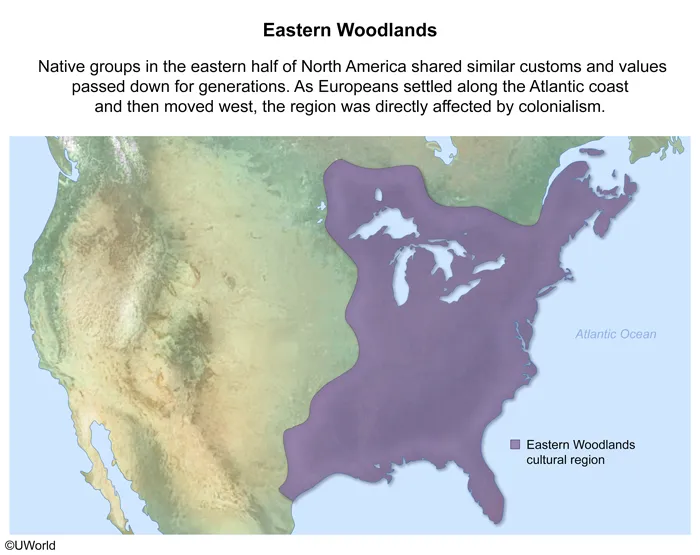
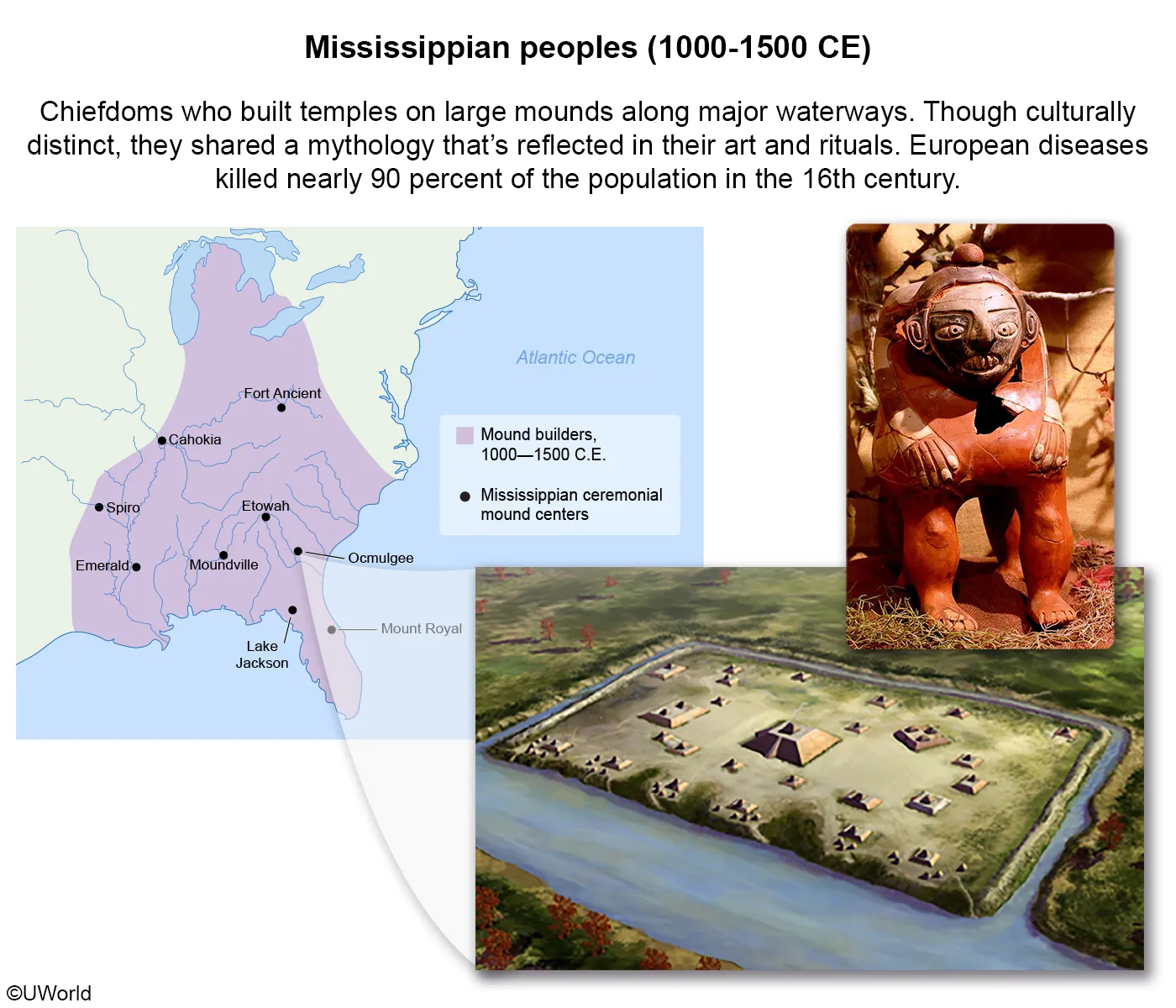
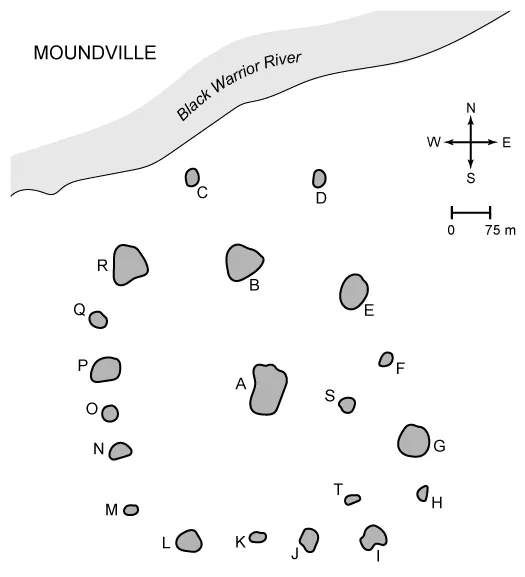
The settlement pattern of southeastern Native populations reflected in the map most directly resulted from

A. the Indian slave trade
B. foraging plants and harvesting marine resources
C. the French and Indian War
D. adoption of maize agriculture

Explanation

Before maize agriculture spread to the Eastern Woodlands around 900 C.E., southeastern Native peoples weren't full-time agriculturalists—although they often tended small gardens of beans, sunflowers, and squash seasonally. Prior to 900 C.E., southeastern Native groups regularly moved their camps in order to hunt deer and gather wild foods. The adoption of Maize agriculture however, changed settlement patterns in the Eastern Woodlands.

Maize was grown throughout the year near major waterways on fertile flood plains; producing more food than populations consumed. Maize agriculturalists needed to stay close to their fields throughout the year, which meant villages were occupied year round. Populations exploded due to the surplus of food, providing more time, labor, and the motivation to construct and use ceremonial centers such as Moundville.

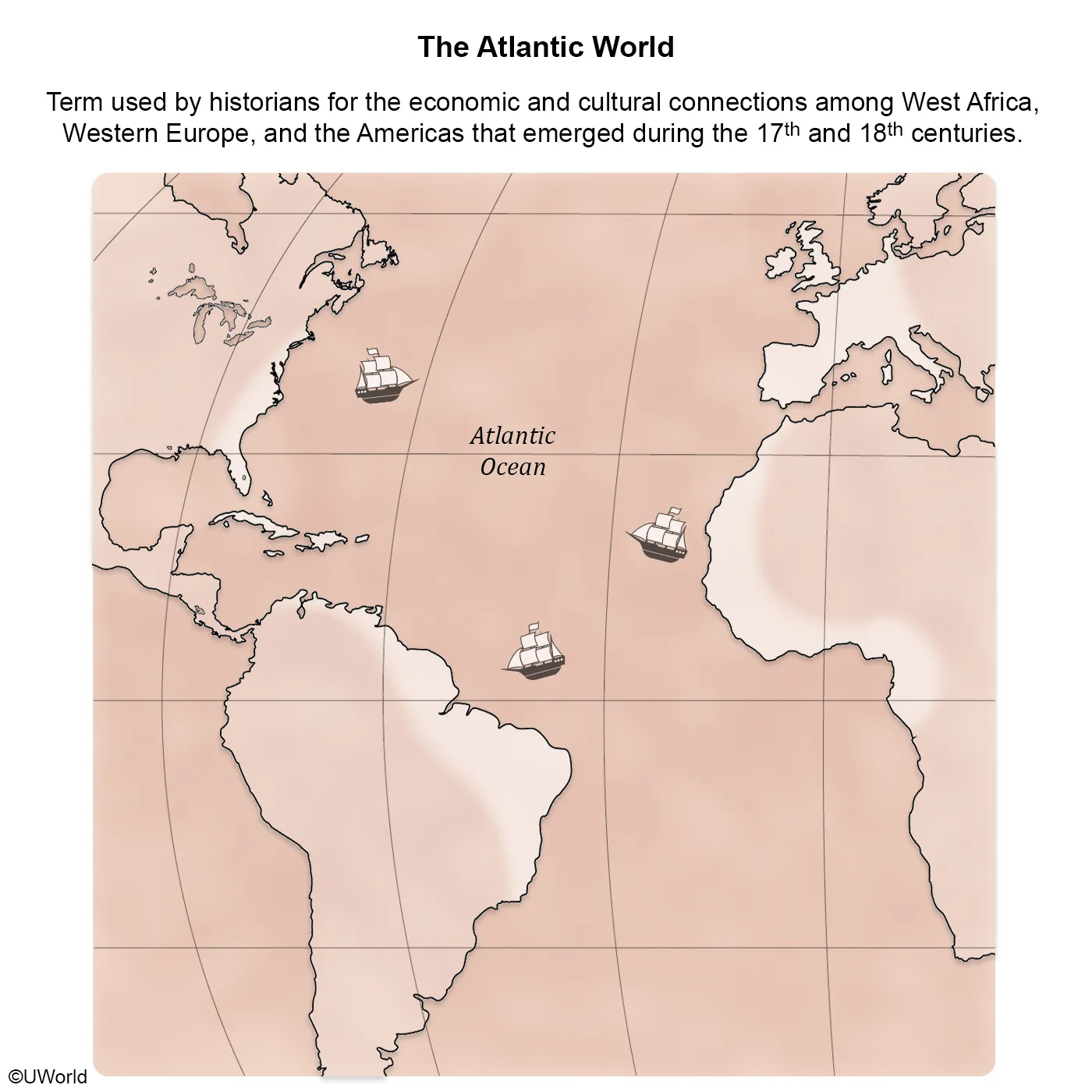
(Choice A) The Indian slave trade refers to the exportation of Natives by Europeans to the Atlantic World, and could not have affected prehistoric settlement patterns.

(Choice B) Foraging plants and harvesting marine resources are practices of hunters and gatherers. Large ceremonial centers, such as Moundville, are typically associated with maize agriculture in the New World.

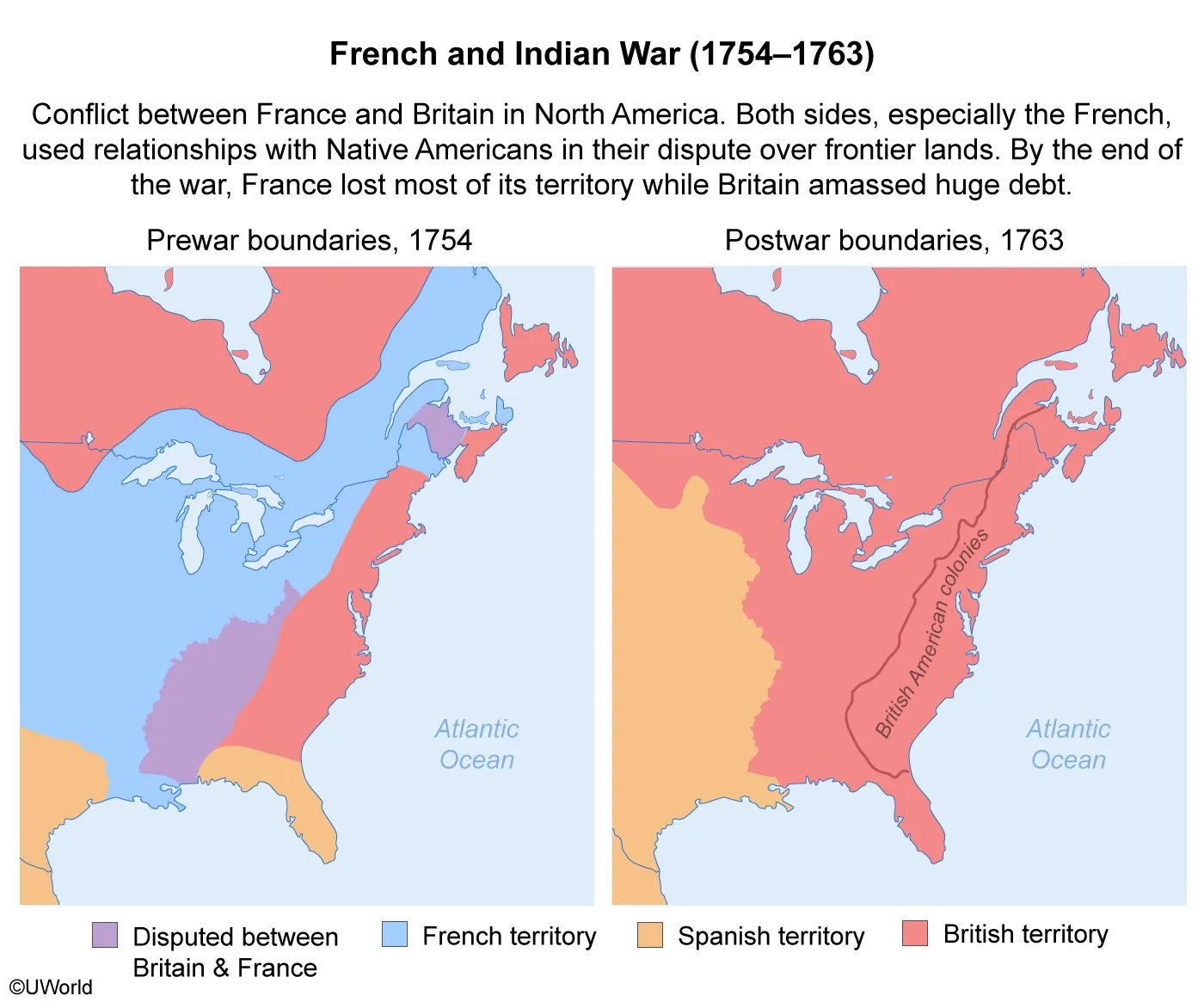
(Choice C) The French and Indian War wasn't a prehistoric conflict; rather, it was a colonial conflict in which France and Britain fought for dominance of the continent.

Things to remember:
Once adopted, maize agriculture was very successful in the warm, wet climate and fertile soils of the Eastern Woodlands. Around 900 C.E., settlements shifted to areas near flood plains. Maize agriculture decreased the need for moving settlements during the year.

Question

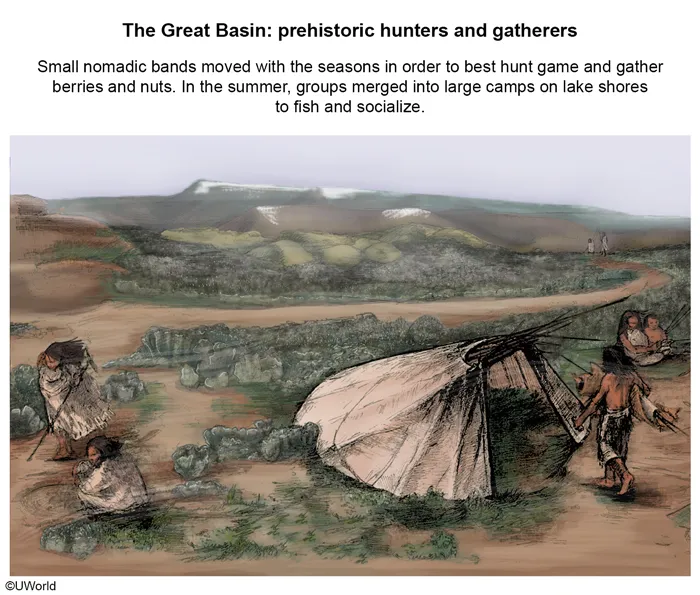
Which of the following was a key difference between the prehistoric peoples of the Great Basin and the Southeast?

A. The Southeastern peoples were hunters and gatherers, and Great Basin cultures were agriculturalists
B. Highly populated settlements dotted the Southeast, while Great Basin cultures were highly mobile and did not establish permanent settlements
C. Great Basin cultures constructed permanent settlements on the shore of large lakes
D. Introduction of the horse meant that Great Basin peoples hunted bison, the Southeastern peoples were maize agriculturalists

Explanation

Archaeologists define prehistoric culture areas by geographic and cultural characteristics. The question asks for a comparison between two prehistoric cultures areas: the Great Basin and the Southeast.

The table lists the contrasting characteristics of two culture areas.

Great Basin Southeast
  • Hunters and gatherers
  • Highly mobile, moved with the seasons
  • Few social distinctions, people earned their roles
  • Small populations, small bands
  • Agriculturalists
  • Settled along major waterways
  • Social hierarchy, people born into their roles
  • Large populations, permanent settlements

In contrast to the Mississippian chiefdoms of the Southeast, Great Basin peoples were highly mobile and did not establish permanent settlements.

(Choice A) Great Basin peoples were not agriculturalists, but rather highly nomadic (moved around). After 900 C.E., the prehistoric cultures of the Southeast were agricultural.

(Choice C) Although Great Basin cultures settled on lakeshores during part of the year, these were not permanent settlements.

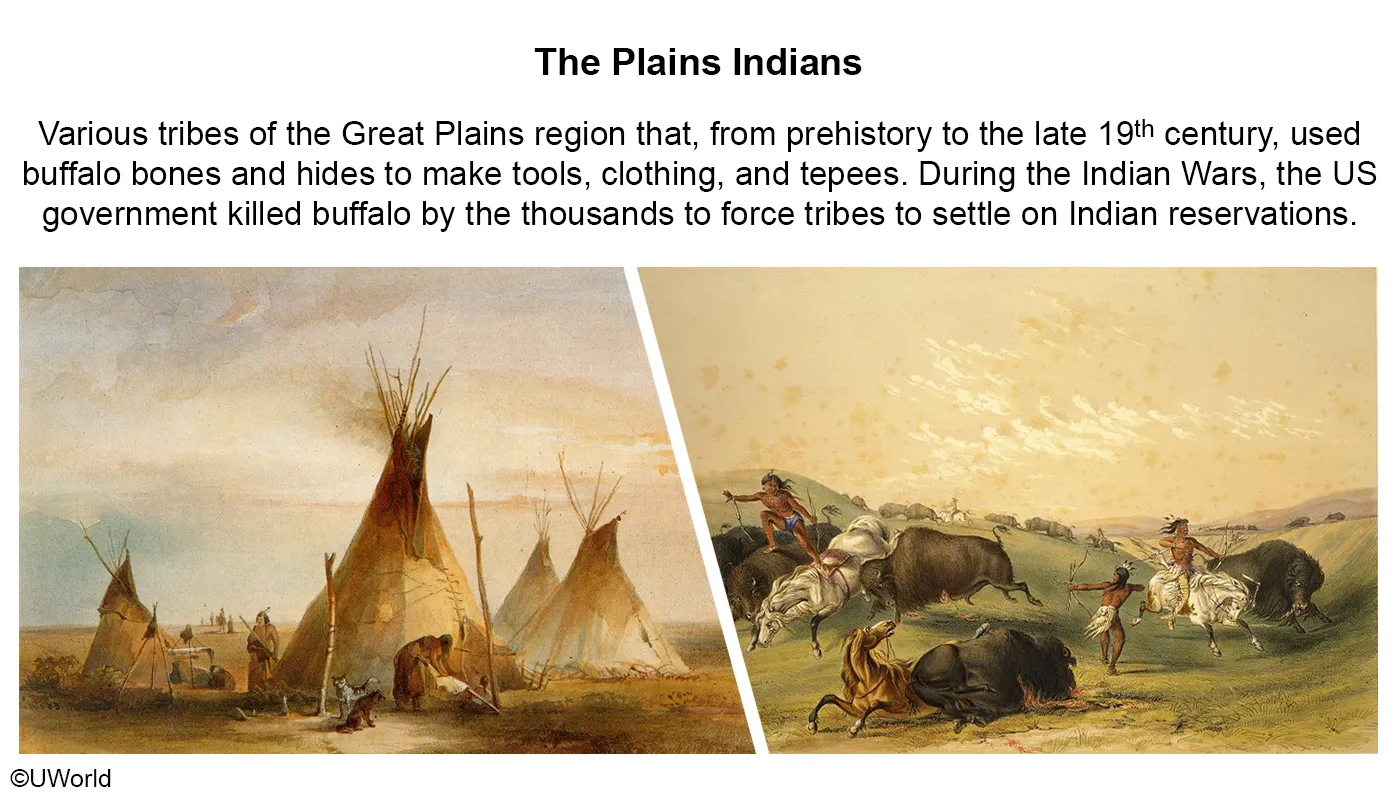
(Choice D) After the introduction of the horse to North America in the 1500s, the Plains Indians, not the peoples in the Southeast or the Great Basin, regularly hunted bison (buffalo) from horseback.

Things to remember:
Great Basin native people were highly mobile hunters and gatherers, whereas the peoples of the Eastern Woodlands were typically maize agriculturalists who established permanent settlements.

Question

Which of the following cultural and social shifts resulted most directly from the adoption of maize agriculture by the native peoples of the Eastern Woodlands?

A. A sharp increase in social inequality
B. The emergence of a numerical system used to record transactions
C. A decline in the political significance of clans and lineages
D. A decline in the importance of the bow and arrow

Explanation

Social hierarchy of Mississippian chiefdoms

The shift to maize agriculture changed more than settlement patterns; it also significantly changed society.

  • Population increased significantly.
  • Specialized jobs such a priests, artists, merchants, or rulers emerged.

Highly populated settlements required a system of order, which meant leadership. The most significant consequence of the shift to maize agriculture was that it made society hierarchical. A rigid social hierarchy—where almost all people live their entire lives in the social position they are born into—resulted in a sharp increase in social inequality.

(Choice B) Presently, there isn’t evidence that the maize agriculturalists of the Eastern Woodlands had a numerical system.

(Choice C) The political significance of clans and lineages increased after the adoption of maize agriculture. Clans and lineages were ranked; with the highest ranking producing an aristocracy and chiefs.

(Choice D) The bow and arrow, invented around 700 C.E. in North America, actually increased in importance after the adoption of maize. It made hunting more efficient and significantly changed warfare—which also increased after the adoption of maize agriculture.

Things to remember:
Maize agriculture drastically changed where and how prehistoric peoples of the Eastern Woodlands lived. Populations exploded and a social hierarchy developed.

UWorld Dark Blue logo

Study Early America Anywhere, Anytime

Work through APUSH Unit 1 MCQ, videos, and study guides wherever you are. Review lessons between classes, answer practice questions on the bus, or read explanations at the coffee shop. With the UWorld app, your entire AP U.S. History Unit 1 review is always ready when you are, online or offline, so your preparation never slows down.

Stand Out
with a Top Score in AP U.S. History

Complete your comprehensive APUSH unit 1 review and boost your performance to make yourself a standout candidate for competitive colleges, majors, and scholarships by earning a top score.

Choose Your Subscription
Dream Score Plan
360-Day
$169
Deep Learning Plan
180-Day
$149
Score Booster Plan
90-Day (No print book, only digital)
$129
Introductory Plan
30-Day (No print book, only digital)
$99

Get your all-in-one course today!

  • Engaging APUSH Videos with Expert Instruction
  • Customizable Quiz Generator
  • Adjustable Study Planner
  • Print & Digital Study Guide with Step-by-Step Explanations
  • Realistic Timed Test Simulation
  • Progress Dashboard
  • 500+ Expert-Designed, Exam-style Practice Questions
  • Smart Flashcards
  • Mobile App
Explore our free trial and frequently asked questions.

Hear From Our AP Students

UWorld’s service is pretty good and helps provide a lot of explanations on subjects I haven’t been confident on before.

—Bence P.

The questions here are the most realistic to the AP tests I've seen so far! I appreciate the ability to customize tests as well.

—Kaila H.

The best part is that all options are well-explained, telling clearly why they are not the right option.
—Syeda Huma Z.

Frequently Asked Questions (FAQs)

AP U.S. History Unit 1 introduces the foundations of early American history, focusing on the societies, systems, and motivations that shaped the first sustained interactions between Native Americans, Europeans, and Africans. This period sets the stage for political, economic, and cultural developments that resonate throughout the rest of the course, making it essential to develop a clear conceptual understanding rather than memorize isolated facts. UWorld explains these topics with contextual detail, allowing students to see how the forces of contact and exchange transformed each group involved.

Key themes you need to know for Period 1 include:

  • Native American societies before European contact
  • European exploration in the New World
  • The Columbian Exchange
  • Labor, slavery, and caste in the Spanish colonial system
  • Cultural interactions between Europeans, Native Americans, and Africans

Understanding these topics helps you make sense of long-term colonial patterns and the economic and cultural systems addressed later in APUSH. Period 1’s themes emphasize change, continuity, and comparison, which align directly with the historical thinking skills tested throughout the AP exam. A firm grasp of these foundations not only supports your APUSH Unit 1 performance but also improves your ability to contextualize developments in Units 2 through 9.

Preparing effectively for APUSH Unit 1 means building a clear understanding of early societies, motivations for exploration, and the consequences of early encounters. Since Period 1: 1491–1607 is short but conceptually dense, preparation should focus on establishing the bigger picture: how Native American diversity shaped early interactions, why Europeans expanded outward, and how contact transformed the Atlantic World. UWorld helps you approach these themes through structured explanations and exam-style practice that sharpen both content recall and historical thinking.

A strong Unit 1 study plan should include:

  • Reviewing Native American regions and how geography shaped political, social, and economic structures.
  • Comparing Spanish, French, English, and Portuguese exploration goals to identify patterns and long-term impacts.
  • Practicing stimulus-based MCQs that require linking maps, charts, or excerpts to broader themes.
  • Writing brief SAQ-style responses on the Columbian Exchange, population shifts, and competing colonial systems.
  • Studying timelines of early contact to build context, which is essential for both MCQs and FRQs.

Preparing this way ensures that you’re not memorizing isolated facts, but rather building a conceptual framework that explains why these early developments were significant. By connecting causes and consequences across regions and groups, you build the analytical habits APUSH expects. This also makes future units easier, since many later themes, such as settlement patterns, labor systems, and imperial competition, trace directly back to Unit 1. Good preparation strengthens both your content understanding and your exam-ready thinking.

Yes. The most useful free starting point for AP U.S. History Unit 1 is UWorld’s 7-day free trial, which gives you access to APUSH-style explanations, exam-level MCQs, and detailed breakdowns that help you understand Period 1: 1491–1607 with clarity. This trial is especially effective for Unit 1 because the period is relatively short yet conceptually foundational, meaning strong early explanations can make the rest of the course easier to process. With the free trial, you can work through stimulus-based questions, visual learning tools, and side-by-side answer analyses that show you why one choice is correct while others are not. This approach trains your thinking to anticipate the types of logic the AP exam expects, even before you delve deeper into later units.

Beyond UWorld, students should review the College Board APUSH course framework, which outlines the key concepts, themes, and learning objectives for Period 1. These documents help you understand what the exam values most, especially cause-and-effect reasoning, comparison, and contextualization. Additionally, you can use publicly released APUSH questions from the College Board to see how real test writers structure prompts and evidence. Some textbook publishers and open-source platforms also offer free summaries or timelines that cover Native American cultures, early European exploration, and the Columbian Exchange. While these can be helpful, they lack the exam-style structure necessary to prepare you for the AP format.

The most effective approach is to rely on UWorld’s explanations for primary learning, then use supplemental free materials to reinforce facts, vocabulary, and historical connections. This combination provides both clarity and accuracy, helping you prepare specifically for the exam’s expectations.

The APUSH Unit 1 test usually includes stimulus-based multiple-choice questions, short-answer questions, and free-response questions. The Period 1: 1491–1607 is both brief and conceptually foundational; the test focuses less on memorizing isolated facts and more on your ability to interpret early American developments in context. The exam expects you to understand Native American cultural regions, European motivations for exploration, and the consequences of the Columbian Exchange, and then apply that understanding directly to historical documents, demographic data, and excerpts. UWorld strengthens these skills by training you to read evidence critically and link it to broader themes.

Typical question types you’ll encounter include:

  • Stimulus-based MCQs built around charts, maps, population graphs, brief excerpts, or images that require you to connect early contact, ecological shifts, or imperial motivations to wider Atlantic World developments.
  • SAQs that may ask you to explain differences among Native American societies, evaluate the effects of European arrival, or describe patterns of cultural exchange and conflict between groups.
  • FRQ or LEQ connections, where Unit 1 isn’t always the main focus but often appears in required contextualization.
  • Cause-and-effect reasoning questions, where you analyze how early interactions shaped later colonial systems, labor structures, or demographic changes.

These question types emphasize historical reasoning rather than memorized lists of facts. The strongest answers use clear explanations, specific evidence, and an understanding of long-term consequences. Although Unit 1 holds a smaller share of the exam, the skills it teaches: comparison, causation, and contextualization, reappear throughout APUSH, making effective practice essential for achieving strong overall exam performance.

Improving FRQ performance for APUSH Unit 1 requires understanding the broader significance of early contact, demographic change, and early colonial patterns. The essays in this period rarely ask you to recite facts; instead, they measure how well you can frame historical developments in a cause-and-effect structure. Strong preparation involves reviewing the major themes of Native American diversity, European expansion, and the Columbian Exchange so you can explain how early interactions shaped later developments. UWorld helps strengthen these connections by modeling high-quality reasoning inside each explanation, showing how evidence supports broader arguments.

To raise your FRQ score for Unit 1, focus on:

  • Using contextualization to anchor your essay in pre-contact Native American societies or early European motives.
  • Selecting evidence that directly supports your argument, such as demographic collapse, agricultural transfers, new trade networks, or imperial rivalries.
  • Explaining significance by connecting early contact to long-term transformations in labor systems, settlement patterns, or cultural exchanges.
  • Practicing thesis crafting that clearly responds to the prompt with a defensible historical claim.
  • Reviewing sample FRQs to identify patterns in how scorers award points.

When writing Unit 1 FRQs, the key is demonstrating how developments fit into broader historical processes. Even if the prompt focuses on a narrow topic, such as early Spanish colonization or Native American regional diversity, you should still demonstrate how these developments influenced later colonial structures and imperial competition. This forward-looking reasoning helps you earn analysis points consistently and prepares you for more complex essay tasks in later units. Strong FRQ skills early in the course make the rest of APUSH more manageable.

Period 1: 1491–1607 typically represents around 4-6% percent of the total AP U.S. History exam content, making it one of the smallest chronological units in terms of percentage weight. However, its importance extends far beyond its numerical value. APUSH uses Period 1 to establish the conceptual foundation for nearly every major theme that appears later in the course, including migration, cultural exchange, labor systems, empire-building, and the development of the Atlantic World.

The College Board often uses Unit 1 material indirectly through contextualization requirements or as background evidence for FRQs, MCQs, and SAQs focused on later topics. Although you may not encounter many direct multiple-choice questions from this period, the reasoning skills developed here, recognizing patterns in cultural diversity, understanding motivations for exploration, and analyzing demographic transformations, will shape your ability to succeed across the remaining periods. Period 1 content also frequently appears in stimulus-based questions that utilize maps, charts, or excerpts referencing Native American societies, Spanish colonization, or early contact.

Even if the primary prompt concerns a later event, the exam often expects you to recognize how early contact continues to influence colonial policies, economic shifts, or interregional patterns. Period 1 provides the context necessary to frame later developments, especially when writing introductory paragraphs for FRQs or SAQs. It is critical to understand its themes clearly. Using structured tools, such as UWorld explanations, helps reinforce these foundations, ensuring that your analysis throughout the exam remains historically accurate and contextually grounded.

A strong AP U.S. History Unit 1 study guide should help you understand the broader themes of Period 1 rather than overwhelm you with long lists of facts. The best guides clarify how Native American diversity, European exploration, and the Columbian Exchange shaped early interactions across the Atlantic World. UWorld offers a structured, exam-aligned approach that connects these developments to the thinking skills tested on the AP exam, making it an effective primary study option.

A reliable Unit 1 study guide should include:

  • Clear summaries of major Native American cultural regions and how geography shaped their political and economic systems.
  • Comparisons of Spanish, French, English, and Portuguese imperial goals and methods.
  • Visual tools, such as maps, timelines, and demographic charts, that reinforce pre-contact diversity and post-contact change.
  • Explanations of the Columbian Exchange that highlight ecological transfers, population shifts, and economic consequences.
  • Practice questions that mirror real AP stimulus-based formats to build reasoning skills.

While textbooks and classroom materials can provide useful narrative detail, a good study guide must also train you to think like the exam expects: identifying patterns, explaining significance, and connecting developments across time. UWorld’s explanations model this type of reasoning, showing you how evidence supports broader arguments and helping you build confidence for both MCQs and free-response tasks. Combining a clear, concept-driven study guide with consistent practice ensures you enter Unit 2 and beyond with a solid historical foundation.

Yes. Many students seek targeted APUSH Unit 1 practice tests to reinforce their understanding of Period 1: 1491–1607 and to build confidence before moving on to later units. UWorld provides high-quality APUSH-style practice questions that mirror the structure of real exam prompts, including stimulus-based MCQs and short-answer formats. These questions are especially effective for Unit 1 because they incorporate maps, demographic charts, and primary-source excerpts that require you to interpret evidence rather than recall unrelated facts. Beyond UWorld’s targeted practice, some teachers offer unit-specific quizzes or practice sets aligned with the APUSH curriculum.

The College Board’s publicly released questions can also be helpful, though they are not organized strictly by unit, so you may need to sort through broader sets to find Period 1–aligned content. Additionally, some textbooks include end-of-chapter review questions that loosely resemble AP exam styles, but these often lack the complexity of real AP stimulus-based items.

The best approach is to focus on practice materials that match the AP exam’s skill demands: sourcing, analyzing context, identifying patterns, and explaining cause-and-effect relationships. Using practice tests built around the actual AP structure ensures that when you encounter similar questions under timed conditions later in the course, you already know how to approach them. A combination of UWorld’s exam-style questions and selected supplemental resources gives you a strong preparation pathway.

Improving your SAQ and MCQ performance for APUSH Unit 1 requires a combination of content clarity and strong historical reasoning. Questions from Period 1 often focus on comparisons among Native American groups, European motives, and early patterns of exchange. The goal isn’t to memorize extra details but to understand how these developments connect. UWorld helps reinforce these skills by modeling how to interpret stimuli, link evidence to broader themes, and explain significance concisely.

To strengthen your SAQ and MCQ performance, focus on:

  • Recognizing patterns: Know how geography shaped Native American societies and how imperial goals differed among European powers.
  • Interpreting stimuli: Practice reading maps, charts, and excerpts quickly to identify the concept being tested.
  • Using precise evidence: For SAQs, choose one or two accurate, relevant examples rather than broad generalizations.
  • Explaining significance: Tie each point to a larger consequence, such as demographic change or economic transformation.
  • Studying cause-and-effect: MCQs often require understanding why Europeans expanded outward and how contact reshaped the Atlantic World.

Better performance comes from understanding the logic behind Unit 1 questions. Instead of focusing purely on facts, consider why developments occurred, what changes resulted, and how these changes influenced long-term patterns in colonization and global exchange. This approach makes both SAQs and MCQs more predictable and easier to manage, especially as you progress into later APUSH units, where these foundational themes continue to appear. Practicing regularly with exam-style questions reinforces this skill set and helps you build the speed and clarity needed for the AP exam.

Many students underestimate APUSH Unit 1 because it covers a shorter chronological span, but the exam uses Period 1 to test analytical skills rather than memorized facts. The biggest mistakes occur when students treat Native American societies, European motives, or patterns of early contact as oversimplified, one-dimensional topics. Instead of understanding the environmental, cultural, and political diversity among Indigenous groups or the complex motivations behind European expansion, students often rely on generalized statements. UWorld helps correct these errors by reinforcing the deeper reasoning the AP exam expects.

Common mistakes to avoid include:

  • Overgeneralizing Native American societies, ignoring regional adaptations and political differences.
  • Misidentifying European motives, assuming “God, gold, and glory” is enough without understanding competition, technology, or economic transitions.
  • Misreading the Columbian Exchange, focusing only on crops without recognizing demographic collapse, forced migration, and global economic shifts.
  • Relying on memory rather than stimulus interpretation, leading to MCQ errors when maps, charts, or excerpts contradict assumptions.
  • Providing evidence without significance in SAQs/FRQs, listing facts rather than explaining how developments shaped long-term patterns.

Avoiding these mistakes strengthens your ability to recognize patterns, respond to stimuli effectively, and craft analytical explanations that matter far more than isolated detail retention. Remember that Period 1 content appears throughout the exam as contextualization or background evidence, even when the primary focus is on a later period. Approaching Unit 1 with care not only builds confidence now but also builds the historical foundation you’ll rely on for every remaining APUSH unit.

AP Classroom’s Unit 1 progress check MCQs and SAQs work best when you treat them as diagnostic tools rather than as full exam preparation. These progress checks are designed to show you whether you truly understand the core themes of Period 1: 1491–1607, including Native American cultural diversity, European motivations for exploration, and the demographic and ecological impacts of early contact. The goal isn’t to memorize the questions but to analyze why you missed certain items and what those mistakes reveal about your reasoning.

Before attempting the progress check, it is helpful to review foundational content so that the questions measure interpretation rather than guessing. As you work through the MCQs, focus on interpreting the stimuli: maps, charts, excerpts, and graphics, because the AP exam heavily emphasizes evidence-based reading. For the SAQs, practice using specific examples and clear explanations rather than vague references or broad generalizations. After completing the progress check, spend time reviewing every mistake closely.

Look for patterns: Are you struggling with causation? Comparison? Identifying main ideas from sources? These patterns will guide your next steps. Pairing your progress check analysis with UWorld’s explanation-based practice provides a stronger, more exam-aligned improvement cycle. The detailed reasoning UWorld offers helps reinforce the analytical habits that progress checks are meant to measure. Ultimately, the value of AP Classroom’s Unit 1 progress check comes from how you respond to it, using it to redirect your study plan, strengthen weak skills, and ensure that your understanding is deep enough to support success across APUSH’s later periods.

Building historical thinking skills for Unit 1 requires learning how to interpret evidence, identify patterns across cultures, and explain change over time rather than simply memorizing details. Period 1 themes – Native American diversity, European expansion, and early cross-cultural exchanges – provide a perfect foundation for practicing these core skills. UWorld helps develop this mindset by modeling the logic behind each answer and showing how evidence connects to broader historical processes.

To strengthen your historical thinking for Unit 1, focus on:

  • Comparison: Understand how Native American societies differed by region and how European powers used distinct colonization models.
  • Causation: Trace why Europeans expanded outward and what immediate and long-term consequences resulted from early encounters.
  • Contextualization: Situate developments within the global shifts of the 15th and 16th centuries, particularly in trade, technology, and empire-building.
  • Evidence interpretation: Practice reading maps, demographic tables, and excerpts to identify what they reveal about interaction and change.
  • Continuity and change: Recognize which cultural patterns persisted among Native societies and which shifted dramatically due to contact.

Mastering these skills early helps you perform better on MCQs, SAQs, and FRQs, not only in Unit 1 but across the entire course. Too many students attempt to memorize isolated facts instead of learning how to think historically, which limits their ability to analyze documents and explain their significance. By focusing on patterns, causes, and consequences, you’ll understand early contact in a way that supports later units on colonization, empire, and emerging American identity. Practicing with structured, explanation-rich questions builds confidence and strengthens the analytical habits required for a high APUSH exam score.

Yes. UWorld offers offline access for APUSH Unit 1 review through its mobile app, providing students with flexibility when studying the Period 1: 1491–1607 content. Once questions, explanations, or notes have been opened on the app, they remain available even without an internet connection, allowing you to review early Native American societies, European exploration motives, and the consequences of the Columbian Exchange while commuting, traveling, or working in places with limited Wi-Fi. This offline feature is beneficial for APUSH because the exam frequently asks you to interpret maps, demographic charts, and excerpts tied to early contact, and being able to revisit these explanations repeatedly helps build stronger analytical recall.

Although creating new tests or syncing performance data requires reconnecting to the internet, the ability to re-read explanations, revisit diagrams, and reinforce complex concepts offline ensures that your study routine stays consistent. Many students preload a set of questions covering regional Native American diversity, Spanish colonization patterns, or trans-Atlantic exchanges, then review them throughout the day for small bursts of high-quality practice. You can also combine this with printed notes or digital flashcards if you prefer a hybrid approach that combines offline study with digital resources. The goal of offline access is to provide you with uninterrupted exposure to high-quality explanations, allowing you to strengthen your reasoning skills anywhere. For APUSH, where success depends on repeatedly engaging with big-picture themes, UWorld’s offline app support helps you stay prepared no matter where you study.

Scroll to Top

Ace AP US History

Master Every Concept
The Easy Way
No Credit Card Required
See the UWorld Difference For Yourself

Frequently Asked Questions

New Purchase: All new subscriptions go into effect from the time they are activated and not at the time of setup/purchase. A subscription can be activated immediately or any time thereafter. If your initial purchase consists of multiple courses (Qbank, Self-Assessment exam, CCS, etc.), each can be activated individually and independently via your account on our website. This process of activating a subscription after purchase allows you the flexibility to start a subscription when you are truly ready to use it.

We recommend that all subscriptions be activated within 180 days of setup/purchase. Once a subscription is activated, it cannot be paused or suspended for any reason and will run continuously for the duration of the course material.

Renewal: A renewal is an extension of time to continue access to a current activated subscription. Because a renewal is an extension to an already active subscription, it is effective from the existing expiration date, not from the day of purchase and cannot be deferred to start at a later date/time.

Note: All of our subscriptions are based on the Eastern Time Zone (GMT/UTC -5 hours or New York Time), which may be different than your local time zone.

Any of our product offerings can be purchased from our website with payment due in full at time of purchase via a credit or debit card with American Express/Discover/MasterCard or Visa logo.

You will need to register for an account in order to purchase any of our products. Once you have registered for an account or if you already have an account:

  • Log in to your UWorld account
  • Click on the Cart icon at the top of the page and then select your desired product to see a list of available packages and their prices
  • Select the package you wish to purchase
  • Verify your profile information, address, and educational status, then click the Update button
  • Enter your Billing address and credit/debit card information, then click Review Order
  • Verify that the correct product is in your cart and click Place Order
  • A purchase receipt will automatically be sent to your registered email address

If you complete your purchase but do not receive a receipt, please contact the Customer Care Team at [email protected]

You can subscribe to any of our online courses/services using a credit or debit card with a Visa, MasterCard, Discover or American Express logo. After a successful payment, your subscription will immediately be available for activation via your account on our website or available complementary mobile applications.

You can also subscribe via personal check, money order, or demand drafts taken in U.S. dollars. These types of payments should be mailed to us and should include the name of the subscription and the duration, along with the details asked for in the registration form. We will set up your account as soon as we receive your payment and notify you via email of your access credentials. All direct-mail payments must be in U.S. dollars and made payable to:

UWorld, LLC
9111 Cypress Waters Blvd
Suite 300
Dallas, TX 75019

We do not accept cash via mail, currencies other than U.S. dollars or payments via fax.

Individuals purchasing our CPA Review product may finance their purchase using Affirm during checkout process. Your eligibility depends on your credit score and other criteria, as per Affirm’s policies (outlined here). A soft credit check, a credit check that does not affect your credit score, will be performed by Affirm to determine your loan eligibility. You will need a US based bank account to qualify.

All refunds are evaluated on a case-by-case basis for products purchased directly from UWorld. One case has no bearing on another. Refund amounts determined by UWorld are final.

In-App Purchases: We are unable to process any refunds for purchases made via mobile application (in-app). Please contact Apple for all refund/credit requests for Apple in-app purchases.

USMLE Step 2 CS, Step 3 CCS, Subject Reviews & Self-Assessment Exams: These subscriptions are non-refundable, non-transferable, and cannot be converted into another subscription.

CPA Review: Students may request to cancel their CPA review product only within 10-days of activation of any of the materials. To qualify for a refund, no more than 10% of the course (lectures, Qbank, or a combination there-of) may have been used per exam section. All CPA Review refunds are subject to a cancellation fee of $75 (for single section purchases) or $250 (for package
purchases), plus any applicable shipping charges. No return of merchandise is necessary.

All other Qbanks: Refunds are considered for subscriptions of more than 30 days. Refund amounts are based on the number of days elapsed since the subscription start date or the number of questions used, whichever amounts to a higher deductible.

Example scenarion: An individual purchases a 180-day Qbank subscription and generates a few test blocks equal to 20% of the questions in the Qbank. After 45 days, he/she requests a refund. Because the elapsed duration is greater than the percentage of questions used, the refund amount will be based on a subscription converted to the closest duration (60 days) by deducting the applicable 60-day subscription fee from the refund. In the same scenario, if the individual had used 85% of the questions, the refund would be 15% of the subscription fee paid.

Note 1: A processing fee of 10% (minimum of $10 and maximum of $25) will be applied to all refund amounts.

Note 2: All refunds, pro-rated or otherwise, must be requested within 360 days of original purchase. Refunds for purchases made more than 360 days ago will be issued as non-refundable, non-transferable store credit.

Note 3: Subscribers must notify UWorld of their intent to obtain a refund before activating their subscription (or) during the active duration. If the reset option is used or all of the questions are used, no refund will be allowed (see “I want to reset/delete my Qbank test history (or) start all over again, is this possible?” below for further details). No refunds will be offered for expired subscriptions.

Note 4: For combination package purchases, individual subscription fees will be applied when calculating the refund. If any self-assessment Exam(s) is utilized from a package, the entire purchase is rendered non-refundable.

Note 5: Although access to Qbanks via certain mobile devices is provided as an additional feature, it is not intended to be a replacement for computer access, and no refunds or cancellations will be honored due to user inability to install and/or use the provided software on any mobile device (regardless of whether the device meets the minimum system requirements).

Please use the following steps to purchase a renewal for your subscription:

  • Log in to your account on our website
  • Click on the User Icon in the top right corner of the screen
  • Click on the Renew button corresponding to your subscription
  • Select the Renewal duration you wish to purchase
  • Verify your profile information, address, and educational status, then click the Update button
  • Enter your Billing address and credit/debit card information, then click Review Order
  • Verify that the correct package is in your cart and click Place Order

Upon a successful transaction, you will be sent a confirmation email receipt.

A renewal is an extension of time to continue accessing an active subscription, and it will not start the subscription over, provide a reset, or grant access to additional questions that were not previously accessible. Because a renewal is an extension to an already active subscription, it is effective from the existing expiration date, not from the date of purchase, and cannot be deferred in any way to start at a later date/time.

Please note that to qualify for renewal pricing, you will need to renew the course before it expires. Renewals are not offered to expired subscriptions. If you fail to secure a renewal before the expiration date, you will need to purchase a new subscription at the regular price directly from our website to regain access to the material.

Note: All times and dates displayed for subscription expiration correspond with the Eastern Time Zone (GMT/UTC -5 hours or New York Time), which may be different than your local time zone.

Note: If your initial purchase was a combination package, you will need to renew each active subscription individually. You do not need to renew a course that has not been activated.

You may request to upgrade or downgrade your subscription purchase as long as it has not been activated. If you purchase a combination package, all included subscriptions must be unused. Please be advised that current subscription pricing will apply.

If your subscription has been activated, unfortunately, we cannot upgrade it retroactively. If seeking to downgrade, please refer to our refund policy for available options.

We do not offer custom duration(s) or combination packages other than those outlined on the website. Please refer to our purchase page for currently available subscriptions (including discounted combination packages for some products).

Self-Assessment exam subscriptions are for 14 days each. Subscribers whose active subscription(s) have not expired can purchase renewals from 7 days or more at any time before their active subscription expires. Please refer to the respective course description page for renewal options.

We offer a demo on each of our product pages that contains a sample of the product interface and a few sample questions. We do not offer guest/trial accounts to test our software and view materials.

It is possible to purchase a subscription as a gift for someone else. However, the intended recipient will need to register an account on our website (or have an account registered for them, with their profile information entered accurately). If the user is present at the time of purchase, the purchase can be made from their account on our website using any credit or debit card with a Visa, MasterCard, American Express, or Discover logo.

If the user is not present, or you wish for the gift to be a surprise, please contact Support directly using the contact form to arrange payment for the gift subscription. You will need to provide the user’s registered email address so the account can be located.