AP® Psychology Unit 3 Review and Practice Test
AP® Psychology Unit 3 focuses on development and learning, explaining how people grow, change, and adapt across different stages of life. This AP Psych Unit 3 review breaks down major theories, learning processes, and key psychologists into simple explanations so you can study faster, stay confident, and feel fully prepared for your test.
Master AP Psychology Unit 3 with Our Development and Learning Review
Understanding development and learning is essential for scoring well in AP Psychology Unit 3. This review breaks down major theories, stages, and learning processes into clear explanations you can review quickly. With helpful examples and visuals, you will feel more confident for your AP Psych Unit 3 practice test and classroom quizzes.
Engaging Video Lessons
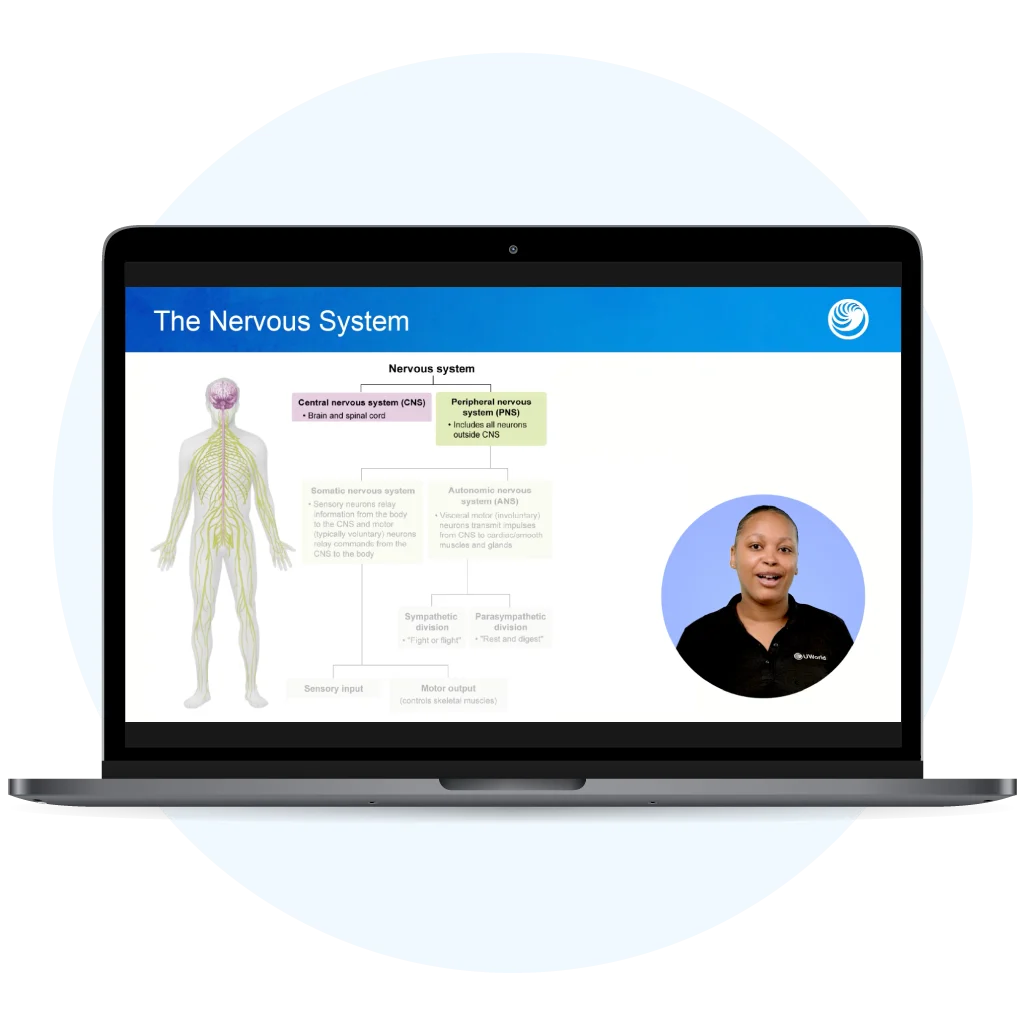
UWorld’s AP Psych Unit 3 videos make development and learning easier to understand by showing how people grow and change across the lifespan. You will learn about major theorists, developmental stages, conditioning, and observational learning through short, clear lessons. These videos help you understand both test questions and real-life examples, preparing you for your Unit 3 AP Psychology exam.
Interactive Study Guides
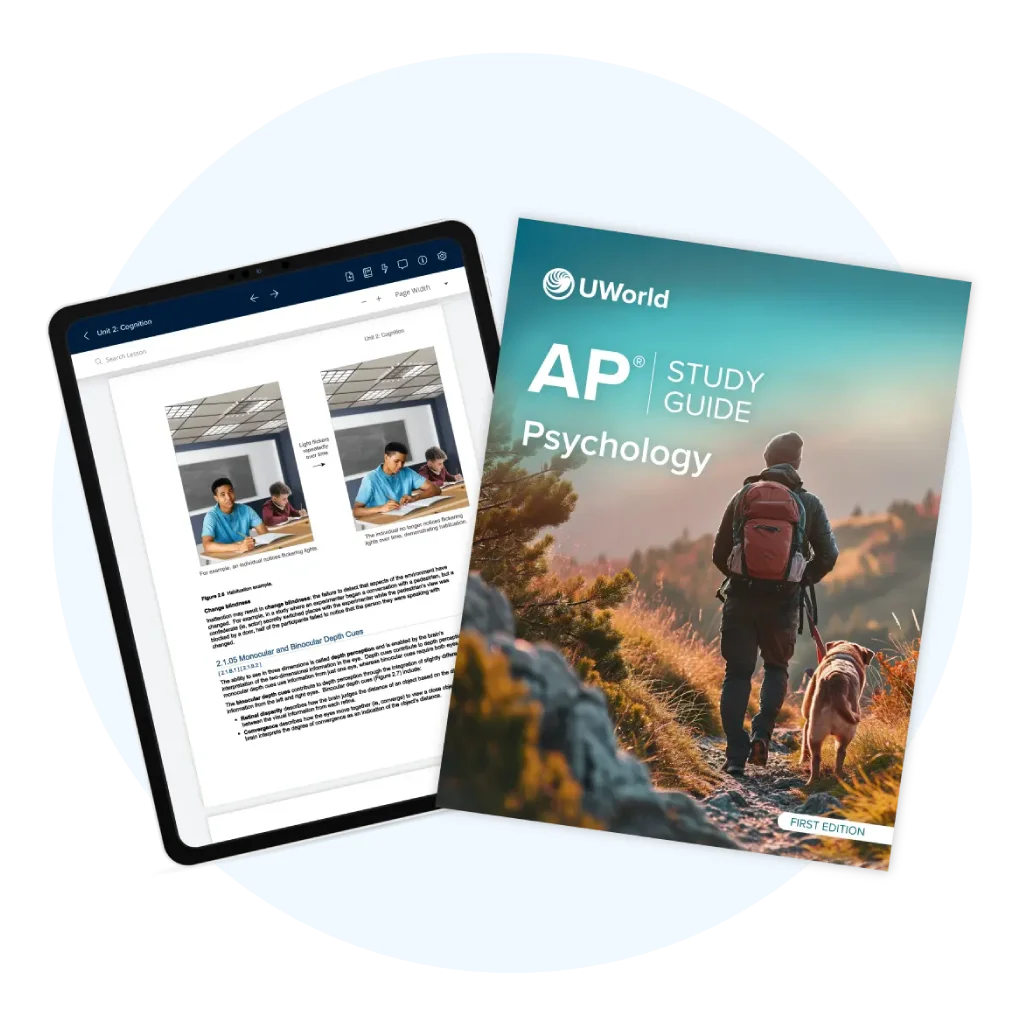
UWorld’s AP Psychology Unit 3 study guide simplifies major development and learning concepts with diagrams, quick summaries, and step-by-step explanations. You will explore classical conditioning, operant conditioning, cognitive development, social learning, and major psychologists like Piaget, Skinner, and Bandura. With organized notes and visuals, this study guide is perfect for Unit 3 progress checks.
AP Psychology Unit 3 Practice Test Questions to Strengthen Your Skills
Question
Which of the following assertions is best supported by the rooting reflex?
| A. Humans are born with automatic responses that aid in survival. | |
| B. Contact comfort is an important element of attachment. | |
| C. Humans are born with specific emotional dispositions. | |
| D. Certain learned behaviors develop only during critical periods. |
Explanation
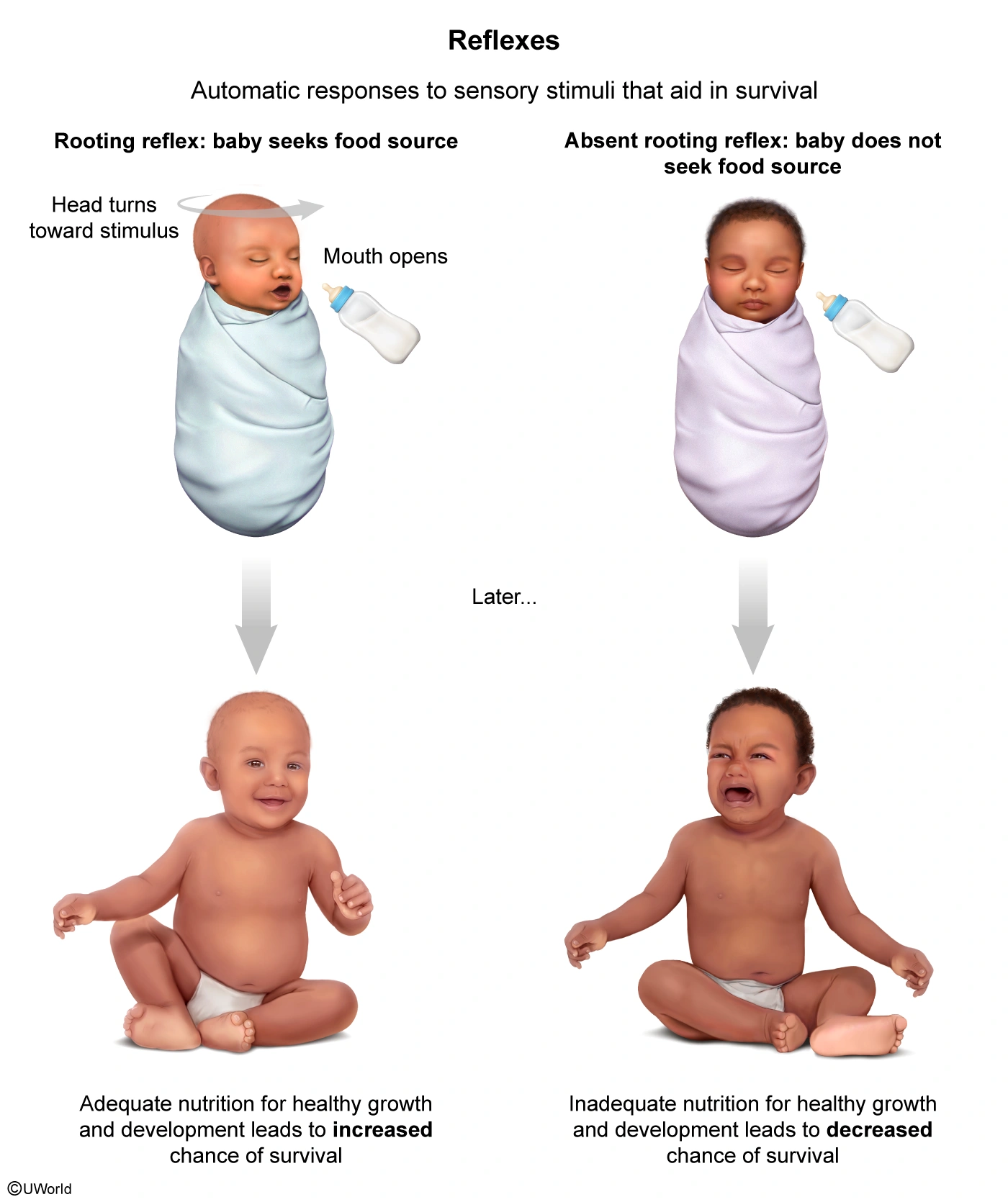
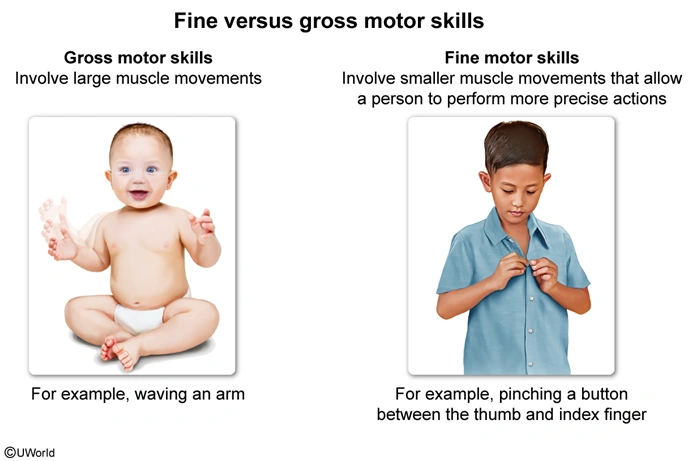
Motor skills, which are voluntary movements of the body, develop over time. In contrast, humans are born with reflexes, automatic responses to sensory stimuli that aid in survival.
For example, the rooting reflex, which causes an infant to turn their head and open their mouth when stroked on the cheek, encourages feeding.
Therefore, the assertion that is best supported by the rooting reflex is humans are born with automatic responses that aid in survival.
(Choice B) In his studies on attachment, Harry Harlow found that newborn monkeys preferred soft, cloth-covered "mothers" (that offered contact comfort) over wire, food-source "mothers." The rooting reflex supports the assertion that humans are born with automatic responses that aid in survival, not the idea that contact comfort is an important element of attachment.
(Choice C) Humans are born with specific emotional dispositions known as temperaments. The rooting reflex supports the assertion that humans are born with automatic responses that aid in survival, not the idea that humans are born with specific emotional dispositions.
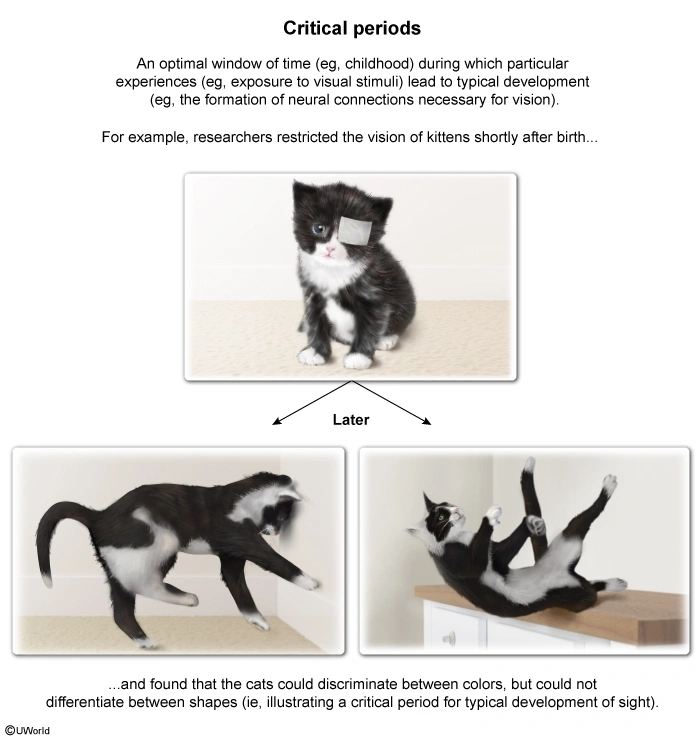
(Choice D) Certain learned behaviors (eg, language acquisition) must develop during critical periods (eg, childhood). The rooting reflex supports the assertion that humans are born with automatic responses that aid in survival, not the idea that certain behaviors develop during critical periods.
Things to remember:
Humans are born with reflexes, automatic responses to sensory stimuli that aid in survival. The rooting reflex, which causes an infant to turn their head and open their mouth when stroked on the cheek, encourages feeding.
Question
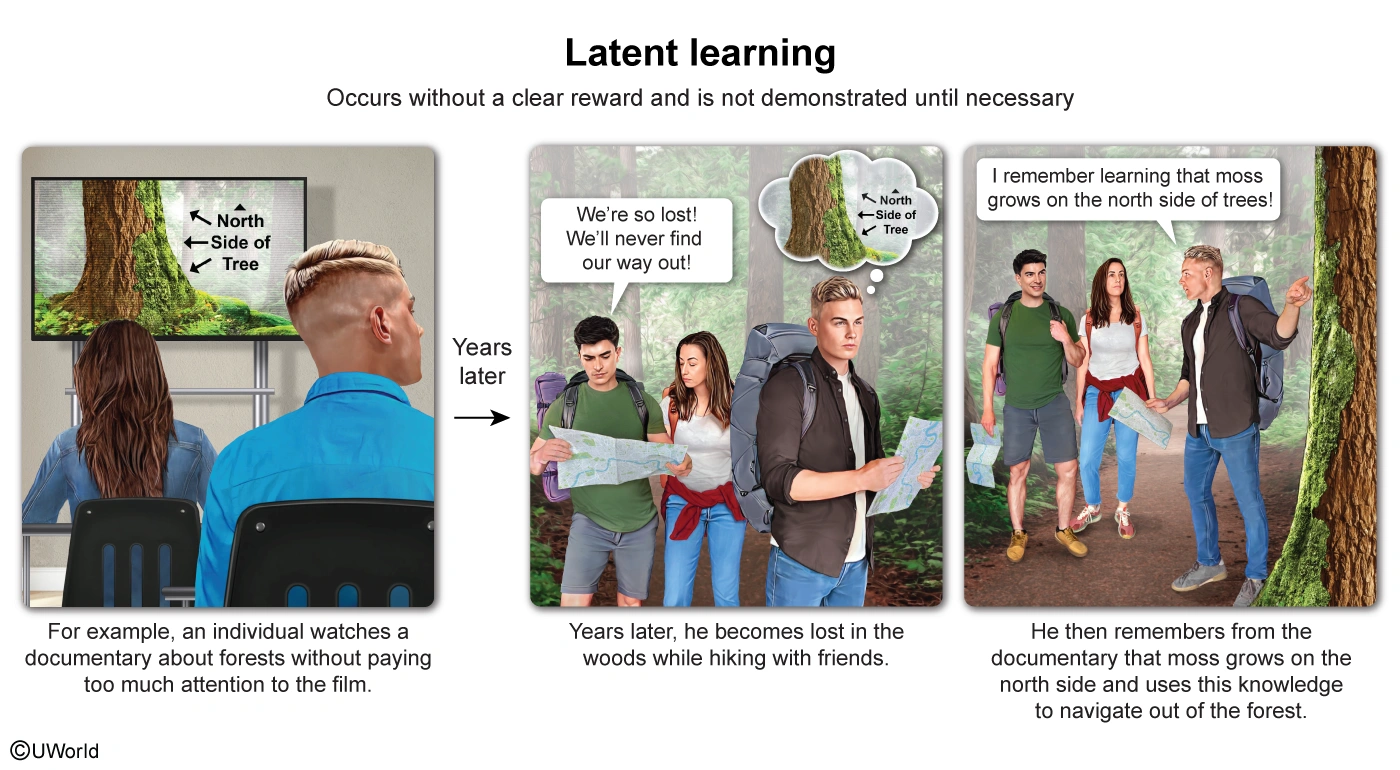
In high school, Mikel watched a documentary about forests without paying too much attention to the film. Years later, he becomes lost in the woods while hiking with friends. However, Mikel remembers from the documentary that moss grows on the north side of trees and uses this knowledge to navigate his way out of the forest. Mikel's behavior reveals
| A. classical conditioning | |
| B. habituation | |
| C. self-fulfilling prophecy | |
| D. latent learning |
Explanation
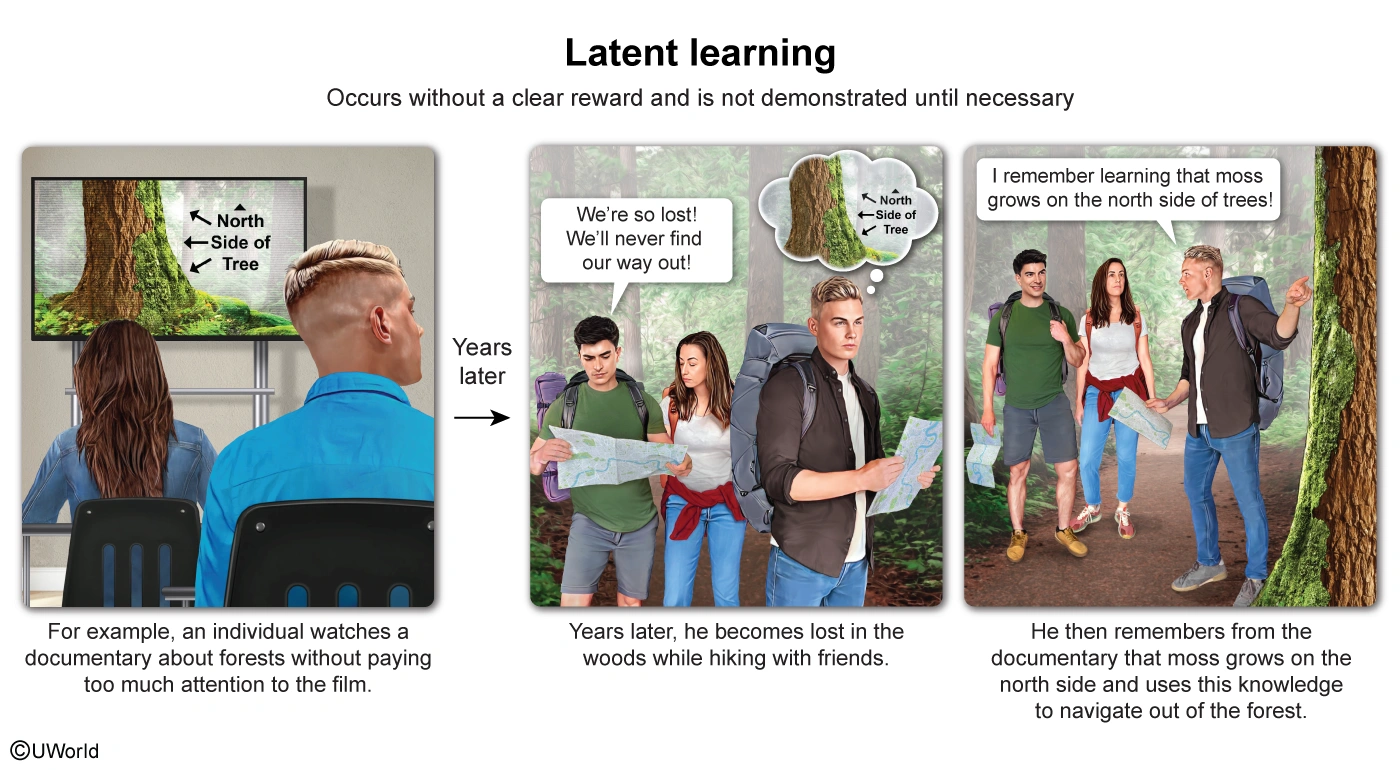
Latent learning occurs without a clear reward and is not demonstrated until necessary.
For example, latent learning is revealed if someone passively learns information about moss from a forest documentary (ie, learning without a reward) and uses that information years later when lost in the woods (ie, demonstrating the learning when necessary).
Therefore, Mikel's behavior of learning about moss without a reward and later demonstrating that knowledge in the woods when necessary reveals latent learning.
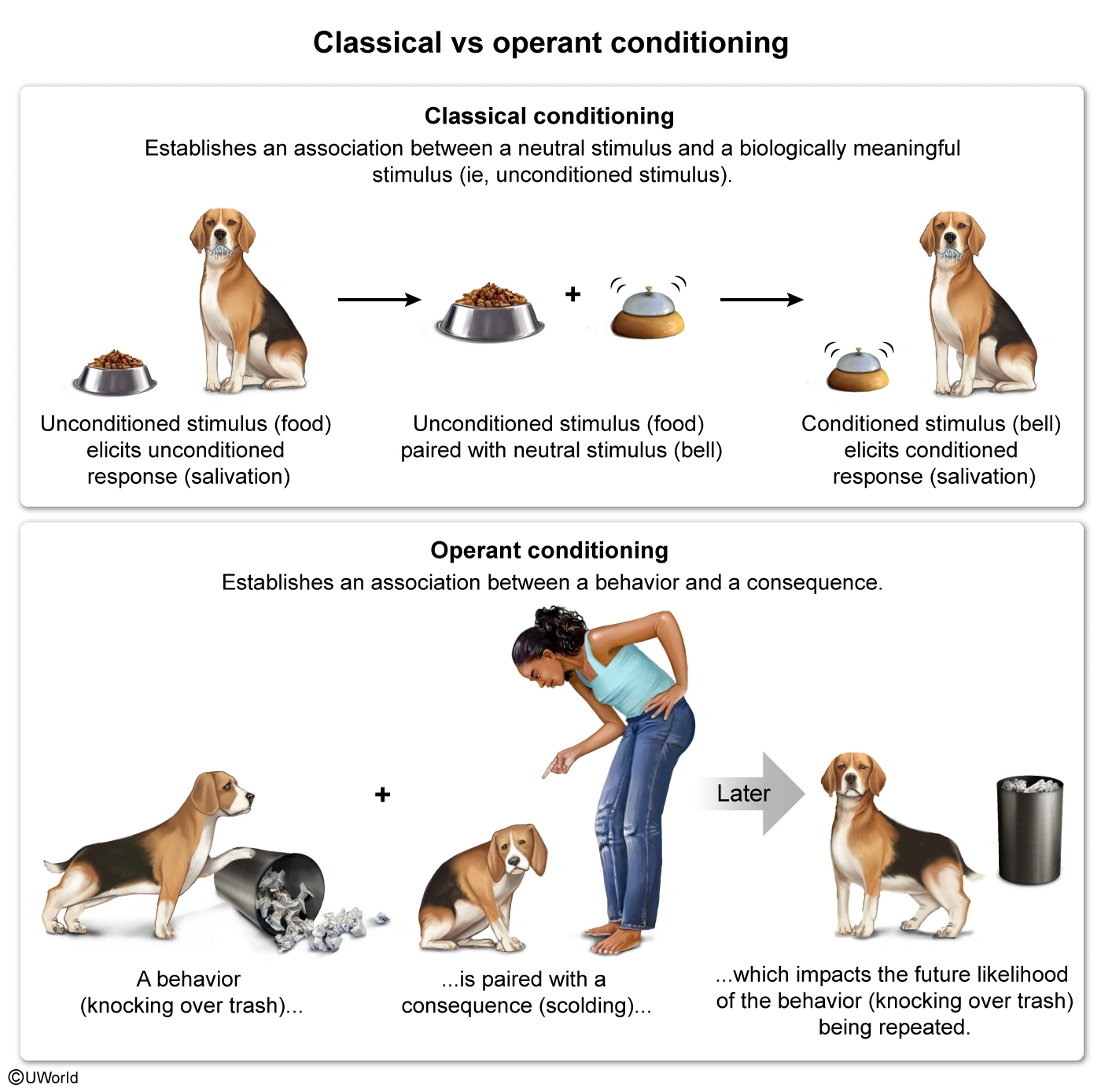
(Choice A) Classical conditioning occurs when a stimulus that did not previously elicit a certain response (neutral stimulus) is paired with and subsequently takes on the properties of a physiologically arousing stimulus (unconditioned stimulus).
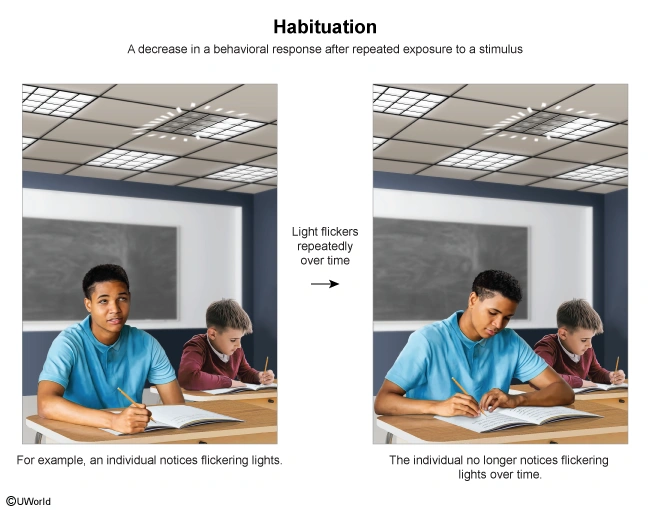
(Choice B) Habituation is characterized by a decreased behavioral response after repeated exposure to a stimulus (eg, no longer being awakened by the sound of traffic over time).
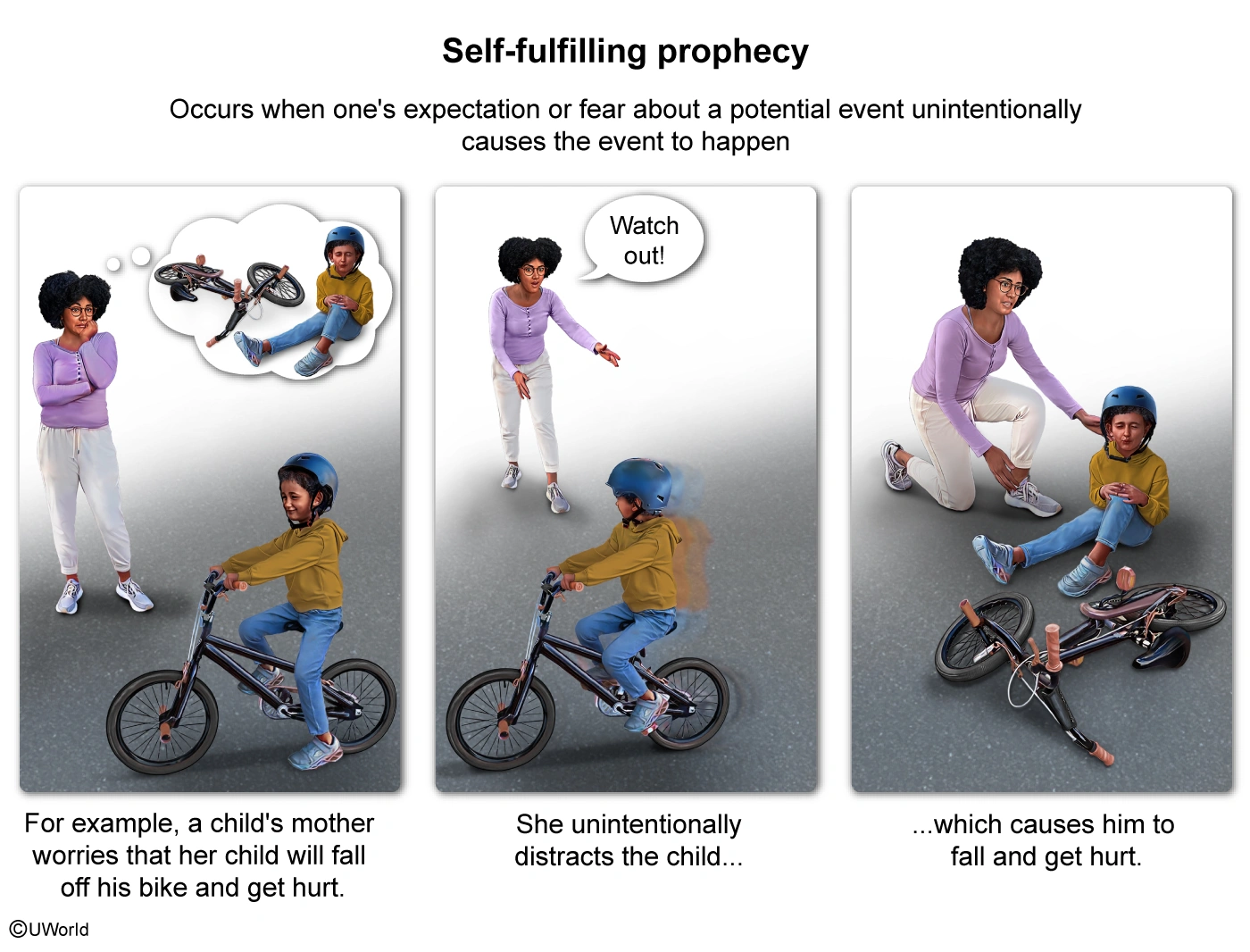
(Choice C) A self-fulfilling prophecy occurs when one's expectation or fear about a potential event unwittingly or unintentionally causes the event to happen (eg, fearing she will trip, a hiker becomes tense and therefore trips).
Things to remember:
Latent learning occurs without a clear reward and is not demonstrated until necessary.
Question
The concept of latent learning is best exemplified by which of the following situations?
| A. A student suddenly realizes the answer to a test question after leaving the classroom. | |
| B. A child plays with a toy train after watching an older sibling do so. | |
| C. A rat passively learns a maze when there is no food reward and later demonstrates learning by quickly completing the maze for food. | |
| D. Parents stop nagging their son once he cleans his room, which increases the likelihood he will clean his room in the future. |
Explanation
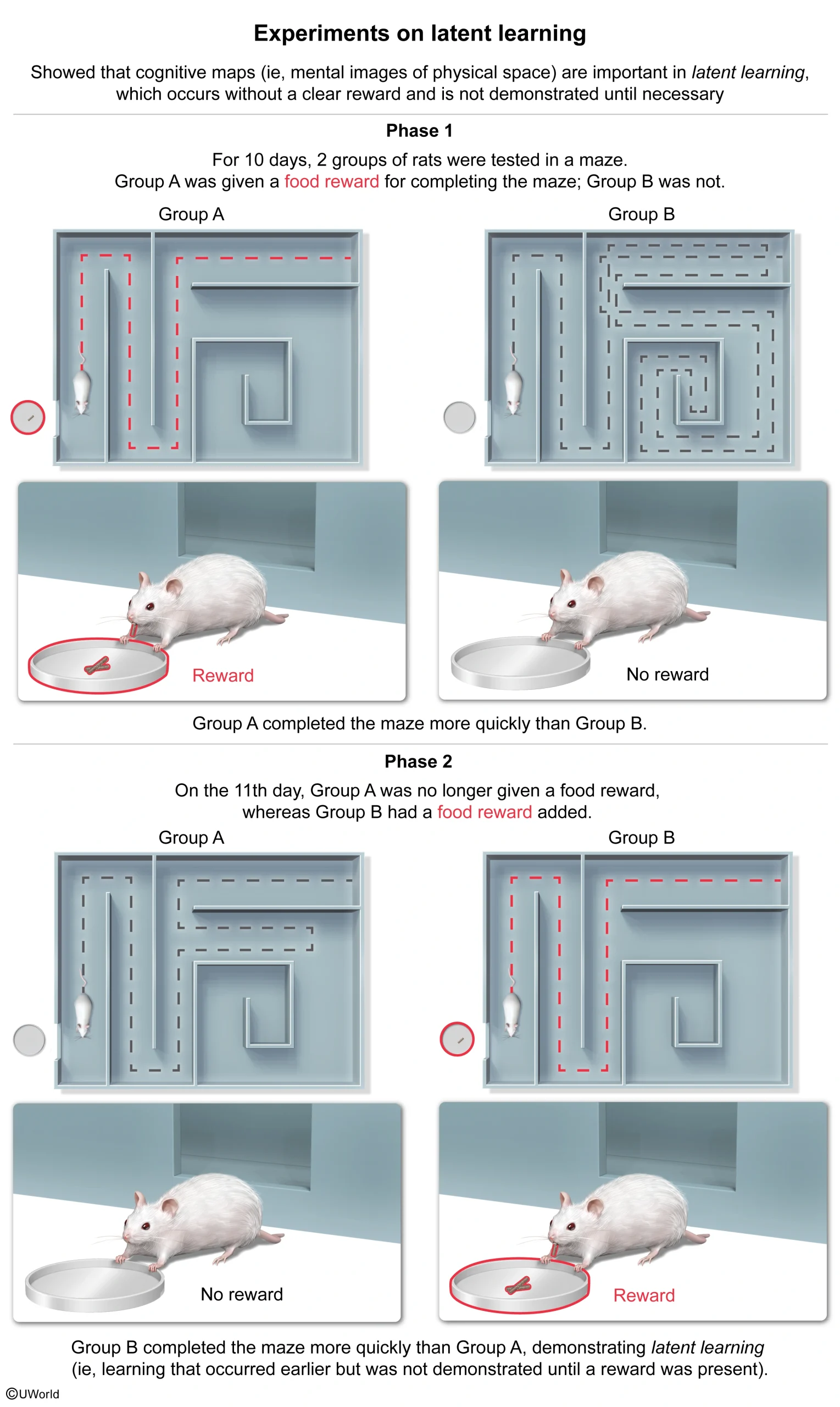
Latent learning occurs without a clear reward and is not demonstrated until necessary.
For example, rats passively learn information while exploring a maze, even during nonreinforced trials (eg, no food reward). Later, they demonstrate their learning by quickly completing the maze when there is reinforcement.
Therefore, the concept of latent learning is best exemplified by a rat passively learns a maze when there is no food reward and later demonstrates learning by quickly completing the maze for food.
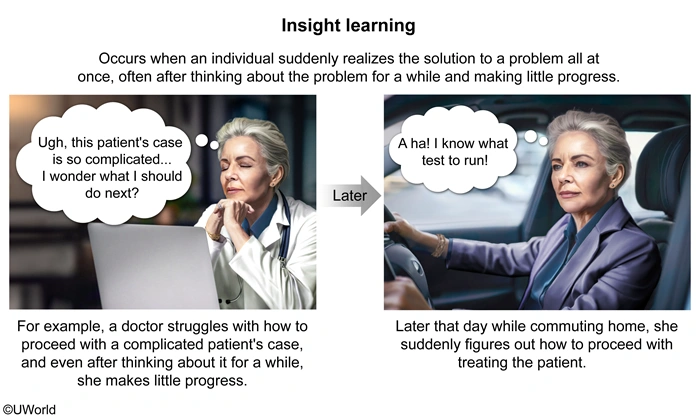
(Choice A) Insight learning occurs when an individual suddenly realizes the solution to a problem all at once, often after thinking about the problem for a while and making little progress toward it (eg, realizing the answer to a test question after leaving the classroom).
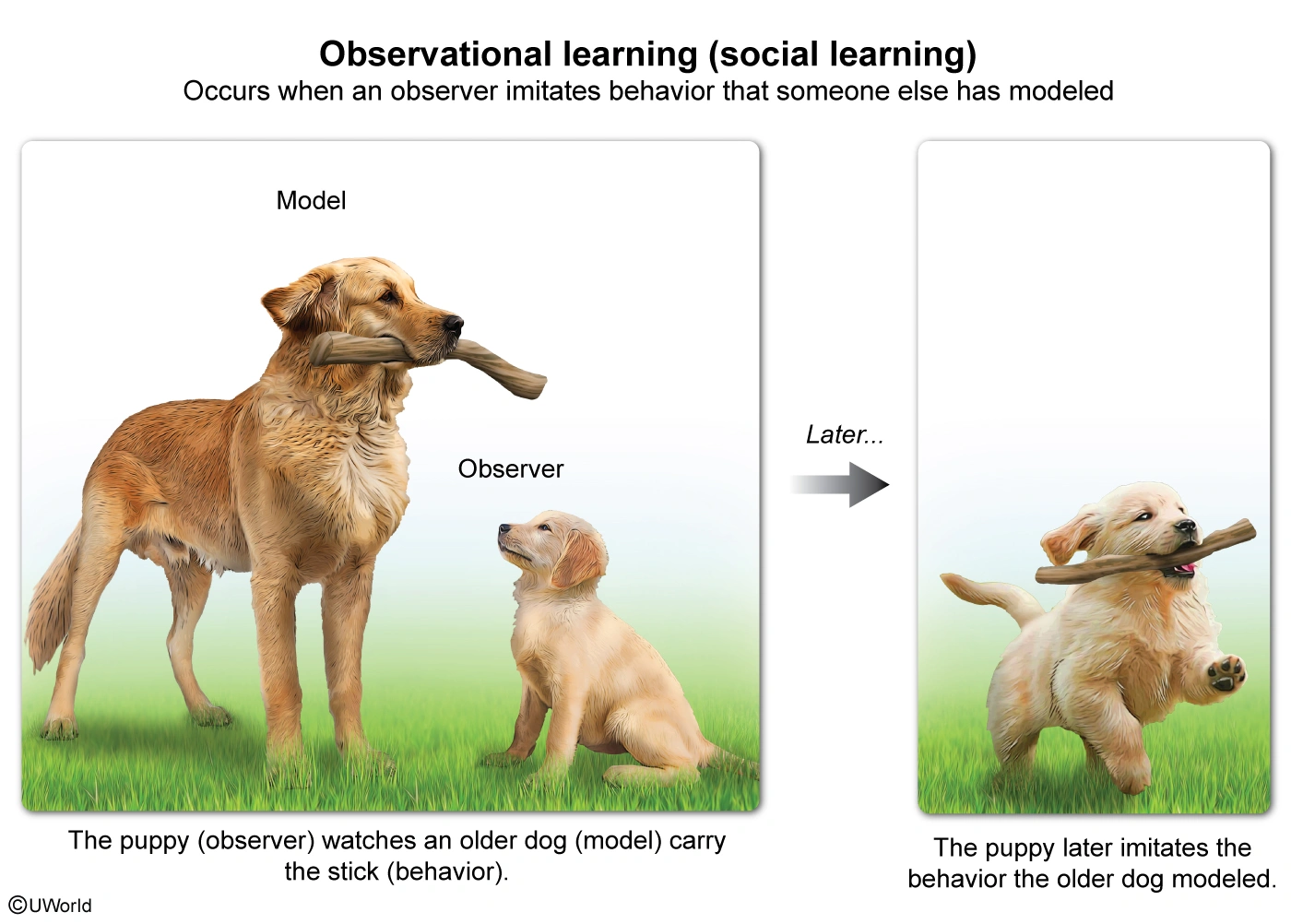
(Choice B) Social learning, also called observational learning, occurs when an observer imitates (copies) a behavior that someone else has modeled (eg, a child playing with a toy after watching an older sibling do so).
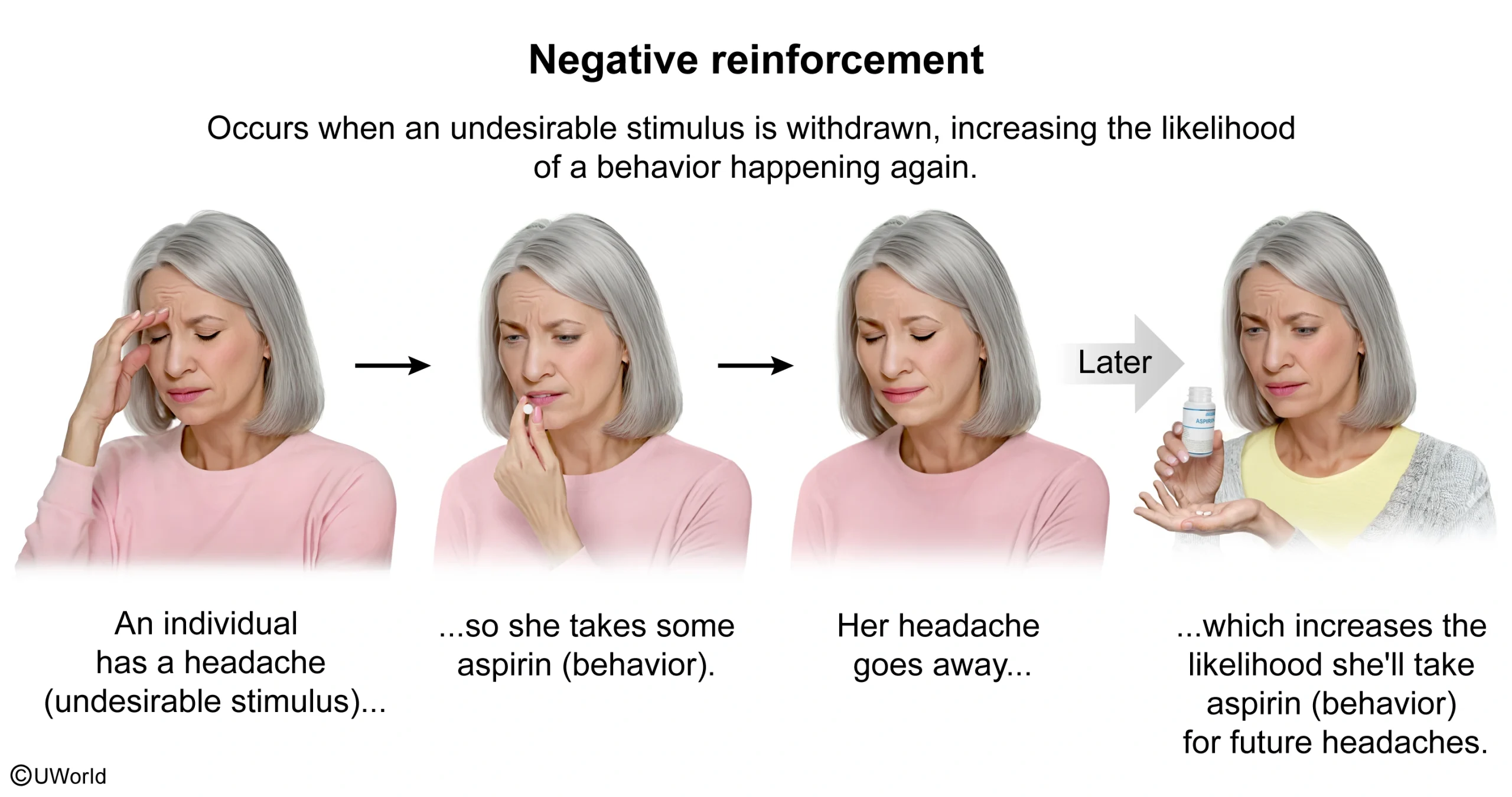
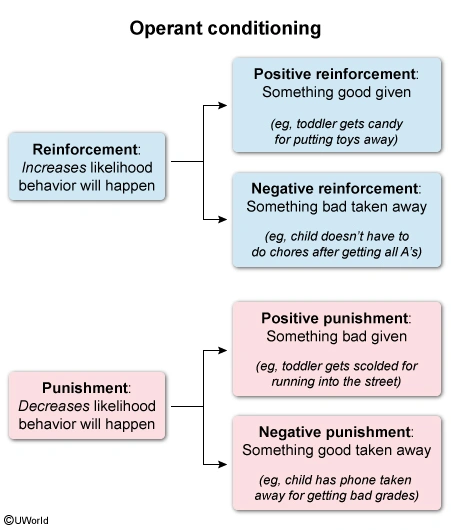
(Choice D) Negative reinforcement occurs in operant conditioning when an undesirable stimulus (eg, nagging) is removed, increasing the likelihood that a behavior (eg, cleaning one's room) will reoccur.
Things to remember:
Latent learning occurs without a clear reward (eg, rats explore a maze without reinforcement) and is not demonstrated until necessary (eg, rats demonstrate knowledge of a maze in the presence of reinforcement).

Study Anywhere, Anytime
Fit AP Psychology Unit 3 review into your daily routine with the UWorld app. You can practice questions on the go, watch quick development and learning videos between classes, or read study notes whenever you have a free moment. Everything you need to prepare for your Unit 3 AP Psych test is always ready when you are.
Stand Out
with a Top Score in AP Psychology
Earn a top score and stand out for colleges, majors, and scholarships. With UWorld’s AP Psychology online course, you’ll be ready from your first unit review to your final exam.
Get our all-in-one course today!
- Focused AP Psychology Videos
- Print & Digital Study Guide
- 350+ Exam-style Practice Questions
- Customizable Quiz Generator
- Adjustable Study Planner
- Realistic Timed Test Simulation
- Colorful Visual Explanations
- Progress Dashboard
- Smart Flashcards & Digital Notebook
Hear From Our AP Students
UWorld’s service is pretty good and helps provide a lot of explanations on subjects I haven’t been confident on before.
The questions here are the most realistic to the AP tests I've seen so far! I appreciate the ability to customize tests as well.
The best part is that all options are well-explained, telling clearly why they are not the right option.
Frequently Asked Questions (FAQs)
What are the main topics covered in AP Psychology Unit 3: Development and Learning?
AP Psychology Unit 3 explores how humans grow, learn, and change throughout life. It introduces major theories and research methods that explain how development happens and what shapes behavior across different ages. This unit helps you understand how learning and development work together in real life and on the AP Psychology exam.
The main topics in AP Psychology Unit 3 include:
- Research methods used in developmental psychology: How psychologists study growth and change over time.
- Physical, cognitive, and social-emotional development: How the body, brain, and social skills evolve across the lifespan.
- Gender and sexual orientation: How identity forms and influences behavior and development.
Studying these topics with UWorld helps you understand key ideas clearly and prepares you for Unit 3 MCQs, progress checks, and FRQs with realistic examples and step-by-step explanations.
How should I prepare for an AP Psychology Unit 3 exam?
Preparing for the AP Psychology Unit 3 exam starts with learning the major theories and stages of development. Begin by reviewing how humans change physically, cognitively, and socially across the lifespan. Make sure you understand classical conditioning, operant conditioning, observational learning, and the work of psychologists like Piaget, Skinner, and Bandura. These ideas show up often on the Unit 3 AP Psych test.
Once you understand the content, practice applying concepts to real-life scenarios. Development and learning questions often require you to connect an age group, behavior, or learning strategy to the correct psychological theory. Reviewing your class notes and rewriting key ideas in your own words can help you remember them better.
You will strengthen your Unit 3 skills by practicing with UWorld’s detailed explanations and AP Psychology Unit 3 practice questions. Their examples show how each development and learning concept appears on MCQs, FRQs, and progress checks so you can feel confident on exam day.
Are any free resources available for AP Psychology Unit 3?
The best place to start is the UWorld free trial, which gives you access to AP Psychology Unit 3 practice questions, sample explanations, and visuals that make development and learning easier to understand. It is a great way to preview how key concepts like cognitive stages, conditioning, and social-emotional development appear on real AP-style questions.
You can also review free resources from the College Board, including sample FRQs, progress check-style questions, and the official Course and Exam Description. These materials show you exactly how Unit 3 content is tested and what types of scenarios you will need to interpret on the AP exam. Khan Academy offers additional video lessons that walk through major theories and psychologists.
After using these free tools, UWorld’s guided explanations help you take your studying further. Their clear examples and detailed feedback make challenging concepts easier to master and help you prepare more efficiently for Unit 3 tests and progress checks.
What types of questions are on the AP Psychology Unit 3 test?
The AP Psychology Unit 3 test includes multiple-choice questions and free-response questions that focus on development and learning. MCQs typically cover development theories, cognitive changes, learning methods, and behavior patterns across the lifespan. You can also expect questions about classical conditioning, reinforcement schedules, and modeling behaviors.
In addition to traditional questions, AP Psychology now includes Article Analysis Questions and Evidence-Based Questions. These items may ask you to interpret research findings, evaluate developmental experiments, or apply learning theory to new situations. You must be able to connect the correct theory or stage to the given scenario.
The best way to prepare is by using UWorld’s realistic AP Psych Unit 3 practice questions. Their detailed explanations help you understand why each answer is correct and how development and learning concepts appear on the exam.
How can I improve my score on the Free-Response Questions (FRQs) for Unit 3?
Improving your FRQ score for AP Psychology Unit 3 starts with understanding the major development and learning concepts. Review classical and operant conditioning, social learning theory, reinforcement, and major developmental psychologists. Practice defining terms accurately and applying them to real-world scenarios, since FRQs often require both steps.
Next, work on writing clearly and directly. FRQs for Unit 3 usually ask you to explain how a specific theory or developmental stage relates to behavior. Breaking your response into short, clear statements helps you stay organized and ensures you answer every part of the prompt. Avoid vague descriptions and make sure each example matches the concept.
To build confidence, practice using UWorld’s Unit 3 FRQ-style questions. Their step-by-step explanations help you understand how to organize responses, avoid common mistakes, and write answers that match AP scoring guidelines.
What is the "Development and Learning" unit's weight on the AP Psychology exam?
The Development and Learning unit typically makes up 15%–25% of the AP Psychology exam. This section is important because it connects how humans grow with how they learn new behaviors, and these concepts appear frequently across MCQs and FRQs. Many questions focus on reinforcement, developmental stages, cognitive growth, and observational learning.
You can expect questions that ask you to identify a developmental milestone, explain a learning principle, or match a scenario to a specific theory. Knowing the major thinkers behind each theory also helps you choose the correct answer. Strong knowledge of this unit supports success across the rest of the exam.
Using UWorld’s AP Psych Unit 3 practice questions helps you get familiar with the learning and development content that falls within this exam weight. Their explanations make the material easier to understand and apply on test day.
Where can I find a good study guide for AP Psychology Unit 3?
You can find a strong study guide for AP Psychology Unit 3 by reviewing resources that clearly explain the major theories of development and learning. Look for guides that break down classical conditioning, operant conditioning, cognitive development, and social learning into simple, visual explanations. A good study guide should also include charts, timelines, and summaries.
Many teachers provide helpful outlines or slides, and some textbooks offer condensed review sections at the end of each chapter. The College Board’s Course and Exam Description also includes a complete overview of what you need to know for Unit 3.
If you want a study guide that is clear, accurate, and easy to follow, UWorld’s AP Psychology Unit 3 materials are one of the best options. Their explanations, examples, and visuals make the concepts easier to learn and remember.
Can I find practice tests specifically for AP Psych Unit 3?
Yes, you can find practice tests specifically focused on AP Psychology Unit 3, and these are incredibly helpful for understanding development and learning. Look for practice questions that challenge you to apply theories such as conditioning, modeling, reinforcement, and developmental stages. Realistic practice helps you recognize how these ideas appear on the AP exam.
Some textbooks and teachers include unit-specific practice sets. Free online resources may also provide short quizzes on topics like reinforcement schedules or Piaget’s stages. These help you warm up but often do not match AP difficulty.
For the most accurate preparation, UWorld offers AP Psych Unit 3 practice tests that closely mirror the style and rigor of the actual exam. Their detailed explanations help you learn concepts faster and improve your overall test performance.
How do learning theories like conditioning and modeling appear on the AP Psychology Unit 3 exam?
Learning theories appear throughout AP Psychology Unit 3 and are commonly tested. You may see questions that ask you to identify examples of classical conditioning, operant conditioning, punishment, reinforcement, or modeling behaviors. Understanding how each theory works helps you analyze real-life situations and apply concepts correctly on MCQs and FRQs.
For example, Unit 3 questions might ask you to identify the unconditioned stimulus in a scenario, determine which reinforcement schedule is being used, or explain how observational learning influences behavior. These questions require careful reading and the ability to connect the scenario to the right learning principle.
Practicing with UWorld’s development and learning questions helps you master these theories. Their explanations show how each learning model appears on the AP exam and how to choose the correct answer confidently.
Why is understanding developmental stages important for AP Psychology Unit 3?
Understanding developmental stages is essential for AP Psychology Unit 3 because these stages explain how people change physically, cognitively, and socially over time. Many exam questions link behavior or growth patterns to a specific stage, so knowing the characteristics of each stage helps you answer accurately. These concepts also appear in real-life examples throughout the course.
You may need to identify a child’s cognitive level, match a behavior to a developmental milestone, or explain how social-emotional changes influence learning. Questions often connect theorists like Piaget, Erikson, or Kohlberg to real developmental scenarios, so precision is important.
Using UWorld’s AP Psych Unit 3 explanations makes developmental stages easier to understand and apply. Their examples show how the stages appear on tests and help you build confidence for Unit 3 and beyond.