Bundle 3+ College Prep products for 20% off

AP® Psychology Unit 1 Review and Practice Test

Biological Bases of Behavior

Understanding the Biological Bases of Behavior is the first step in AP® Psychology. This AP Psychology Unit 1 review simplifies neurons, neurotransmitters, and brain structures so you can study confidently, review faster, and score higher on tests and progress checks.

Level Up Your Learning with This AP Psychology Unit 1 Review

AP® Psychology Unit 1 introduces you to key ideas about how the brain and nervous system shape thoughts, emotions, and behavior. Our AP Psych Unit 1 review helps you understand these concepts clearly with visuals, examples, and guided explanations. Whether you are preparing for your AP Psychology Unit 1 test or working on your Unit 1 progress check MCQ, UWorld gives you the tools to study more effectively.

Watch

Engaging Video Lessons

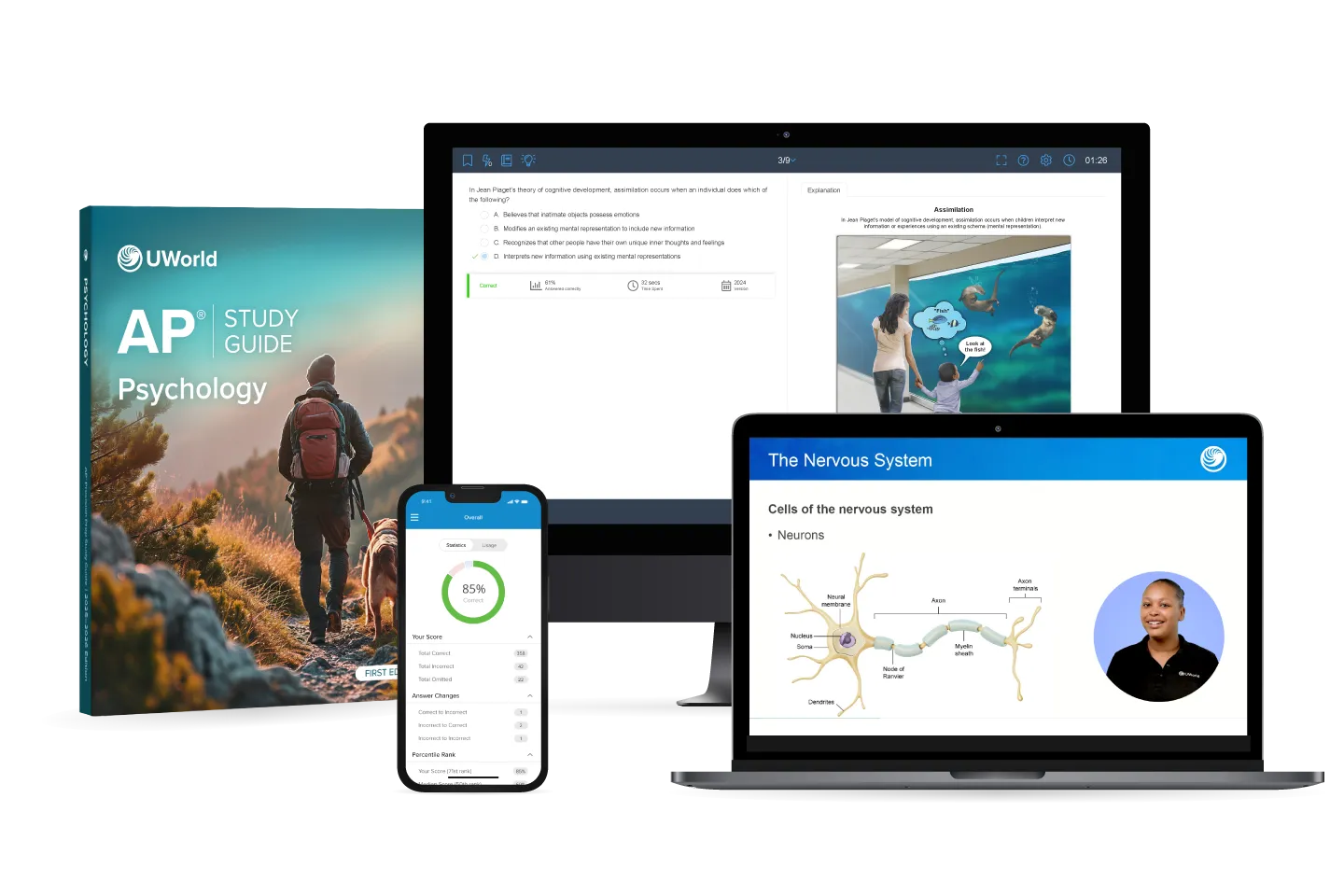
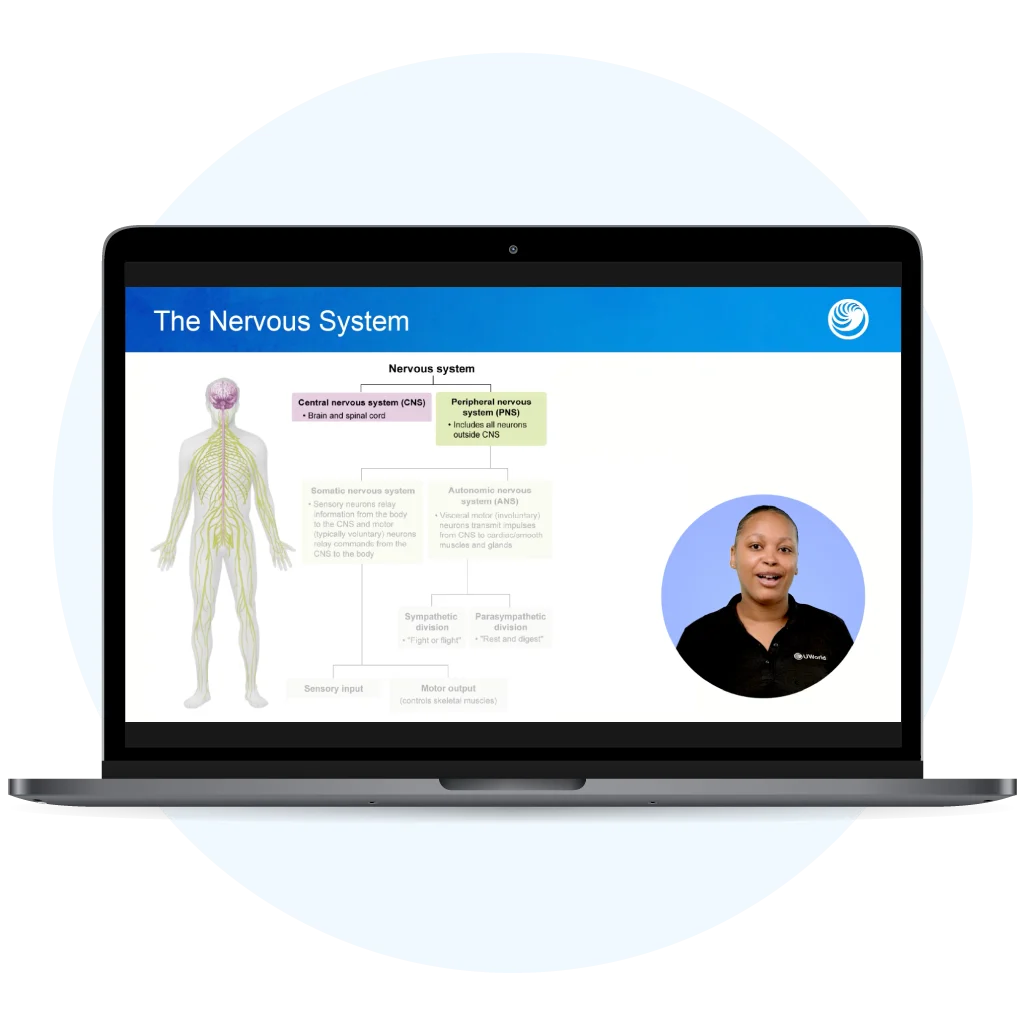
UWorld’s video lessons break down important Unit 1 topics such as neural communication, brain anatomy, and the endocrine system into short, easy-to-understand segments. Each lesson also walks you through common AP Psych Unit 1 graphs, diagrams, and illustrations, making the content much easier to visualize and remember.

Read

Interactive Study Guides

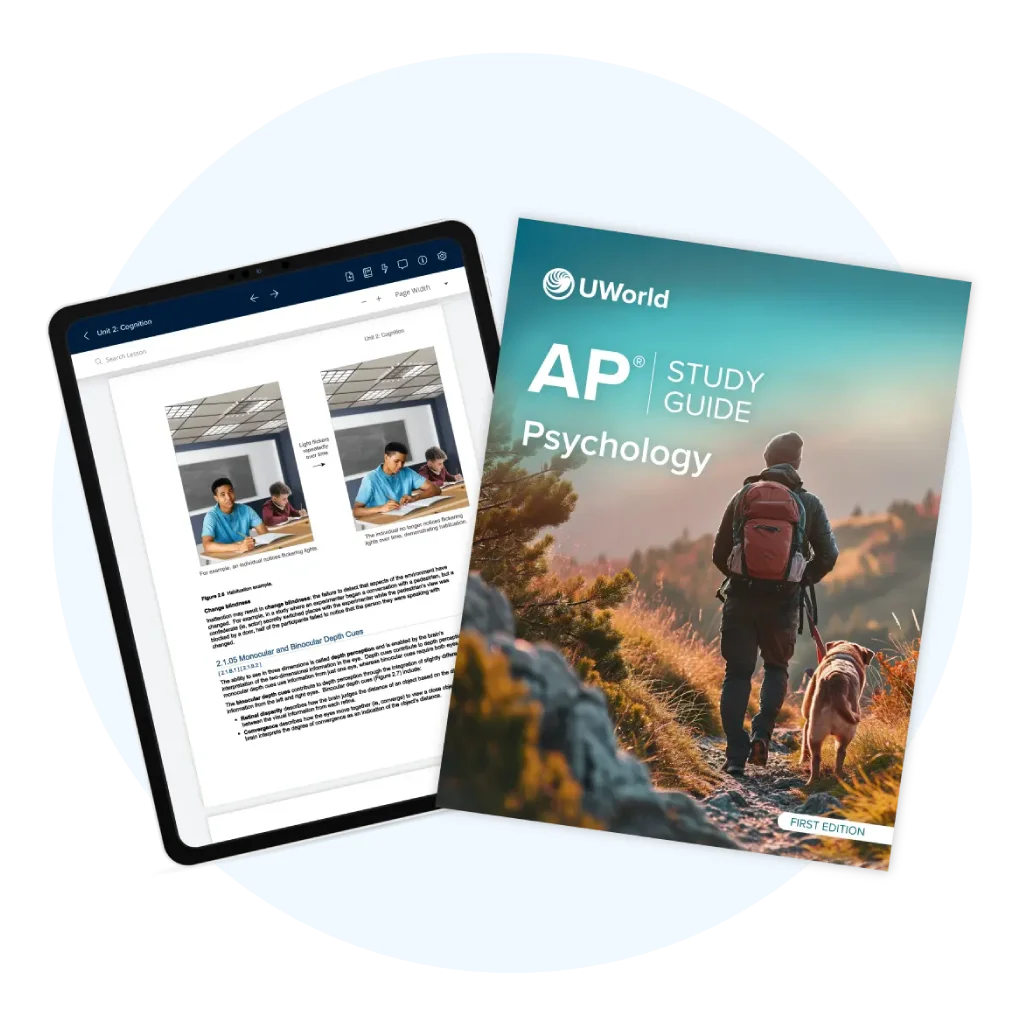
UWorld’s AP Psychology Unit 1 study guide gives you clear summaries, labeled diagrams, and step-by-step explanations of biological psychology concepts. From the structure of a neuron to the functions of the hippocampus, amygdala, and cerebral cortex, our study guide simplifies everything you need for your Unit 1 AP Psychology review.

Practice

AP Psychology Unit 1 Practice Test Questions to Boost Your Score

Practicing with realistic questions is the best way to improve your score. UWorld’s AP Psychology Unit 1 practice tests match the style, difficulty, and wording of real AP Psych questions. Each question includes a detailed explanation that shows you how to think through nervous system problems, brain areas, neurotransmitter functions, and biological psychology scenarios.
Try these sample practice questions with detailed answer explanations:
Biological Bases of Behavior Practice Tests

Question

,limbic system

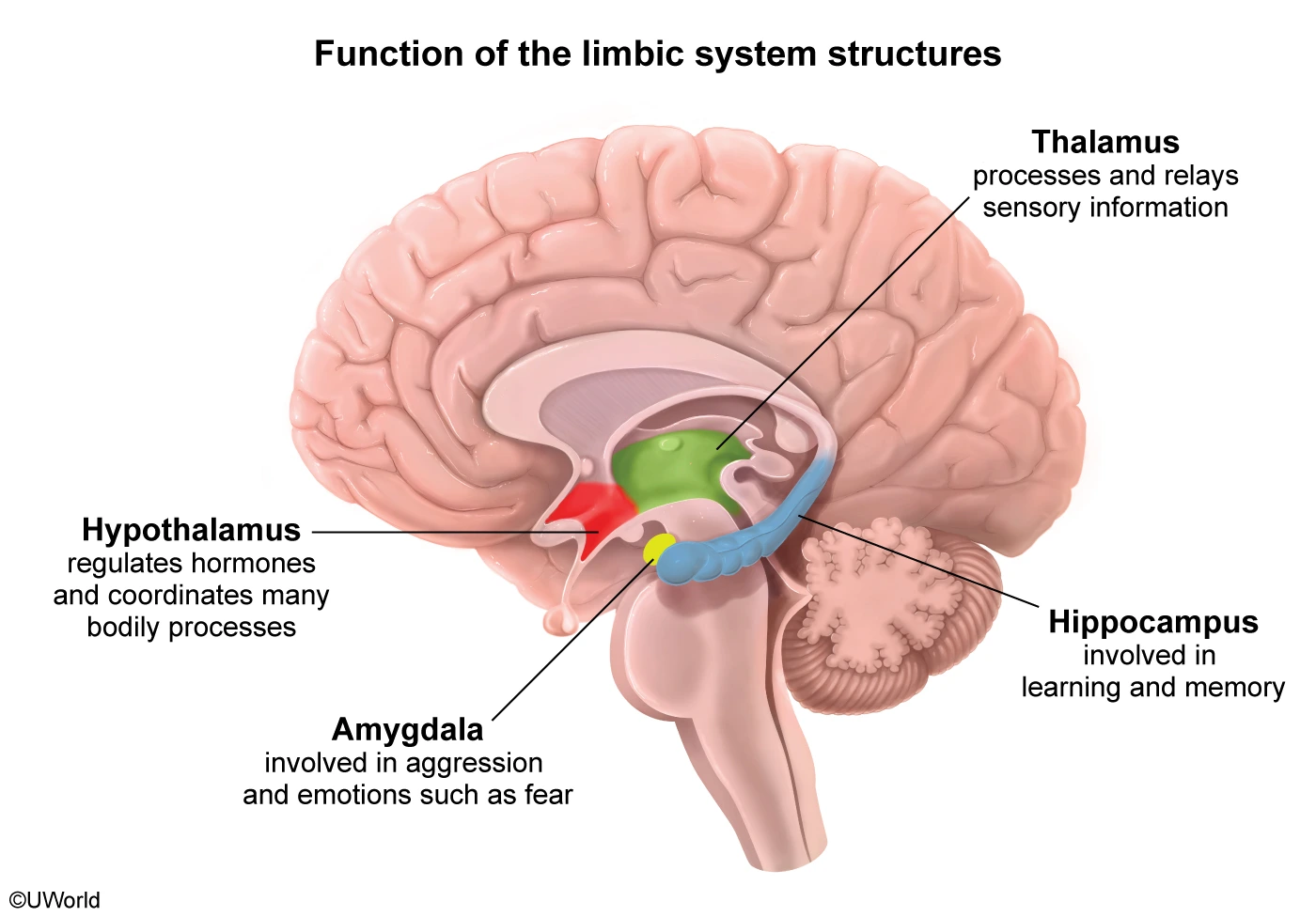
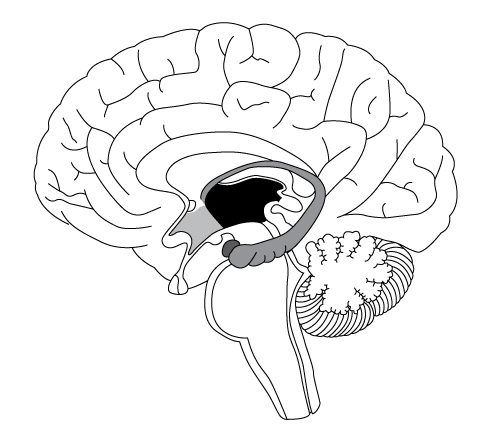
Which of the following systems is represented in the drawing above?

A. The peripheral nervous system
B. The somatic nervous system
C. The limbic system
D. The reticular activating system

Explanation

function of the limbic system structure

Located beneath the outermost region of the cortex are several brain structures that contribute to emotionmemory, and motivation.  These structures are sometimes collectively referred to as the limbic system.

Limbic structures include the amygdala (important for fear and aggression), hypothalamus (releases hormones and coordinates many bodily processes such as hunger), thalamus (involved in sensation), and hippocampus (important for learning and memory).

Therefore, the system that is represented in the drawing above is the limbic system.

(Choice A)  The peripheral nervous system contains the neurons and glial cells outside the brain and spinal cord.

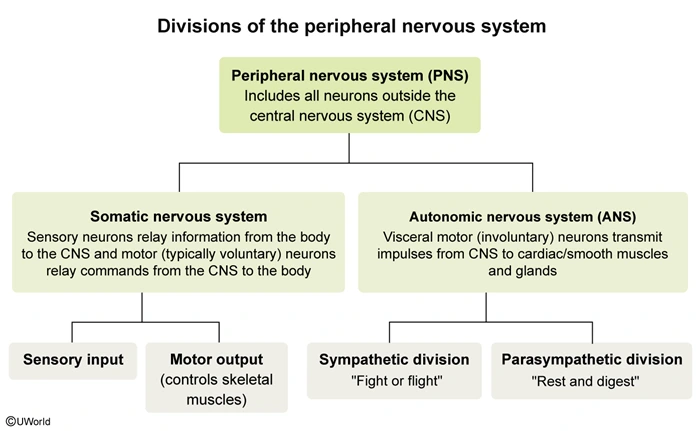
(Choice B)  The somatic nervous system is the division of the peripheral nervous system that includes the sensory neurons that relay information from the body to the central nervous system (CNS) and the motor neurons that relay commands from the CNS to the body.

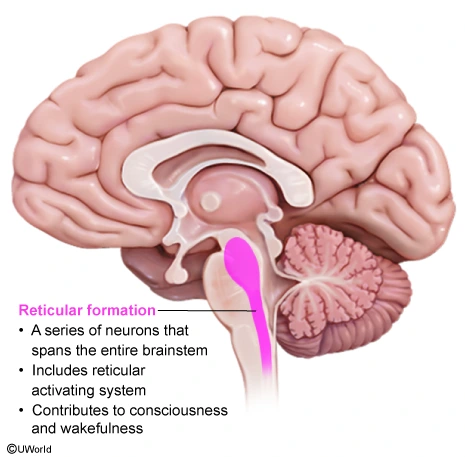
(Choice D)  The reticular activating system is part of the reticular formation, a series of neurons that span the entire brainstem and contribute to consciousness and wakefulness.

Things to remember:
Limbic system structures include the amygdala (important for fear and aggression), hypothalamus (releases hormones and coordinates many bodily processes such as hunger), thalamus (involved in sensation), and hippocampus (important for learning and memory).

Question

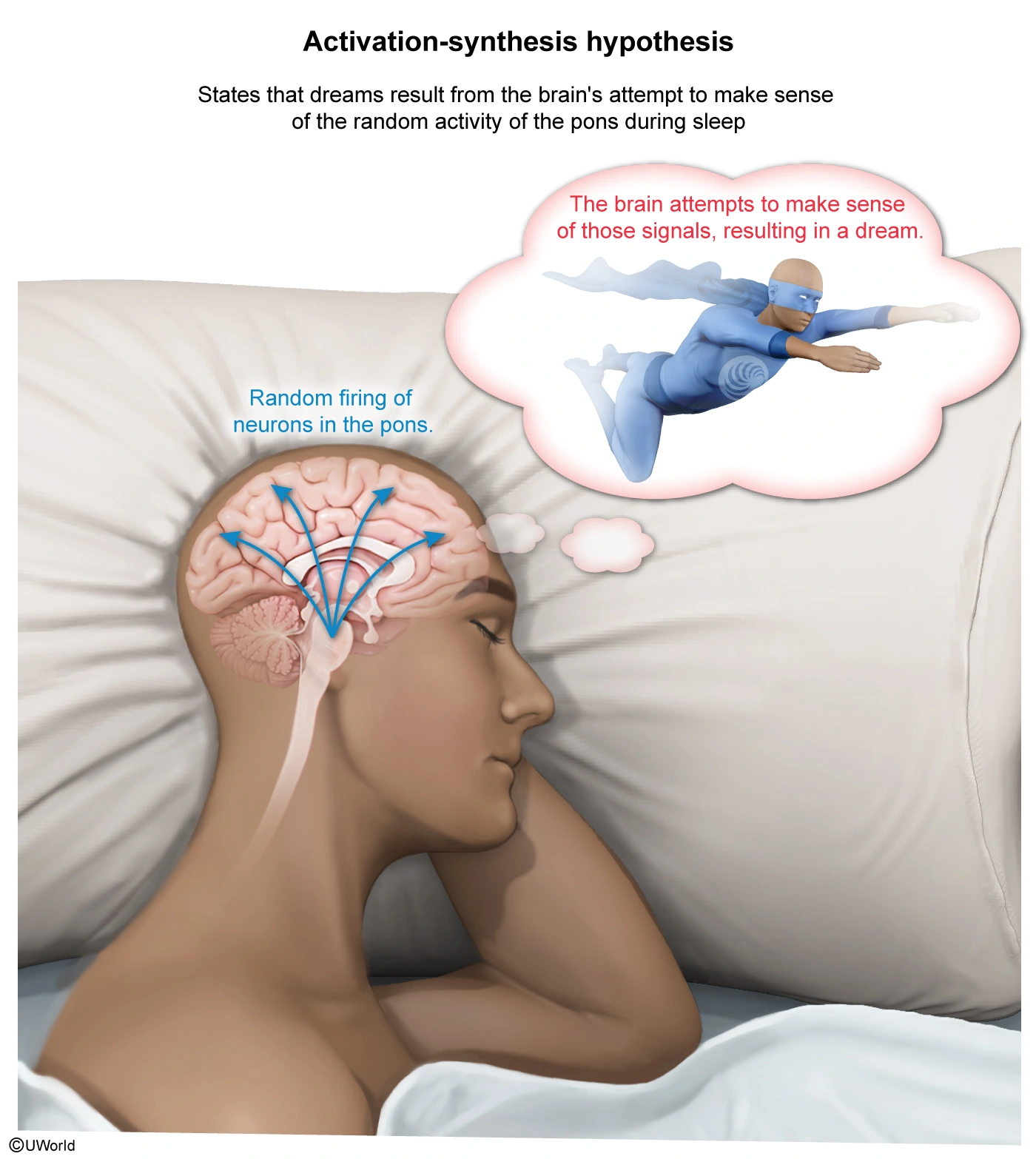
Which of the following argues that dreams result from the brain interpreting random activity of the pons?

A. Activation-synthesis hypothesis
B. Restoration theory
C. Consolidation theory
D. Drive-reduction theory

Explanation

activation synthesis hypothesis

Consciousness is the awareness of one's self and one's environment.  Dreaming is an altered state of consciousness beyond normal wakefulness.

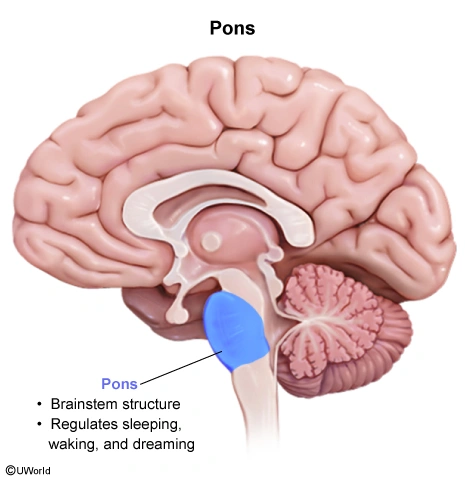
Several theories seek to explain why people dream.  The activation-synthesis hypothesis states that dreams result from the brain's attempt to make sense of the random activity of the pons during sleep.  The pons is the area in the brainstem responsible for sleepingwaking, and dreaming.

Therefore, the theory that argues that dreams result from the brain interpreting random activity of the pons is the activation-synthesis hypothesis.

(Choice B)  Restoration theory argues that sleep promotes growth (eg, production of new proteins) and enables the body to repair damage.

(Choice C)  Consolidation theory argues that dreams reflect the process of memory consolidation because, for example, elements of daily experience can be incorporated into dreams.

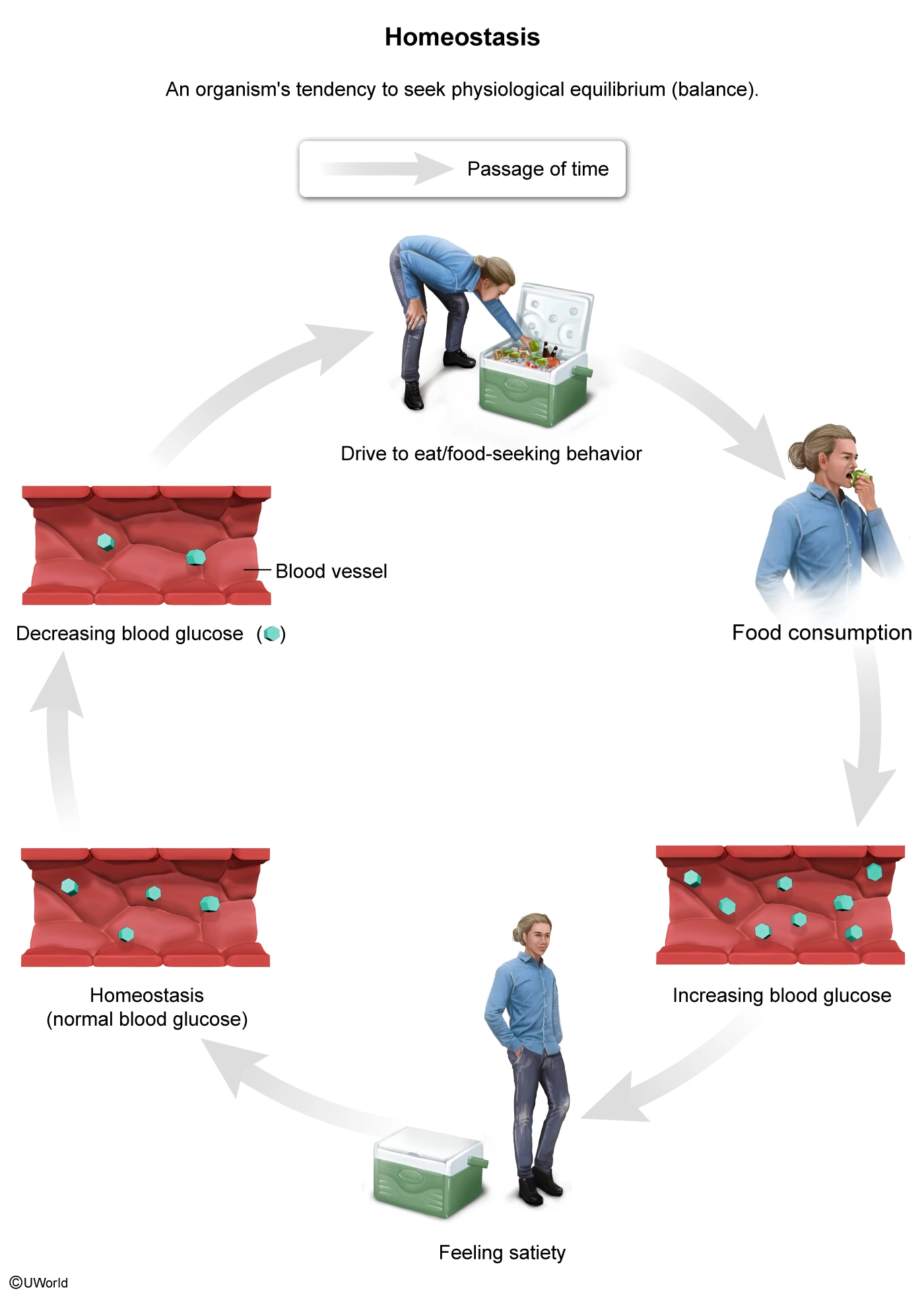
(Choice D)  Drive-reduction theory argues that motivation results from a disruption of homeostasis (eg, decreasing blood glucose levels), which generates a biological need; the biological need generates a drive (eg, hunger) to fulfill that need, which prompts action (eg, food-seeking behaviors) to restore homeostasis.

Things to remember:
The activation-synthesis hypothesis states that dreams result from the brain's attempt to make sense of the random activity of the pons (the brain area responsible for sleeping, waking, and dreaming) during sleep.

Question

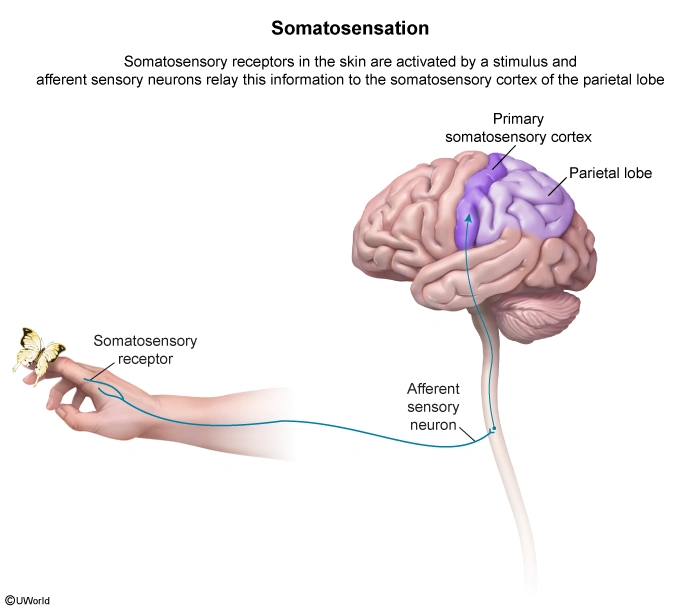
The function of somatosensory receptors is to

A. transmit sound vibrations to the inner ear
B. relay information from photoreceptors to ganglion cells
C. convert touch information into neural signals
D. bind odor molecules and transmit information to the olfactory bulb

Explanation

somatosensation

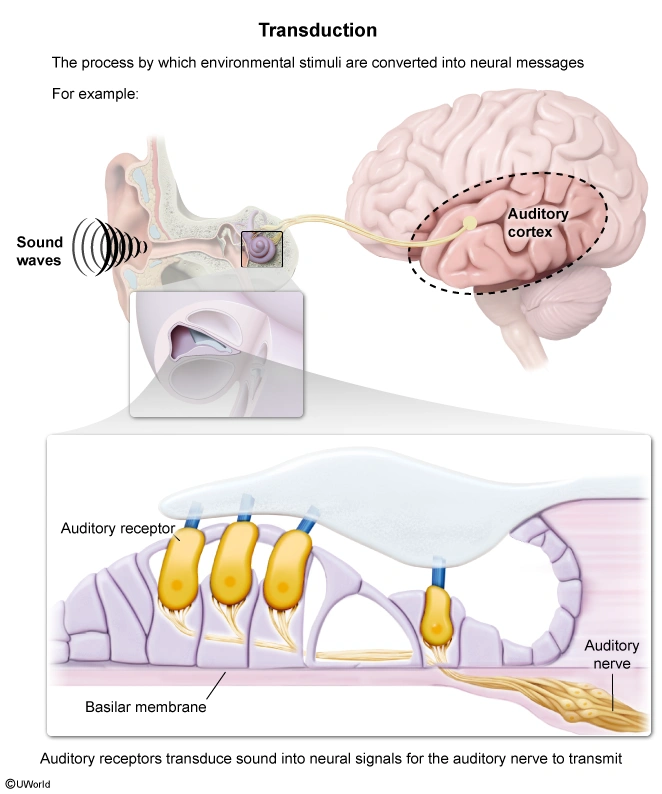
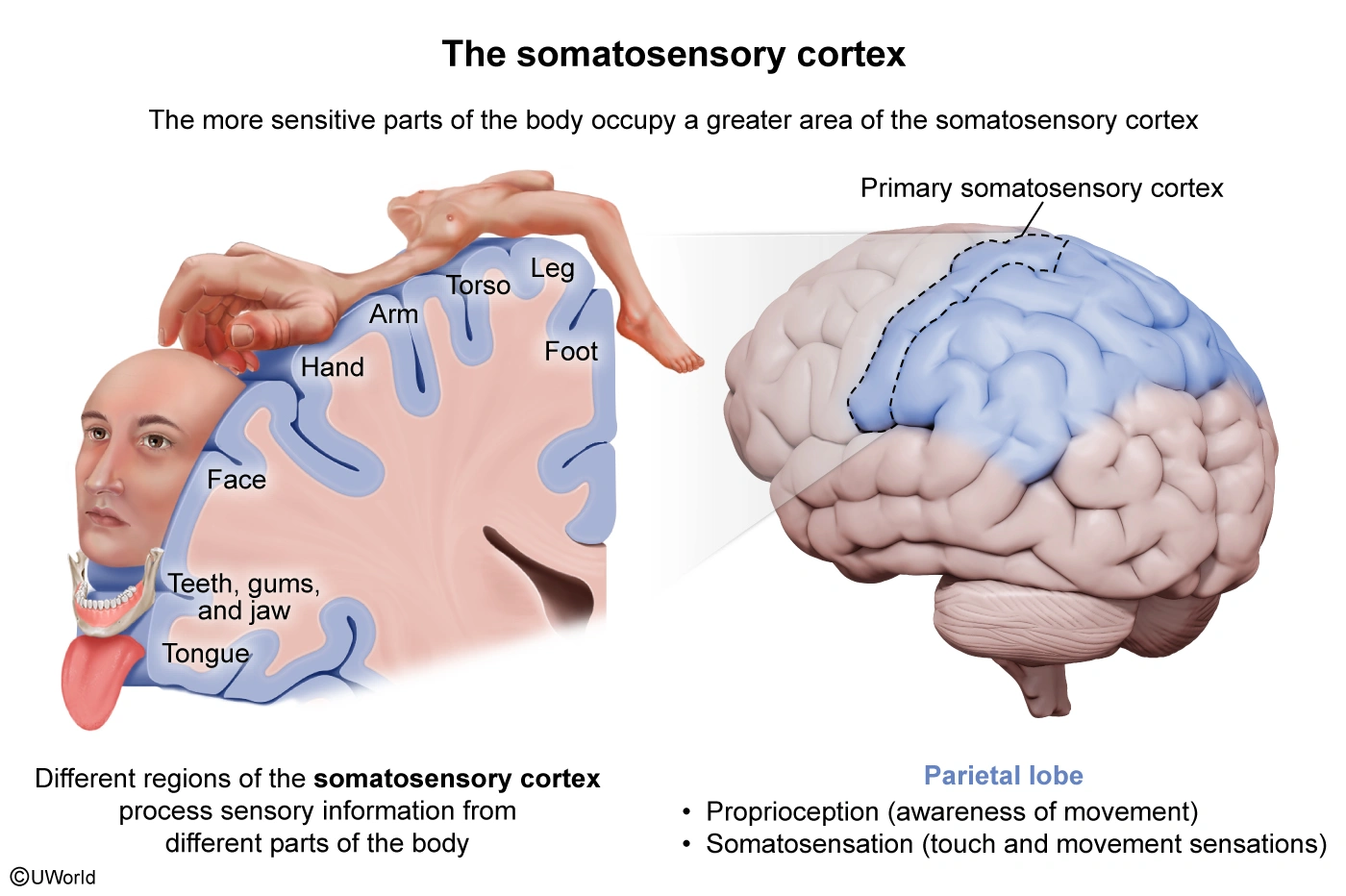
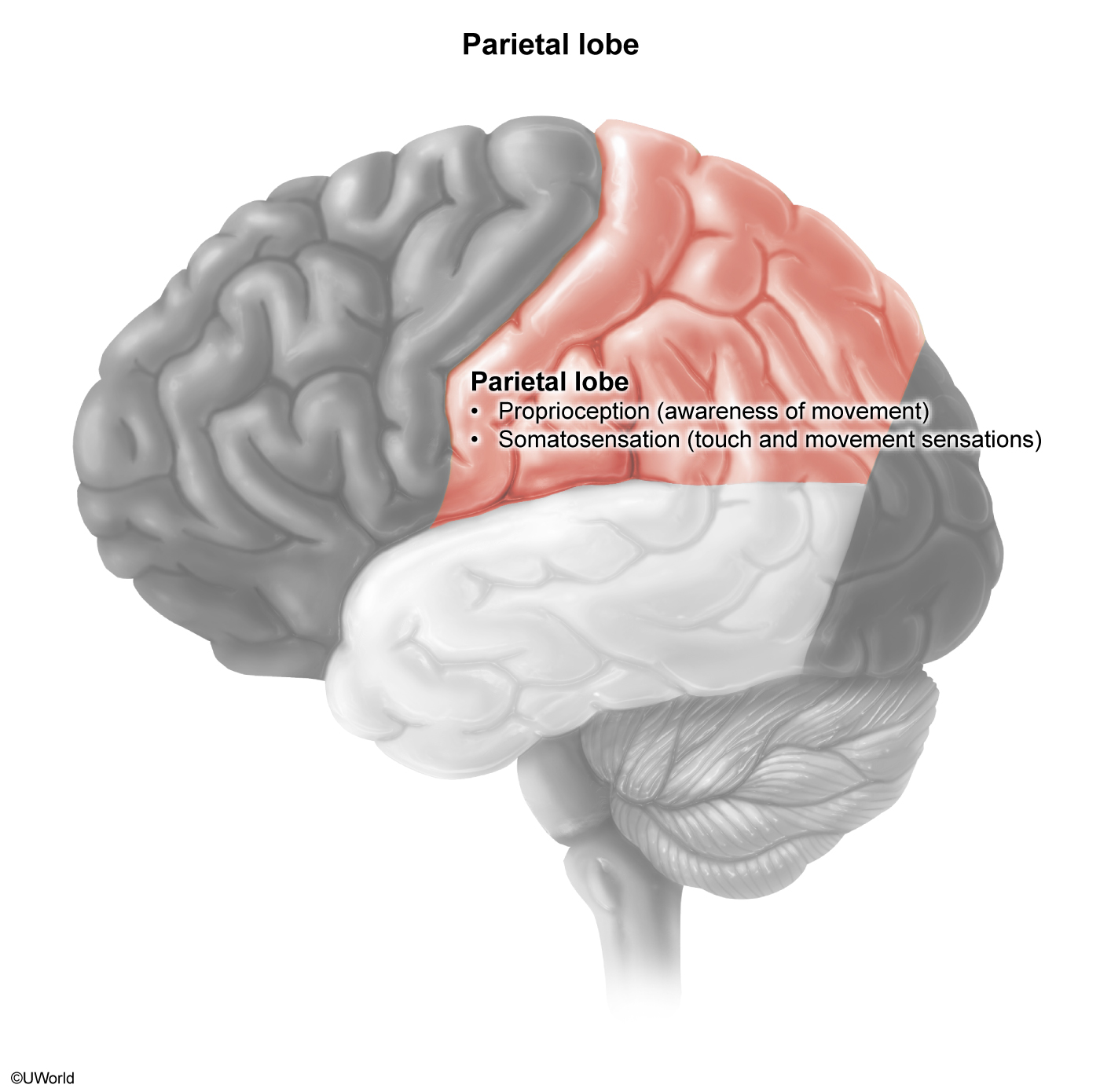
In the process of touch, somatosensory receptors in the skin are activated by a stimulus (eg, an insect landing on one's arm).  The somatosensory receptors transduce (convert) this somatosensory information (eg, touch, pain, temperature) into neural signals.  Sensory neurons relay the information to the brain for processing in the somatosensory cortex of the parietal lobe.

Therefore, the function of somatosensory receptors is to convert touch information into neural signals.

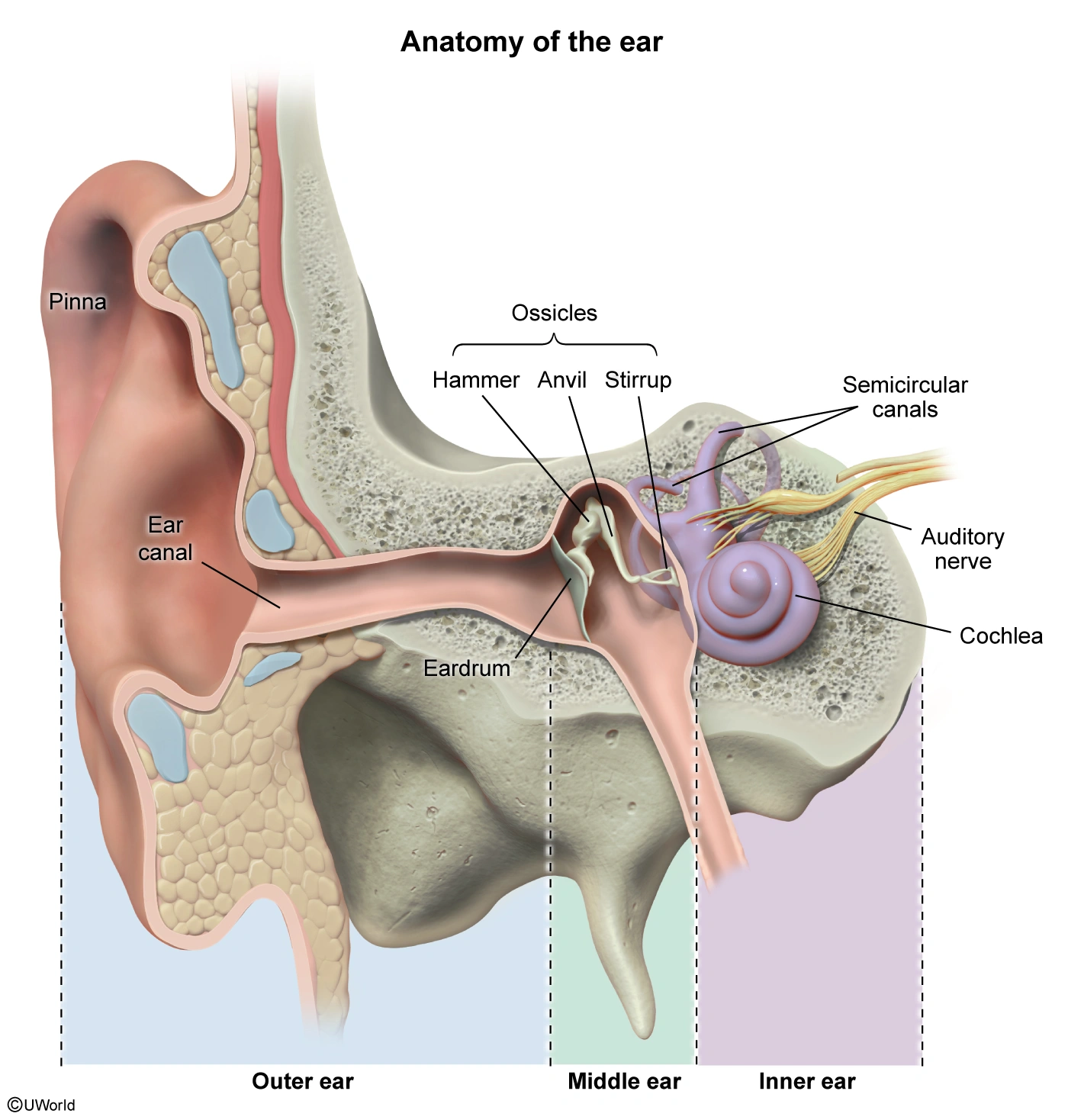
(Choice A)  The ossicles are the three small bones (hammer, anvil, and stirrup) located in the middle ear that transmit sound vibrations to the inner ear.

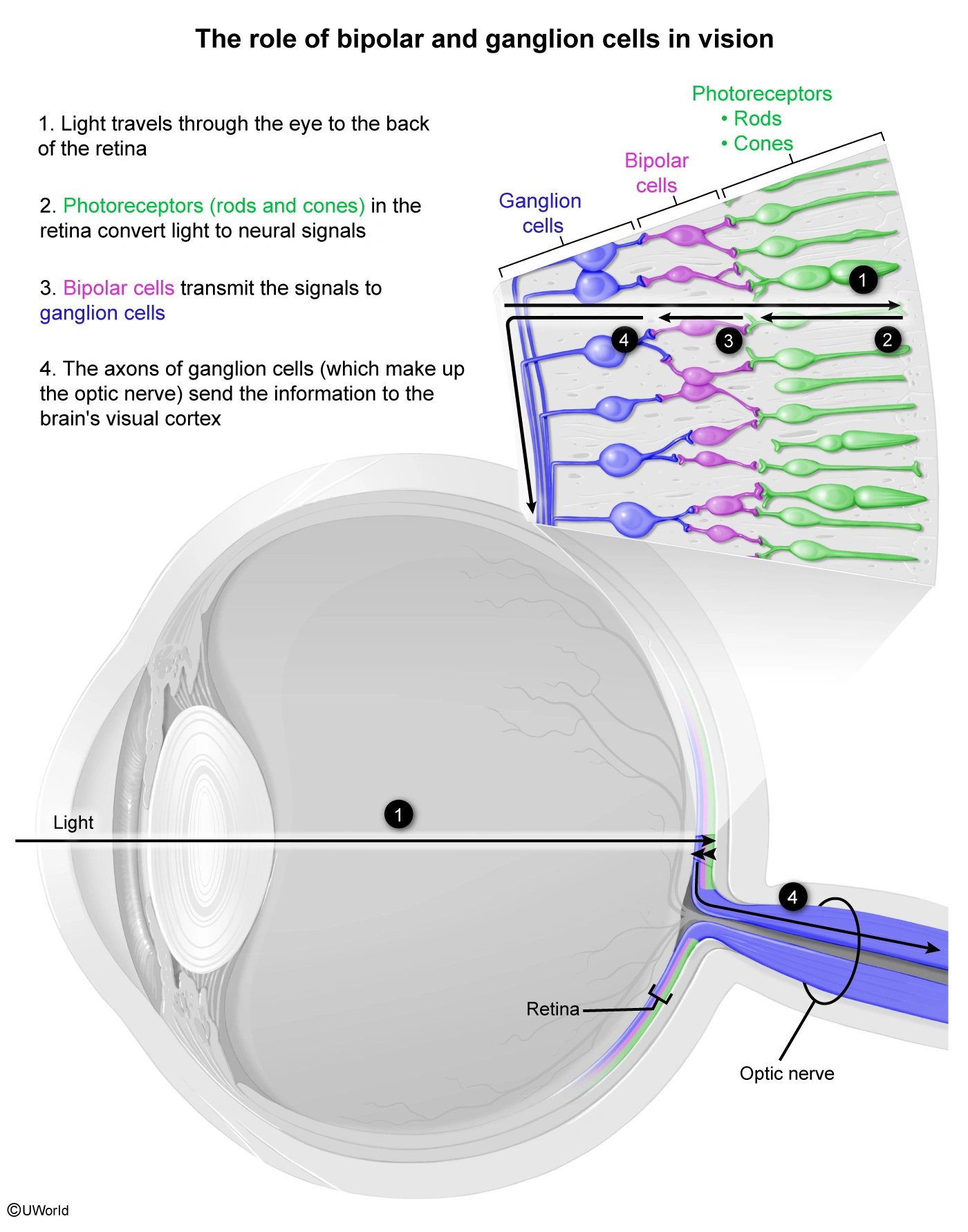
(Choice B)  Bipolar cells are cells in the retina that relay visual information from photoreceptors (ie, visual receptor cells) to ganglion cells.

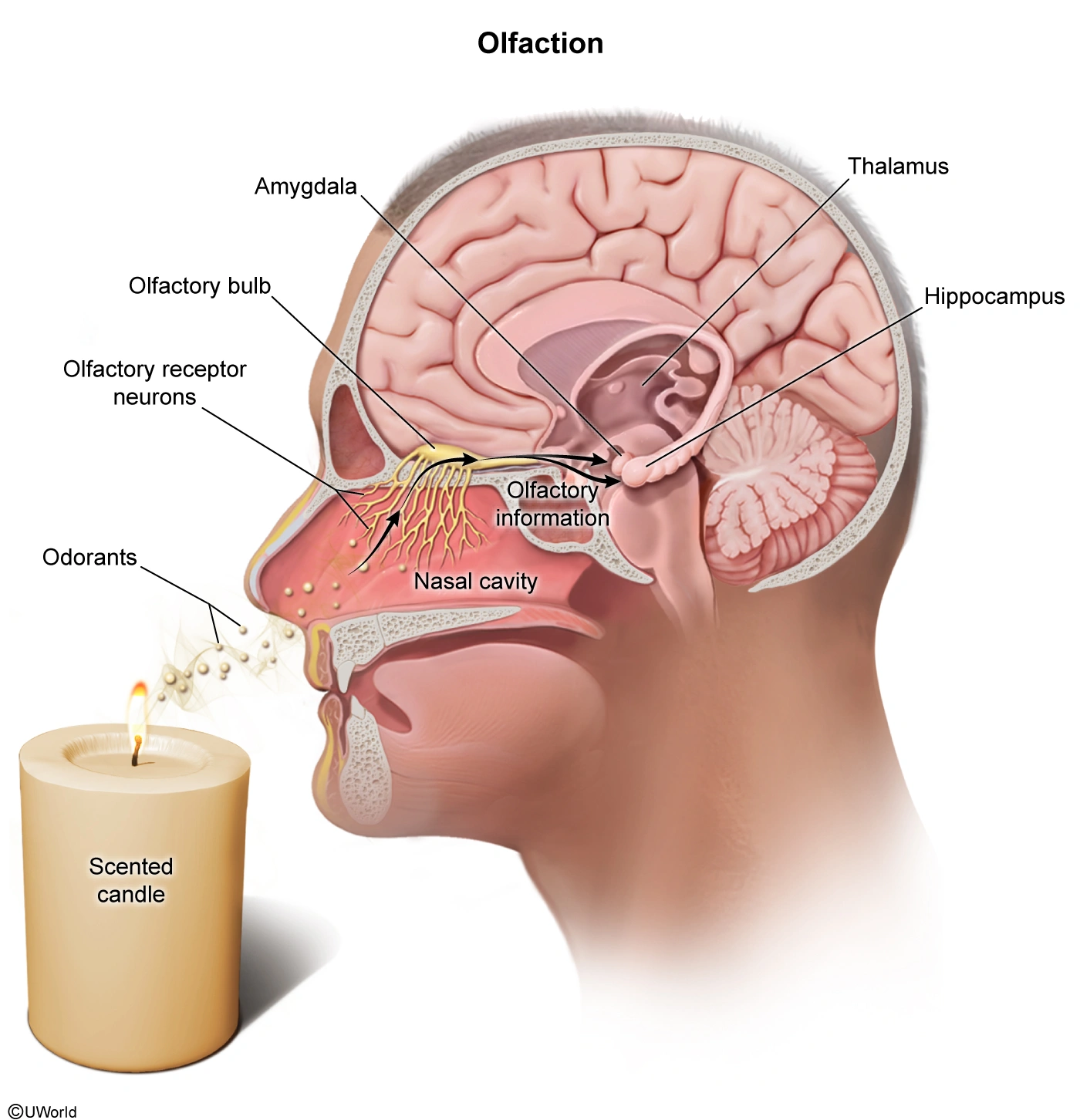
(Choice D)  Olfactory receptor neurons are the receptor cells for the sense of smell; they bind odor molecules in the nasal cavity and transmit olfactory information to the olfactory bulb.

Things to remember:
In the process of touch, somatosensory receptors in the skin are activated by a stimulus (eg, an insect landing on one's arm).  The somatosensory receptors convert this somatosensory information (eg, touch, pain, temperature) into neural signals.


UWorld Dark Blue logo

Study Anywhere, Anytime

UWorld’s mobile app makes it easy to review AP Psychology Unit 1 anytime you have a few minutes. You can practice questions on the bus, watch brain anatomy videos between classes, or review your AP Psych Unit 1 notes while waiting for friends.

Stand Out
with a Top Score in AP Psychology

Earn a top score and stand out for colleges, majors, and scholarships. With UWorld’s AP Psychology online course, you’ll be ready from your first unit review to your final exam.

Choose Your Subscription
Dream Score Plan
360-Day
$169
Deep Learning Plan
180-Day
$149
Score Booster Plan
90-Day (No print book, only digital)
$129
Introductory Plan
30-Day (No print book, only digital)
$99

Get our all-in-one course today!

  • Focused AP Psychology Videos
  • Print & Digital Study Guide
  • 350+ Exam-style Practice Questions
  • Customizable Quiz Generator
  • Adjustable Study Planner
  • Realistic Timed Test Simulation
  • Colorful Visual Explanations
  • Progress Dashboard
  • Smart Flashcards & Digital Notebook
Explore our free trial and frequently asked questions.

Hear From Our AP Students

UWorld’s service is pretty good and helps provide a lot of explanations on subjects I haven’t been confident on before.

— Bence P.

The questions here are the most realistic to the AP tests I've seen so far! I appreciate the ability to customize tests as well.

— Kaila H.

The best part is that all options are well-explained, telling clearly why they are not the right option.

— Syeda Huma Z.

Frequently Asked Questions (FAQs)

AP Psychology Unit 1 covers the Biological Bases of Behavior, which explain how the brain, nervous system, and endocrine system shape everything we think and do. This foundation is important because these ideas appear throughout the entire AP Psychology course and are tested in Unit 1 MCQs and FRQs.

The main topics in AP Psych Unit 1 include:

  • Interaction of inherited traits, environment, and evolution: How genetics and experiences shape behavior.
  • Structures and functions of nervous systems: How the CNS and PNS send and process signals.
  • Neural firing and psychoactive substances: How neurons communicate and how drugs affect neurotransmitters.
  • Study of the brain and its structures: How different brain regions influence thoughts, emotions, and actions.
  • Sleep: How sleep cycles and stages affect learning and mental health.
  • Sensation: How sensory systems detect and send information to the brain.

Studying these topics with UWorld helps you connect biological concepts to real psychological behavior. With diagrams, examples, and AP Psychology Unit 1 practice questions, UWorld makes it easier to understand these ideas and apply them on your progress checks, quizzes, and the AP Psych exam.

A good way to prepare for the AP Psychology Unit 1 exam is to follow a Read, Watch, Practice approach using UWorld. Start by reading the Unit 1 study guide to review neurons, brain structures, and neurotransmitters. These explanations help you build a strong foundation in biological psychology.

After reading, watch UWorld’s AP Psychology videos. Seeing concepts like neural firing, synaptic transmission, and brain areas illustrated visually helps you remember them more easily. This is especially useful for Unit 1 progress check MCQs.

Finish by practicing with UWorld’s AP Psych Unit 1 practice questions. These questions look like real exam items and help you strengthen your understanding of biological concepts. With this method, you will feel well prepared for your AP Psychology Unit 1 test.

There are free resources that can help you prepare for AP Psychology Unit 1. UWorld offers a free trial with a selection of AP Psych Unit 1 practice questions, sample explanations, and study guide previews. These tools help you learn the Biological Bases of Behavior and see what real AP-style questions look like.

The College Board® website includes free Unit 1 FRQs, progress check-style questions, and the official AP Psychology Course and Exam Description. These materials show how topics like neural communication and brain anatomy appear on the exam.

Khan Academy also provides free AP Psych videos that cover basic Unit 1 content. When combined with UWorld’s detailed practice questions, these resources help you prepare more effectively for your Unit 1 AP Psychology exam.

The AP Psychology Unit 1 test includes multiple-choice questions, free-response questions, and new evidence- and article-based question formats. UWorld helps you prepare for all of these styles by giving you realistic AP Psychology Unit 1 practice questions that match the wording and difficulty level of the actual exam. These questions focus on biological psychology topics such as neurons, neurotransmitters, brain structures, and the nervous system.

You will see traditional multiple-choice questions, along with two newer formats: the Article Analysis Question (AAQ), which asks you to analyze a short reading and apply biological concepts to it, and the Evidence-Based Question (EBQ), which requires you to interpret data, charts, or research related to Unit 1 topics. UWorld walks you through how to approach both formats with guided explanations.

FRQs also appear on the Unit 1 test and usually require you to define biological terms or explain how brain and nervous system processes relate to behavior. Practicing these question types in UWorld helps you understand how to structure your answers, avoid mistakes, and feel more confident with the Biological Bases of Behavior on test day.

To improve your FRQ score for Unit 1, begin by reviewing the Biological Bases of Behavior content in UWorld’s study guide. Understanding how neurons fire, how neurotransmitters work, and what different brain structures do will help you write stronger responses.

Next, practice explaining concepts in your own words. FRQs often ask you to define terms and apply them to scenarios. UWorld shows you how to break down these questions so you can write clear and accurate explanations.

Finally, work through UWorld’s AP Psych Unit 1 FRQ-style questions. These practice items help you learn how to structure your responses and avoid common mistakes. With consistent practice, your FRQ writing will improve, and you will feel more confident.

The Biological Bases of Behavior unit, also known as AP Psychology Unit 1, typically makes up 15%–25% of the AP Psychology exam. UWorld prepares you for MCQs and FRQs by covering all the unit’s key topics.

Since Unit 1 introduces core biological concepts that appear throughout the course, many questions require you to understand neurons, neurotransmitters, and brain structures. UWorld’s practice questions focus on these skills and match the style of real AP Psych questions.

Because Unit 1 content appears consistently on the exam, using UWorld’s videos, study guides, and practice tests helps you build a strong foundation and perform better on later units as well.

UWorld is one of the best places to find a clear and effective AP Psychology Unit 1 study guide. The guide breaks down complex biological psychology concepts into simple explanations that help you understand how the brain and nervous system influence behavior.

The UWorld study guide includes diagrams, charts, memory tips, and examples that make topics like neurotransmission and brain anatomy easier to learn. It also complements Unit 1 progress check MCQs and FRQs with matching explanations and visuals.

If you want a study guide that feels organized, easy to read, and built specifically for AP Psychology students, UWorld is the best place to start. It gives you everything you need to prepare with confidence.

Yes, UWorld offers AP Psychology Unit 1 practice tests that focus on the Biological Bases of Behavior. These practice questions match the format and difficulty of real AP Psych questions, so you can prepare more effectively.

Each question comes with a detailed explanation that helps you understand why the correct answer works and how to avoid common mistakes. UWorld’s practice tests cover neural firing, neurotransmitters, brain structures, and other key Unit 1 topics.

Practicing with UWorld builds your confidence and helps you perform better on Unit 1 MCQs, progress checks, and FRQs. It is one of the most effective ways to prepare for your AP Psychology Unit 1 exam.

Learn More About Specific Unit

Strengthen your grasp of AP Psychology by exploring related units that build on these concepts.
Scroll to Top

Ace AP Psych

No Credit Card Required
Try UWorld FREE for 7 Days

Frequently Asked Questions

New Purchase: All new subscriptions go into effect from the time they are activated and not at the time of setup/purchase. A subscription can be activated immediately or any time thereafter. If your initial purchase consists of multiple courses (Qbank, Self-Assessment exam, CCS, etc.), each can be activated individually and independently via your account on our website. This process of activating a subscription after purchase allows you the flexibility to start a subscription when you are truly ready to use it.

We recommend that all subscriptions be activated within 180 days of setup/purchase. Once a subscription is activated, it cannot be paused or suspended for any reason and will run continuously for the duration of the course material.

Renewal: A renewal is an extension of time to continue access to a current activated subscription. Because a renewal is an extension to an already active subscription, it is effective from the existing expiration date, not from the day of purchase and cannot be deferred to start at a later date/time.

Note: All of our subscriptions are based on the Eastern Time Zone (GMT/UTC -5 hours or New York Time), which may be different than your local time zone.

Any of our product offerings can be purchased from our website with payment due in full at time of purchase via a credit or debit card with American Express/Discover/MasterCard or Visa logo.

You will need to register for an account in order to purchase any of our products. Once you have registered for an account or if you already have an account:

  • Log in to your UWorld account
  • Click on the Cart icon at the top of the page and then select your desired product to see a list of available packages and their prices
  • Select the package you wish to purchase
  • Verify your profile information, address, and educational status, then click the Update button
  • Enter your Billing address and credit/debit card information, then click Review Order
  • Verify that the correct product is in your cart and click Place Order
  • A purchase receipt will automatically be sent to your registered email address

If you complete your purchase but do not receive a receipt, please contact the Customer Care Team at [email protected]

You can subscribe to any of our online courses/services using a credit or debit card with a Visa, MasterCard, Discover or American Express logo. After a successful payment, your subscription will immediately be available for activation via your account on our website or available complementary mobile applications.

You can also subscribe via personal check, money order, or demand drafts taken in U.S. dollars. These types of payments should be mailed to us and should include the name of the subscription and the duration, along with the details asked for in the registration form. We will set up your account as soon as we receive your payment and notify you via email of your access credentials. All direct-mail payments must be in U.S. dollars and made payable to:

UWorld, LLC
9111 Cypress Waters Blvd
Suite 300
Dallas, TX 75019

We do not accept cash via mail, currencies other than U.S. dollars or payments via fax.

Individuals purchasing our CPA Review product may finance their purchase using Affirm during checkout process. Your eligibility depends on your credit score and other criteria, as per Affirm’s policies (outlined here). A soft credit check, a credit check that does not affect your credit score, will be performed by Affirm to determine your loan eligibility. You will need a US based bank account to qualify.

All refunds are evaluated on a case-by-case basis for products purchased directly from UWorld. One case has no bearing on another. Refund amounts determined by UWorld are final.

In-App Purchases: We are unable to process any refunds for purchases made via mobile application (in-app). Please contact Apple for all refund/credit requests for Apple in-app purchases.

USMLE Step 2 CS, Step 3 CCS, Subject Reviews & Self-Assessment Exams: These subscriptions are non-refundable, non-transferable, and cannot be converted into another subscription.

CPA Review: Students may request to cancel their CPA review product only within 10-days of activation of any of the materials. To qualify for a refund, no more than 10% of the course (lectures, Qbank, or a combination there-of) may have been used per exam section. All CPA Review refunds are subject to a cancellation fee of $75 (for single section purchases) or $250 (for package
purchases), plus any applicable shipping charges. No return of merchandise is necessary.

All other Qbanks: Refunds are considered for subscriptions of more than 30 days. Refund amounts are based on the number of days elapsed since the subscription start date or the number of questions used, whichever amounts to a higher deductible.

Example scenarion: An individual purchases a 180-day Qbank subscription and generates a few test blocks equal to 20% of the questions in the Qbank. After 45 days, he/she requests a refund. Because the elapsed duration is greater than the percentage of questions used, the refund amount will be based on a subscription converted to the closest duration (60 days) by deducting the applicable 60-day subscription fee from the refund. In the same scenario, if the individual had used 85% of the questions, the refund would be 15% of the subscription fee paid.

Note 1: A processing fee of 10% (minimum of $10 and maximum of $25) will be applied to all refund amounts.

Note 2: All refunds, pro-rated or otherwise, must be requested within 360 days of original purchase. Refunds for purchases made more than 360 days ago will be issued as non-refundable, non-transferable store credit.

Note 3: Subscribers must notify UWorld of their intent to obtain a refund before activating their subscription (or) during the active duration. If the reset option is used or all of the questions are used, no refund will be allowed (see “I want to reset/delete my Qbank test history (or) start all over again, is this possible?” below for further details). No refunds will be offered for expired subscriptions.

Note 4: For combination package purchases, individual subscription fees will be applied when calculating the refund. If any self-assessment Exam(s) is utilized from a package, the entire purchase is rendered non-refundable.

Note 5: Although access to Qbanks via certain mobile devices is provided as an additional feature, it is not intended to be a replacement for computer access, and no refunds or cancellations will be honored due to user inability to install and/or use the provided software on any mobile device (regardless of whether the device meets the minimum system requirements).

Please use the following steps to purchase a renewal for your subscription:

  • Log in to your account on our website
  • Click on the User Icon in the top right corner of the screen
  • Click on the Renew button corresponding to your subscription
  • Select the Renewal duration you wish to purchase
  • Verify your profile information, address, and educational status, then click the Update button
  • Enter your Billing address and credit/debit card information, then click Review Order
  • Verify that the correct package is in your cart and click Place Order

Upon a successful transaction, you will be sent a confirmation email receipt.

A renewal is an extension of time to continue accessing an active subscription, and it will not start the subscription over, provide a reset, or grant access to additional questions that were not previously accessible. Because a renewal is an extension to an already active subscription, it is effective from the existing expiration date, not from the date of purchase, and cannot be deferred in any way to start at a later date/time.

Please note that to qualify for renewal pricing, you will need to renew the course before it expires. Renewals are not offered to expired subscriptions. If you fail to secure a renewal before the expiration date, you will need to purchase a new subscription at the regular price directly from our website to regain access to the material.

Note: All times and dates displayed for subscription expiration correspond with the Eastern Time Zone (GMT/UTC -5 hours or New York Time), which may be different than your local time zone.

Note: If your initial purchase was a combination package, you will need to renew each active subscription individually. You do not need to renew a course that has not been activated.

You may request to upgrade or downgrade your subscription purchase as long as it has not been activated. If you purchase a combination package, all included subscriptions must be unused. Please be advised that current subscription pricing will apply.

If your subscription has been activated, unfortunately, we cannot upgrade it retroactively. If seeking to downgrade, please refer to our refund policy for available options.

We do not offer custom duration(s) or combination packages other than those outlined on the website. Please refer to our purchase page for currently available subscriptions (including discounted combination packages for some products).

Self-Assessment exam subscriptions are for 14 days each. Subscribers whose active subscription(s) have not expired can purchase renewals from 7 days or more at any time before their active subscription expires. Please refer to the respective course description page for renewal options.

We offer a demo on each of our product pages that contains a sample of the product interface and a few sample questions. We do not offer guest/trial accounts to test our software and view materials.

It is possible to purchase a subscription as a gift for someone else. However, the intended recipient will need to register an account on our website (or have an account registered for them, with their profile information entered accurately). If the user is present at the time of purchase, the purchase can be made from their account on our website using any credit or debit card with a Visa, MasterCard, American Express, or Discover logo.

If the user is not present, or you wish for the gift to be a surprise, please contact Support directly using the contact form to arrange payment for the gift subscription. You will need to provide the user’s registered email address so the account can be located.