AP Human Geography Unit 6 Review and Practice Test
Get ready to crush AP Human Geography Unit 6 with quick tips, easy reviews, and practice tests that make Cities and Urban Land-Use Patterns feel way less confusing. Level up your prep with study tools like UWorld’s AP Human Geography Unit 6 practice test and study guide that actually make sense.
Build Real Confidence with Your AP Human Geography Unit 6 Review
Strengthen your understanding of AP Human Geography Unit 6 with clear explanations, helpful visuals, and targeted AP HUG Unit 6 practice tests. This review gives you the support you need to study smarter, feel prepared, and boost your score with less stress.
Engaging Video Lessons
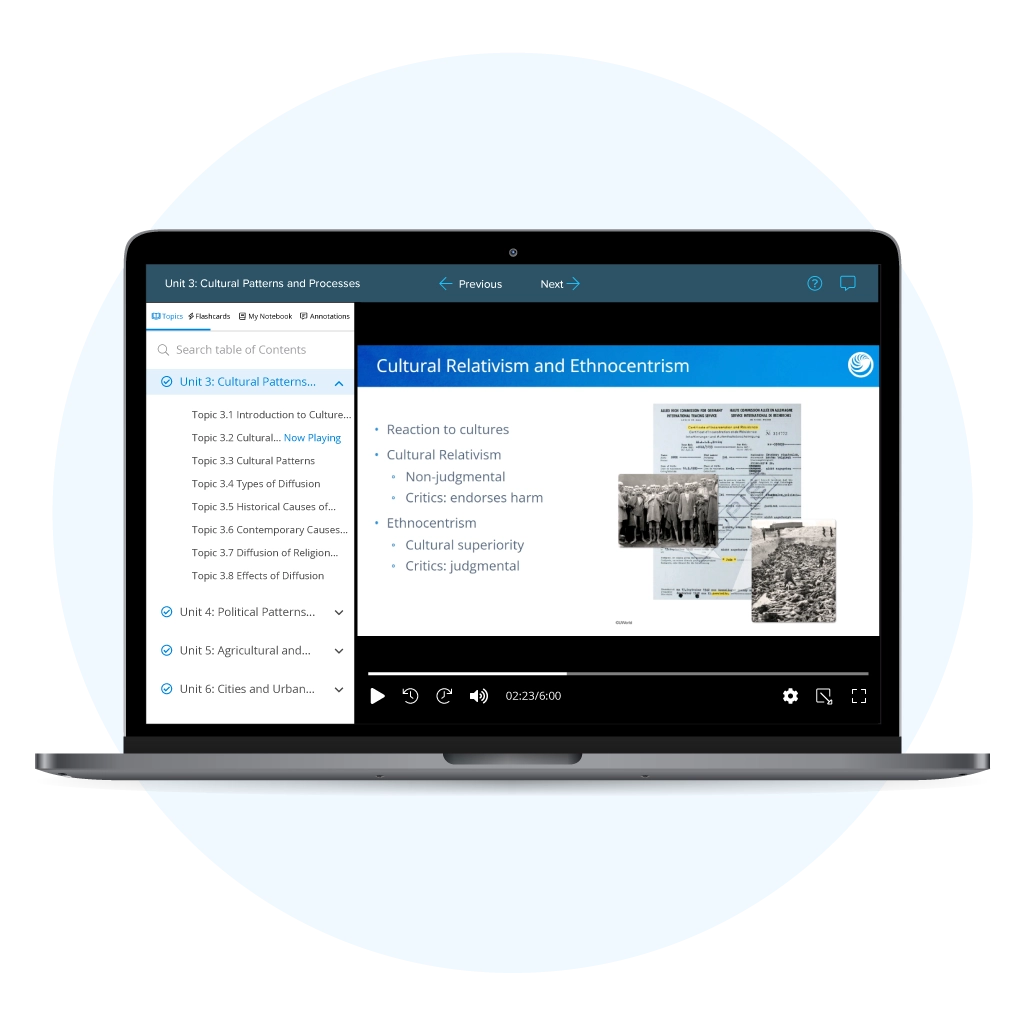
Learn AP Human Geography Unit 6 with video lessons designed to break down Cities and Urban Land-Use Patterns in a way that actually sticks. These AP HUG Unit 6 videos explain key concepts clearly so you can review faster and feel more prepared for your AP Human Geo Unit 6 test.
Interactive Study Guides
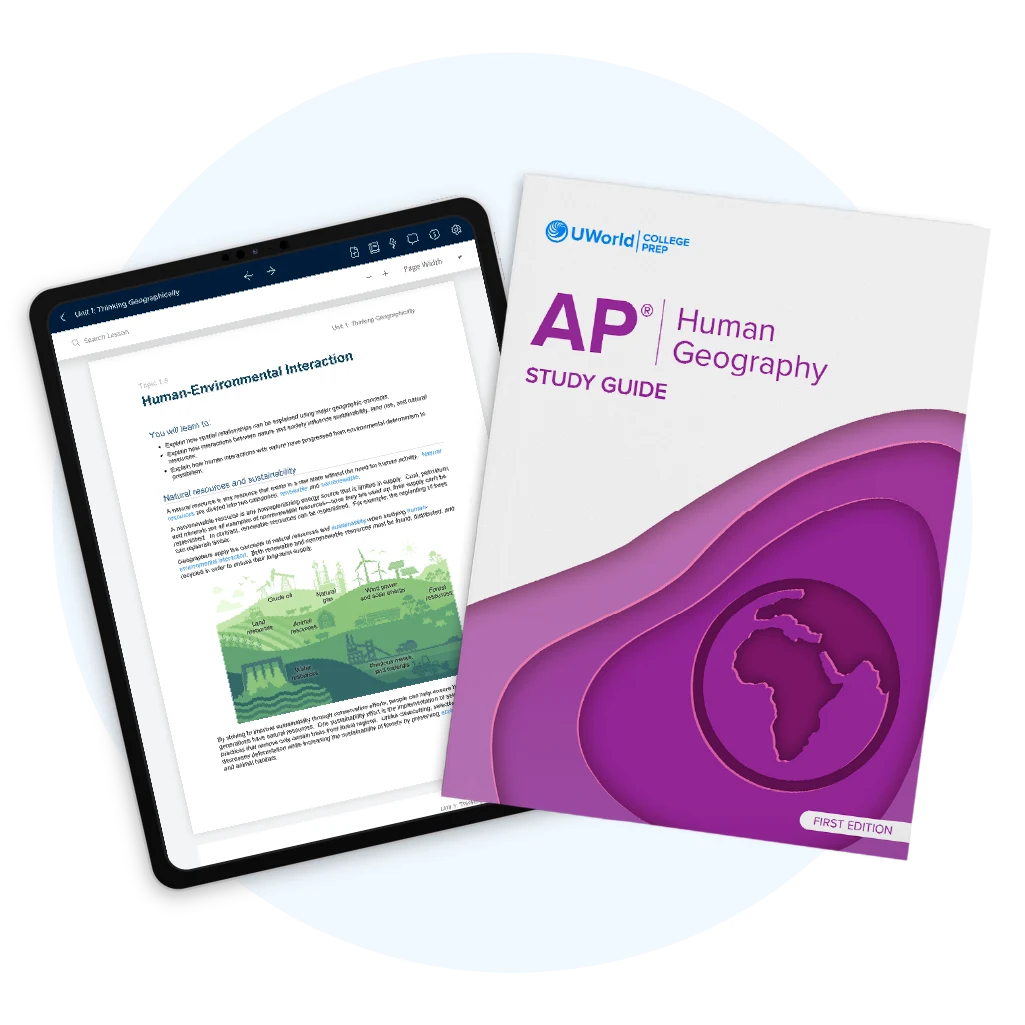
Stay on top of AP Human Geography Unit 6 with interactive study guides that simplify Cities and Urban Land-Use Patterns into visuals and notes you can actually remember. These AP HUG Unit 6 review tools help you break down tough topics so your AP Human Geo Unit 6 practice test feels way more manageable.
Challenge Yourself with AP Human Geography Unit 6 Practice Questions
Question
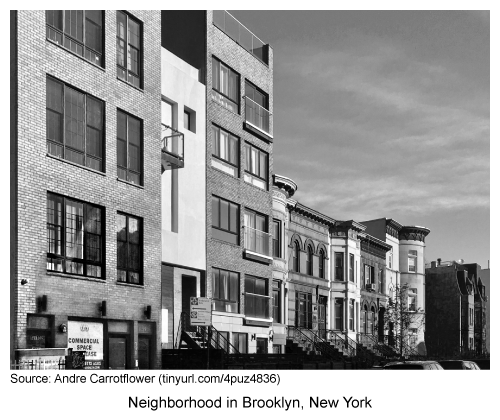
An argument cited by critics of urban developments like those in the photograph is that they
| A. decrease a city's housing options | |
| B. are not sustainable developments | |
| C. increase urban sprawl | |
| D. diminish historical character in communities | |
| E. decrease a community's tax base |
Explanation
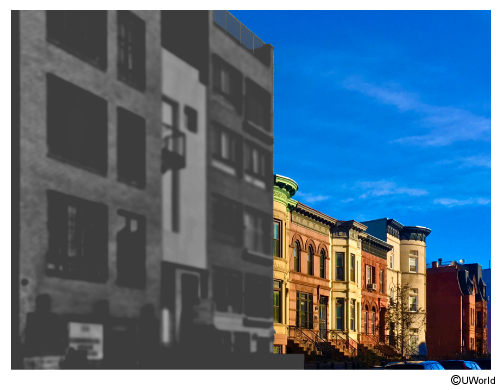
Urban development increases the diversity of housing options and reduces urban sprawl. However, critics of urban design initiatives have identified drawbacks in developments such as infills. One common criticism is that the designs of modern infills diminish historical character in communities.
The buildings on the right side of this Brooklyn, New York, photograph have architectural designs dating from earlier eras, some to the late 1800s. Some critics, including historians and architects, argue that the designs of modern infills diminish a neighborhood's beauty and should not be near historical architecture.
(Choices A and E) Infills that become residential dwellings help increase a city's housing options. As a result, infills also help expand the local tax base.
(Choices B and C) Since infills make use of land that requires redevelopment, they are generally considered sustainable developments, which help decrease urban sprawl.
Things to remember:
One common criticism of urban developments such as modern infills is that their designs diminish historical character in communities.
Question
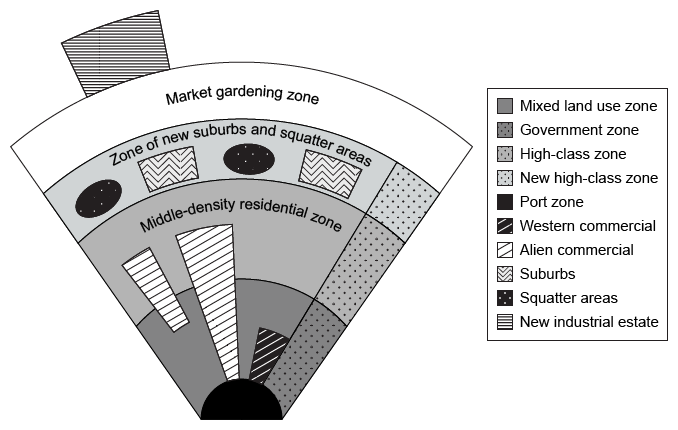
Which of the following models is depicted in the image?
| A. African city model | |
| B. Harris and Ullman model | |
| C. Hoyt sector model | |
| D. Latin American city model | |
| E. Southeast Asian city model |
Explanation
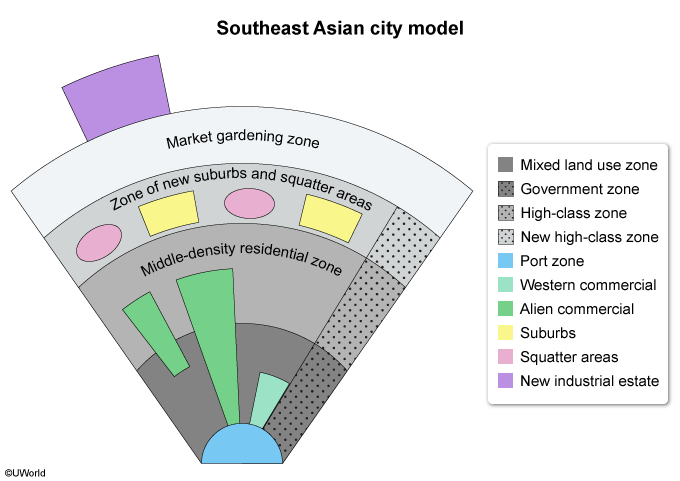
The Southeast Asian city model focuses on the mid-sized port cities in that region and the lack of a central business district (CBD) in these cities. Despite the lack of a CBD, there are two permanent zones: the port zone and the market gardening zone.
Port zones were built in Southeast Asia during the era of colonialism and imperialism, led by European countries such as Portugal and Spain. These zones are typically surrounded by mixed land-use and middle-density residential zones.
The Southeast Asian model also features blended areas, in contrast with other models that have clearly defined, unmixed areas. For example, squatter and suburban areas are found in the same zone in the region's cities. These details indicate that the image depicts the Southeast Asian city model.
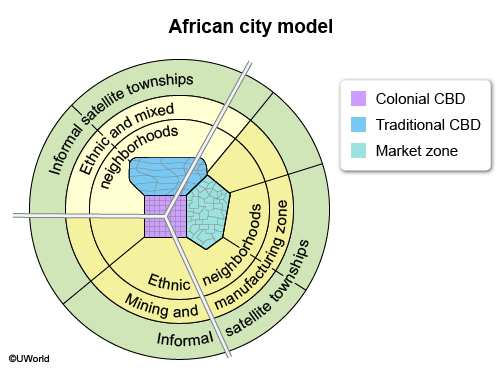
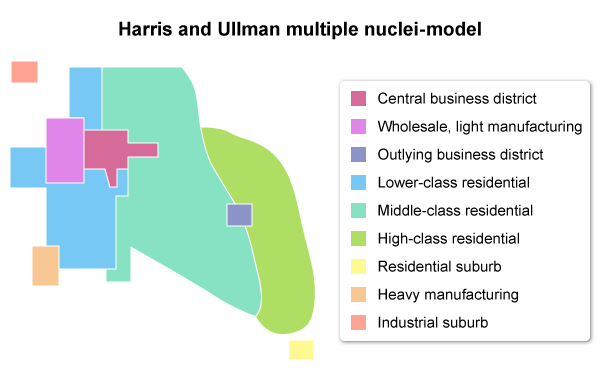
(Choices A and B) The African city model and the Harris and Ullman model both feature CBDs, which are absent in the above image.
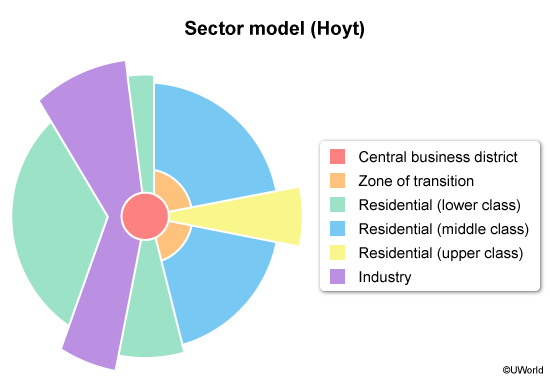
(Choice C) The Hoyt sector model focuses on the effect that transportation and communication have on a city's layout, features not shown in the above image.
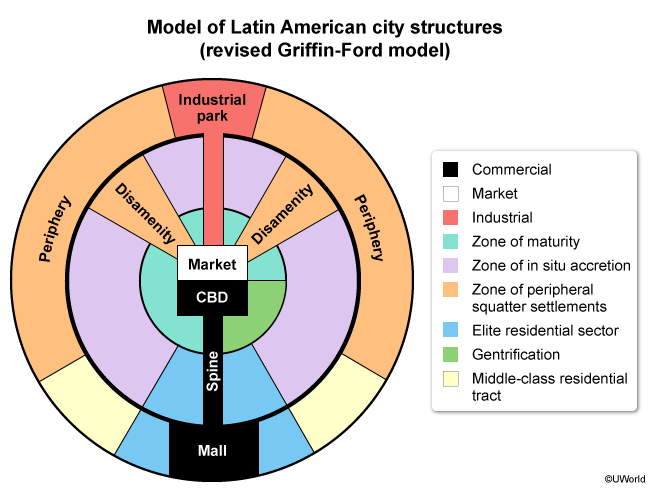
(Choice D) In the Latin American city model, squatter settlements are located on the periphery, away from suburbs.
Things to remember:
The Southeast Asian city model features mid-sized port cities that lack a central business district. However, these cities have a permanent port zone, a market gardening zone, and mixed residential and land-use areas.
Question
Which of the following is a correct statement about world cities?
| A. They require financial support from primate cities | |
| B. They facilitate financial and cultural exchanges with other cities | |
| C. They have little influence in foreign affairs | |
| D. They rarely demonstrate signs of placelessness | |
| E. They are characterized by a lack of public transportation |
Explanation

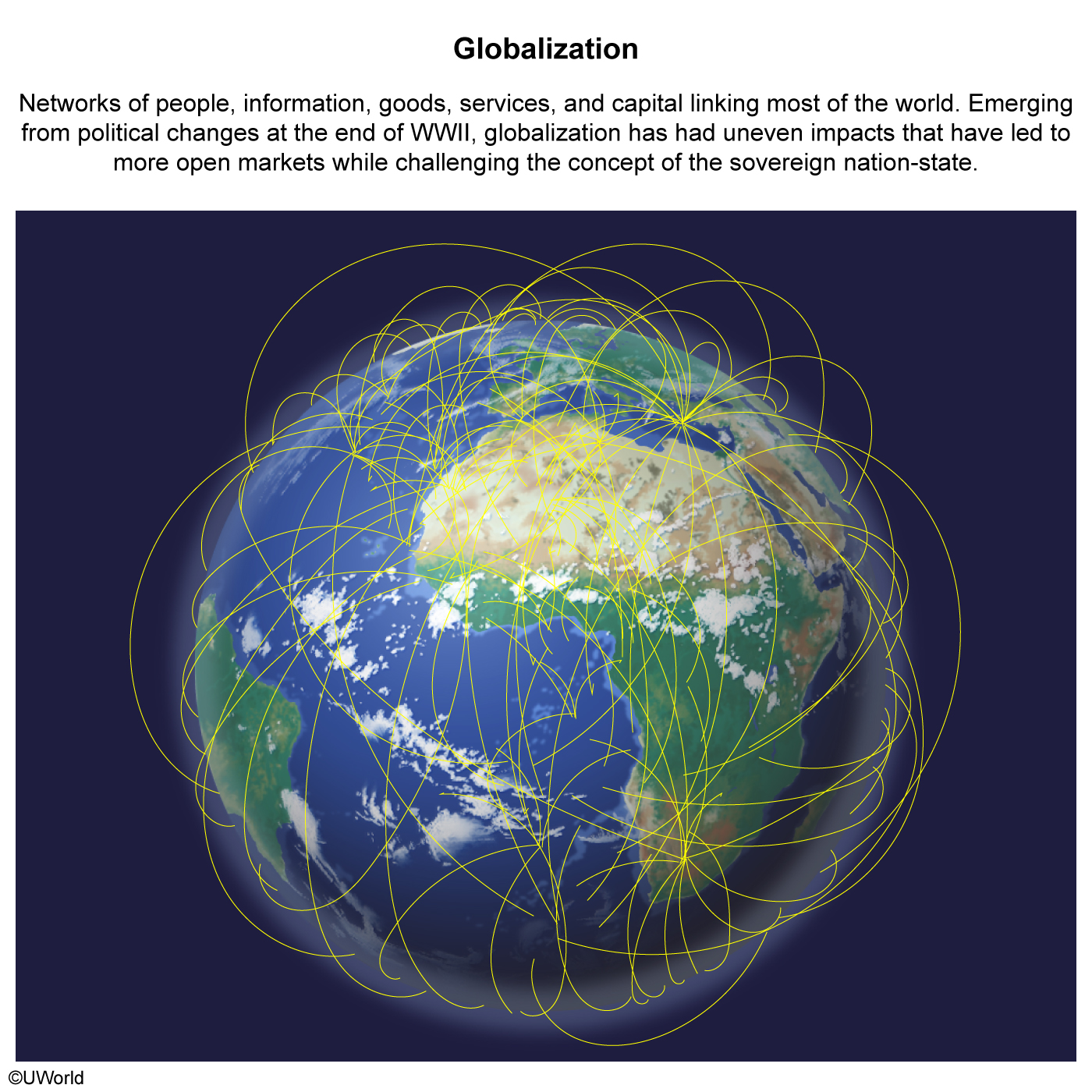
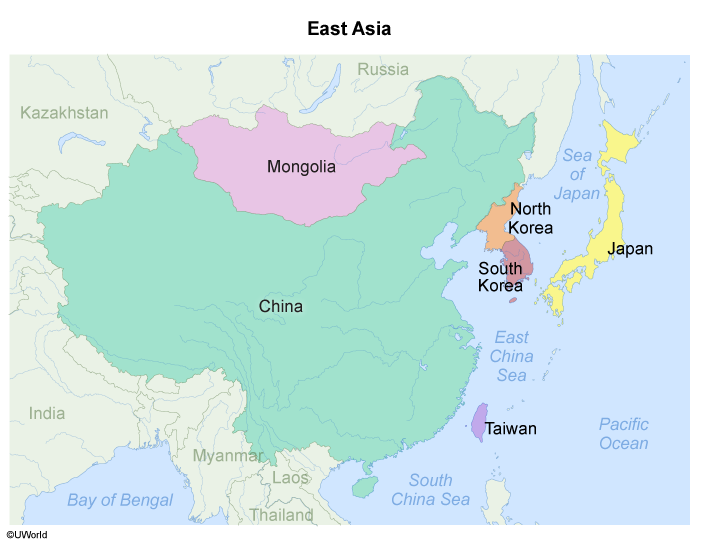
Due to their role in the process of globalization, world cities, also known as global cities, have tremendous financial and economic impact across the globe. Tokyo, for example, is a dominant player in East Asian financial networks, being home to major banks, corporations, and busy ports that impact regional and global trade. In this way, Tokyo and other world cities facilitate financial exchanges around the world.
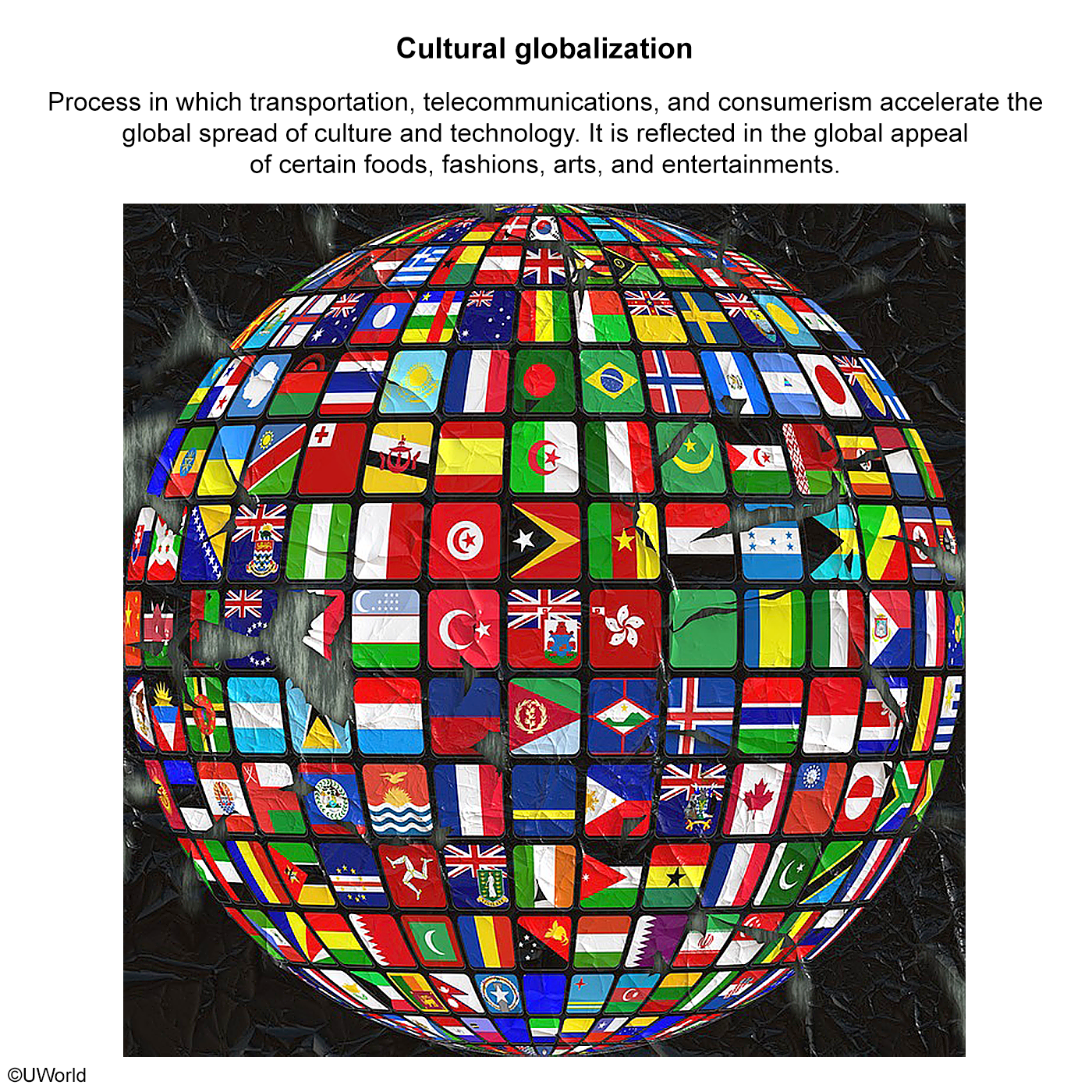
World cities like New York also contribute to cultural globalization by serving as sites of intense cultural exchange. This exchange is made possible by transportation systems, as well as the communication and digital networks that dominate media. These connections allow world cities to serve as global cultural nodes.
(Choice A) World cities are financially independent and do not require financial support from primate cities.
(Choice C) Due to being hubs of financial importance, world cities are influential in international political affairs.
(Choice D) World cities tend to experience a great deal of placelessness due to the effects of globalization and being highly interconnected with other parts of the world.
(Choice E) Generally, world cities have large mass transit networks and international airports.
Things to remember:
World cities facilitate financial and cultural exchange with other cities around the world.

Study Anywhere, Anytime
Stay ready for your AP Human Geography Unit 6 review wherever you are. Use the app to work through AP HUG Unit 6 practice test questions on the bus, between classes, or while waiting for friends. With quick access to videos, notes, and AP Human Geo unit 6 review tools, you can keep your practice going anytime you have a few minutes.
Stand Out
with a Top Score in AP Human Geography
Finish your AP HUG Unit 6 review and continue mastering all units with UWorld. Boost your performance and make yourself a standout candidate for competitive colleges, majors, and scholarships by earning a top score.
Get our all-in-one AP HUG review course today!
- Focused AP HUG Videos
- Print & Digital Study Guide
- 300+ Exam-style Practice Questions
- Customizable Quiz Generator
- Adjustable Study Planner
- Realistic Timed Test Simulation
- Colorful Visual Explanations
- Progress Dashboard
- Smart Flashcards
- Digital Notebook
Hear From Our AP Students
UWorld’s service is pretty good and helps provide a lot of explanations on subjects I haven’t been confident on before.
The questions here are the most realistic to the AP tests I've seen so far! I appreciate the ability to customize tests as well.
The best part is that all options are well-explained, telling clearly why they are not the right option.

Frequently Asked Questions (FAQs)
What are the main topics covered in AP Human Geography Unit 6: Cities and Urban Land-Use Patterns and Processes?
Understanding AP Human Geography Unit 6 starts with knowing how cities grow, change, and function in real life. This unit helps you build a strong foundation for your AP Human Geo unit 6 test and prepares you for tougher concepts you’ll see in AP Human Geography unit 6 practice tests and FRQs.
Here are the core topics you’ll review in this AP HUG Unit 6 section:
- The factors that drive the growth of cities and suburbs: Explore how migration, economics, and transportation shape urban expansion in your AP Human Geography unit 6 review.
- Globalization and cities: See how global connections influence cultural patterns, trade, and city networks in AP human geo unit 6 notes.
- City infrastructure: Learn how transportation, housing, and public services support modern urban life for the AP Human Geography Unit 6 practice test.
- Urban design initiatives and practices: Understand sustainable planning and smart-growth strategies for the AP human geography unit 6 FRQ and multiple-choice questions.
UWorld makes these AP Human Geography Unit 6 topics easier to learn with visuals, examples, and AP HUG Unit 6 practice test questions that match the real exam. With detailed explanations and a clean, student-focused design, UWorld helps you study faster, remember more, and feel fully prepared for your Unit 6 AP human geography test.
How should I prepare for an AP Human Geography Unit 6 exam?
Preparing for the AP Human Geography Unit 6 exam starts with understanding how cities grow, connect, and function. A strong Unit 6 AP Human Geography review should mix clear explanations, visuals, and steady AP Human Geo Unit 6 practice tests so you’re not just memorizing, you’re actually getting the concepts.
Try building your prep around these steps:
- Review core ideas daily using AP Human Geography Unit 6 notes, vocab, and topic summaries.
- Practice with AP HUG Unit 6 practice tests to learn real exam patterns and question styles.
- Work through FRQ-style prompts to get comfortable applying Cities and Urban Land-Use concepts on your AP Human Geography Unit 6 FRQ questions.
- Use timed MCQ drills to build speed and accuracy for your AP Human Geo Unit 6 test.
Once you’ve got the basics down, using a resource like UWorld can help you level up your Unit 6 AP human geography practice. The platform gives you realistic AP HUG Unit 6 practice test questions, detailed explanations, and visuals that make tricky urban patterns easier to understand. It’s a simple way to stay confident and more prepared for the AP Human Geography Unit 6 exam without feeling overwhelmed.
Are any free resources available for AP Human Geography Unit 6?
Yes, you can start your AP Human Geography Unit 6 review with the UWorld free trial, which gives you short-term access to AP HUG Unit 6 practice test questions and explanations that help clarify Cities and Urban Land-Use Patterns. This is one of the easiest ways to get immediate, high-quality practice without paying up front.
You can also use free AP Classroom resources from the College Board to support your AP Human Geo Unit 6 review. These include topic videos, progress checks, and materials aligned directly with what you’ll see on the Unit 6 AP Human Geography test.
For additional support, platforms like Khan Academy offer general geography explanations that can strengthen your understanding of concepts you’ll see in AP Human Geography Unit 6 practice tests. Using all three together gives you a solid, no-cost starting point for your Unit 6 prep.
What types of questions are on the AP Human Geography Unit 6 test?
The AP Human Geography Unit 6 test includes both multiple-choice and FRQ-style questions that focus on Cities and Urban Land-Use Patterns. Your AP Human Geo unit 6 review should prepare you for questions that connect real-world city growth to the concepts covered in this unit.
Here are the types of questions you’ll usually see on test:
- Multiple-choice questions (MCQs): These AP Human Geography Unit 6 MCQs test your understanding of urban models, city infrastructure, globalization, and suburban growth.
- Free-response questions (FRQs): AP Human Geography Unit 6 (FRQ) prompts ask you to explain patterns, apply models, analyze maps, and interpret urban design scenarios.
Practicing these formats helps you strengthen both your content knowledge and your timing. When you’re comfortable with MCQs and FRQs, the Unit 6 AP human geography exam feels much easier and more predictable.
How can I improve my score on the Free-Response Questions (FRQs) for Unit 6?
Improving your score on AP Human Geography Unit 6 FRQs starts with understanding how to apply concepts about Cities and Urban Land-Use Patterns, not just memorizing them. A strong AP Human Geography Unit 6 review should help you connect real-world examples to the FRQ tasks you’ll see on the exam.
Here are reliable ways to boost your Unit 6 AP Human Geography FRQ performance:
- Practice breaking down FRQ prompts so you know exactly what each task is asking on the Unit 6 test.
- Use urban models and vocabulary correctly to show strong content knowledge in your AP HUG Unit 6 practice tests.
- Organize your responses with short explanations that directly answer the prompt’s requirements.
- Review sample scoring guidelines to understand what earns points on AP Human Geography Unit 6 FRQ questions.
Once you get comfortable with the structure and scoring, practicing with realistic AP Human Geography unit 6 practice tests helps reinforce timing and clarity.
What is the "Cities and Urban Land-Use Patterns and Processes" unit's weight on the AP Human Geography exam?
On the AP Human Geography Unit 6 test, the “Cities and Urban Land-Use Patterns and Processes” unit carries a significant portion of the multiple-choice and FRQ sections. Because of this weight, your AP Human Geo unit 6 review plays a major role in shaping your overall exam performance.
Here’s how Unit 6 typically shows up on the AP Human Geography Unit 6 test:
- Roughly 12–17% of the exam comes from AP Human Geography Unit 6 content, making it one of the more heavily tested units.
- Unit 6 AP Human Geography FRQs frequently include tasks tied to urban models, growth patterns, and infrastructure.
- AP HUG Unit 6 practice test questions often appear in the MCQ section because cities and land-use patterns are easy to test with data, maps, and models.
Because Unit 6 holds this level of importance, consistent AP Human Geography Unit 6 practice tests and clear topic review can make a noticeable difference in your score. Focusing on this unit early ensures you’re ready for both MCQs and FRQs on your Unit 6 AP Human Geography exam.
Where can I find a good study guide for AP Human Geography Unit 6?
If you’re looking for a reliable AP Human Geography Unit 6 study guide, UWorld is one of the strongest options available. Its study materials break down Cities and Urban Land-Use Patterns in a way that makes your AP Human Geo Unit 6 review easier to understand and apply on both MCQs and FRQs.
Here’s what makes the UWorld AP HUG Unit 6 study guide stand out:
- Clear visual explanations that simplify complex urban models and city-growth patterns for your Unit 6 AP human geography test prep.
- Integrated practice questions that mirror real AP Human Geography Unit 6 practice tests, helping you build accuracy and confidence.
- Smart flashcards and notes tools that let you save key terms and concepts from AP HUG Unit 6 in one organized place.
- Detailed answer explanations that teach you the “why” behind each question, not just the correct option.
Using UWorld for your AP Human Geography Unit 6 study guide means you’re learning with tools built around the actual exam. It’s a complete system that supports every part of your Unit 6 AP Human Geography Review, from understanding the content to practicing with real exam-style questions.
Can I find practice tests specifically for AP HUG Unit 6?
Yes, you can definitely find practice tests designed specifically for AP Human Geography Unit 6. Using targeted practice tests helps you get familiar with the question styles and pacing you’ll see on the real exam.
Here are the best places to get Unit 6 AP Human Geography practice tests:
- UWorld provides exam-style AP HUG Unit 6 practice test questions that mirror the difficulty and format of the actual test.
- Topic-focused practice sets inside UWorld let you drill into concepts like urban growth, city infrastructure, and land-use models for a stronger Unit 6 AP Human Geography review.
- FRQ and MCQ practice inside the platform helps you sharpen both writing and multiple-choice skills for the AP Human Geography Unit 6 practice tests.
The more you work through real exam-style questions, the more confident and prepared you’ll feel for the Unit 6 AP Human Geography exam.
How much time should I spend studying for AP Human Geography Unit 6?
How long you study for AP Human Geography Unit 6 depends on how comfortable you are with Cities and Urban Land-Use Patterns. Most students need consistent, focused sessions to fully understand the models and concepts in the AP Human Geo unit 6 test.
A solid Unit 6 AP Human Geography study plan usually looks like this:
- 30–45 minutes per day reviewing unit 6 notes and textbook content.
- Three to four practice sessions each week using AP HUG Unit 6 practice test questions.
- Weekly FRQ practice to build confidence with Unit 6 AP Human Geography FRQs and real exam timing.
What skills do I need to succeed on the AP Human Geography Unit 6 test?
Doing well on the AP Human Geography Unit 6 test requires more than memorizing definitions. You need to understand how urban processes work and apply those ideas to new scenarios during your AP Human Geo Unit 6 review.
The most important skills for Unit 6 AP Human Geography include:
- Interpreting maps and data related to urban growth, land use, and city structure.
- Comparing urban models used in AP HUG Unit 6 practice tests to explain how cities develop.
- Applying real-world examples to FRQs on the AP Human Geography Unit 6 exam.
- Explaining cause-and-effect relationships between globalization, infrastructure, and city design.
Strengthening these skills helps you move beyond memorization and answer both the AP Human Geography unit 6 MCQs and FRQs with confidence.