FREE Ground Shipping on Courses $149+ | Code: SANTASENDSFREE

AP® Environmental Science Unit 8 Review and Practice Test

Aquatic and Terrestrial Pollution

Prepare for your AP® Environmental Science Unit 8 test with this complete review of aquatic and terrestrial pollution. This unit explains how human activities affect water and land systems, how pollution spreads through ecosystems, and how environmental regulations guide pollution management. Use this APES Unit 8 review to build understanding with lesson videos, interactive study guides, and exam-style APES Unit 8 practice test questions that follow the structure of the real AP exam.

Whether you want concise notes, visual explanations, or detailed AP Environmental Science Unit 8 practice test problems, this resource supports the foundation you need for a higher score.

Boost Your Confidence and Score High with Our AP Environmental Science Unit 8 Review

Dive into AP Environmental Science Unit 8: Aquatic and Terrestrial Pollution with guided lessons that explain the major sources of pollution, how contaminants travel through soil and water, and how ecosystems react to both natural and human-driven disturbances. These topics appear often in APES Unit 8 MCQs and FRQs, which makes a strong understanding essential for exam success. UWorld’s practice sets and progress checks help reinforce each concept so students can strengthen problem-solving skills and approach the exam with confidence.

Watch

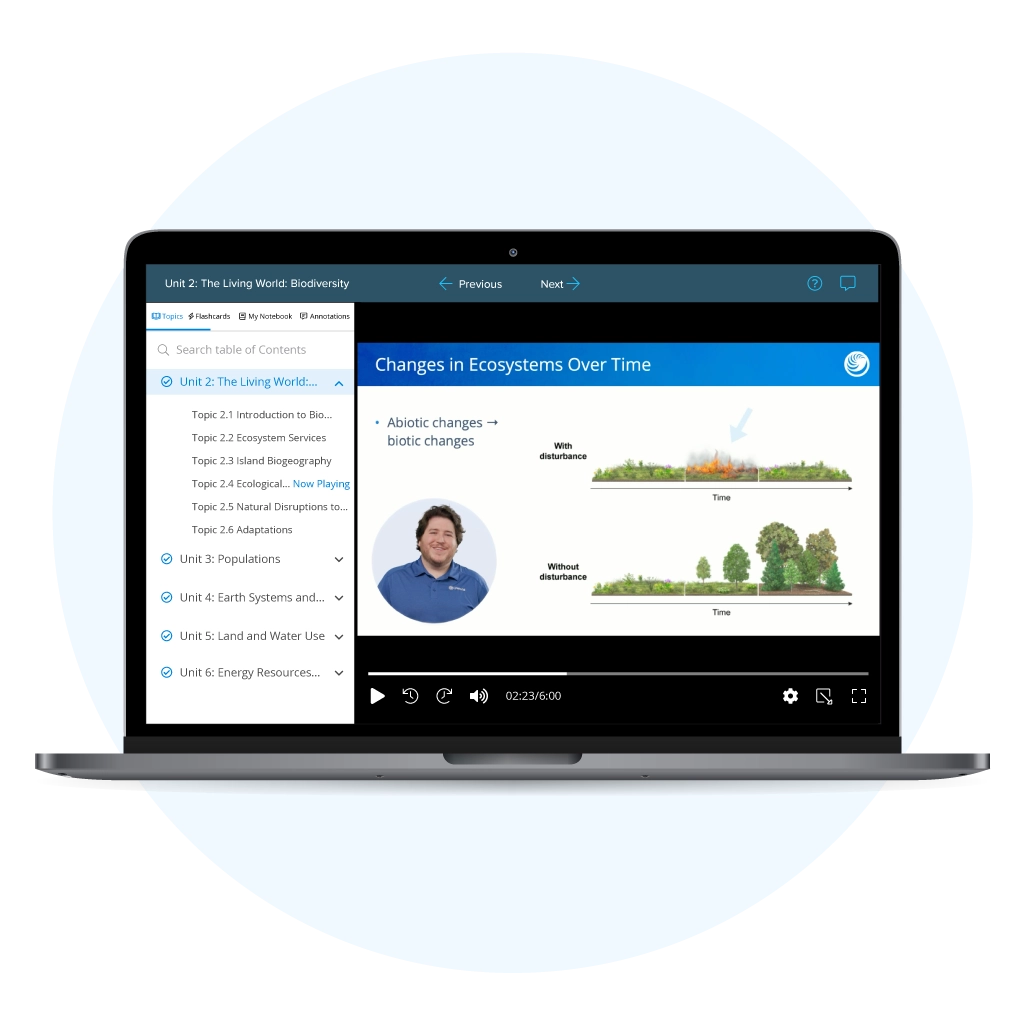
Engaging Video Lessons

Topics like eutrophication, biomagnification, endocrine disruptors, and wastewater treatment can feel overwhelming when studied from text alone. Each video is paired with UWorld’s short practice questions that reinforce the lesson. These quick checks build retention and help students prepare more effectively for APES Unit 8 MCQs, where conceptual clarity is essential.

Read

Interactive Study Guides

The AP Environmental Science Unit 8 study guide breaks down complex ideas using diagrams, color-coded examples, and clear explanations. Students learn key processes such as nutrient pollution, thermal pollution, pathogen contamination, and pollution indicators like BOD and dissolved oxygen.

Practice

Try These AP Environmental Science Unit 8 Practice Test Questions

Build confidence with APES Unit 8 practice test questions modeled after the structure and style of the AP exam. These items cover point and nonpoint source pollution, heavy metals, sediment pollution, waste treatment methods, and terrestrial contamination.
Every question includes a full explanation that shows why each answer choice is correct or incorrect, helping you develop stronger reasoning for both MCQs and FRQs.
Try these sample practice questions with detailed answer explanations:
Aquatic and Terrestrial Pollution Practice Tests

Question

Map or diagram of global wetland distribution highlighting ecosystem services and threats from human activity

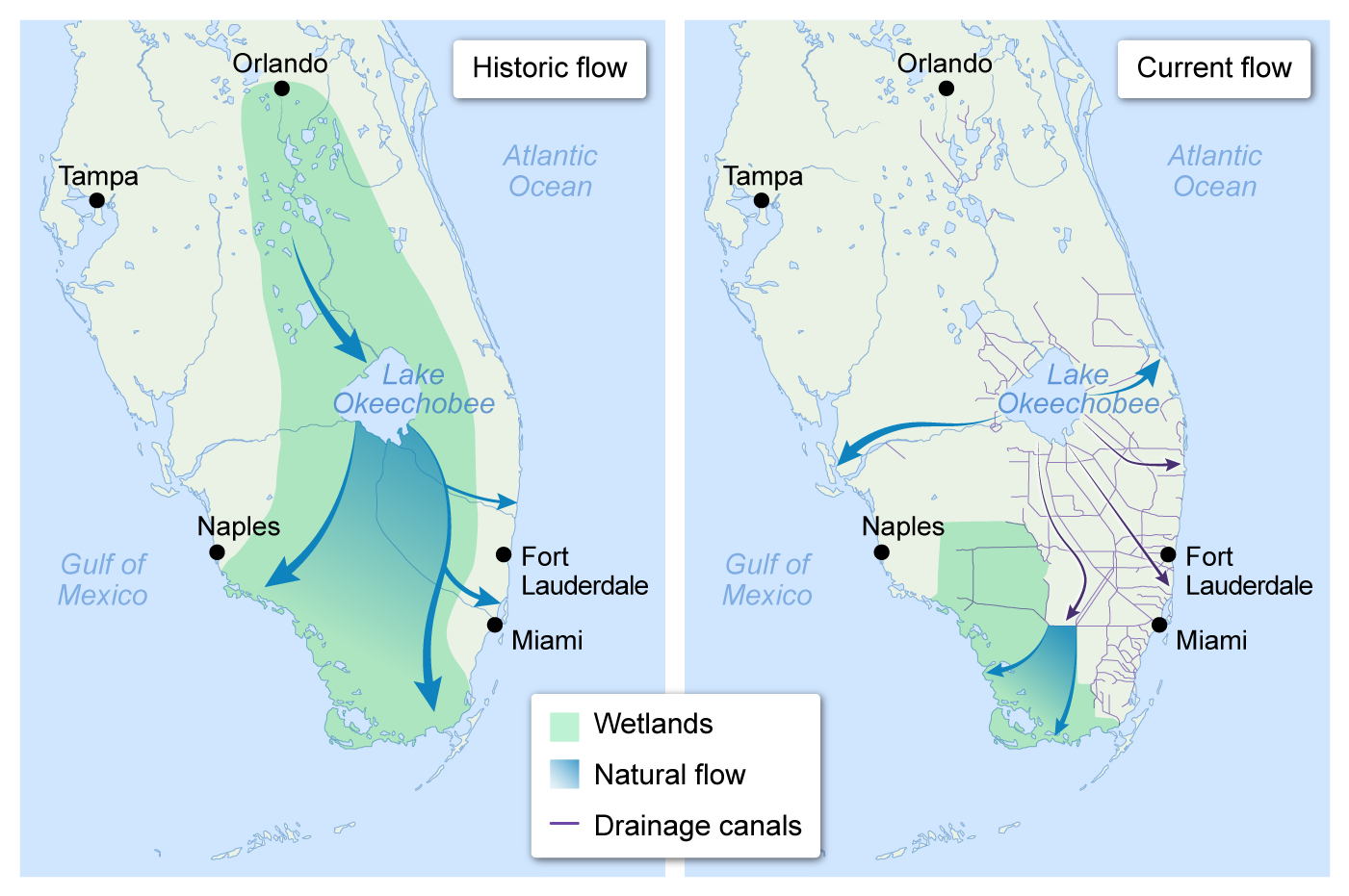
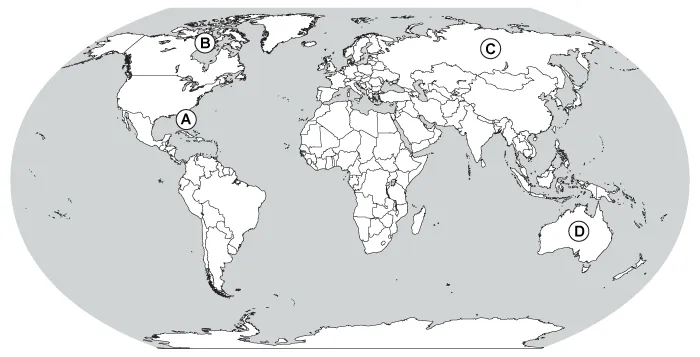
Anthropogenic activities resulted in significant fragmentation of wetlands in this subtropical/tropical area.

A. A
B. B
C. C
D. D

Explanation

Map or diagram of global wetland distribution highlighting ecosystem services and threats from human activity

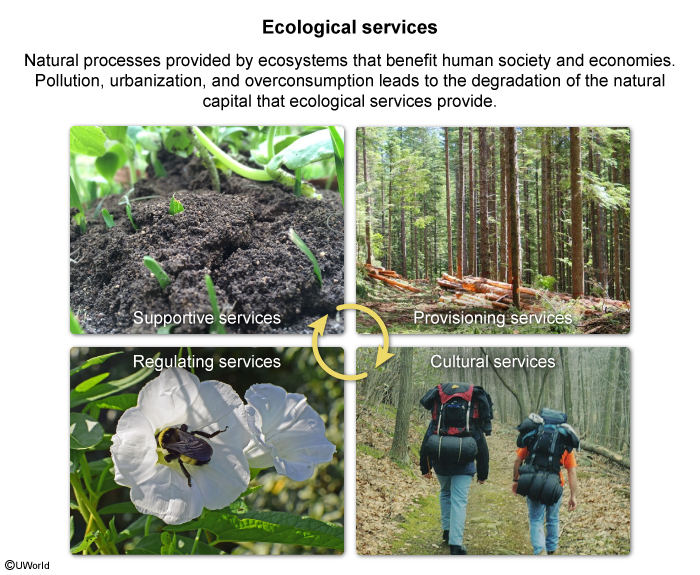
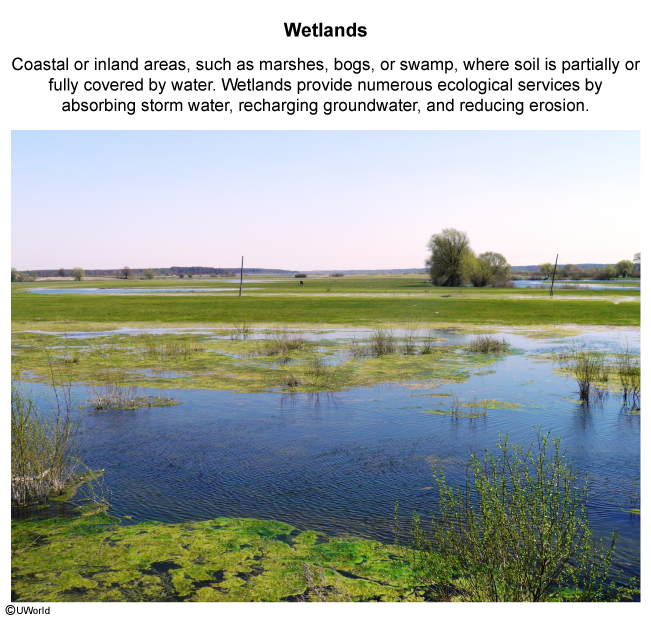
Wetlands, such as marshes, bogs, or swamps, are coastal or inland areas where soil is covered by water during a portion of the growing season. Wetlands are unique because they support both terrestrial and aquatic organisms while serving numerous ecosystem services, such as absorbing storm water, recharging groundwater, and reducing erosion.

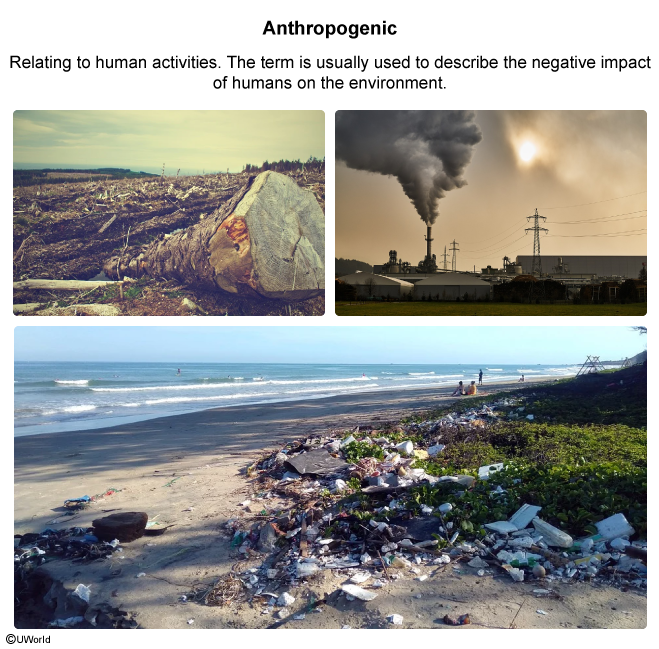
Despite having immense ecological and economic value, many wetlands around the world have been lost or are threatened by anthropogenic activities, such as commercial development, overfishing, dam construction, and pollution.

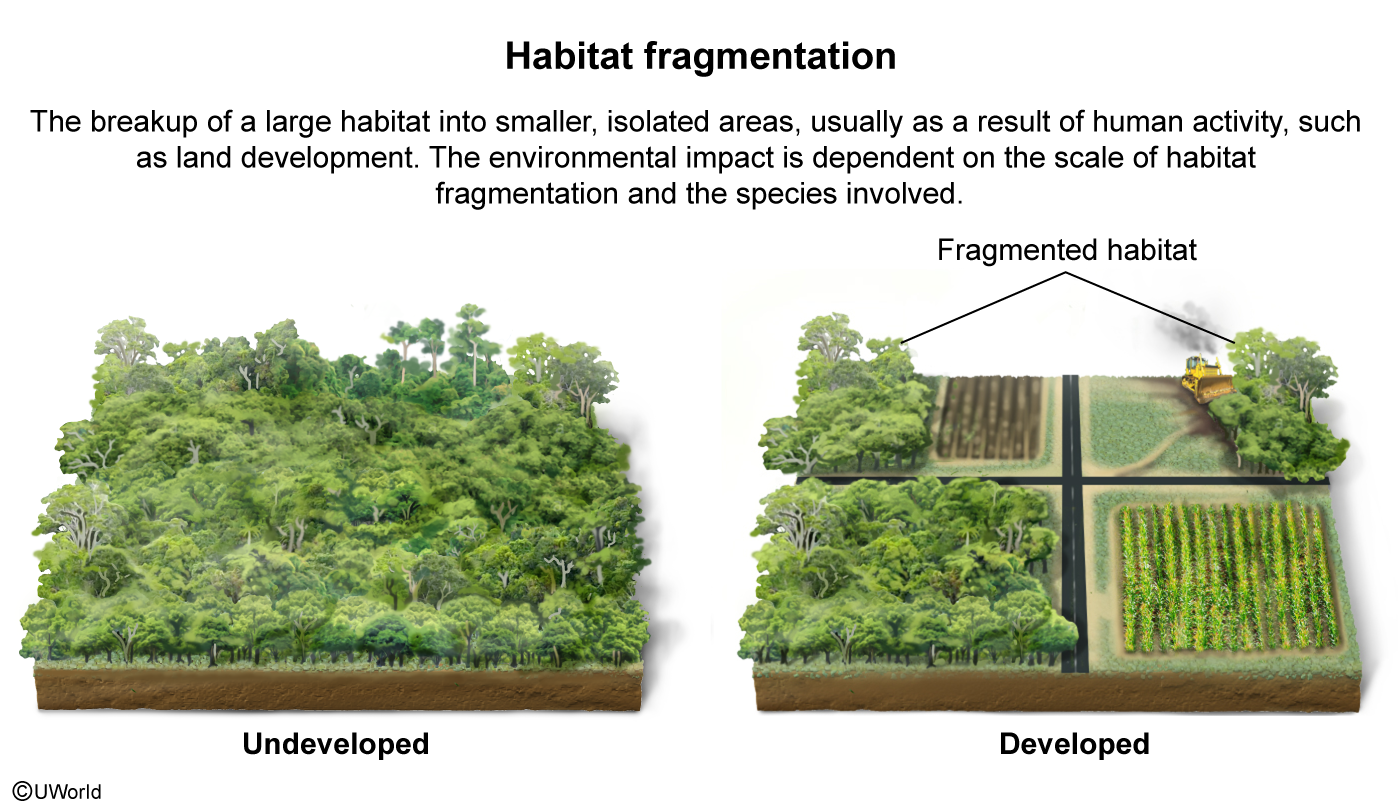
For example, the Everglades, located in subtropical/tropical Florida (Choice A), once consisted of wetlands and a 100-km-wide river fed by Lake Okeechobee. However, in the late 20th century, anthropogenic activities, such as water diversion and agricultural development, resulted in fragmentation of this wetland ecosystem.

Before-and-after comparison of the Everglades showing water flow restoration under the Comprehensive Everglades Restoration Plan

In 2000, the US government authorized the Comprehensive Everglades Restoration Plan to return the natural flow of water, reestablish degraded ecological services, and reduce the impact of fragmentation in southern Florida.

(Choices B and C) These areas are considered temperate/polar, not subtropical/tropical.

(Choice D) Although this area does have a subtropical/tropical climate, the large area of desert in central Australia results in the majority of the human population living along the coastal regions. Therefore, significant fragmentation of wetlands due to anthropogenic activities has not occurred.

Things to remember:
Wetlands are globally threatened from commercial development, dam construction, overfishing, and pollution.

Passage

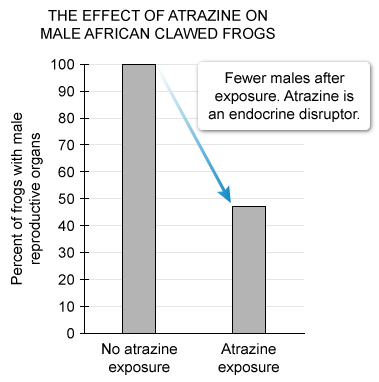
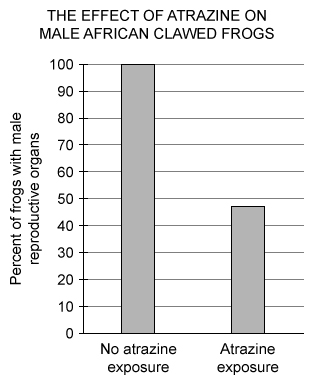
African clawed frogs were used to study the effects of atrazine in an ecosystem. Scientists hypothesized that atrazine is an endocrine disruptor. In a laboratory study, the scientists observed two groups of gentically male African clawed frogs from the larval stage through sexual maturity, one with and one without atrazine exposure in the larval stage. At the age of sexual maturity, data for the percentages of the frogs that had mature male reproductive organs were collected and presented in the following graph.
SAT Reading & Writing Questions 1-3: Information and Ideas

Question

Which of the following best interprets the results in the graph in relation to the given hypothesis?

A. The results support the scientists' hypothesis because there was a lower percentage of frogs that developed male reproductive organs after no exposure to atrazine.
B. The results support the scientists' hypothesis because there was a lower percentage of frogs that developed male reproductive organs after exposure to atrazine.
C. The results do not support the scientists' hypothesis because there was a higher percentage of frogs that developed male reproductive organs after no exposure to atrazine.
D. The results do not support the scientists' hypothesis because there was a higher percentage of frogs that developed male reproductive organs after atrazine exposure.

Explanation

Bar graph showing percentage of frogs developing male reproductive organs with and without atrazine exposure at sexual maturity

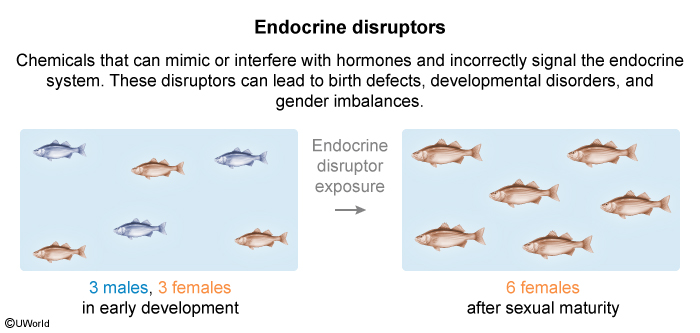
During the study, scientists hypothesized that atrazine is an endocrine disruptor. Endocrine disruptors are chemicals that can interfere with an animal's endocrine system by mimicking or blocking hormones that normally control many of the body's functions, including metabolism, growth, and reproduction. These disruptors can lead to birth defects, developmental disorders, and gender imbalances, such as delaying or halting the growth of reproductive organs in some animals.

Based on the study and the graph, at sexual maturity:

  • without atrazine exposure, 100% of the frogs developed male reproductive organs.
  • with atrazine exposure, approximately 50% of the frogs developed male reproductive organs.

Therefore, atrazine impacts the development of the frogs' sexual organs and is likely an endocrine disruptor, which supports the scientists' hypothesis because there was a lower percentage of frogs that developed male reproductive organs after exposure to atrazine.

(Choice A) Although the results did support the hypothesis, there was a higher, not lower, percentage of frogs that developed male reproductive organs without atrazine exposure.

(Choices C and D) The results did support the scientists' hypothesis because atrazine caused reproductive organ abnormalities, an effect of endocrine disruptors.

Things to remember:
Endocrine disruptors are chemicals that interfere with the function of animal endocrine systems and the production of hormones.

Question

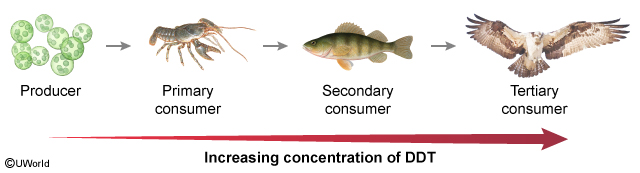
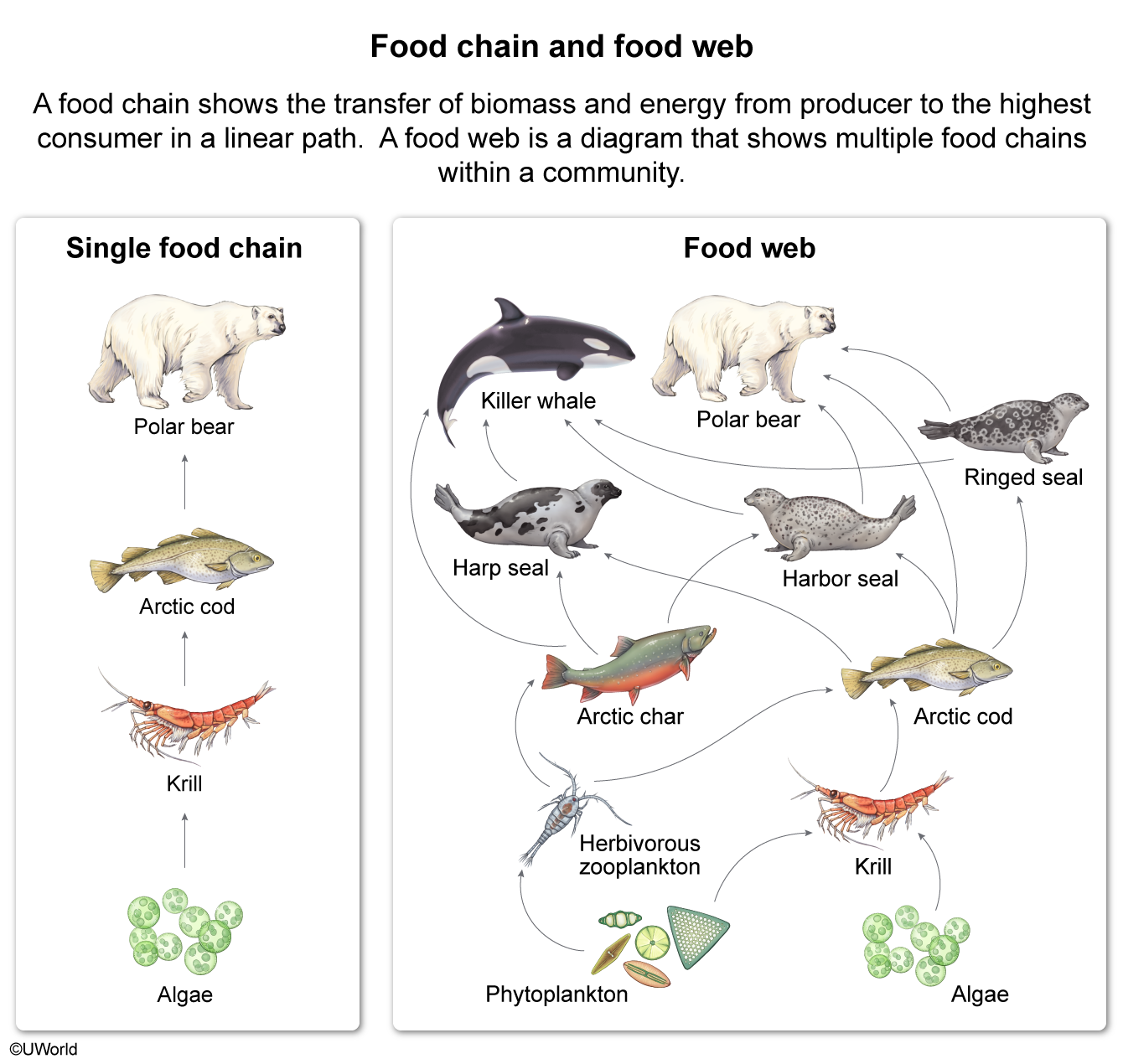
The feeding relationships between several organisms are shown in the food chain below.

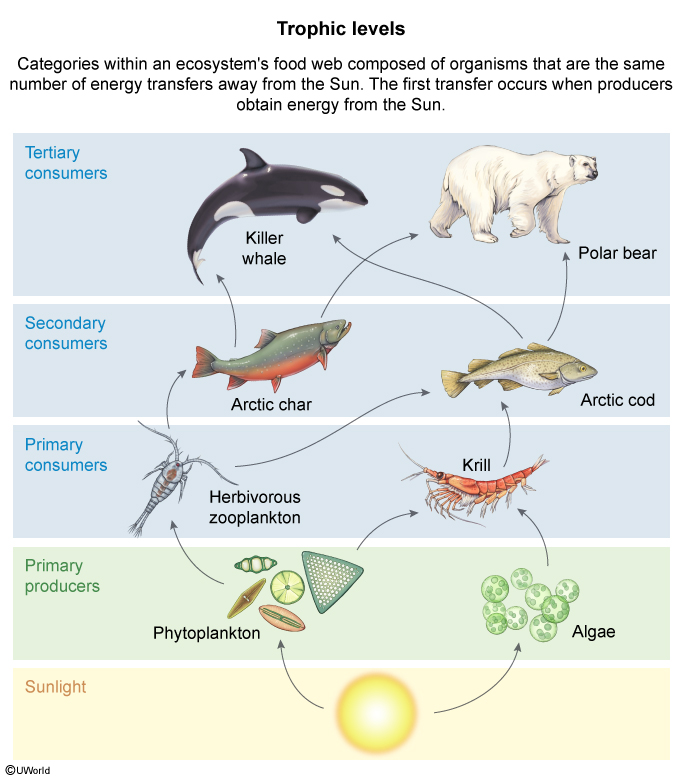
Food chain diagram showing trophic levels with organisms and directional arrows indicating energy flow, labeled for DDT biomagnification analysis

Based on the diagram, which of the following best describes the most likely indirect effect of DDT on the food chain?

A. The osprey population will experience a decline because of the production of thinner eggshells.
B. The osprey population will experience an increase from increasing algae and crayfish populations.
C. The osprey population will decrease from the increase in the acidification of the ecosystem.
D. The osprey population will increase because of decreased competition for food resources.

Explanation

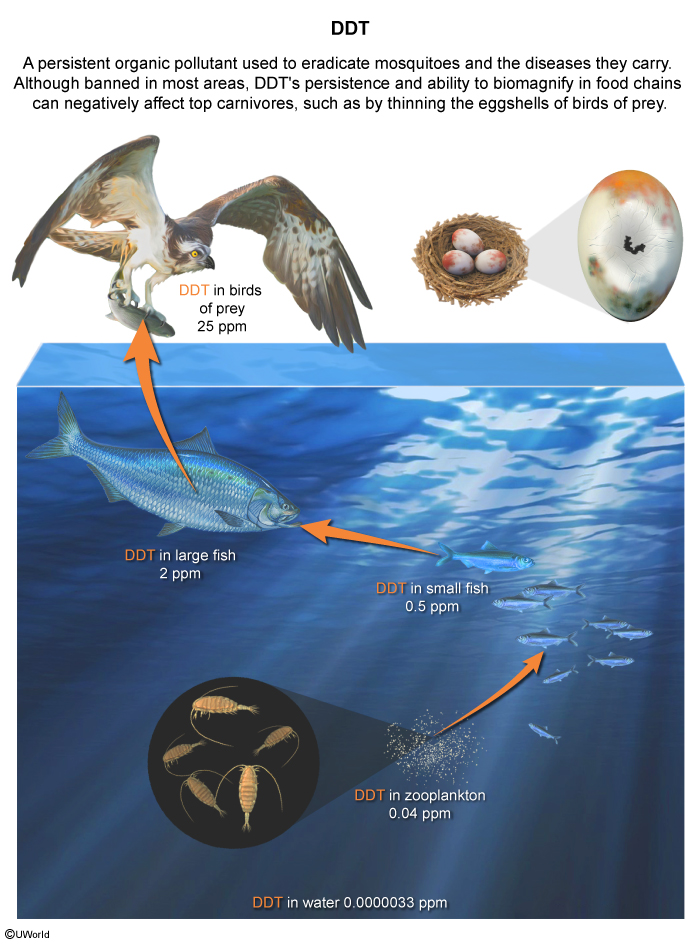
Diagram illustrating biomagnification of DDT through a food chain, showing increasing concentrations from algae to osprey

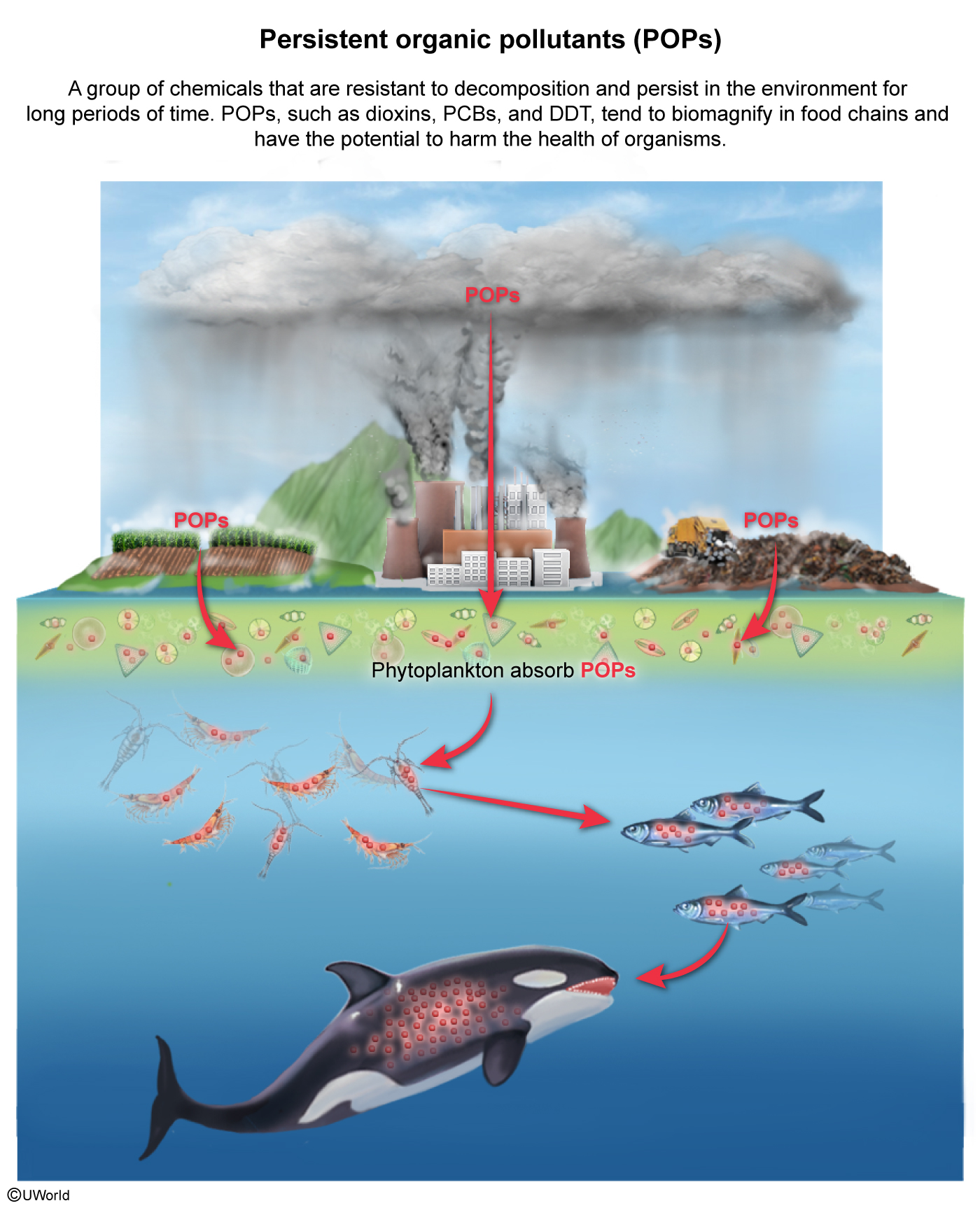
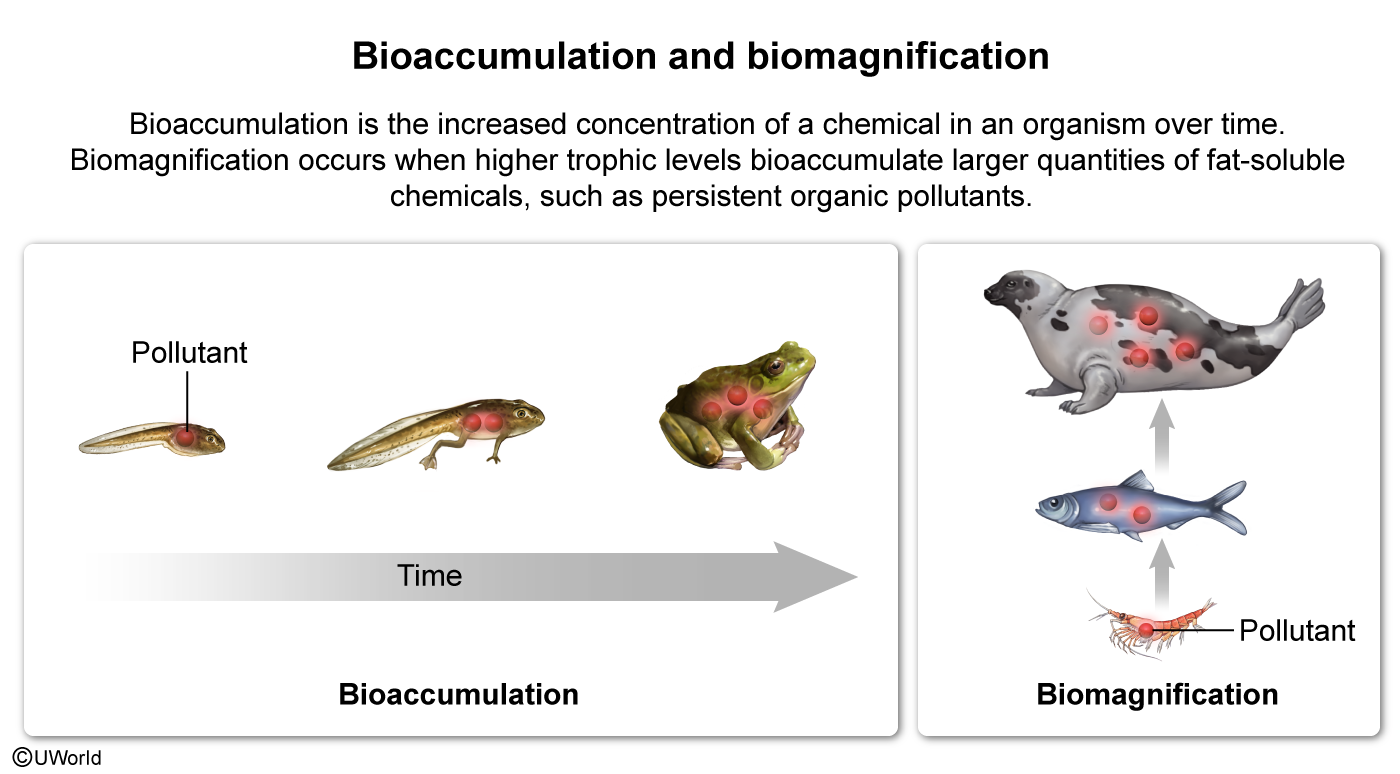
In an ecosystem, organisms at higher trophic levels in a food chain, such as tertiary consumers, will consume more food than those at lower trophic levels. If a persistent organic pollutant (POP), such as DDT, is present in an ecosystem, its accumulation will increase through the various trophic levels with increasing food consumption. This increase in the concentration of a substance along a food chain is known as biomagnification and can lead to negative impacts at higher trophic levels.

Among the negative effects on higher trophic levels caused by the biomagnification of POPs are developmental deformities in top carnivores including eggshell thinning in birds of prey. Thus, an indirect effect of DDT on the food chain pictured above is a decline in the osprey population due to the thinning of their eggshells.

Historical photo or diagram related to Rachel Carson’s Silent Spring and the environmental impact of DDT on bird populations

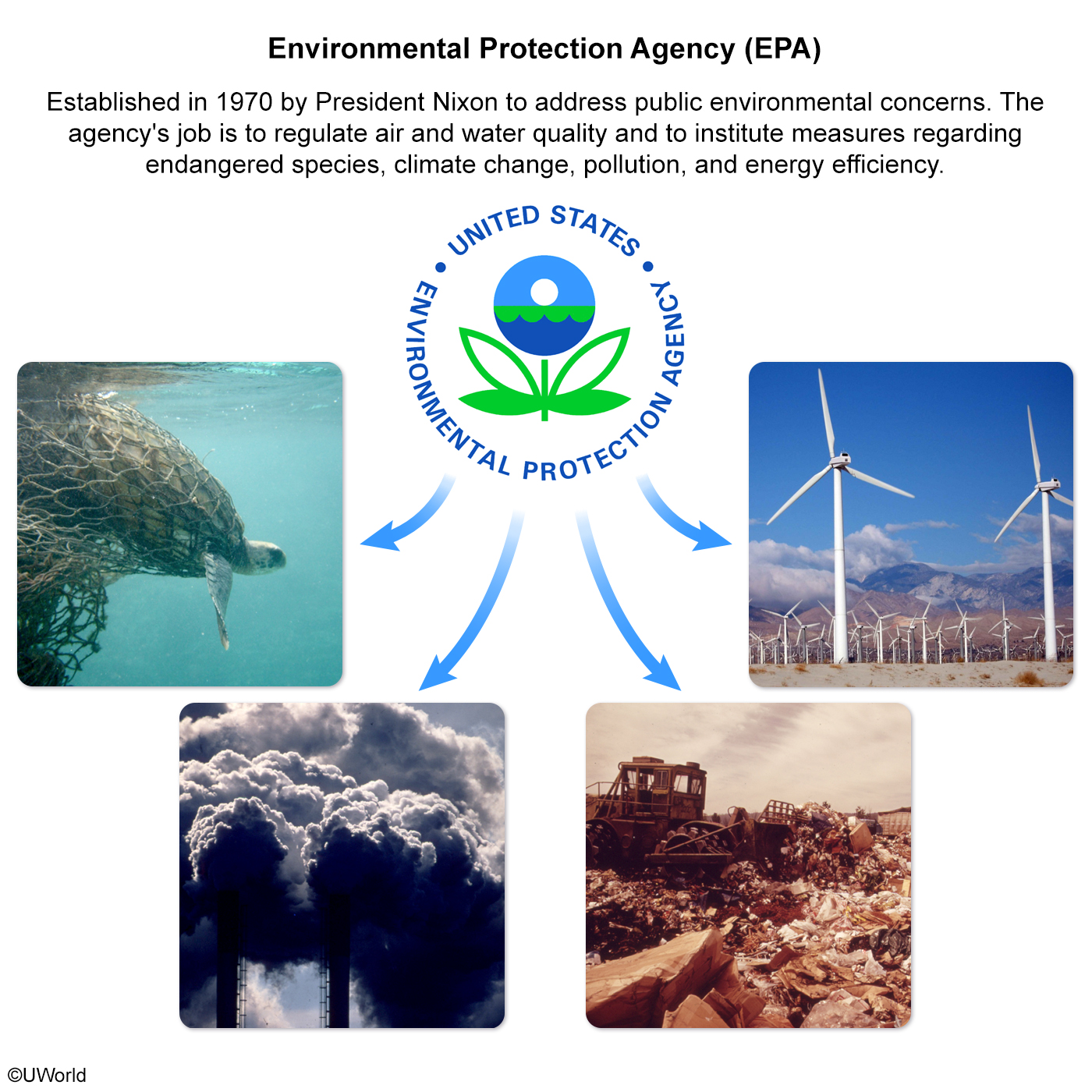
In 1962, Rachel Carson, a marine biologist and conservationist, highlighted the dangers of DDT on bird populations in her book Silent Spring. Carson is credited with inspiring the environmental movement, which led to the creation of the Environmental Protection Agency (EPA) and subsequent ban of DDT in 1972.

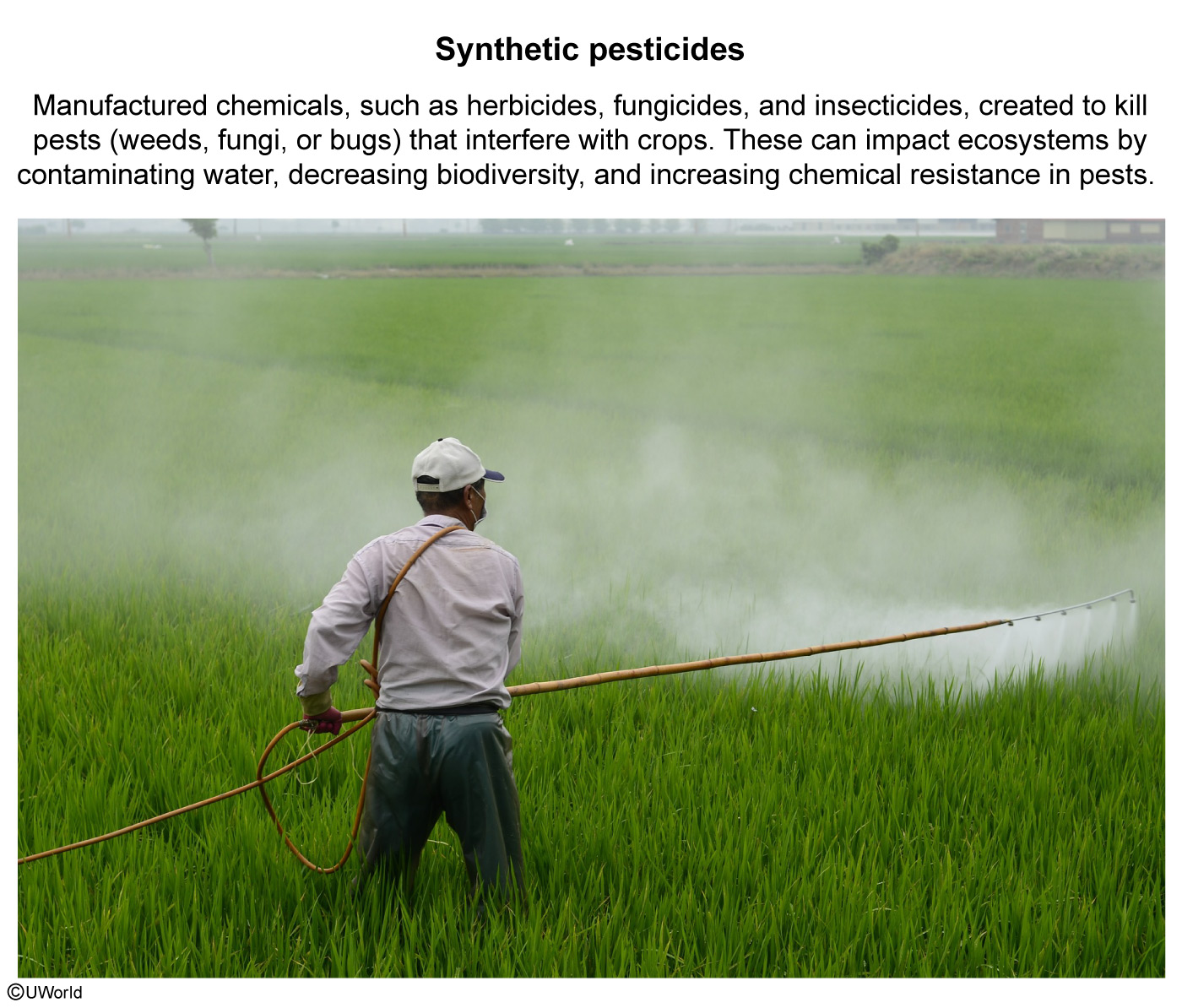
(Choices B and D) DDT is an insecticide that would cause a decrease, not increase, in the algae and crayfish populations. Thus, the decrease in the number of organisms at the lower trophic levels would cause an increase, not a decrease, in competition for food resources.

(Choice C) DDT is not an acid and therefore would not increase the acidification of terrestrial or aquatic ecosystems.

Things to remember:
When a persistent organic pollutant (POP) such as DDT is biomagnified in a food chain, the increased concentration at higher trophic levels can cause developmental deformities including eggshell thinning in top predators.

UWorld Dark Blue logo

Study Anywhere, Anytime

Review AP Environmental Science Unit 8 topics from any device using the UWorld app. Watch short videos, solve daily practice questions, or revisit key terms during study sessions. The mobile platform makes it easier to build consistent habits, which strengthens long-term retention of concepts like pollutant pathways, water quality indicators, and impacts on terrestrial systems.

Stand Out
with a Top Score in AP Environmental Science

After completing your AP Environmental Science Unit 8 review, continue with the following units to build a strong understanding of global change, resource use, and sustainability. Mastering aquatic and terrestrial pollution supports success across later topics and improves your ability to answer AP-style MCQs and FRQs with clarity.

Choose Your Subscription
Dream Score Plan
360-Day
$169
Deep Learning Plan
180-Day
$149
Score Booster Plan
90-Day (No print book, only digital)
$129
Introductory Plan
30-Day (No print book, only digital)
$99

Get our all-in-one course today!

  • Focused APES Videos
  • Print & Digital Study Guide
  • 550+ Exam-style Practice Questions
  • Customizable Quiz Generator
  • Adjustable Study Planner
  • Realistic Timed Test Simulation
  • Colorful Visual Explanations
  • Progress Dashboard
  • Smart Flashcards
  • Digital Notebook
Explore our free trial and frequently asked questions.

Hear From Our AP Students

UWorld’s service is pretty good and helps provide a lot of explanations on subjects I haven’t been confident on before.

— Bence P.

The questions here are the most realistic to the AP tests I've seen so far! I appreciate the ability to customize tests as well.

— Kaila H.

The best part is that all options are well-explained, telling clearly why they are not the right option.
— Syeda Huma Z.

Frequently Asked Questions (FAQs)

AP Environmental Science Unit 8, focused on aquatic and terrestrial pollution, explains how contaminants enter water and land systems and how these pollutants affect ecosystems. Mastery of these ideas is important because pollution topics appear often in APES Unit 8 MCQs and FRQs, making this unit essential for success on the AP exam.

To study effectively:

  • Review point and nonpoint source pollution.
  • Understand nutrient pollution, wastewater treatment, and water quality indicators.
  • Study pollutant categories such as heavy metals, pathogens, and endocrine disruptors.
  • Use AP Environmental Science Unit 8 review resources and practice tests to build confidence.

UWorld’s APES Unit 8 lessons present these concepts through clear visuals and step-by-step examples, helping you strengthen understanding and prepare for both the Unit 8 APES test and the full exam.

Unit 8 AP Environmental Science, focused on aquatic and terrestrial pollution, introduces the major ways pollutants enter and move through ecosystems. These ideas connect to water quality, land use, biodiversity, and human health, which makes this unit important for many APES MCQs, FRQs, and classroom assessments.

Key topics in an APES Unit 8 review include:

  • Point and nonpoint source pollution and how they impact water and land.
  • Nutrient pollution, eutrophication, and changes in dissolved oxygen and BOD.
  • Solid waste disposal, landfill structure, and waste management methods.
  • Hazardous chemicals, heavy metals, pathogens, and endocrine disruptors.
  • Soil contamination and how pollutants travel through terrestrial systems.
  • Thermal pollution, sedimentation, and turbidity in aquatic environments.
  • Wastewater treatment steps and common water purification processes.

After reviewing each topic, you can use UWorld’s AP Environmental Science Unit 8 progress check MCQs and FRQs to check understanding and build stronger reasoning skills. These targeted checkpoints offer clear explanations that help reinforce concepts before moving on to the next section of the course.

Studying for AP Environmental Science Unit 8: Aquatic and Terrestrial Pollution requires building a strong conceptual understanding and practicing with real environmental examples. Since pollution influences many ecological processes, mastering this unit early improves accuracy on APES Unit 8 MCQs and FRQs across the course.

Here is an effective approach for your APES Unit 8 review:

  • Start with core ideas: Learn how pollutants enter and move through water and land systems.
  • Use visuals: Study diagrams showing eutrophication, biomagnification, and pollutant pathways.
  • Review pollution indicators: Practice interpreting DO, BOD, turbidity, and pH graphs.
  • Solve practice questions daily: Reinforce learning with AP Environmental Science Unit 8 practice test sets.
  • Reflect after each topic: Use UWorld’s APES Unit 8 progress check MCQs and targeted FRQs to measure understanding before moving on.

UWorld’s Unit 8 lessons use annotated visuals, real examples, and immediate feedback to strengthen comprehension. When combined with classroom notes and official AP materials, this approach builds confidence and prepares you for the full AP exam.

A structured study plan for AP Environmental Science Unit 8: Aquatic and Terrestrial Pollution helps you build understanding, improve retention, and develop accuracy on pollution-related MCQs and FRQs. Since this unit connects to water quality, waste management, and ecosystem health, steady review gives you a strong advantage going into the AP exam.

Follow this 3-phase study approach:

3 Months Before the Exam:

  • Begin with core concepts like pollution sources, eutrophication, and contaminant movement.
  • Watch short lessons to visualize how pollutants affect aquatic and terrestrial systems.
  • Reinforce each topic with UWorld’s APES Unit 8 progress check MCQs, which help identify early weak points.
  • Review class notes alongside strategies from the How to Study for AP Environmental Science guide for structured pacing.

1 Month Before the Exam:

  • Shift toward application by working through AP Environmental Science Unit 8 practice test questions that mix real data, pollutant indicators, and environmental scenarios.
  • Create a summary sheet covering DO, BOD, turbidity, pH, and pollutant categories.
  • Practice interpreting wastewater treatment steps and soil contamination examples, which appear often in APES Unit 8 FRQs.

2 Weeks Before the Exam:

  • Take at least two full-length APES Unit 8 practice tests under timed conditions.
  • Review any missed questions using UWorld’s detailed explanations.
  • Set aside daily blocks for mixed MCQs and FRQs on aquatic and terrestrial pollution.

This balanced routine blends theory, practice, and timing. It helps you master Unit 8 APES content and builds the confidence needed for the full AP Environmental Science exam.

The AP Environmental Science Unit 8 FRQs often assess your ability to explain pollution processes, interpret environmental data, and apply concepts such as nutrient loading or contaminant movement. These questions test both conceptual understanding and written scientific reasoning, so clear explanations are essential. Because Unit 8 connects to water quality, waste management, and ecosystem impacts, FRQs frequently involve real-world pollution scenarios.

Expect the following common Unit 8 APES FRQ types:

  • Data analysis: Interpret DO, BOD, turbidity, or pH data to explain pollution levels.
  • Pollution pathway questions: Describe how contaminants move through aquatic or terrestrial systems.
  • Wastewater treatment and management: Explain treatment steps or evaluate methods for reducing pollution.
  • Ecological impact scenarios: Apply pollution concepts to biodiversity loss, species decline, or habitat disruption.

To prepare effectively:

  • Practice FRQs that include water quality indicators and pollution case studies.
  • Write full explanations that justify each step of your reasoning.
  • Use UWorld’s APES Unit 8 progress check FRQs for guided feedback and clearer understanding of common mistakes.

Regular practice builds the clarity and precision needed for Unit 8 APES review tasks and strengthens performance on the full AP Environmental Science exam.

Improving accuracy on APES Unit 8 MCQs comes from strengthening your understanding of pollution processes and practicing how to read environmental data. Many mistakes occur when students memorize terms without understanding how pollutants affect ecosystems. Building stronger reasoning helps you perform better on both AP Environmental Science Unit 8 review quizzes and full-length practice tests.

To boost precision:

  • Master the fundamentals: Review how pollutants enter water and land systems and how they impact DO, BOD, turbidity, and pH.
  • Identify error patterns: Note whether mistakes involve reading graphs, interpreting water quality indicators, or understanding pollutant movement.
  • Mix question types: Practice numerical, graphical, and scenario-based MCQs to see how concepts appear in different formats.
  • Review pollution processes regularly: Repetition strengthens your ability to explain eutrophication, biomagnification, and wastewater treatment.
  • Simulate test conditions: Work through timed AP Environmental Science Unit 8 practice test sets to build accuracy and pacing.

Consistent review and reflection improve your problem-solving skills, especially on pollution questions that often anchor the early sections of the AP Environmental Science exam.

In AP Environmental Science Unit 8, aquatic and terrestrial pollution are closely linked because contaminants in one system often affect the other. Pollutants released on land can wash into streams, rivers, and oceans, while polluted water sources can lead to soil contamination and ecological stress on surrounding habitats. Understanding this relationship is important because it helps explain patterns seen in APES Unit 8 MCQs, FRQs, and real environmental case studies.

Here is how they connect conceptually:

  • Runoff carries fertilizers, pesticides, and waste from land into aquatic ecosystems.
  • Pollutants such as heavy metals and chemicals can move between soil and water, impacting both systems.
  • Eutrophication begins with nutrient pollution on land but results in oxygen depletion in water.
  • Soil contamination can reduce plant health, which then affects erosion and sediment pollution in nearby waterways.

Recognizing how these pollution pathways interact helps students see the bigger environmental picture. This understanding improves performance on graph interpretation, data analysis, and scenario-based questions in your APES Unit 8 review and across the AP Environmental Science course.

Retention in AP Environmental Science Unit 8 depends on building strong visual and conceptual memory for how pollutants move through ecosystems and how different pollution types affect water and land. Since many questions require interpreting data, understanding pollutant pathways, and recognizing environmental responses, students often lose accuracy when steps are rushed or reasoning is incomplete. A structured study approach helps turn short-term familiarity into lasting mastery.

Here are a few ways to improve retention:

  • Create visual summaries: Draw diagrams of eutrophication, biomagnification, and runoff to connect terms with real processes.
  • Use structured repetition: Review a few APES Unit 8 practice test questions each day to reinforce pollutant indicators like DO, BOD, and turbidity.
  • Teach it aloud: Explaining concepts such as nutrient loading or point versus nonpoint sources strengthens recall.
  • Keep a concept tracker: List key AP Environmental Science Unit 8 terms and revisit them regularly.
  • Mix problem types:  Alternate between data interpretation, scenario-based questions, and pollution definitions to improve adaptability.

Spacing your review and focusing on environmental relationships rather than memorization ensures you remember how and why each process occurs. Over time, this approach makes even the most complex Unit 8 APES topics familiar and manageable on the AP exam.

Studying aquatic and terrestrial pollution effectively means balancing conceptual understanding, visual learning, and consistent practice. These topics form a major part of AP Environmental Science Unit 8, so mastering them early improves performance across your entire APES Unit 8 review.

Focus on:

  • Understanding how pollutants enter water and land systems and how they move through ecosystems.
  • Reviewing key indicators such as dissolved oxygen, BOD, turbidity, pH, and nutrient levels.
  • Learning major pollution processes like eutrophication, biomagnification, and wastewater treatment.
  • Interpreting charts, graphs, and data tables commonly used in Unit 8 APES MCQs and FRQs.
  • Solving mixed AP Environmental Science Unit 8 practice test questions to build accuracy and speed.

Alternate between short concept reviews and timed practice sets to strengthen reasoning under pressure. Regular practice helps you recognize pollution patterns and confidently handle both MCQs and FRQs on the APES Unit 8 test.

The most effective AP Environmental Science Unit 8 practice test format mirrors the structure and pacing of the actual AP exam. Since Unit 8 focuses on aquatic and terrestrial pollution, your practice should include both multiple-choice and free-response questions that assess data interpretation, environmental reasoning, and pollutant impacts.

A balanced test format should include:

  • 30–35 MCQs: Mix questions on water quality indicators, pollution sources, and data interpretation.
  • 2 FRQs: Include one focused on analyzing environmental data and one on explaining pollution processes or management methods.
  • Time limit: About 60–70 minutes to match real exam pacing.
  • Review section: Spend 10 minutes afterward checking mistakes and identifying recurring patterns.

This structure ensures your APES Unit 8 review covers both speed and depth. Completing timed practice tests regularly helps you build confidence, recognize common pollution scenarios, and prepare effectively for the full AP Environmental Science exam.

The best time to start preparing for the AP Environmental Science Unit 8 test is as soon as your class begins covering aquatic and terrestrial pollution. These concepts appear throughout the course, so steady review is more effective than trying to memorize everything at the last minute. Starting early helps you build stronger understanding and improves accuracy on APES Unit 8 MCQs and FRQs.

Here is a suggested preparation timeline:

  • During class instruction: Review daily lessons and work through a few AP Environmental Science Unit 8 practice questions after each topic.
  • 2 to 3 weeks before the test: Focus on mixed sets covering nutrient pollution, wastewater treatment, DO and BOD patterns, and major pollutant categories.
  • One week before the test: Take short, timed Unit 8 APES practice test sessions to improve pacing and identify weak areas.
  • Final days: Review diagrams, key pollution indicators, and common pathways linking terrestrial and aquatic pollution.

This steady approach keeps concepts fresh, builds environmental reasoning skills, and ensures mastery of the core topics tested in APES Unit 8.

Many students lose points on AP Environmental Science Unit 8 because they memorize definitions without understanding how aquatic and terrestrial pollution actually works. Since these concepts appear throughout the course and often influence FRQs, small misconceptions can affect performance in multiple units. Recognizing and correcting these errors early improves both accuracy and confidence.

Frequent mistakes in an APES Unit 8 review include:

  • Confusing point and nonpoint source pollution.
  • Misinterpreting water quality indicators like DO, BOD, turbidity, or pH.
  • Overlooking how nutrient pollution causes eutrophication and oxygen loss.
  • Forgetting how pollutants move between land and water systems.
  • Misidentifying pollutant types such as pathogens, heavy metals, or endocrine disruptors.
  • Struggling to explain wastewater treatment steps or solid waste management.

To avoid these issues, begin by reviewing concepts visually before solving practice questions. Revisit explanations after every AP Environmental Science Unit 8 practice test to understand why each answer is correct. Consistent error analysis strengthens environmental reasoning and prepares you for success on the AP exam.

Reliable AP Environmental Science Unit 8 notes and study guides break down the most important concepts of aquatic and terrestrial pollution into simple, quick-reference materials. The best resources summarize key terms, processes, and pollutant impacts so you can review efficiently before a quiz or test. High-quality guides also include visuals that show how contaminants move through ecosystems and why pollution affects water and land differently.

Look for study materials that include:

  • Key APES Unit 8 terms and definitions for major pollutants and indicators.
  • Step-by-step examples of eutrophication, biomagnification, and wastewater treatment.
  • Diagrams showing point and nonpoint source pollution pathways.
  • Summaries of DO, BOD, turbidity, and pH relationships in checklist form.
  • Short quizzes or AP Environmental Science Unit 8 practice test sets for quick review.

Using a combination of your class notes and structured APES Unit 8 study guide sheets helps reinforce accuracy and recall. Concise, well-organized materials are especially helpful in the final days before the exam, allowing you to refresh core pollution topics clearly and confidently.

Yes. Downloadable AP Environmental Science Unit 8 review PDFs and worksheets offer clear summaries of aquatic and terrestrial pollution, including key terms, pollutant categories, and environmental indicators. Choose resources that align with the College Board’s Course and Exam Description for accurate coverage of tested topics.

You can also find printable and digital APES Unit 8 study guides, flashcards, and AP Environmental Science Unit 8 practice test materials that reinforce your understanding of eutrophication, wastewater treatment, pollutant movement, and water quality data. Combining structured review sheets with official AP resources helps you build strong conceptual mastery and exam-style readiness for AP Environmental Science Unit 8.

Scroll to Top

Smash APES

Your Best Score
Starts Here
No Credit Card Required
Try UWorld FREE for 7 Days

Frequently Asked Questions

New Purchase: All new subscriptions go into effect from the time they are activated and not at the time of setup/purchase. A subscription can be activated immediately or any time thereafter. If your initial purchase consists of multiple courses (Qbank, Self-Assessment exam, CCS, etc.), each can be activated individually and independently via your account on our website. This process of activating a subscription after purchase allows you the flexibility to start a subscription when you are truly ready to use it.

We recommend that all subscriptions be activated within 180 days of setup/purchase. Once a subscription is activated, it cannot be paused or suspended for any reason and will run continuously for the duration of the course material.

Renewal: A renewal is an extension of time to continue access to a current activated subscription. Because a renewal is an extension to an already active subscription, it is effective from the existing expiration date, not from the day of purchase and cannot be deferred to start at a later date/time.

Note: All of our subscriptions are based on the Eastern Time Zone (GMT/UTC -5 hours or New York Time), which may be different than your local time zone.

Any of our product offerings can be purchased from our website with payment due in full at time of purchase via a credit or debit card with American Express/Discover/MasterCard or Visa logo.

You will need to register for an account in order to purchase any of our products. Once you have registered for an account or if you already have an account:

  • Log in to your UWorld account
  • Click on the Cart icon at the top of the page and then select your desired product to see a list of available packages and their prices
  • Select the package you wish to purchase
  • Verify your profile information, address, and educational status, then click the Update button
  • Enter your Billing address and credit/debit card information, then click Review Order
  • Verify that the correct product is in your cart and click Place Order
  • A purchase receipt will automatically be sent to your registered email address

If you complete your purchase but do not receive a receipt, please contact the Customer Care Team at [email protected]

You can subscribe to any of our online courses/services using a credit or debit card with a Visa, MasterCard, Discover or American Express logo. After a successful payment, your subscription will immediately be available for activation via your account on our website or available complementary mobile applications.

You can also subscribe via personal check, money order, or demand drafts taken in U.S. dollars. These types of payments should be mailed to us and should include the name of the subscription and the duration, along with the details asked for in the registration form. We will set up your account as soon as we receive your payment and notify you via email of your access credentials. All direct-mail payments must be in U.S. dollars and made payable to:

UWorld, LLC
9111 Cypress Waters Blvd
Suite 300
Dallas, TX 75019

We do not accept cash via mail, currencies other than U.S. dollars or payments via fax.

Individuals purchasing our CPA Review product may finance their purchase using Affirm during checkout process. Your eligibility depends on your credit score and other criteria, as per Affirm’s policies (outlined here). A soft credit check, a credit check that does not affect your credit score, will be performed by Affirm to determine your loan eligibility. You will need a US based bank account to qualify.

All refunds are evaluated on a case-by-case basis for products purchased directly from UWorld. One case has no bearing on another. Refund amounts determined by UWorld are final.

In-App Purchases: We are unable to process any refunds for purchases made via mobile application (in-app). Please contact Apple for all refund/credit requests for Apple in-app purchases.

USMLE Step 2 CS, Step 3 CCS, Subject Reviews & Self-Assessment Exams: These subscriptions are non-refundable, non-transferable, and cannot be converted into another subscription.

CPA Review: Students may request to cancel their CPA review product only within 10-days of activation of any of the materials. To qualify for a refund, no more than 10% of the course (lectures, Qbank, or a combination there-of) may have been used per exam section. All CPA Review refunds are subject to a cancellation fee of $75 (for single section purchases) or $250 (for package
purchases), plus any applicable shipping charges. No return of merchandise is necessary.

All other Qbanks: Refunds are considered for subscriptions of more than 30 days. Refund amounts are based on the number of days elapsed since the subscription start date or the number of questions used, whichever amounts to a higher deductible.

Example scenarion: An individual purchases a 180-day Qbank subscription and generates a few test blocks equal to 20% of the questions in the Qbank. After 45 days, he/she requests a refund. Because the elapsed duration is greater than the percentage of questions used, the refund amount will be based on a subscription converted to the closest duration (60 days) by deducting the applicable 60-day subscription fee from the refund. In the same scenario, if the individual had used 85% of the questions, the refund would be 15% of the subscription fee paid.

Note 1: A processing fee of 10% (minimum of $10 and maximum of $25) will be applied to all refund amounts.

Note 2: All refunds, pro-rated or otherwise, must be requested within 360 days of original purchase. Refunds for purchases made more than 360 days ago will be issued as non-refundable, non-transferable store credit.

Note 3: Subscribers must notify UWorld of their intent to obtain a refund before activating their subscription (or) during the active duration. If the reset option is used or all of the questions are used, no refund will be allowed (see “I want to reset/delete my Qbank test history (or) start all over again, is this possible?” below for further details). No refunds will be offered for expired subscriptions.

Note 4: For combination package purchases, individual subscription fees will be applied when calculating the refund. If any self-assessment Exam(s) is utilized from a package, the entire purchase is rendered non-refundable.

Note 5: Although access to Qbanks via certain mobile devices is provided as an additional feature, it is not intended to be a replacement for computer access, and no refunds or cancellations will be honored due to user inability to install and/or use the provided software on any mobile device (regardless of whether the device meets the minimum system requirements).

Please use the following steps to purchase a renewal for your subscription:

  • Log in to your account on our website
  • Click on the User Icon in the top right corner of the screen
  • Click on the Renew button corresponding to your subscription
  • Select the Renewal duration you wish to purchase
  • Verify your profile information, address, and educational status, then click the Update button
  • Enter your Billing address and credit/debit card information, then click Review Order
  • Verify that the correct package is in your cart and click Place Order

Upon a successful transaction, you will be sent a confirmation email receipt.

A renewal is an extension of time to continue accessing an active subscription, and it will not start the subscription over, provide a reset, or grant access to additional questions that were not previously accessible. Because a renewal is an extension to an already active subscription, it is effective from the existing expiration date, not from the date of purchase, and cannot be deferred in any way to start at a later date/time.

Please note that to qualify for renewal pricing, you will need to renew the course before it expires. Renewals are not offered to expired subscriptions. If you fail to secure a renewal before the expiration date, you will need to purchase a new subscription at the regular price directly from our website to regain access to the material.

Note: All times and dates displayed for subscription expiration correspond with the Eastern Time Zone (GMT/UTC -5 hours or New York Time), which may be different than your local time zone.

Note: If your initial purchase was a combination package, you will need to renew each active subscription individually. You do not need to renew a course that has not been activated.

You may request to upgrade or downgrade your subscription purchase as long as it has not been activated. If you purchase a combination package, all included subscriptions must be unused. Please be advised that current subscription pricing will apply.

If your subscription has been activated, unfortunately, we cannot upgrade it retroactively. If seeking to downgrade, please refer to our refund policy for available options.

We do not offer custom duration(s) or combination packages other than those outlined on the website. Please refer to our purchase page for currently available subscriptions (including discounted combination packages for some products).

Self-Assessment exam subscriptions are for 14 days each. Subscribers whose active subscription(s) have not expired can purchase renewals from 7 days or more at any time before their active subscription expires. Please refer to the respective course description page for renewal options.

We offer a demo on each of our product pages that contains a sample of the product interface and a few sample questions. We do not offer guest/trial accounts to test our software and view materials.

It is possible to purchase a subscription as a gift for someone else. However, the intended recipient will need to register an account on our website (or have an account registered for them, with their profile information entered accurately). If the user is present at the time of purchase, the purchase can be made from their account on our website using any credit or debit card with a Visa, MasterCard, American Express, or Discover logo.

If the user is not present, or you wish for the gift to be a surprise, please contact Support directly using the contact form to arrange payment for the gift subscription. You will need to provide the user’s registered email address so the account can be located.