APES Unit 4 Review and Practice Test
Prepare for your AP® Environmental Science Unit 4 test with a complete review of Earth Systems and Resources, including tectonic processes, soil formation, and geological cycles. Study using APES Unit 4 notes, MCQs, FRQs, and practice tests that reflect how Unit 4 content appears on the exam. This APES Unit 4 review strengthens your understanding of plate boundaries, rock types, and soil profiles so you can approach Unit 4 APES questions with confidence.
Boost Your Confidence and Score High with Our AP Environmental Science Unit 4 Review
Master the core ideas of APES Unit 4: Earth Systems and Resources through clear lessons and structured practice. This Unit 4 AP Environmental Science review helps you connect geological processes with environmental impacts, improving both accuracy and problem-solving on the exam.
Engaging Video Lessons
Our APES videos break down complex ideas such as plate tectonics, earthquakes, volcanoes, and soil characteristics into clear, visual explanations. Students learn faster when concepts like convergent boundaries and horizon layers are demonstrated step by step. Each video is designed to build retention by combining animations with guided reasoning. This supports stronger performance on AP Environmental Science Unit 4 MCQs and prepares you for APES Unit 4 FRQ tasks.
Interactive Study Guides
Our AP Environmental Science Unit 4 study guide presents essential concepts like weathering, erosion, and soil fertility with concise explanations and helpful diagrams. Students can move at their own pace while exploring examples of rock cycle transformations, watershed characteristics, and resource distribution patterns. This structure supports both quick review sessions and in-depth study for the unit 4 APES test.
Try These AP Environmental Science Unit 4 Practice Test Questions
Question
The table below shows the insolation for three United States cities on June 21st and December 21st of 2021.
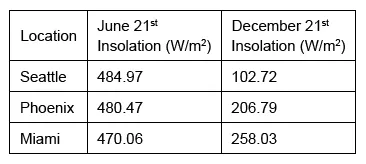
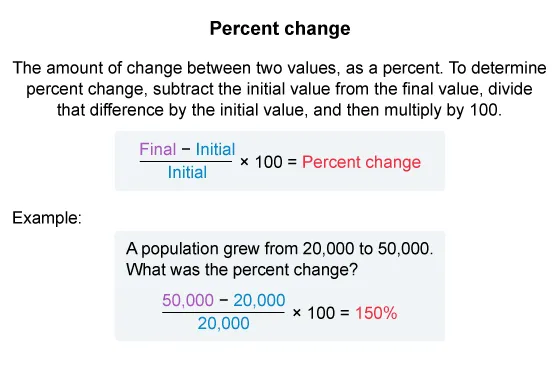
Which of the following calculation methods would determine the percent change in insolation for Pheonix from June 21st to December 21st?
| A. | |
| B. | |
| C. | |
| D. |
Explanation
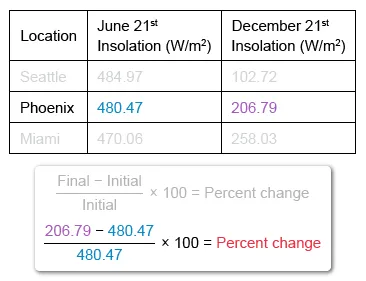
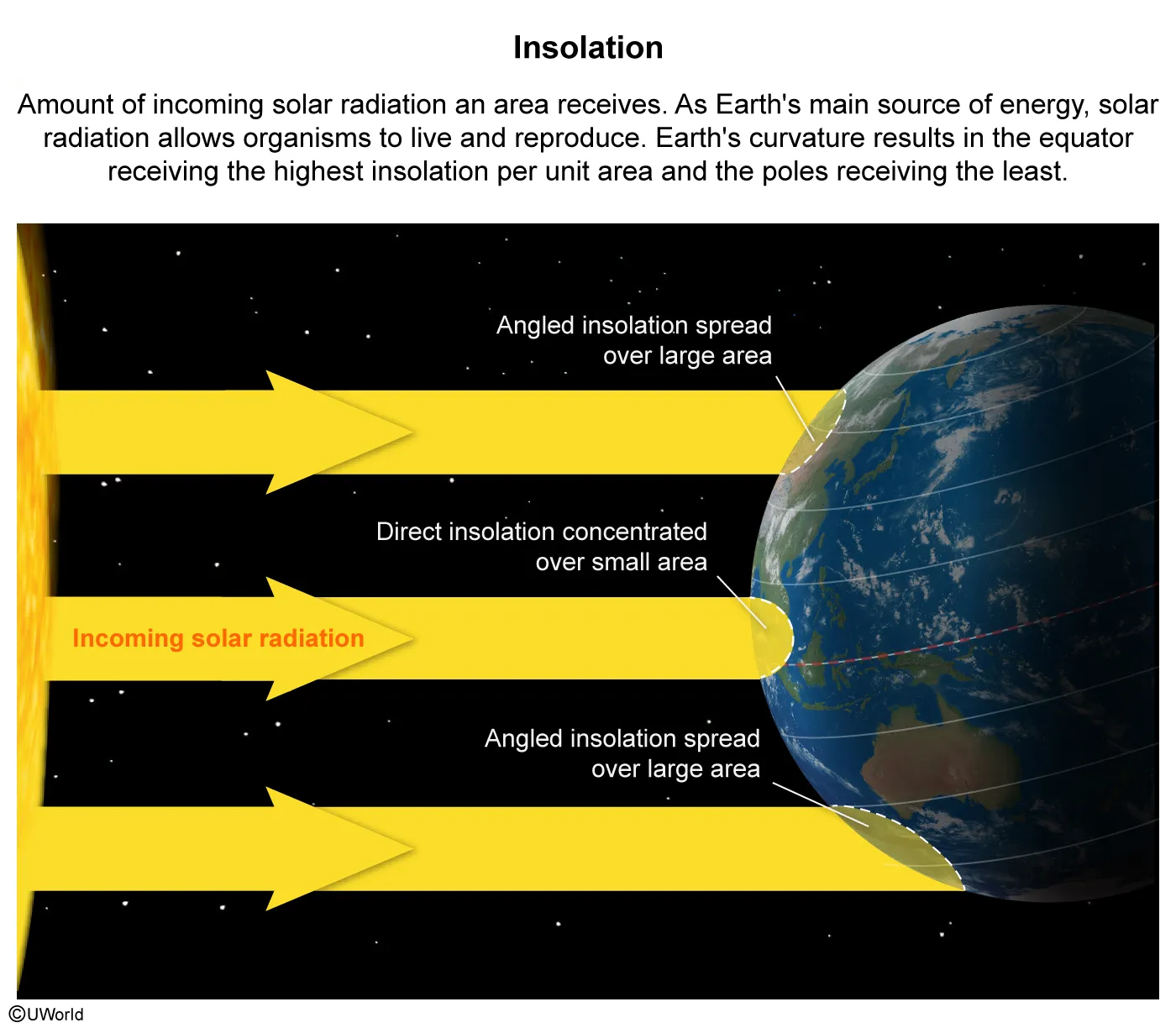
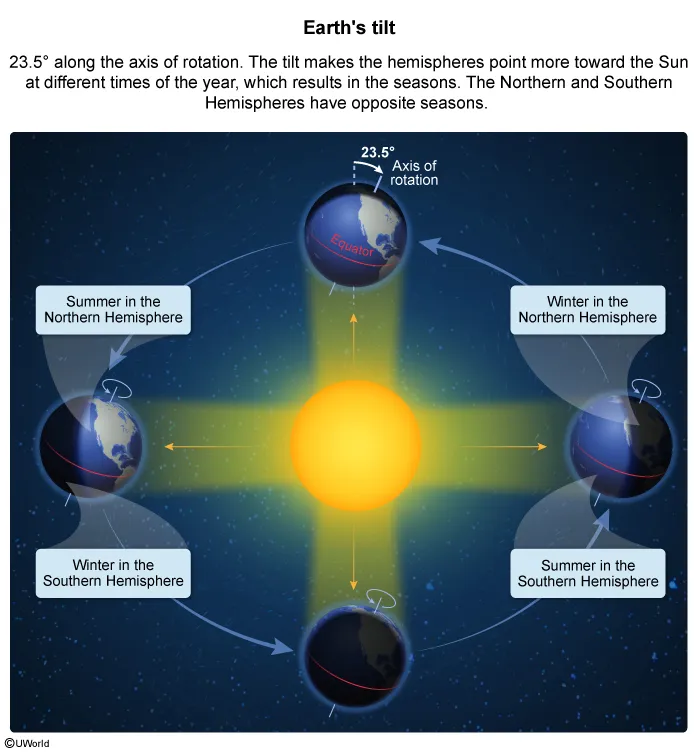
Insolation (incoming solar radiation) is the energy from the Sun that reaches Earth's surface and is the Earth's main source of energy. Because of Earth's shape and tilt on its axis of rotation, the amount of insolation a location receives varies by latitude and season.
For example, the amount of insolation Phoenix receives is different during the summer than in the winter. The biggest variation in insolation is between its summer solstice (June 21st), when the Northern Hemisphere is tilted toward the Sun, and its winter solstice (December 21st), when the Northern Hemisphere is tilted away from the Sun. The percent change in Phoenix's insolation is:
(Choice A) may result from mistakenly using the incorrect formula may result from mistakenly using the incorrect formula instead of using the percent change formula instead of using the percent change formula
(Choice B) may result from mistakenly dividing the final value by the initial value instead of using the percent change formula .
(Choice D) may result from mistakenly using the incorrect formula instead of using the percent change formula instead of using the percent change formula
Things to remember:
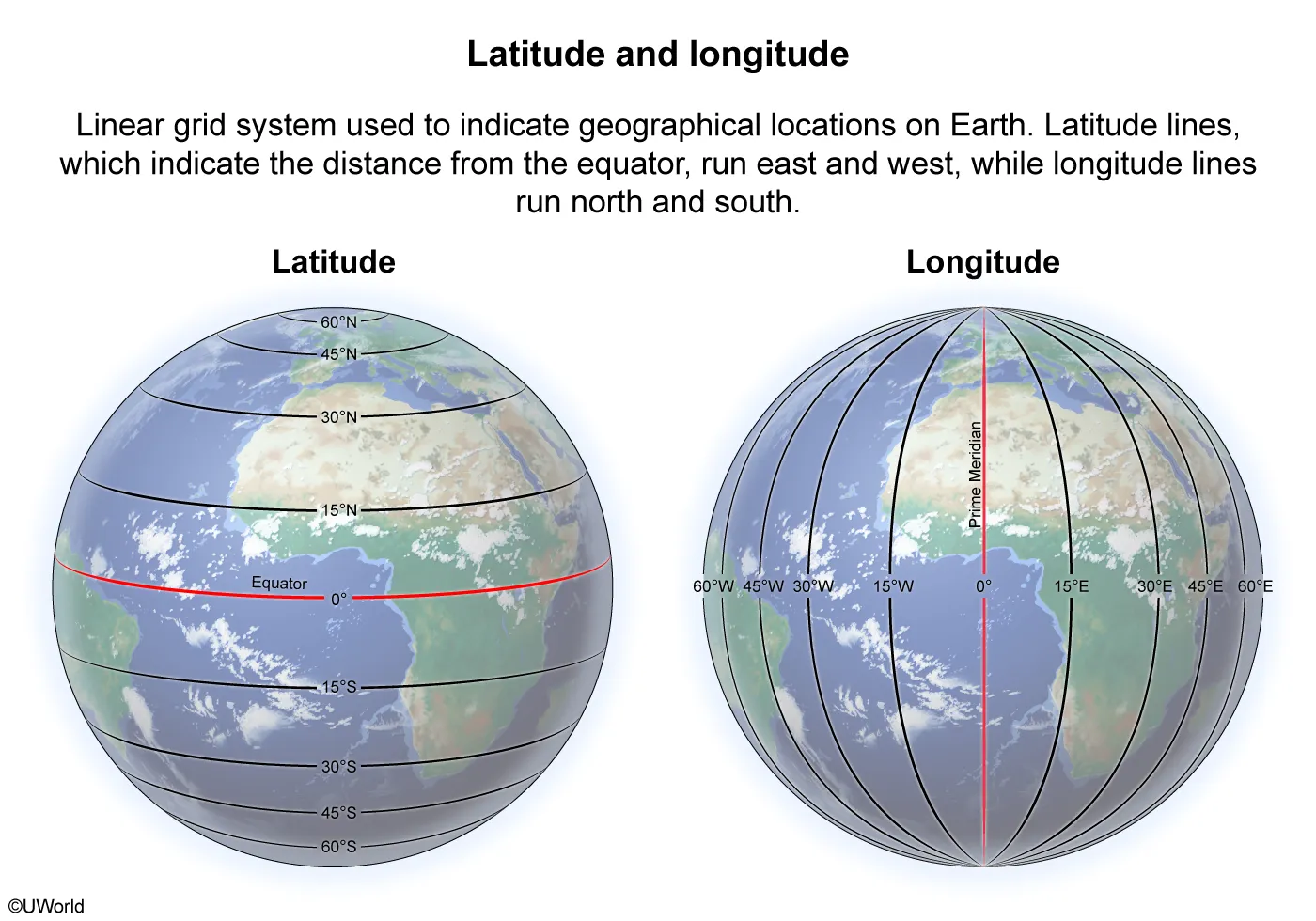
Insolation (incoming solar radiation) is Earth's main source of energy. Because of Earth's curvature and tilt on its axis of rotation, the amount of insolation that a location receives depends primarily on its latitude and season.
Question
Which of the following best explains why an ecosystem would have more plant roots in the A horizon than in the B horizon of soil?
| A. The humus is less dense in the A horizon than in the B horizon, leading to lower acidity in the A horizon. | |
| B. The topsoil has the highest percentage of clay, so the A horizon retains more water than the B horizon. | |
| C. The A horizon has more organic material than the B horizon, so the A horizon has more microbial activity that increases nutrient cycling. | |
| D. The surface of soil has more weathered rock, leading to more waterlogging in the A horizon than in the B horizon. |
Explanation
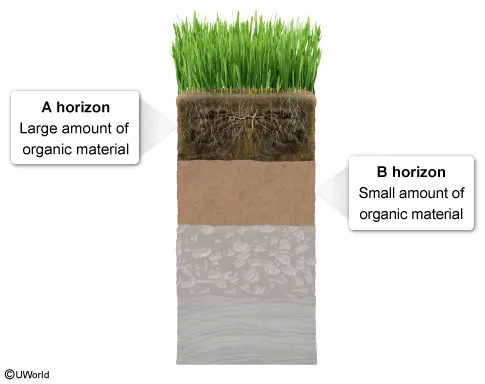
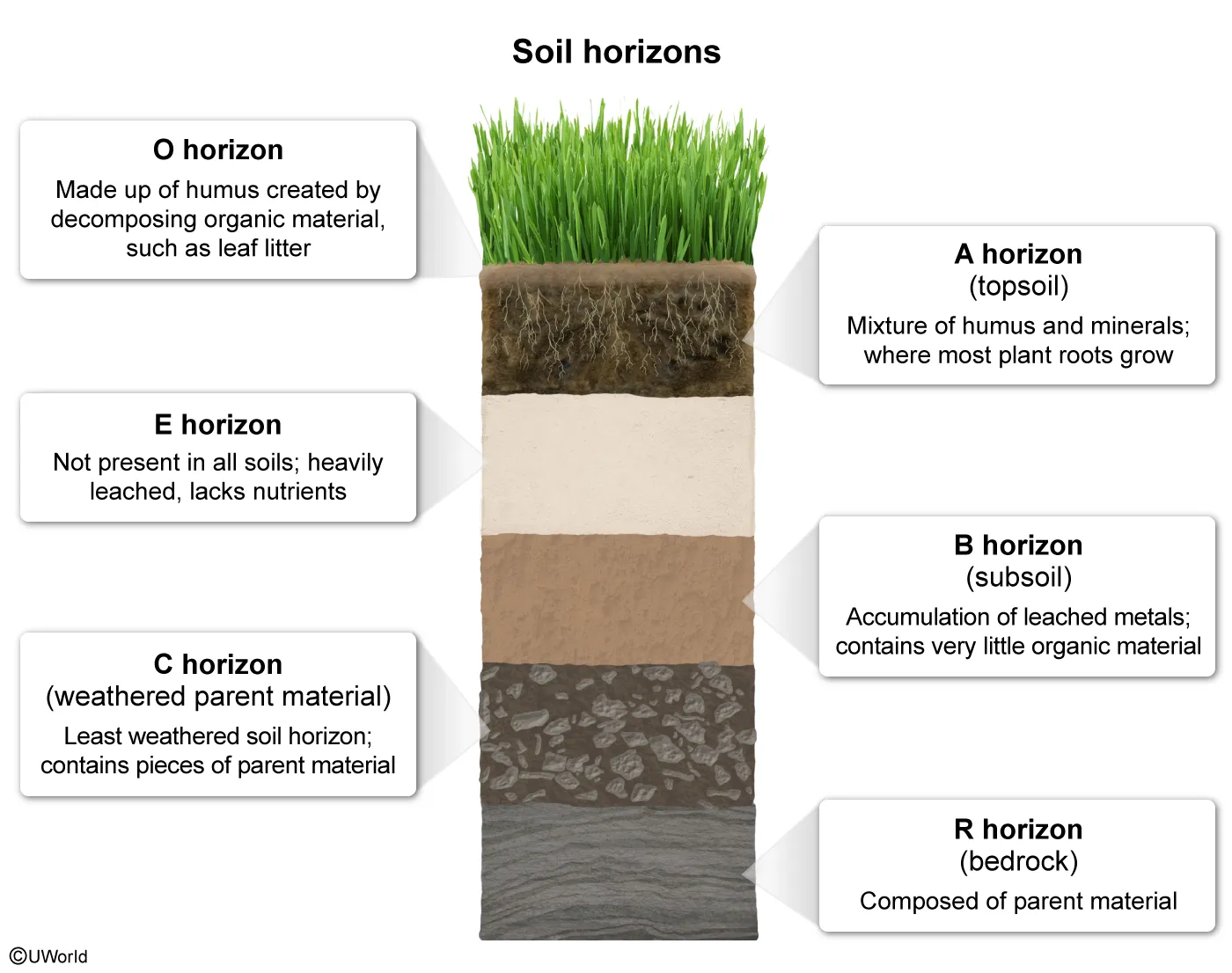
Soil horizons are layers of soil with varying compositions of minerals and organic material. Soil horizons closer to the:
- surface—O and A horizons—have a high percentage of organic material.
- bedrock—C and B horizons—have a high percentage of mineral material.
Because the A horizon has a higher amount of organic material than the B horizon, nutrient cycling increases as microbes, such as bacteria, decompose organic material. Because plants assimilate nutrients through their roots, more roots can be found in the A horizon compared with the B horizon.
(Choice A) Humus (organic material) is more, not less, dense in the A horizon than in the B horizon.
(Choice B) The topsoil, which includes the A horizon, has the highest percentage of organic material, not clay particles.
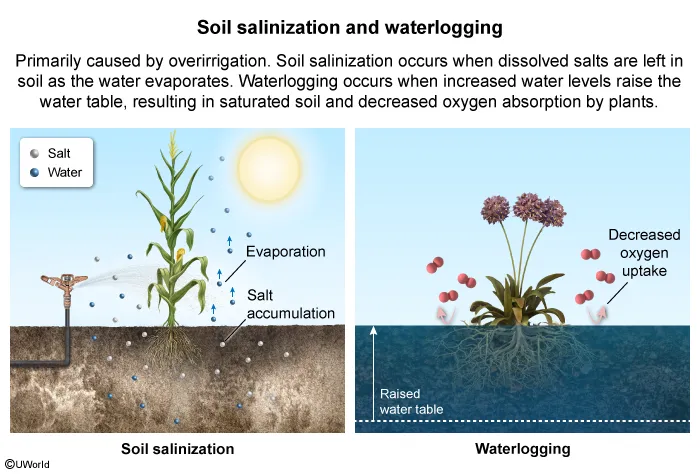
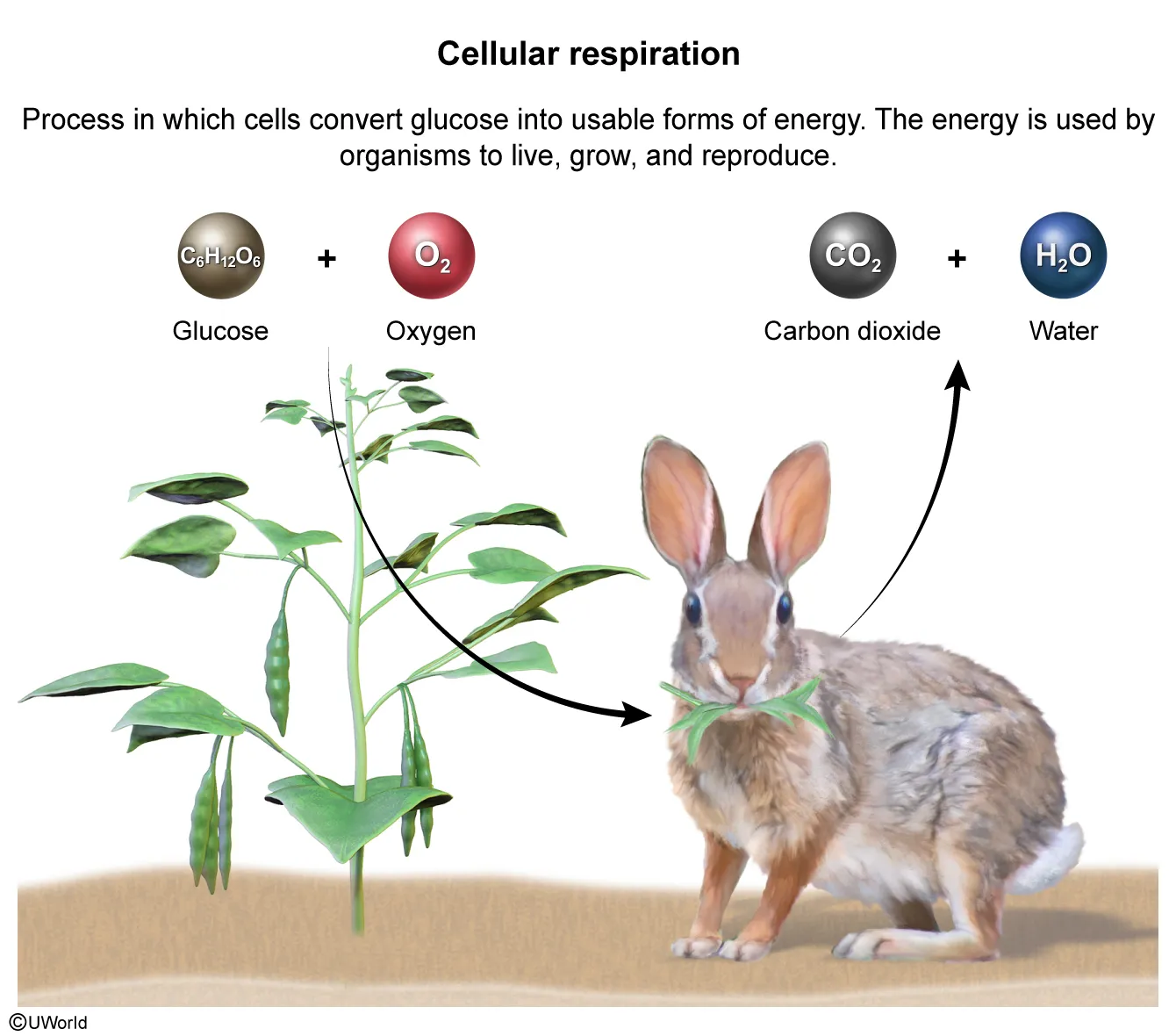
(Choice D) Because waterlogging decreases the amount of oxygen available to plant roots for cellular respiration, more plant roots would grow in a soil horizon with less, not more, waterlogging.
Things to remember:
Soil is made up of horizons that contain varying compositions of minerals and organic material.
Question
Which of the following best describes why soil formation occurs over long periods of time?
| A. The processes of magma surfacing and solidifying into soil particles are infrequent. | |
| B. The process of gravity compacting Earth's crust into soil particles is weak. | |
| C. The process of geologic uplift to expose soil particles takes millions of years. | |
| D. The processes of weathering and erosion to deposit soil particles are slow. |
Explanation
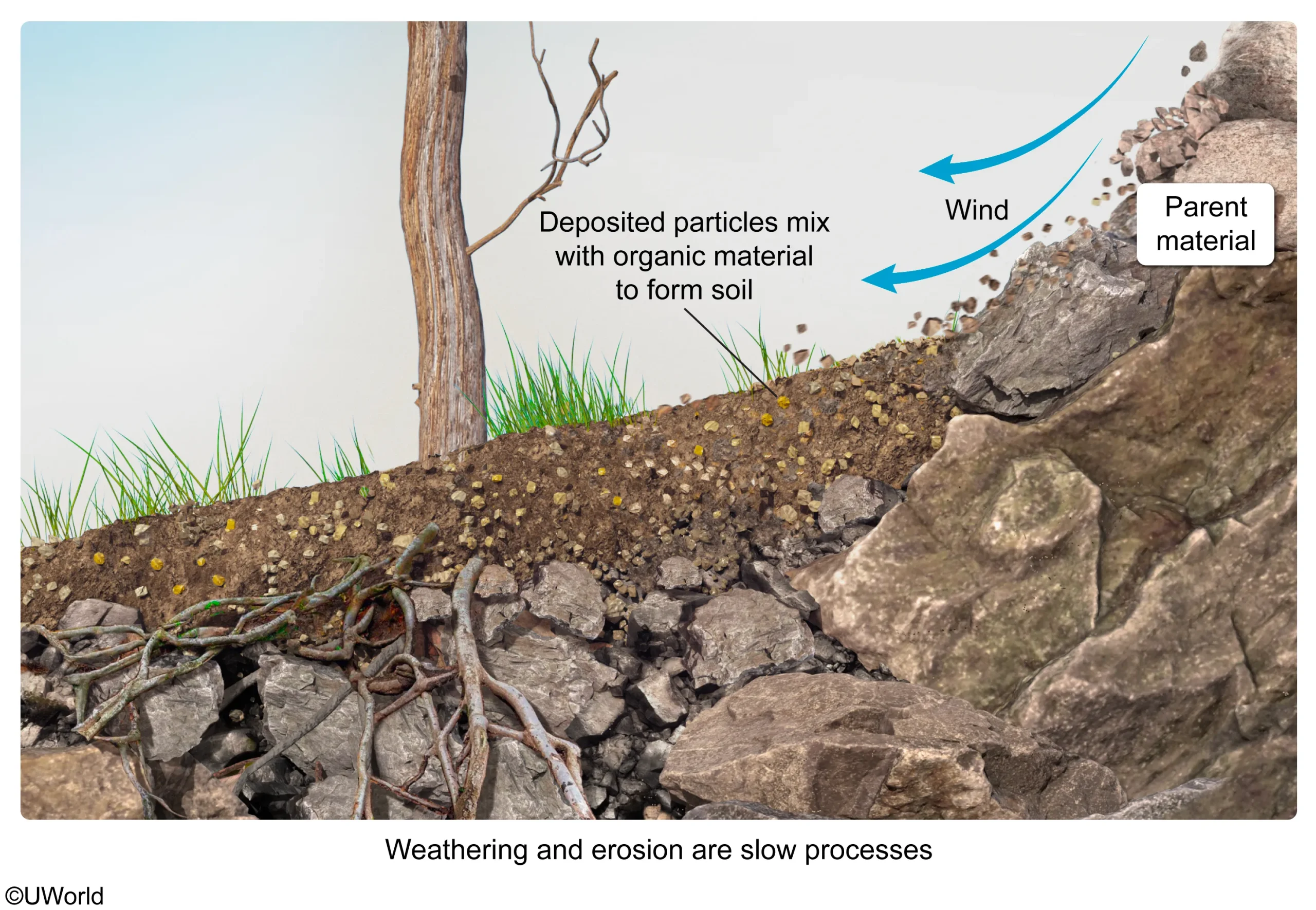
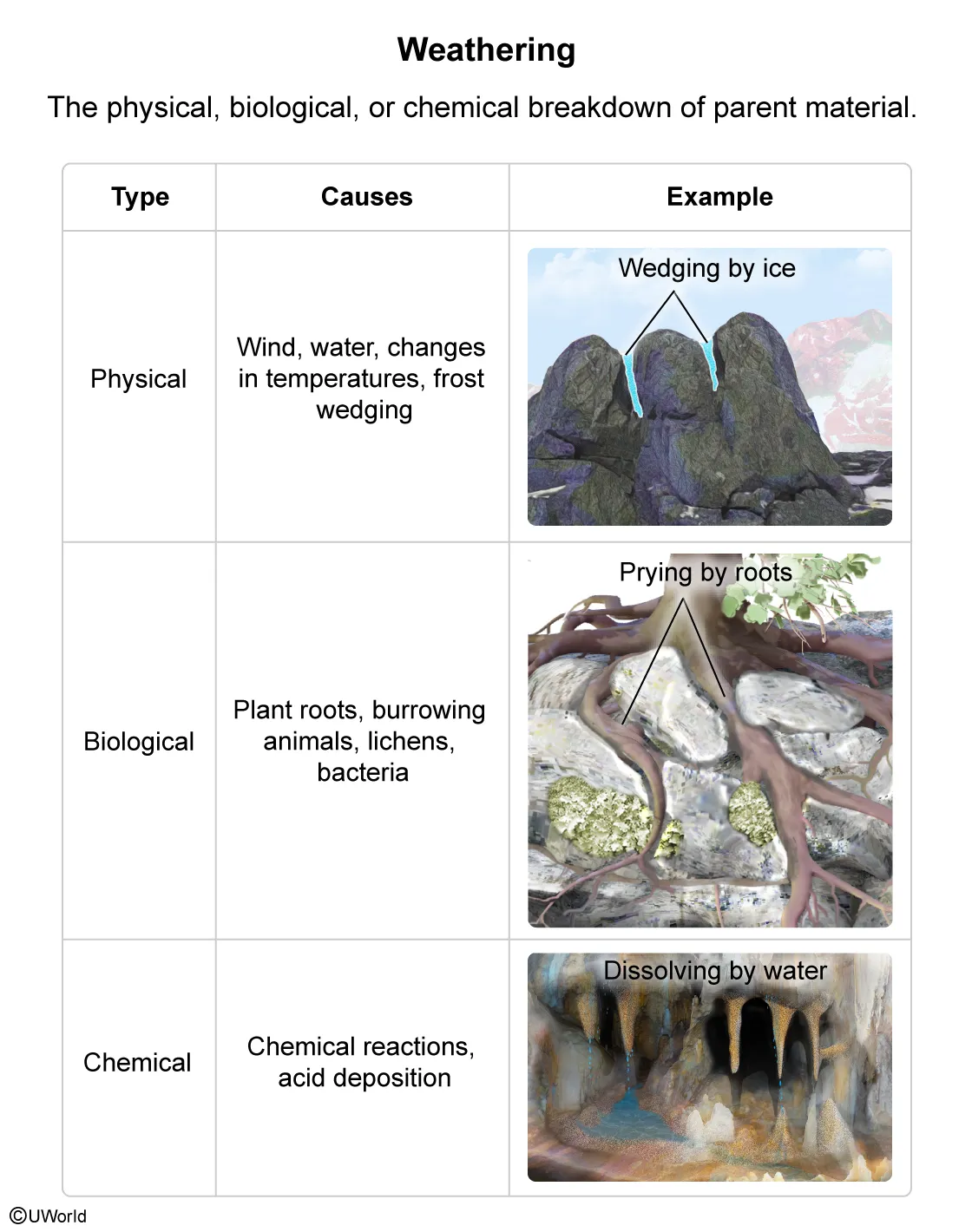
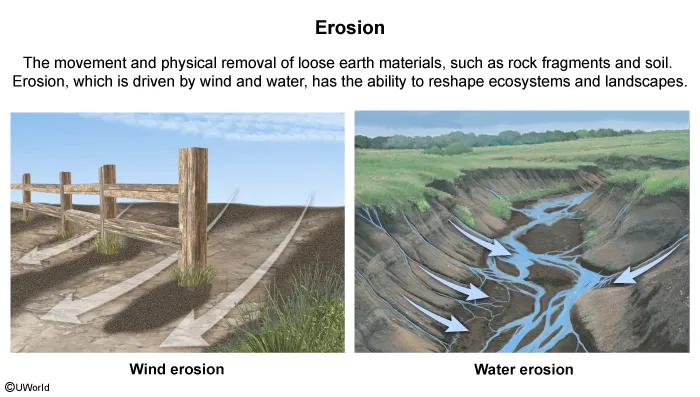
Soil is a mixture of minerals, organic material, water, and air that supports living organisms. The minerals in soil come primarily from the weathering of parent material, or bedrock. Weathering breaks down the parent material into smaller particles, which are then easily eroded, or transported to new locations. Once deposited, the particles mix with organic material to form soil.
However, the process of weathering takes a long time, and erosion to deposit soil particles is slow, so soil formation occurs over long periods of time. For example, it is estimated to take about 500–1,000 years to form one inch of soil.
(Choice A) When magma rises to Earth's surface, it solidifies into parent material, not soil particles.
(Choice B) The compaction of Earth's crust reduces empty space to form rock, not soil particles, over time.
(Choice C) Geologic uplift is the process of Earth's surface rising to form mountains and other landforms, which exposes rock, not soil particles, to atmospheric conditions.
Things to remember:
Over long periods of time, the parent material of soil is weathered into smaller particles, eroded by wind and water, and deposited and mixed with organic material, water, and air to form soil.

Study Anywhere, Anytime
Use the UWorld app to review Unit 4 APES MCQs, watch lessons, or read notes whenever you have a few minutes. This flexibility helps you stay consistent with daily practice, which is essential when preparing for content-heavy topics like earth systems and resources and tectonic boundary interactions.
Stand Out
with a Top Score in AP Environmental Science
Finish your AP Environmental Science Unit 4 review and build momentum for the rest of the course. A strong performance on unit 4 AP Environmental Science enhances your readiness for the exam and strengthens your academic profile for competitive colleges and science-focused pathways.
Get our all-in-one course today!
- Focused APES Videos
- Print & Digital Study Guide
- 550+ Exam-style Practice Questions
- Customizable Quiz Generator
- Adjustable Study Planner
- Realistic Timed Test Simulation
- Colorful Visual Explanations
- Progress Dashboard
- Smart Flashcards
- Digital Notebook
Hear From Our AP Students
UWorld’s service is pretty good and helps provide a lot of explanations on subjects I haven’t been confident on before.
The questions here are the most realistic to the AP tests I've seen so far! I appreciate the ability to customize tests as well.
The best part is that all options are well-explained, telling clearly why they are not the right option.

Frequently Asked Questions (FAQs)
What is AP Environmental Science Unit 4 and why is it important for the exam?
AP Environmental Science Unit 4 focuses on Earth Systems and Resources, a core set of topics that help students understand geological processes, soil development, and natural resource distribution. This unit appears frequently in AP Environmental Science Unit 4 MCQs, FRQs, and classroom assessments, making it essential for forming accurate scientific explanations. Because many environmental impacts begin with changes in the lithosphere, hydrosphere, or atmosphere, mastering these concepts strongly supports both ecological reasoning and quantitative problem solving.
Key ideas include plate tectonics, the rock cycle, soil horizons, and the formation of freshwater resources. These concepts influence how ecosystems respond to natural disasters, how nutrients move through the environment, and how human activities accelerate erosion or resource depletion. When reviewing APES Unit 4, students need to understand both the scientific mechanisms and their real world implications.
Students benefit from building a strong foundation early because Unit 4 connects directly to later topics like land use and sustainability. Using structured resources such as visual diagrams, soil texture analyses, and APES Unit 4 practice test questions helps reinforce understanding. UWorld’s explanations can clarify how these Earth systems interact, which supports stronger performance on Unit 4 AP Environmental Science exam tasks.
What topics are covered in Unit 4 AP Environmental Science?
Unit 4 APES covers a wide range of physical processes that shape Earth’s structure and resources. The core topics include plate tectonics and seismic activity, which explain how continents shift, volcanoes form, and mountains rise. Soil properties and fertility are central topics in APES Unit 4 review, since soil supports ecosystems and agriculture.
Essential topics include:
- Tectonic plates, boundaries, hotspots, and earthquakes
- Rock cycle processes and resource formation
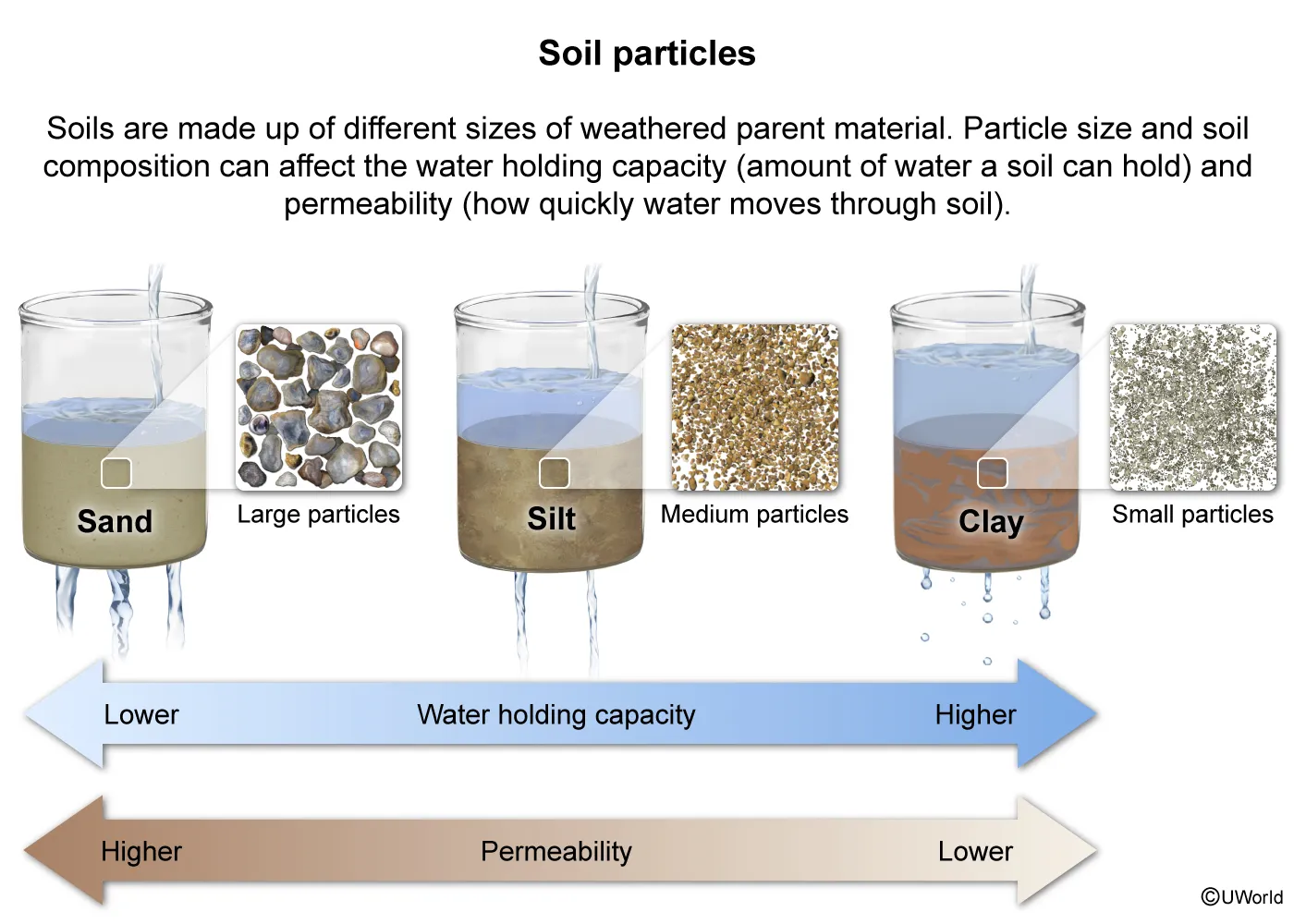
- Soil horizons, porosity, permeability, and fertility
- Natural resource availability and geological distribution
- Watershed characteristics and freshwater sources
- Erosion, weathering, and deposition
These ideas appear often in AP Environmental Science Unit 4 practice tests, APES Unit 4 MCQs, and Unit 4 APES FRQs, where students must analyze diagrams, interpret data, or compare soil types.
Students can reinforce learning by reviewing soil texture triangles, plate boundary maps, and APES earth systems and resources diagrams. This strengthens both conceptual understanding and data interpretation skills needed for the AP exam.
How should I study for the AP Environmental Science Unit 4 review?
A strong AP Environmental Science Unit 4 review begins with organizing concepts visually. Start by sketching diagrams of plate boundaries, soil horizons, and the rock cycle to understand how each component connects. Since the Unit 4 Earth Systems APES exam review includes both conceptual and applied questions, visual mapping helps strengthen long term retention and prepares you for a variety of MCQ and FRQ styles.
Consider these steps:
- Review APES Unit 4 notes and identify the major geological processes.
- Use soil texture triangles and plate movement animations to clarify mechanisms.
- Practice interpreting data tables and environmental case studies.
- Solve a set of AP Environmental Science Unit 4 practice MCQ items at the end of each topic.
- Write brief summaries for processes like weathering, erosion, and deposition.
As you study, practice plays a central role. Mixed problem sets help you connect tectonic activity to natural hazards or understand why soil fertility varies across regions. To track your progress, you can work through APES Unit 4 progress check MCQ practice sets within UWorld, which highlight weak areas and guide targeted review. These checkpoints provide structured reinforcement, especially for cause-and-effect reasoning needed in Unit 4 AP Environmental Science FRQs.
What is the best study sequence for Unit 4 AP Environmental Science?
The best study order for Unit 4 APES follows the natural structure of Earth systems. Begin with tectonic processes, because they influence rock formation, natural hazards, and landscape development. Understanding this physical foundation makes it easier to study the rock cycle and the formation of mineral and energy resources. After that, move into soil science, focusing on the factors that determine texture, fertility, and ecosystem role.
A recommended sequence:
- Plate tectonics and boundary interactions
- Earthquakes, volcanoes, and hotspots
- Rock cycle transitions and resource formation
- Weathering, erosion, and deposition
- Soil horizons, porosity, and permeability
- Watersheds and freshwater systems
- Human impacts on geological resources
This structure mirrors how concepts appear in AP Environmental Science Unit 4 study guide materials and creates a logical flow that prepares students for both MCQs and FRQs.
Once you complete each topic, switch to application-based practice. Use APES unit 4 quiz items, case studies, and real environmental scenarios to strengthen your problem-solving and interpretation skills. UWorld’s targeted Unit 4 progress check MCQ APES sets can also help verify your understanding after each section, offering guided reinforcement as you prepare for Unit 4 APES test and Unit 4 AP Environmental science FRQ questions.
What is the most effective AP Environmental Science Unit 4 review plan before the exam?
A structured approach to AP Environmental Science Unit 4: Earth Systems and Resources helps you build a strong understanding of geological processes, soil composition, and freshwater systems. Because Unit 4 concepts appear in both MCQs and FRQs, an organized plan supports long term retention and exam readiness.
Follow this 3-phase study strategy:
3 Months Before the Exam:
- Start with foundational concepts such as plate tectonics, rock formation, and major geological cycles.
- Watch brief, focused lessons to visualize boundary interactions, soil layering, and watershed flow.
- Reinforce each topic with UWorld’s Unit 4 APES progress check MCQs, which help verify understanding after every major concept.
- Review class notes alongside pacing strategies from the How to Study for AP Environmental Science guide for a clearer structure.
1 Month Before the Exam:
- Shift toward applied practice by working through APES Unit 4 practice test questions covering soil texture, weathering, natural resource formation, and freshwater systems.
- Build a concise summary sheet of soil horizons, porosity and permeability patterns, and types of plate boundaries.
- Practice scenario based items and APES Unit 4 FRQ tasks that require explaining cause and effect within Earth systems.
2 Weeks Before the Exam:
- Take one to two mixed AP Environmental Science Unit 4 practice test sessions under timed conditions.
- Revisit mistakes from UWorld’s progress checks and focus on reinforcing frequently tested ideas such as aquifer recharge, mineral resource use, and tectonic hazards.
- Dedicate short daily review blocks to mixed unit 4 APES MCQ and FRQ style practice, strengthening both accuracy and pacing.
What are the main FRQ question types for AP Environmental Science Unit 4?
FRQs in AP Environmental Science Unit 4 focus on your ability to explain geological processes, interpret environmental data, and connect Earth system interactions to real-world impacts. Since Earth Systems and Resources APES concepts influence land use, natural hazards, and ecosystem stability, FRQs often blend scientific reasoning with cause-and-effect analysis. You’ll encounter these themes frequently in APES Unit 4 FRQ, Unit 4 APES FRQ, and classroom assessments designed to mirror exam expectations.
Common FRQ types in Unit 4 AP Environmental Science include:
- Plate Tectonics and Natural Hazards: Explain boundary interactions, earthquake patterns, or volcanic activity using scientific principles.
- Rock Cycle and Resource Formation: Describe how igneous, sedimentary, and metamorphic processes create mineral or energy resources.
- Soil Science and Land Use: Analyze soil horizons, fertility, or erosion impacts in agricultural or ecological contexts.
- Watersheds and Water Flow: Interpret diagrams showing groundwater movement, aquifers, or watershed boundaries.
- Human Impacts: Discuss how mining, deforestation, or extraction practices alter geological stability or soil quality.
To prepare effectively:
- Practice breaking down prompts into parts to ensure you address each scoring component. Study diagrams such as APES unit 4 soil horizons, watershed maps, and tectonic boundary charts, since visuals often appear in FRQs.
- Use mixed question sets and written explanations to build clarity in cause-and-effect reasoning. Apply concepts to real examples such as erosion control, mining impacts, or volcanic risk zones.
UWorld’s topic-specific explanations support this practice by modeling clear, structured reasoning similar to what is needed on AP Environmental Science Unit 4 FRQ items. Reviewing these examples helps strengthen analytical writing and prepares you for both conceptual and data-driven free-response questions.
How can I improve my accuracy on AP Environmental Science Unit 4 MCQs and practice questions?
Building accuracy on AP Environmental Science Unit 4 MCQs requires understanding how geological processes, soil characteristics, and freshwater systems connect across Earth systems. Many mistakes occur when students memorize definitions but struggle to apply them to data tables, diagrams, or real-world scenarios. Strengthening conceptual reasoning will improve performance on APES Unit 4 MCQ, classroom quizzes, and full-length AP Environmental Science Unit 4 practice test sets.
To improve your precision on Unit 4 APES questions:
- Review foundational processes, such as plate boundary interactions, the rock cycle, and soil formation. Understanding why these processes occur makes MCQs more intuitive.
- Identify your weak areas by noting patterns in missed items. Many students struggle with interpreting soil texture triangles, watershed diagrams, or tectonic maps.
- Mix question types to build flexibility. Practice numerical data interpretations, map-based questions, and scenario-driven environmental problems to see how concepts transfer across formats.
- Study key APES vocabulary, including permeability, porosity, convergent boundaries, and soil horizons. These terms often appear in APES Unit 4 multiple choice questions and Unit 4 APES practice test items.
- Solve timed sets to build confidence and reduce second-guessing. Time pressure affects accuracy, especially on applied questions involving erosion, deposition, or aquifer flow.
Using reinforcement tools such as UWorld’s topic-based practice and unit 4 progress check MCQ AP Environmental Science sets helps clarify reasoning and provides guided feedback after each question. This combination of content review, pattern recognition, and timed practice will steadily strengthen your accuracy across all topics in Earth Systems and Resources APES.
How are Earth systems and resources connected in AP Environmental Science Unit 4?
In AP Environmental Science Unit 4, Earth systems and resources are tightly linked through geological, hydrological, and soil processes that shape the planet’s surface and influence ecosystem stability. This unit emphasizes how tectonic activity, the rock cycle, and watershed dynamics interact to form the environmental conditions tested across APES Unit 4 MCQs, FRQs, and classroom assessments. Understanding these connections is essential because Earth systems operate together, not in isolation, and each process influences the distribution of natural resources such as minerals, freshwater, and fertile soils.
Conceptually, these links appear across the major topics in Unit 4 AP Environmental Science:
- Tectonic processes drive mountain building, volcanic activity, and earthquakes, all of which create and redistribute mineral resources.
- The rock cycle transforms materials through weathering, melting, and compaction, contributing to soil formation and landscape changes.
- Weathering and erosion break down rock into sediments that form diverse soil types, affecting fertility and water retention.
- Soil horizons reflect how biological, chemical, and physical processes interact to determine porosity, permeability, and nutrient availability.
- Watersheds and aquifers integrate geology and hydrology, directing water flow, groundwater recharge, and flood patterns.
Seeing these systems as interconnected allows students to analyze real-world scenarios such as volcanic soil fertility, earthquake risks, resource depletion, or watershed contamination. These relationships often appear in unit 4 APES FRQ prompts and AP Environmental Science Unit 4 test questions that require explanation of cause-and-effect patterns.
As you study, reinforce these connections through diagrams, soil profiles, and tectonic maps. UWorld resources can further guide your reasoning with structured examples that mirror the complexity of APES Earth Systems and Resources questions, helping you develop stronger analytical skills for both MCQs and FRQs.
How can I retain complex processes or topics in AP Environmental Science Unit 4?
Retention in AP Environmental Science Unit 4 comes from understanding how geological, hydrological, and soil processes interact rather than memorizing isolated definitions. Since Earth Systems and Resources APES questions often require multi-step reasoning—such as linking plate tectonics to soil formation or connecting watershed flow to erosion—students retain information best when they review concepts visually and repeatedly. This approach helps improve accuracy on APES Unit 4 MCQ items, FRQs, and mixed practice sets.
Here are effective ways to strengthen long-term retention:
- Build visual models. Sketch plate boundaries, the rock cycle, and soil horizons to connect terminology with real-world patterns. Visual diagrams reinforce memory far more effectively than text alone and support questions commonly seen in Unit 4 APES review materials.
- Use spaced practice. Review a few AP Environmental Science Unit 4 practice test questions each day, especially those involving weathering, erosion, deposition, or watershed flow. Repeated exposure improves recognition of recurring problem types.
- Explain processes aloud. Teaching topics like soil permeability, convergent boundaries, or the formation of mineral deposits helps solidify conceptual understanding.
- Create mini reference sheets. Summarize tectonic terms, rock cycle transitions, and soil characteristics to form a personalized unit 4 APES study guide. Include key vocabulary that appears in APES Unit 4 test and FRQ prompts.
- Mix question formats. Alternate between multiple-choice, diagram-based, and scenario-driven problems to strengthen adaptability and recall.
By spacing your review, using visuals, and revisiting challenging concepts regularly, complex processes become more intuitive. This method improves recall during timed exams and prepares you for analytical tasks across AP Environmental Science Unit 4, including FRQs and data interpretation problems.
How do I study Earth systems and resources for the AP Environmental Science Unit 4 test?
Studying Earth systems and resources for AP Environmental Science Unit 4 requires combining conceptual understanding with real-world interpretation. Since Unit 4 APES covers tectonic activity, the rock cycle, soil science, and freshwater systems, building a clear mental model of how these processes interact helps you perform well on MCQs and FRQs. A strong grasp of these relationships strengthens your full AP Environmental Science Unit 4 review, especially when questions involve environmental impacts or geological change.
Focus on:
- Core tectonic processes. Review plate boundaries, hotspots, and seismic activity to understand how earthquakes and volcanoes shape landscapes.
- Rock cycle pathways. Practice identifying transitions between igneous, sedimentary, and metamorphic rocks and how these relate to mineral resources.
- Soil formation and properties. Study soil horizons, texture, porosity, and fertility since these concepts appear frequently in APES Unit 4 practice test and MCQ questions.
- Watershed dynamics. Learn how water flows, infiltrates, and transports sediment across systems to prepare for FRQ-style environmental scenarios.
- Mixed question practice. Solve a combination of graphical, data-based, and scenario-driven items to strengthen application skills, including those found in AP Environmental Science Unit 4 practice test sets.
Alternate between diagrams, brief content reviews, and timed problem sets to build accuracy and recall. Consistent practice with these patterns makes it easier to recognize processes that appear in APES unit 4 FRQ prompts, unit 4 AP Environmental Science test questions, and real-world case studies. Over time, this balanced approach helps you understand the complexity of Earth systems and resources APES topics and boosts confidence for the full exam.
What is the best AP Environmental Science Unit 4 practice test format?
The most effective way to prepare for AP Environmental Science Unit 4 is to use a practice test format that reflects the pacing and question styles of the AP exam. Because Earth Systems and Resources APES topics involve tectonic processes, the rock cycle, soil properties, and water movement, your practice should blend conceptual recall with data interpretation and applied environmental reasoning. A well-designed APES Unit 4 practice test helps you evaluate both content knowledge and analytical skills, especially for FRQs connected to geological hazards and resource use.
A balanced APES Unit 4 practice test should include:
- 25–30 MCQs: Mix questions on plate boundaries, rock cycle transitions, soil horizons, and watershed dynamics. Include data tables, maps, and diagrams since these appear often in AP Environmental Science Unit 4 MCQ items.
- 1–2 FRQs: One should focus on cause-and-effect processes like weathering, erosion, or tectonic movement, and the other should examine soil characteristics, land use, or freshwater systems. This reflects tasks commonly tested in APES Unit 4 FRQ and Unit 4 APES FRQ prompts.
- Time Limit: 50–60 minutes: This pacing helps build stamina and accuracy for the full Unit 4 AP Environmental Science test.
- Review Block: Spend 10 minutes after finishing to rework errors and compare explanations. This is especially helpful for revisiting soil profiles, boundary interactions, and processes like deposition or runoff.
Using this structured approach ensures your AP Environmental Science Unit 4 review strengthens both speed and comprehension. When combined with UWorld’s clear explanations and topic-based practice, this format helps you recognize patterns across APES earth systems and resources questions and prepares you confidently for the real exam.
When should I begin preparing for the AP Environmental Science Unit 4 test?
The ideal time to begin preparing for the AP Environmental Science Unit 4 test is as soon as your class starts covering Earth systems, geological processes, and soil science. Unit 4 concepts are deeply interconnected, so consistent, early review is far more effective than last-minute cramming. Starting early helps you build a strong conceptual base that supports success on both AP Environmental Science Unit 4 MCQ items and FRQs involving tectonic activity, rock formation, and soil characteristics.
Here’s a suggested preparation timeline:
-
During Class Instruction:
Review daily lessons and complete a few APES Unit 4 practice MCQ questions after each topic. Reinforce definitions related to plate boundaries, rock cycle transitions, and soil horizons.
-
2 to 3 Weeks Before the Test:
Shift to mixed problem sets that combine tectonic processes, weathering and erosion, freshwater systems, and soil profiles. Consult your AP Environmental Science Unit 4 study guide or Unit 4 APES notes to check for gaps.
-
One Week Before the Test:
Take short, timed sets that mimic the Unit 4 APES test pacing. Include both MCQs and FRQ-style explanations to improve your ability to analyze real-world geological or environmental scenarios.
-
Final Days:
Review major diagrams (soil horizons, plate boundaries, watershed flow), key vocabulary, and high-yield processes that appear frequently on APES Unit 4 test questions. Revisit difficult concepts using your summaries or a quick APES Unit 4 review PDF if available.
Following this gradual approach keeps the material fresh, builds confidence, and ensures you can reason through the interactions within Earth Systems and Resources APES, preparing you for strong performance on the full exam.
What are the common mistakes students make in AP Environmental Science Unit 4?
Many students lose points on AP Environmental Science Unit 4 because they try to memorize isolated facts instead of understanding how Earth systems interact. Since Unit 4 covers tectonic processes, the rock cycle, soil development, and watershed dynamics, even small misconceptions can affect performance on both AP Environmental Science Unit 4 MCQ items and FRQs. Identifying these mistakes early strengthens your reasoning across all Unit 4 APES review sections.
Common errors in APES Unit 4 include:
- Mixing up plate boundary types and incorrectly linking them to earthquakes, volcanoes, or mountain formation.
- Confusing rock cycle transitions, such as believing sedimentary rock forms directly from magma.
- Overlooking soil horizon differences, especially when interpreting APES unit 4 vocab terms like O-horizon vs. A-horizon.
- Misreading watershed flow, leading to incorrect predictions about erosion, runoff, or flood patterns.
- Ignoring porosity and permeability relationships, which affects answers on groundwater movement and aquifer recharge.
- Misinterpreting diagrams, a frequent issue on Unit 4 AP Environmental Science test questions that include maps, graphs, or cross-sections.
- Relying on memorization instead of cause-and-effect reasoning when answering Unit 4 APES FRQ prompts.
To avoid these issues, start by reviewing diagrams and processes visually before moving into text-based notes. After each practice set, whether a short APES unit 4 quiz, FRQ practice, or a full AP Environmental Science unit 4 practice test, spend time analyzing explanations to identify patterns in your mistakes. Consistent reflection and correction ensure that misconceptions are resolved long before test day, improving your performance across all Earth Systems and Resources APES question types.
Where can I find AP Environmental Science Unit 4 notes, cheat sheets, or study guides?
Reliable AP Environmental Science Unit 4 notes, cheat sheets, and study guides help simplify the core ideas behind Earth Systems and Resources so you can review quickly and effectively. Strong resources break down tectonic processes, the rock cycle, soil formation, and watershed dynamics into clear visuals and key takeaways. These tools make it easier to prepare for APES Unit 4 MCQs, FRQs, and classroom assessments.
Look for APES Unit 4 study guide materials that include:
- Summaries of major plate boundary interactions, hotspots, earthquakes, and volcanic activity.
- Labeled diagrams of the rock cycle, weathering, erosion, and deposition.
- Clear explanations of soil horizons, texture, porosity, and permeability.
- Quick-reference charts for Unit 4 Earth Systems APES exam review, including mineral and resource formation.
- Short practice sets or APES Unit 4 multiple choice questions for rapid reinforcement.
- Visuals that connect tectonic activity to natural hazards, a common feature of APES Unit 4 FRQ prompts.
Combining your class notes with a focused AP Environmental Science Unit 4 study guide helps strengthen long-term understanding and speeds up revision before tests. Concise, well-organized resources are especially useful in the final days before the AP Environmental Science Unit 4 test, giving you a clear, confident overview of the geological and environmental processes you need to master.
Are there downloadable AP Environmental Science Unit 4 study guide PDFs and practice materials?
Yes. You can download AP Environmental Science Unit 4 study guide PDFs and practice materials that summarize the most important concepts from Earth Systems and Resources. These resources typically include streamlined notes on tectonic plates, soil composition, watershed dynamics, and the rock cycle, making them useful for quick revision before Unit 4 APES tests or quizzes. Selecting materials aligned with the College Board’s framework ensures accurate coverage of topics that frequently appear in APES Unit 4 MCQ and FRQ sections.
Strong downloadable guides often include:
- Diagrams of plate boundaries, earthquakes, volcanoes, and hotspots.
- Rock cycle charts with explanations of igneous, sedimentary, and metamorphic transitions.
- Soil horizon summaries and APES Unit 4 vocab checklists.
- Watershed flow visuals and examples of human impacts on freshwater systems.
- Short practice sets that mirror APES Unit 4 practice test formats.
You can also find printable cheat sheets, APES Unit 4 notes, and practice worksheets that help reinforce geological processes and environmental interactions. Pairing these PDFs with interactive tools or topic-based quizzes, such as APES Unit 4 practice MCQ items, creates a well-rounded review routine for Unit 4 AP Environmental Science. This combination supports stronger recall, better conceptual connections, and increased confidence heading into the AP Environmental Science Unit 4 test.