APES Unit 2 Review and Practice Test
Prepare for APES Unit 2 with a complete, exam-ready review designed to build clarity, accuracy, and speed. With targeted concept lessons, AP-level practice questions, and step-by-step explanations, UWorld helps you turn complex ideas into simple, testable logic so you walk into the AP® Exam fully prepared.
Boost Your Score with Our AP Environmental Science Unit 2 Review
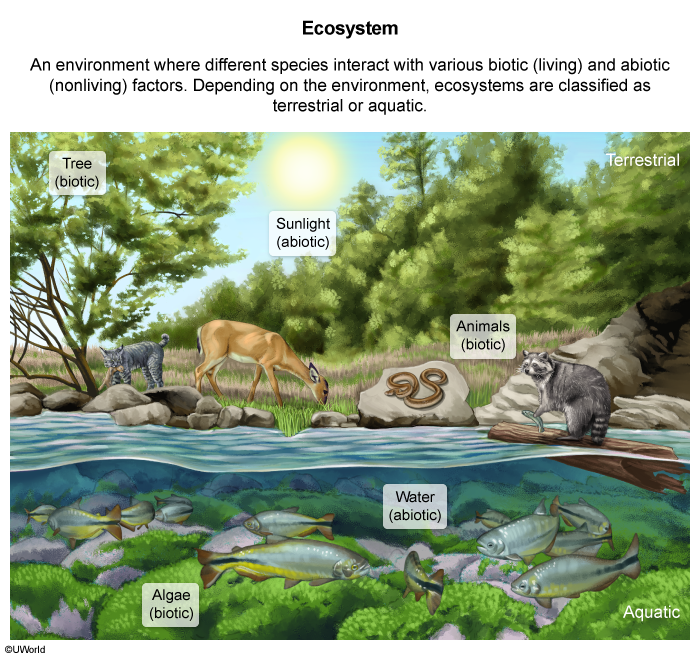
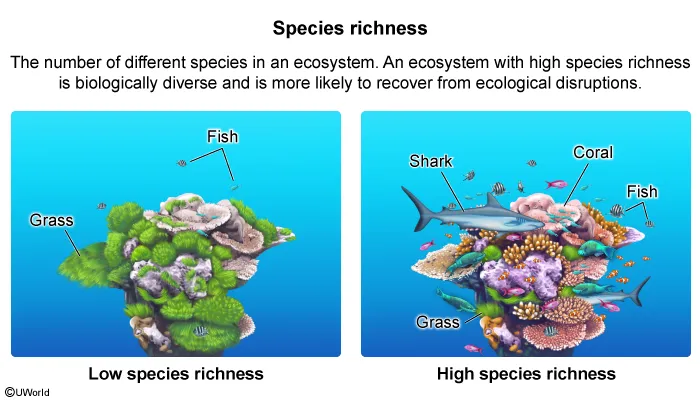
Get a clearer grasp of biodiversity, species richness, population resilience, ecological niches, and ecosystem services with concise, visual explanations. This APES Unit 2 review guides you through every idea you’ll see on the exam, so you strengthen both recall and reasoning.
Engaging Video Lessons That Stick
Video instruction breaks down complex Unit 2 concepts into manageable pieces. Each lesson helps you understand why patterns form, how disturbances affect ecosystems, and what the AP Exam expects you to interpret from data. Our instructors use real-world examples and exam-focused cues to help you build confidence with every topic.
Easy to Understand Interactive Study Guides
Our APES Unit 2 study guides make ecological content into simple, test-oriented formats. You’ll find structured breakdowns of biodiversity, succession, niche partitioning, habitat fragmentation, and more, paired with diagrams that help you quickly interpret ecosystem relationships. Everything aligns with the themes you’ll encounter on the AP Environmental Science Unit 2 test, so your study time is efficient and focused.
Sharpen Your Skills AP Environmental Science Unit 2 Practice Test Questions
Question
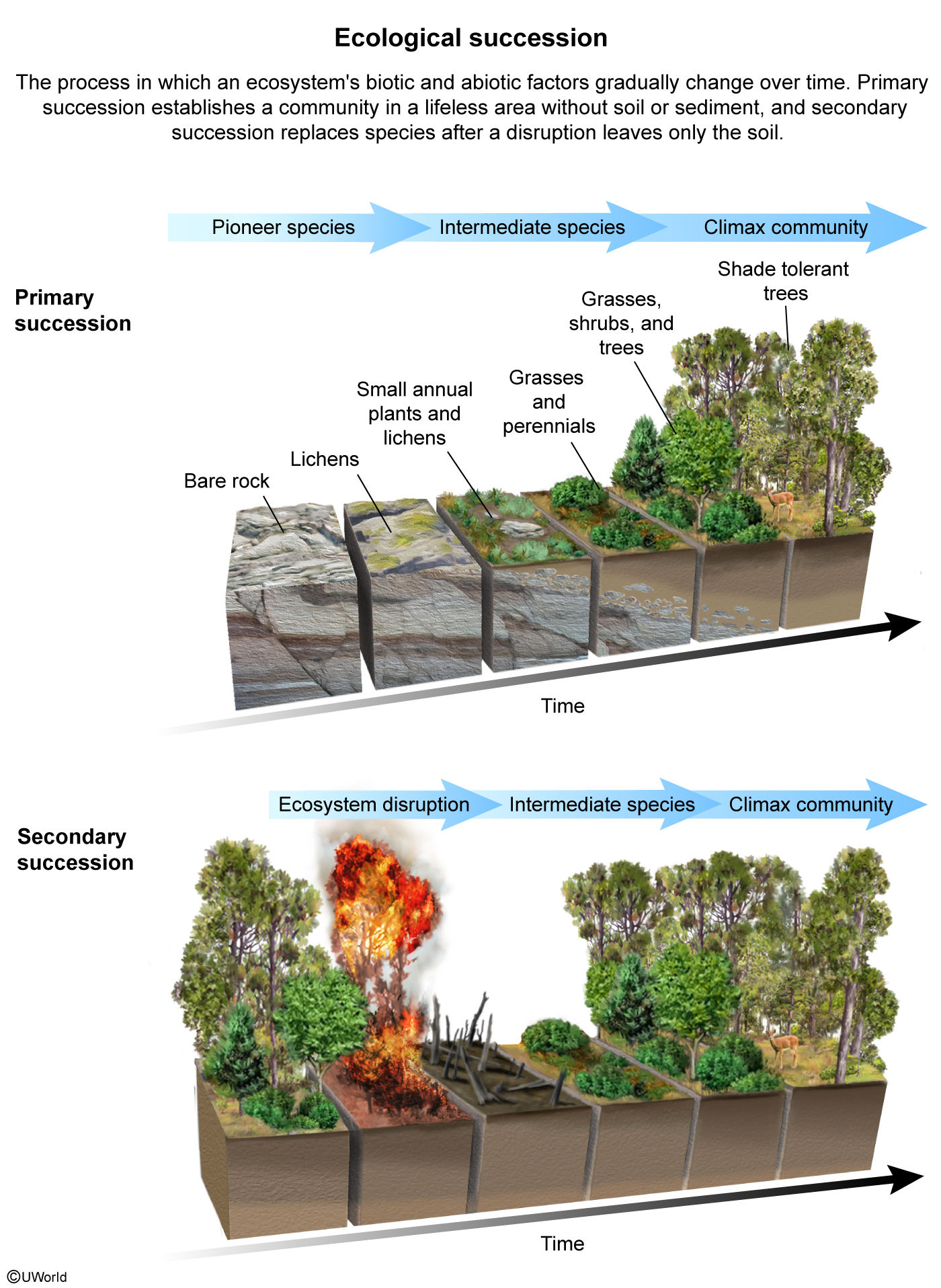
In disturbed ecosystems, ecological succession will affect species richness, the total biomass, and the
| A. rate of habitat fragmentation | |
| B. net primary productivity | |
| C. Coriolis effect | |
| D. incoming solar radiation |
Explanation
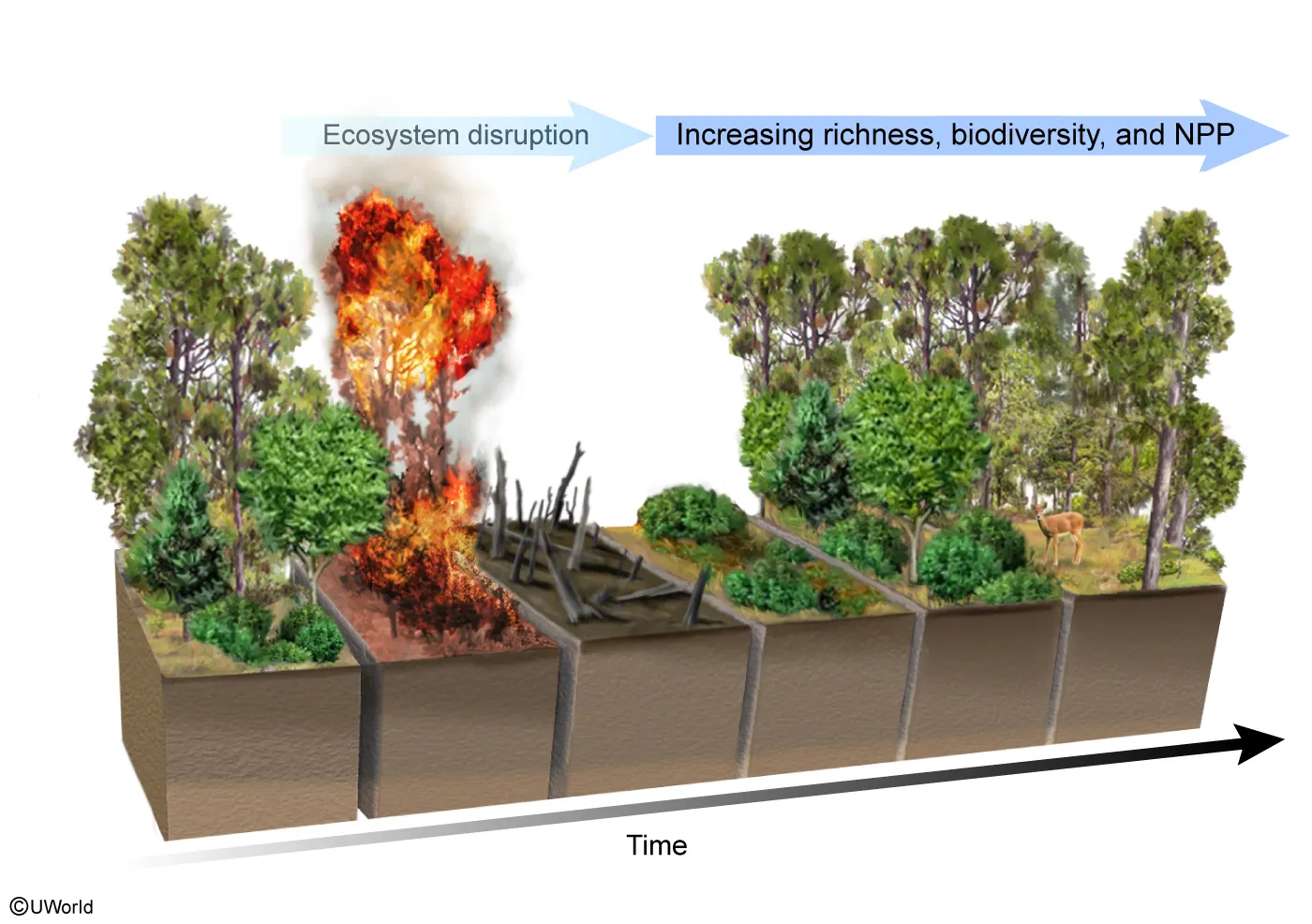
An ecosystem's biotic and abiotic factors gradually change over time in a process called ecological succession. Following a disruption event, such as a wildfire, ecological succession increases the following:
- species richness.
- total biomass.
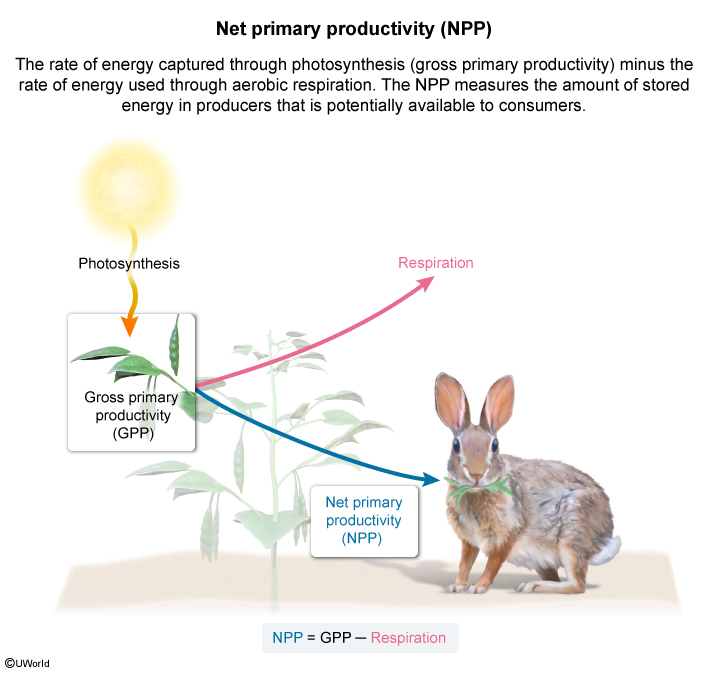
- net primary productivity (NPP).
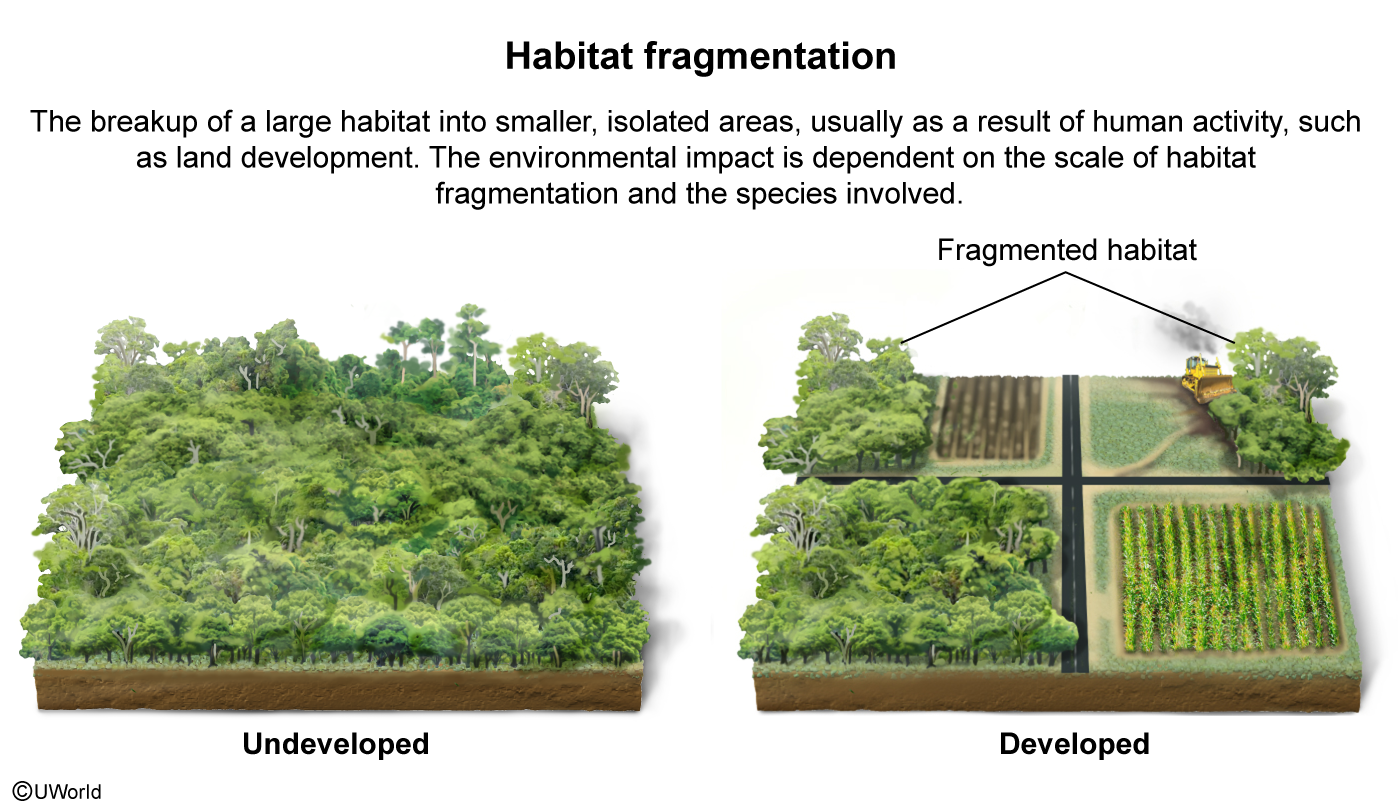
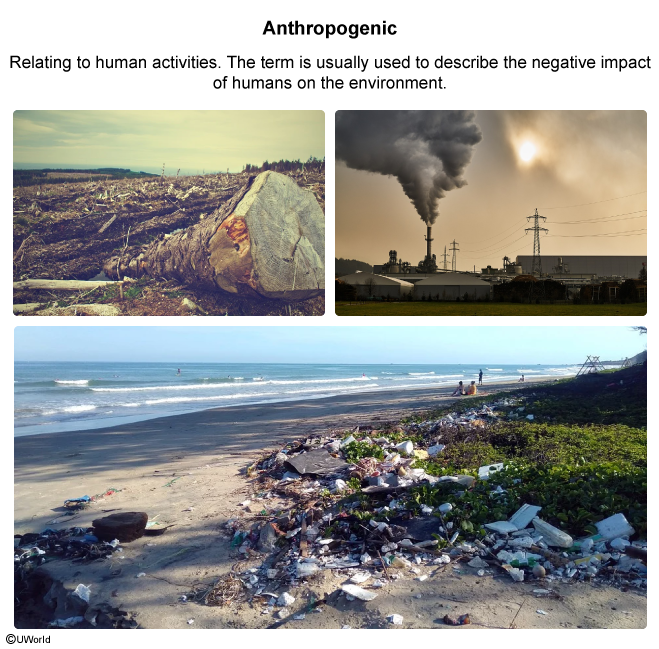
(Choice A) Habitat fragmentation is an effect of anthropogenic activities, not ecological succession.
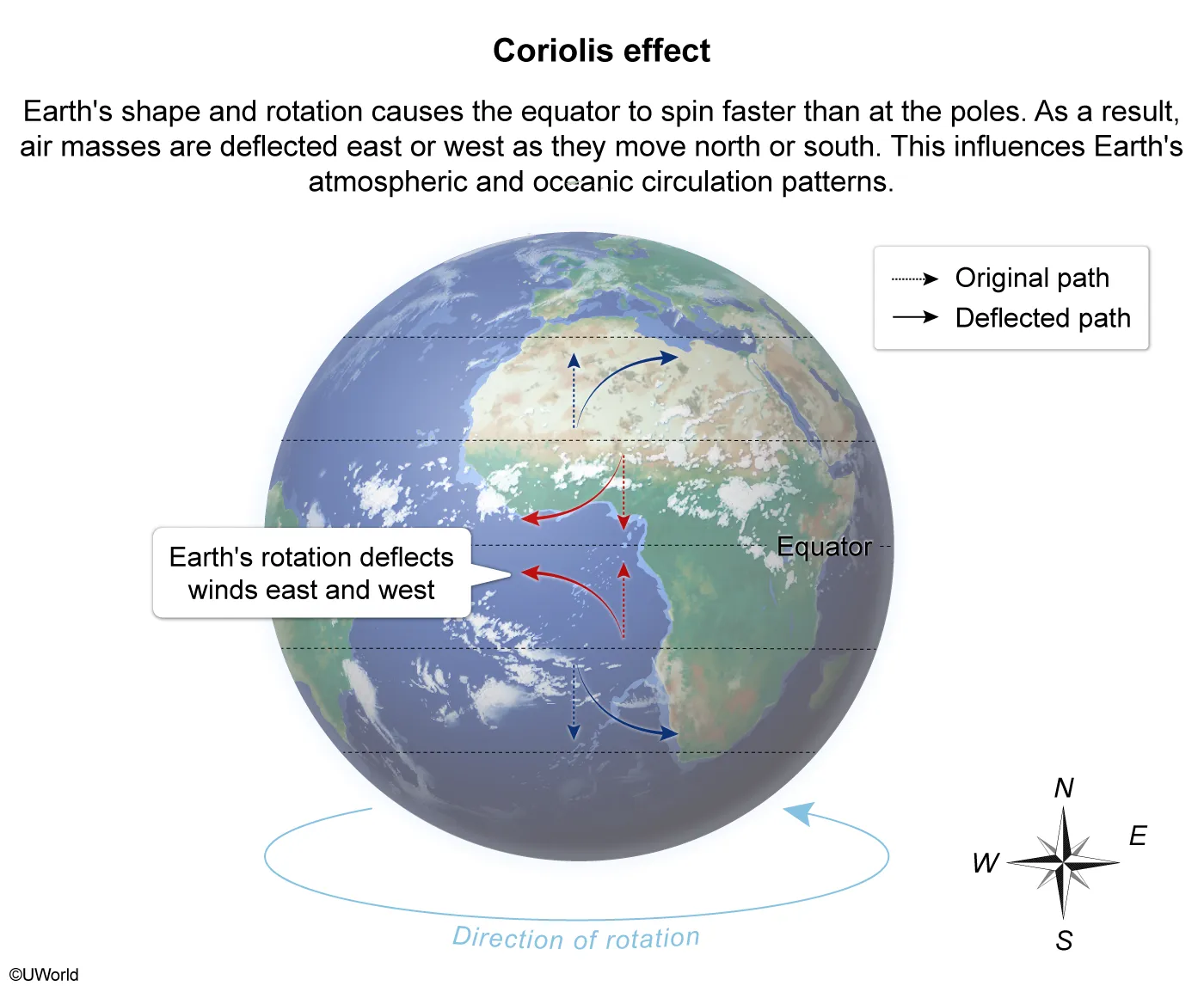
(Choice C) The Coriolis effect is not affected by ecological succession.
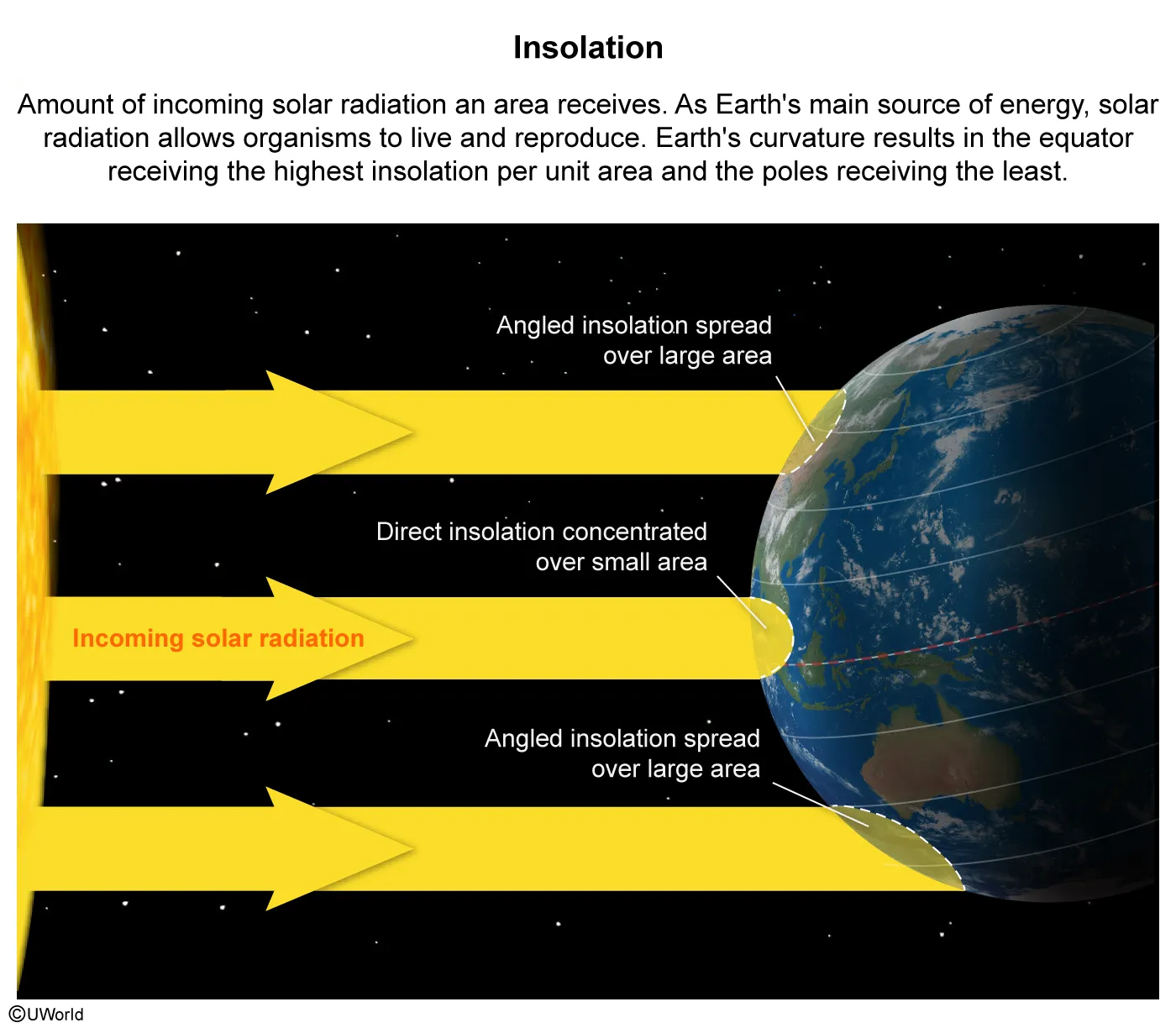
(Choice D) Incoming solar radiation is dependent on an ecosystem's geographic location, not on ecological succession.
Things to remember:
In disturbed ecosystems, succession will affect species richness, the total biomass, and net primary productivity.
Question
The graph below shows the estimated number of aquatic species and major disruption events in present-day China between 540 and 240 million years ago (mya).
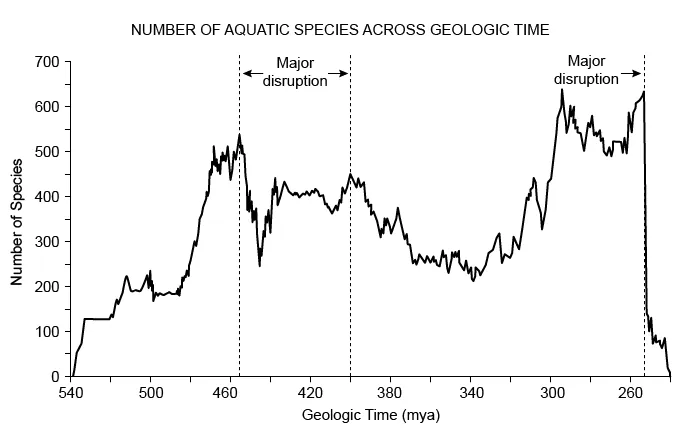
Based on the data in the graph, which of the following methods could be used to calculate the percent change in the number of species from 400 mya to 360 mya?
| A. | |
| B. | |
| C. | |
| D. |
Explanation
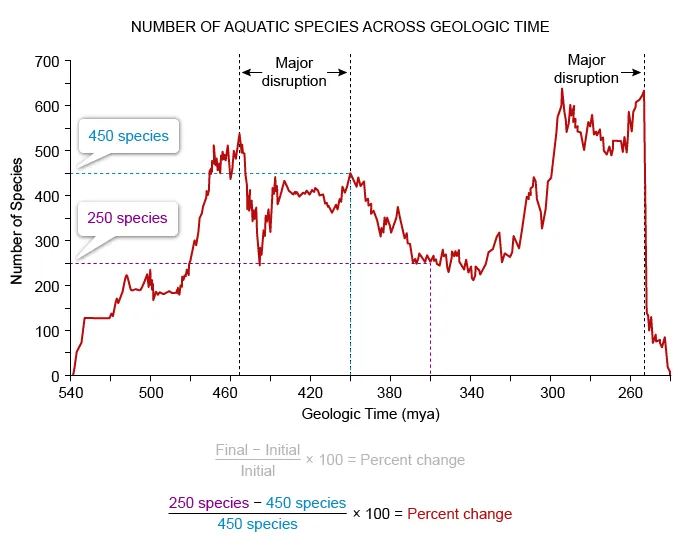
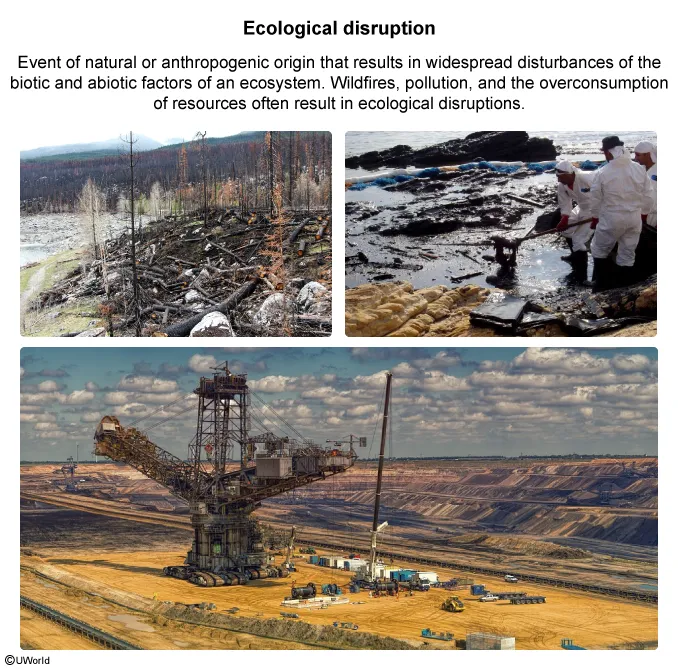
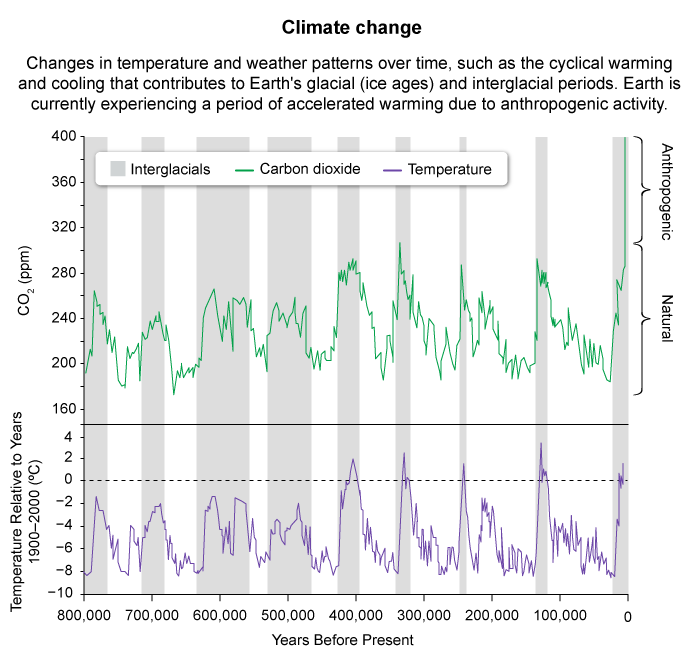
Throughout geologic time, natural disruptions, such as volcanic eruptions, asteroid impacts, and glaciations, have led to drastic environmental changes, including climate change, sea-level fluctuations, and the rearrangement of continents.
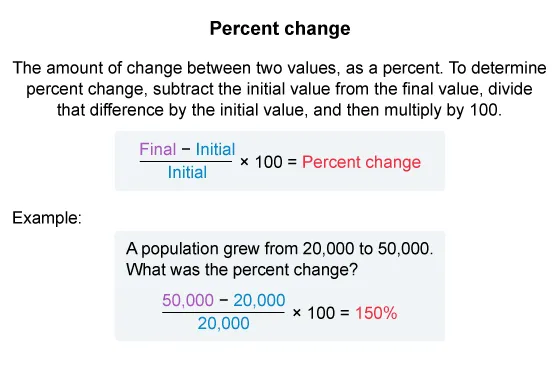
When these environmental changes alter large areas of habitat, mass extinction events may result, significantly decreasing the number of species in the affected region. For example, between 400 mya and 360 mya, a major environmental disruption in present-day China caused an extinction event that reduced the number of aquatic species from 450 species to 250 species. This resulted in an approximately 45% reduction in the number of species there, as determined by the percent change formula:
(Choices A and C) Because the question asks for the percent change in the number of species, the time span should not be included in the calculation.
(Choice D) This equation mistakenly swaps the placement of the values for the initial and final number of species in the percent change equation.
Things to remember:
Major changes in the environment, such as volcanic eruptions and asteroid impacts, can result in significantly altered habitats, which can cause extinction events.
Question
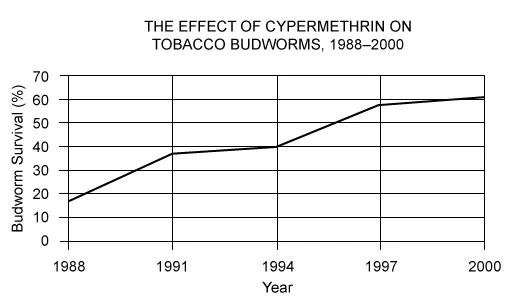
The graph above shows the percent survival of tobacco budworms after an annual application of a pesticide called cypermethrin over twelve years. Cypermethrin was sprayed one time each year, and a single concentration of the chemical was used during the twelve years.
Which of the following conclusions can be drawn from the data in the graph?
| A. The budworm is a K-selected species | |
| B. The cypermethrin concentration was too high | |
| C. The cypermethrin increased in effectiveness each year | |
| D. The budworm adapted to its environment |
Explanation
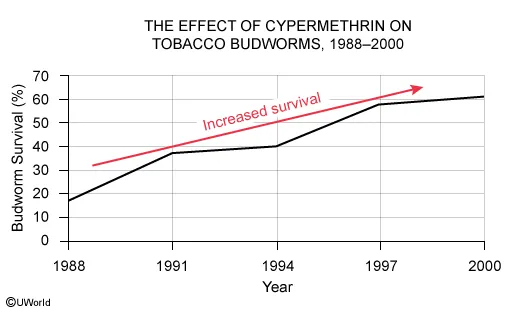
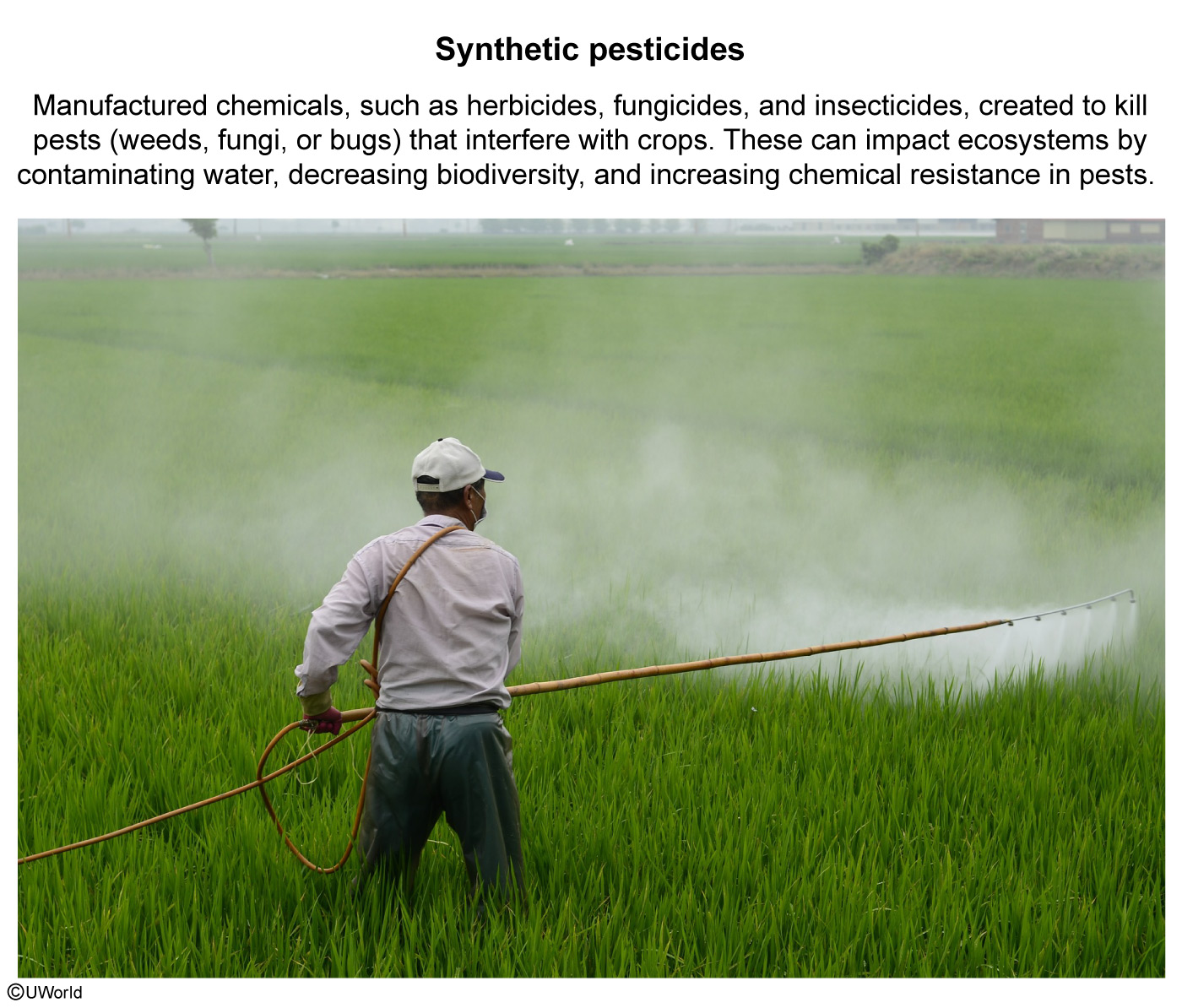
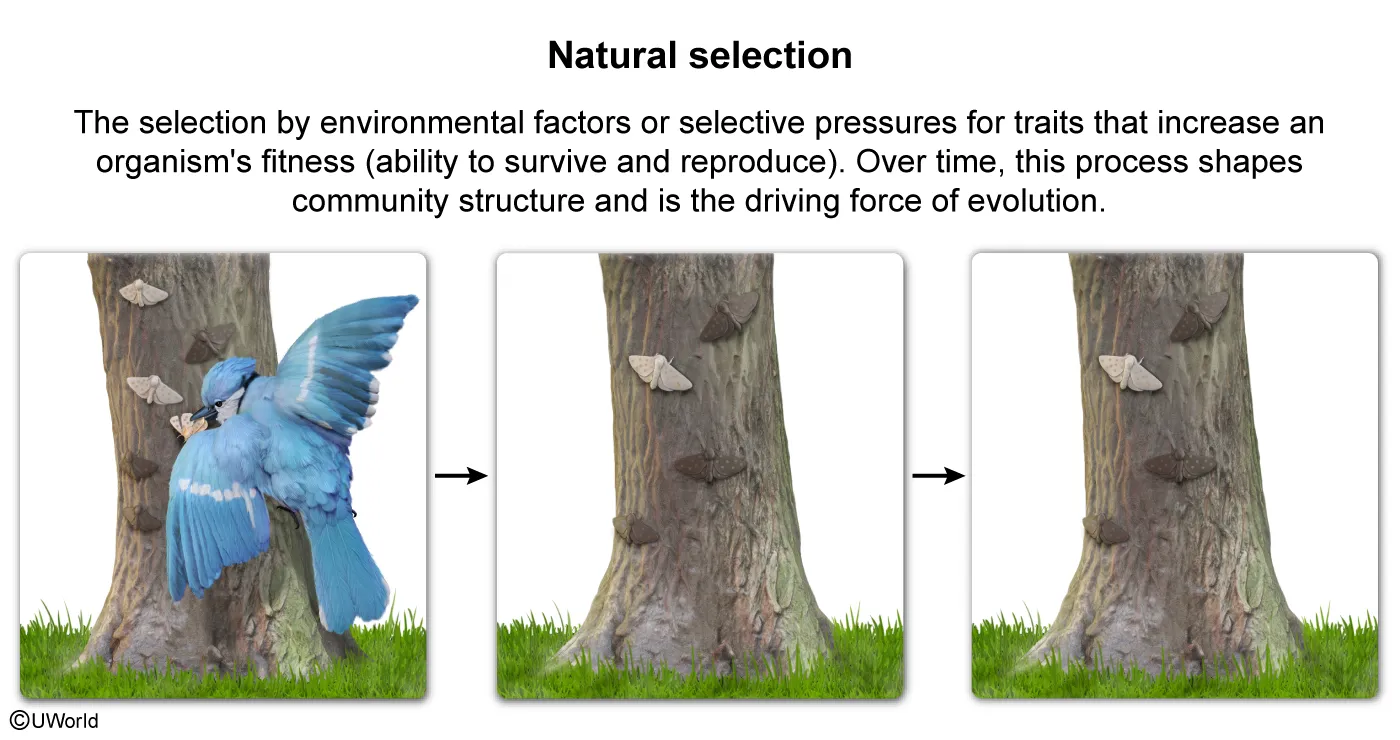
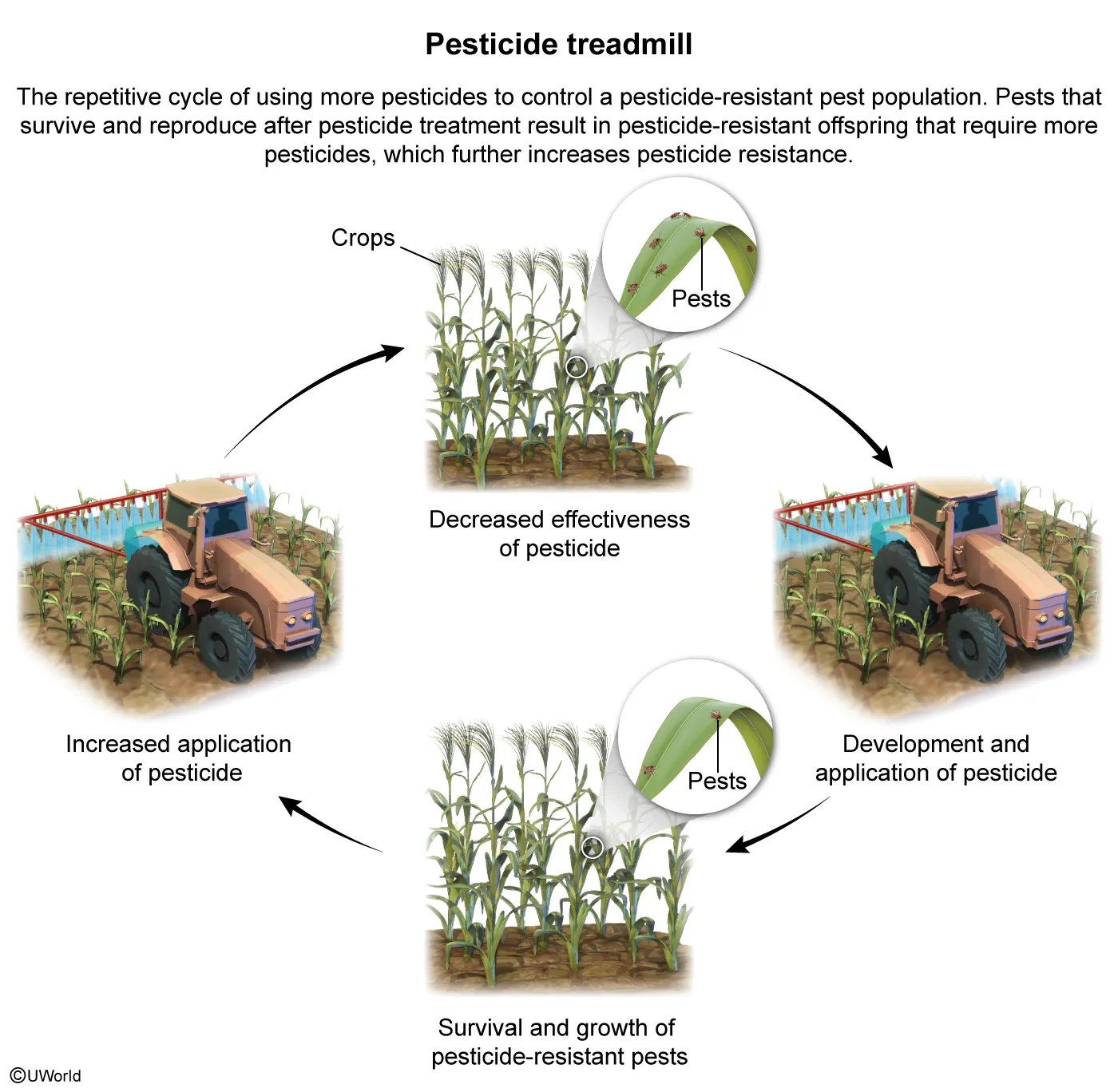
Changes to the environment, such as those caused by climate change or the spraying of pesticides, can impact the survival of individuals within a population. Because members of a population vary naturally, some individuals within a population can survive changes and pass on their traits to the next generation. Over time, these traits become more common within the population.
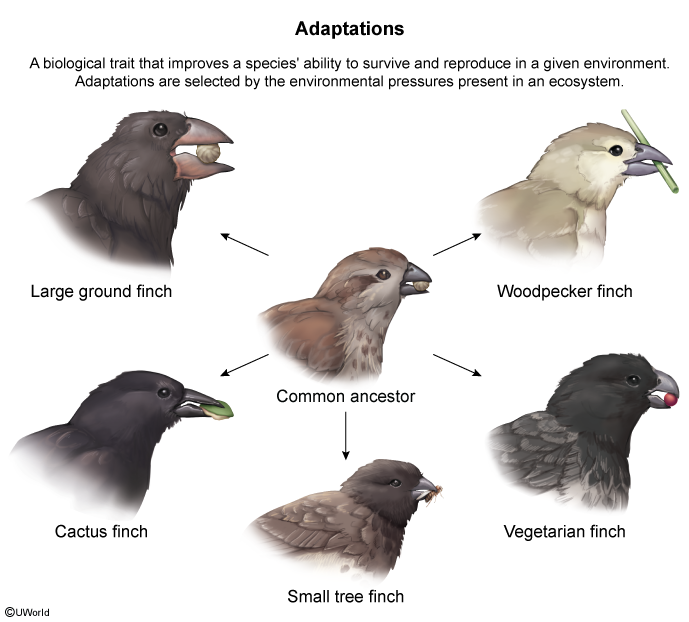
This phenomenon is the mechanism of natural selection by which species adapt to their environment through incremental changes at the genetic level. Although some genetic changes occur over long periods of time, such as speciation, other changes, such as pesticide resistance, can occur over a relatively short period of time.
According to the graph, cypermethrin had some initial effectiveness with killing the budworm. However, the percent of surviving budworms continually increased over time despite repeated pesticide application, which indicates that the budworm adapted to the cypermethrin in its environment.
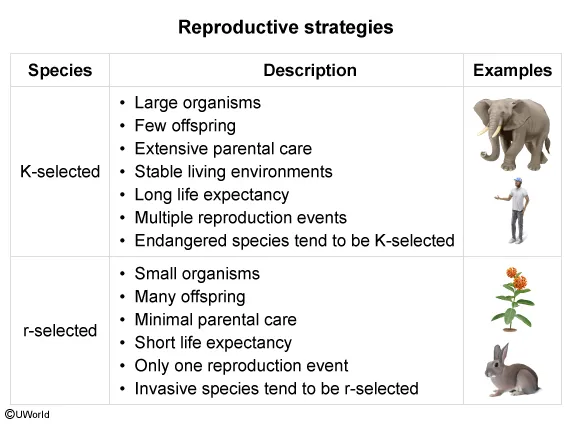
(Choice A) An increase in survival despite the pesticide shows that the budworms have adapted over time, which is indicative of an r-selected, not a K-selected, species.
(Choice B) Because the survival of budworms never reached 0%, the cypermethrin concentration was most likely too low, not too high.
(Choice C) Because the budworm survival increased over the 12 years, the effectiveness of cypermethrin decreased, not increased.
Things to remember:
Over time, incremental changes at the genetic level enable organisms to adapt to their environment.

Study On the Go
Review the APES Unit 2 test topics at your convenience. Practice biodiversity MCQs while commuting, watch quick Unit 2 videos before class, or revisit a study guide during downtime. With synced progress and mobile-friendly tools, the UWorld app helps you stay consistent and confident throughout your Unit 2 APES review.
Stand Out
with a Top Score in AP Environmental Science
Finish your APES Unit 2 review and continue mastering all units with UWorld. Boost your performance to make yourself a standout candidate for competitive colleges, majors, and scholarships by earning a top score.
Get our all-in-one course today!
- Focused APES Videos
- Print & Digital Study Guide
- 550+ Exam-style Practice Questions
- Customizable Quiz Generator
- Adjustable Study Planner
- Realistic Timed Test Simulation
- Colorful Visual Explanations
- Progress Dashboard
- Smart Flashcards
- Digital Notebook
Hear From Our AP Students
UWorld’s service is pretty good and helps provide a lot of explanations on subjects I haven’t been confident on before.
The questions here are the most realistic to the AP tests I've seen so far! I appreciate the ability to customize tests as well.
The best part is that all options are well-explained, telling clearly why they are not the right option.

Frequently Asked Questions (FAQs)
What are the main topics covered in AP Environmental Science Unit 2: The Living World: Biodiversity?
AP Environmental Science Unit 2 centers on biodiversity and the ecological patterns that sustain life across the planet. Students explore the mechanisms that create diversity, the interactions that shape ecosystem structure, and the factors that determine long-term species survival and persistence. Rather than memorizing terms, you study how ecological systems function as interconnected networks, where every species, niche, and environmental variable contributes to resilience. Understanding these connections helps you interpret the types of reasoning commonly seen on the AP Environmental Science Unit 2 test.
Key themes include:
- Introduction to biodiversity
- Ecosystem services
- Island biogeography
- Ecological tolerance
- Natural disruptions to ecosystems
- Ecological succession
These topics are not isolated concepts but form the foundation of nearly every ecological pattern you’ll analyze throughout the course. When you understand why biodiversity increases or decreases, how species interact within a community, and how disturbances alter ecological stability, you gain the ability to reason through FRQs and MCQs with clarity. A single round of targeted practice through UWorld can reinforce these patterns and strengthen your long-term ecological thinking for future units.
How should I prepare for an AP Environmental Science Unit 2 exam?
Preparing for an AP Environmental Science Unit 2 exam means building a solid understanding of biodiversity principles and practicing how to apply them to real ecological scenarios. Since Unit 2 topics frequently appear in both multiple-choice and FRQ formats, your preparation must emphasize interpretation, analysis, and precise vocabulary use. Focus on connecting concepts such as species richness, ecological tolerance, keystone species, and ecosystem services. These relationships often determine correct answers on the APES Unit 2 MCQ and written responses.
A structured Unit 2 preparation plan should include:
- Concept Foundations: Review core principles like biodiversity levels, ecosystem services, natural disruptions, and island biogeography.
- Visual Interpretation Practice: Work with diagrams of niches, tolerance curves, and species interactions, since APES questions rely heavily on visual logic.
- Application-Based Questioning: Study AP-style scenarios that require interpreting species data, evaluating community interactions, or identifying ecological outcomes.
- Vocabulary Reinforcement: Review terms like resilience, survivorship, invasive species, and species richness to ensure accurate written explanations.
After reviewing core concepts and visuals, dedicate time to practice questions to evaluate your understanding under test-like conditions. Many Unit 2 FRQs require identifying patterns in ecological data or describing cause-and-effect relationships. Practicing with a high-quality practice set, such as UWorld, enables you to strengthen your reasoning and identify areas that require review. Once your conceptual understanding and application skills are aligned, you’ll approach the Unit 2 exam with clarity, confidence, and strong ecological logic.
Are any free resources available for AP Environmental Science Unit 2?
Yes. UWorld provides the most comprehensive free resource available through its 7-day free trial, giving you access to the full AP Environmental Science Unit 2 review course with detailed explanations, study guides, flashcards, and exam-style practice items. This trial lets you work through high-quality Unit 2 questions that mirror the analytical thinking required on the AP Exam, while also helping you identify gaps in understanding early.
The explanations guide you through biodiversity patterns, ecological tolerance, species interactions, and ecosystem services in a step-by-step manner. The trial functions as a comprehensive short-term study package, even before considering a subscription.
Beyond UWorld, students can use teacher-provided notes, review packets, and slides that align with the AP Environmental Science Unit 2 review structure. These often summarize ecological concepts clearly and provide foundational clarity on natural disruptions, habitat fragmentation, and island biogeography. The College Board’s AP Daily videos (if enabled through AP Classroom) also offer reliable, concise reinforcement of Unit 2 content, but fall short when it comes to visualizing concepts and making them stick.
The most effective no-cost strategy is combining the UWorld 7-day trial with the College Board’s official materials. Together, they offer both high-quality practice and authoritative content alignment, which is an ideal approach for mastering Unit 2 without upfront expense.
What types of questions are on the AP Environmental Science Unit 2 test?
The AP Environmental Science Unit 2 test includes a blend of multiple-choice and free-response questions designed to evaluate how well you understand biodiversity, species interactions, ecological tolerance, and ecosystem services. Rather than recalling isolated facts, Unit 2 questions ask you to interpret ecological patterns, analyze data, and apply principles to real-world scenarios. Many of the questions reflect the cause-and-effect reasoning that students encounter in APES Unit 2 review materials and classroom activities.
Typical Unit 2 questions assess your ability to:
- Interpret Ecological Data: Read graphs, species richness tables, tolerance curves, and biodiversity models to determine trends or predict outcomes.
- Explain Ecological Relationships: Describe interactions such as predation, competition, parasitism, mutualism, and the role of keystone species.
- Analyze Disturbances: Assess the impact of natural disruptions, habitat loss, and fragmentation on biodiversity and ecosystem stability.
- Apply Island Biogeography: Use area, distance, and habitat variables to predict species richness.
- Connect Concepts: Relate ecological tolerance to species distribution or link ecosystem services to human benefits.
In the FRQ section, you may be asked to justify claims using ecological evidence, explain impacts of environmental change, or connect multiple concepts in a structured argument. These questions reward clarity, logic, and the ability to explain ecological mechanisms, not memorized details. Completing AP-style practice sets through a resource like UWorld helps students learn how to interpret visuals, organize responses, and apply Unit 2 principles in a precise and exam-aligned way.
How can I improve my score on the FRQs and MCQs for Unit 2?
Improving your performance on AP Environmental Science Unit 2 MCQs and FRQs requires strengthening both conceptual understanding and ecological reasoning. Unit 2 questions focus heavily on interpreting patterns, as why biodiversity changes, how species interact, and how environmental disturbances influence ecosystem structure. To earn higher scores, you need to explain ecological processes clearly and support your conclusions with accurate terminology, which is essential for APES Unit 2 FRQ items.
Two core strategies help most:
- For MCQs: Practice interpreting visuals such as species richness graphs, tolerance curves, and biogeography diagrams. MCQs often test your ability to connect variables, identify trends, or predict outcomes from ecological data.
- For FRQs: Focus on writing short, structured explanations. Each point should connect a concept to a mechanism, such as “increased species richness improves ecosystem resilience because…” These logical connections earn the majority of FRQ points.
After building conceptual clarity, transition into consistent practice. Reviewing AP-style questions through UWorld can help you identify where your reasoning falters and how to refine explanations. As you practice, focus on commonly tested relationships, such as keystone species and stability, habitat fragmentation and biodiversity reduction, or tolerance ranges and species survival. Strength comes from repeatedly applying ideas rather than memorizing definitions.
The final step is vocabulary precision. Words like niche, resilience, provisioning services, competitive exclusion, and indicator species often determine whether your FRQ explanation earns credit. Improving both language accuracy and conceptual logic leads to significant score gains, especially when paired with UWorld’s timed practice that mirrors the expectations of the AP Exam.
What is the "The Living World: Biodiversity" unit's weight on the AP Environmental Science exam?
APES Unit 2 accounts for approximately 6-8% of the total AP Environmental Science Exam. This weight makes it one of the foundational units in the course, shaping not only early content but also how students interpret ecological scenarios throughout later units. Students who develop strong ecological logic early often perform better across multiple-choice and FRQ sections.
The AP Exam uses Unit 2 content to assess whether you can interpret relationships among species, identify ecological patterns, and explain how environmental changes affect stability. This is why APES Unit 2 review materials frequently emphasize patterns such as habitat fragmentation, species richness, island biogeography, and the impacts of disturbance. You may also see Unit 2 concepts appearing indirectly in questions about succession, climate impacts, or conservation strategies.
Another reason Unit 2 carries significant weight is its role in introducing ecosystem services, a recurring theme throughout the exam. Understanding provisioning, regulating, cultural, and supporting services helps you evaluate environmental policies, resource management decisions, and human impacts in later units.
Given its influence across the exam, students benefit from allocating focused study time to biodiversity concepts and practicing their application in data-driven scenarios. A structured resource such as UWorld can help reinforce these connections and improve performance on the AP Exam.
Where can I find a good study guide for AP Environmental Science Unit 2?
A strong study guide for AP Environmental Science Unit 2 should simplify complex ecological principles while preparing you to apply them in AP-style scenarios. UWorld’s Unit 2 study guide isn’t just about learning what biodiversity is but about understanding how species interactions, tolerance ranges, and ecosystem services shape ecological stability. The best guides help you visualize relationships, compare ecological patterns, and interpret data the same way you’ll be expected to on the exam. When choosing a Unit 2 resource, look for materials that organize content logically and show how concepts connect to both MCQs and FRQs.
A high-quality AP Environmental Science Unit 2 study guide typically includes:
- Clear Concept Summaries: Biodiversity levels, keystone species, island biogeography, and ecological tolerance.
- Visual Models: Diagrams, charts, and maps to reinforce patterns such as habitat fragmentation and species distribution.
- Ecological Examples: Real-world case studies that deepen understanding of species richness and environmental resilience.
- Exam-Oriented Structure: Definitions, cause-and-effect relationships, and sample explanations that mirror FRQ expectations.
Study guides that combine visuals with reasoning practice are the most effective, because they help you interpret ecological patterns rather than memorize definitions. Using UWorld’s interactive study guides ensures you’re not just reading content but applying it to exam-level questions that strengthen logical thinking. Pairing a reliable study guide with regular practice builds a solid foundation for both multiple-choice and written responses, helping you approach Unit 2 with clarity and confidence.
Can I find practice tests specifically for APES Unit 2?
Yes. The strongest and most effective practice tests for APES Unit 2 are provided by UWorld, which offers exam-level questions that closely mirror the structure, difficulty, and analytical style of AP Environmental Science assessments. Unit 2 requires you to interpret ecological data, compare biodiversity patterns, evaluate environmental changes, and explain cause-and-effect relationships. UWorld’s practice tests are built around these exact skills, making them the most precise tool for preparing for the biodiversity-focused portion of the exam. Instead of simple recall questions, you get scenarios that force you to think like the AP Exam expects by linking concepts, interpreting visuals, and reasoning through environmental mechanisms.
UWorld’s AP Environmental Science Unit 2 Practice Test features include:
- Realistic AP-Level Question Design
- Data-Driven Scenarios
- Complete Answer Explanations
- Visual Learning Aids
- Smart Practice Tools
- FRQ-Focused Skill Building
Success on Unit 2 depends on your ability to connect multiple ecological concepts, rather than memorizing isolated facts. UWorld’s exam-style structure makes a direct impact on performance. Its explanations help you understand not just what the correct answer is, but why, giving you the reasoning skills needed to handle both multiple-choice and written responses with confidence.
What are the most common mistakes students make on Unit 2 questions?
Many students struggle with Unit 2 APES review because they memorize ecology terms without understanding the underlying mechanisms that determine biodiversity and ecosystem stability. One of the most common mistakes is failing to connect species richness with resilience. Students may know the definition of biodiversity, but cannot explain how a greater variety of species helps communities recover from disturbances. When questions ask for explanations, responses often lack cause-and-effect reasoning.
Students also regularly confuse species interactions. For example, some mix up keystone species with foundation species, or they incorrectly describe competitive relationships. Many also overlook the significance of habitat size and fragmentation, which frequently appear in AP-style MCQs and FRQs through island biogeography concepts. Misinterpreting diagrams, such as tolerance curves, richness graphs, or biogeography maps, further contributes to lost points, especially when questions require identifying trends or predicting outcomes.
Vocabulary misuse is another issue. Using terms like ‘niche,’ ‘resilience,’ ‘succession,’ or ‘provisioning services’ incorrectly can lower FRQ clarity and accuracy. Students may also write vague explanations that describe what happens without explaining why it happens. Practicing with detailed descriptions, such as those found in UWorld, helps address these issues by reinforcing ecological logic and showing how to frame conclusions clearly.
How much time should I spend reviewing Unit 2 before the exam?
Preparing for AP Environmental Science Unit 2 requires a balance between concept review, visual interpretation, and application practice. Unit 2 is foundational and influences later units; you should allocate sufficient time to understand not only the definitions but also the ecological relationships behind them. Most students benefit from dividing their review across multiple sessions, allowing time for reflection and reinforcement. This prevents cramming and strengthens the long-term retention needed for both MCQs and FRQs on the AP Exam.
A strong Unit 2 review plan could look like this:
- 6–7 Hours on Concept Review: Biodiversity levels, ecological tolerance, ecosystem services, keystone species, island biogeography, and species interactions.
- 3–4 Hours on Visual Interpretation: Practice reading graphs, tolerance curves, population tables, and biogeography diagrams.
- 4–5 Hours on Practice Questions: Use AP-style scenarios and data-driven questions to apply ecological reasoning.
- 1–2 Hours on Vocabulary: Reinforce precise terms that repeatedly appear in FRQs and MCQs.
- Short Daily Refreshers: Quick review of diagrams or examples to reinforce retention.
This schedule ensures that you develop strong ecological reasoning rather than relying on memorization. Students often underestimate the frequency with which Unit 2 concepts appear indirectly in later units, making early mastery essential. Utilizing a resource like UWorld towards the end of your review helps you identify misunderstandings and refine your ability to analyze biodiversity patterns and clearly justify ecological claims. With consistent practice and distributed study sessions, your Unit 2 performance becomes much more reliable and confident.
What’s the best way to organize my Unit 2 notes and study materials?
Organizing your APES Unit 2 notes effectively can make a significant difference in how well you understand biodiversity and the ecological mechanisms behind it. Unit 2 covers many interrelated ideas, and grouping them visually helps you recognize patterns more easily. A clear, structured note system also reduces stress when reviewing before the AP Environmental Science Unit 2 test, since you can quickly locate definitions, diagrams, and examples that support your understanding.
A useful organization method includes:
- Core Concepts Section: One page each for biodiversity levels, species interactions, and ecosystem services.
- Model Diagrams: Include tolerance curves, species-area relationships, and illustrations of island biogeography.
- Case Examples: Real-world scenarios demonstrating disturbances, resilience, or habitat fragmentation.
- Vocabulary List: Terms with short, applied definitions instead of long memorized descriptions.
- Cause-and-Effect Charts: Quick visuals showing how a disturbance influences biodiversity or how habitat loss affects species survival.
- Mini FRQ Practice: Short explanations demonstrating ecological reasoning.
This structure helps you form connections between ideas rather than learning content in isolation. When you later use a tool like UWorld, organized notes make it easier to compare your reasoning with expert explanations and quickly adjust to any misunderstandings. A well-built note system supports both MCQ and FRQ success by grounding memorized content in clear patterns and ecological logic. Over time, organized notes become a study map that strengthens confidence leading into the exam.
How can UWorld help me prepare for AP Classroom’s progress checks for Unit 2?
UWorld is one of the most effective tools for preparing for AP Environmental Science Unit 2 progress check MCQs and FRQs. The progress checks are designed to test early understanding of biodiversity, species interactions, ecological tolerance, and ecosystem services. They assess your ability to interpret environmental data and apply foundational concepts to brief scenarios. UWorld strengthens the exact skills the progress checks measure by giving you AP-level Unit 2 questions with detailed explanations that clarify both correct and incorrect reasoning.
Progress checks often involve interpreting graphs, providing cause-and-effect explanations, and using precise vocabulary. Practicing through UWorld builds confidence before you take your in-class assessments. The platform’s questions closely resemble the logic, style, and complexity that the AP Classroom system expects students to understand at this point in the course. You can use UWorld’s explanations to identify where your thinking breaks down, whether in interpreting a tolerance curve, analyzing biodiversity patterns, or applying island biogeography to predict species richness.
Additionally, progress checks are often timed or graded in classrooms, so using UWorld beforehand gives you the chance to refine accuracy without pressure. The insights you gain from practice directly translate to higher progress check performance and, more importantly, stronger preparedness for the actual AP Exam. Instead of memorizing terms, you develop the reasoning skills needed for long-term success.