This guide explains how to study for the AP Chemistry exam using a structured AP Chemistry study plan built around exam-level practice and proven study methods. Whether you are learning how to prepare for AP Chemistry early or refining your approach closer to test day, you will find practical strategies to help you get a 5 on AP Chemistry with confidence.
Why You Need a Study Plan for AP Chemistry
The AP Chemistry exam requires more than classroom learning. It tests your ability to apply concepts across units, analyze data, and solve complex problems under strict time limits. Without a structured AP Chemistry study plan, students often review material randomly, which leads to gaps in understanding and inconsistent scores.
A well-designed study plan helps you stay engaged before and during class while reinforcing key concepts outside the classroom. Reviewing lessons in advance, asking targeted questions in class, and practicing consistently allows you to build a strong foundation instead of rushing through topics later. Since AP Chemistry concepts build on one another, skipping or rushing early units can make later topics much harder to master.
A study plan also ensures balanced preparation for both multiple-choice and free-response questions on the AP Chemistry exam. Regular practice helps you recognize common question patterns, improve accuracy, and manage time effectively. Instead of spending hours rereading notes, you focus on solving exam-level problems and learning from mistakes.
Starting with an initial diagnostic test makes your study plan more effective by identifying which AP Chemistry topics need the most attention, allowing you to focus on gaps and track progress as test day approaches.
With a clear plan, every study session has a purpose. You know what to review, how to practice, and when to adjust, making it easier to stay consistent and confident throughout your AP Chemistry preparation.
Take an Initial Diagnostic Test
Before building your AP Chemistry study schedule, it is important to understand where you currently stand. An initial diagnostic test helps you identify strengths, uncover gaps in understanding, and avoid spending time on topics you already know well.
A diagnostic should include exam-style multiple-choice and free-response questions that reflect the format and difficulty of the AP Chemistry exam. Working through a full-length or targeted AP Chemistry practice test early shows how well you apply concepts under timed conditions, not just how familiar the material feels. This distinction matters because many students overestimate their readiness based on passive review alone.
After completing the diagnostic, review every missed question carefully. Look for patterns, such as difficulty with stoichiometry calculations, equilibrium reasoning, or data analysis in lab-based questions. These insights help you prioritize high-impact AP Chemistry topics and shape a study plan that focuses on improvement rather than repetition.
Using a diagnostic as your starting point turns preparation into a targeted process. Instead of guessing how to study for AP Chemistry, you can align your practice with what the exam actually tests and track progress as your accuracy improves over time.
When to Start Preparing for AP Chemistry
There is no single “right” time to start preparing for AP Chemistry, because every student begins with a different background, schedule, and level of confidence. The key is starting early enough to build understanding gradually instead of rushing through concepts weeks before the exam.
Students who want to know how to prepare for AP Chemistry effectively should think in terms of foundation, reinforcement, and practice. AP Chemistry concepts build on each other, so starting preparation early allows you to review prerequisite ideas, stay engaged during class, and avoid falling behind when topics become more complex.
If you begin preparing before the school year starts, you can familiarize yourself with core AP Chemistry topics and terminology, which makes in-class lessons easier to follow. Starting during the school year helps reinforce what you are learning in real time, while starting closer to the exam requires a more focused and intensive AP Chemistry study plan built around practice and review.
No matter when you start, preparation works best when it is consistent and intentional. Understanding the structure and timing of the AP Chemistry exam early helps you plan realistic study sessions, manage stress, and make steady progress toward your target score.
How to Prepare for AP Chemistry Class (Before School Starts)
Preparing before AP Chemistry begins helps you ease into the course without falling behind in the first few weeks. Instead of trying to master full units, focus on understanding key terms, formulas, and problem types that appear early in the curriculum.
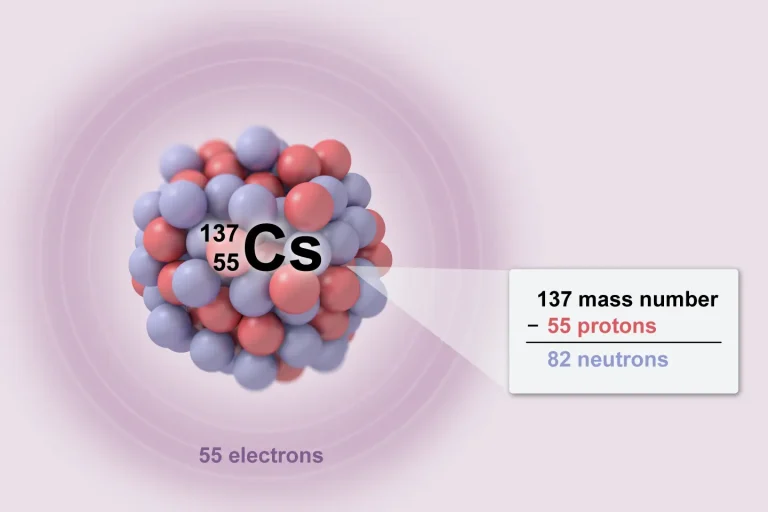
Reviewing foundational topics like atomic structure and chemical bonding gives you context for upcoming lessons and reduces confusion when new material is introduced. Skimming the course outline also helps you see how major AP Chemistry topics connect across units.
A small amount of targeted practice can be useful at this stage. Working through a few exam-style questions shows how concepts are applied on the AP Chemistry exam and helps you adjust to the level of reasoning required. This early exposure supports a smoother transition into a consistent AP Chemistry study plan once classes begin.
What to Do in the First Month of AP Chemistry
The first month of AP Chemistry sets the tone for the rest of the course. This is the time to establish strong study habits and stay ahead of concepts that build quickly from one unit to the next. Students who do well focus on understanding material as it is taught rather than saving review for later.
After each class, review your notes the same day and clarify anything that feels unclear. Short, consistent review sessions are more effective than long study blocks and help reinforce how to study for AP Chemistry at a sustainable pace. Practicing a small number of exam-style questions each week also helps you apply new concepts instead of just memorizing formulas.
This is also the right time to begin shaping your AP Chemistry study plan. Track which topics feel challenging and adjust your weekly study time accordingly. Paying attention to how questions are structured early on prepares you for the reasoning and time management required on the AP Chemistry exam.
By staying organized and consistent during the first month, you reduce the risk of falling behind and make later review more efficient, especially as topics become more complex.
How to Catch Up If You're Behind
Falling behind in AP Chemistry can happen quickly, especially when newer topics depend on earlier concepts. Catching up is less about starting over and more about focusing on what is actually causing difficulty.
Begin by pinpointing the specific topics or question types you are struggling with. Some students fall behind because of weak conceptual understanding, while others struggle with calculations or interpreting data. Identifying the root issue helps you choose the most effective way to review instead of spending time on topics you already understand.
Once gaps are clear, revisit those topics briefly and apply what you review through targeted practice. Working through exam-style questions helps reinforce how concepts are tested on the AP Chemistry exam and builds confidence more efficiently than passive review. Carefully reviewing mistakes prevents repeated errors and accelerates improvement.
To stay on track, balance catching up with keeping pace in class. Small, focused review sessions are more effective than long cram sessions and make it easier to regain momentum without feeling overwhelmed.
| Type of Test-taker | Description | Recommended Timeframe |
|---|---|---|
| Busy | Students who have very tight schedules and need longer periods of time to prepare but shorter sessions that fit seamlessly into their hectic lives. | 180 to 360 days (For those juggling between multiple subjects) |
| At a Plateau | Students who are stuck at specific scores and are looking for targeted practice to work on their areas of improvement and achieve their dream score. | 30 to 90 days (For improving scores by drilling hard questions and fine-tuning) |
| Just Getting Started | Students who want to get a feel of the exam by laying the foundation and building their knowledge. | 30 to 90 days (For feeling confident about taking the exam from Day 1) |
| Not a “Good Test Taker” | Students who want to get comfortable with the course content and overcome the pitfalls of MCQs and FRQs with strategic practice. | 180 to 360 days (For navigating trick questions and turning knowledge into high scores) |
| Retaking the Exam | Students who already know their areas of improvement but want to score better than their last attempt with strategic and focused practice. | 30 to 90 days (For turning past mistakes into stepping stones for success) |
| Stressed by the Clock | Students who want to get comfortable with the duration of the exam and avoid common mistakes by developing time management skills. | 90 to 180 days (For managing stress and ensuring peak performance) |
AP Chemistry Study Plans
A clear timeline makes AP Chemistry preparation more manageable, especially when balancing schoolwork, exams, and extracurriculars. Instead of studying randomly, structured study plans help you decide what to review, when to practice, and how to pace your preparation as the exam approaches.
The right plan depends on how much time you have before test day and how comfortable you are with the material. Some students need months to build confidence with core concepts, while others benefit from shorter, more focused review periods. Understanding how to study for the exam within a defined timeframe helps prevent burnout and keeps preparation efficient.
The study plans below are designed to support different prep windows while maintaining consistent exposure to both multiple-choice and free-response questions on the AP Chemistry exam. Each plan emphasizes steady review, targeted practice, and regular reflection on mistakes so you can adjust your approach as needed.
- Begin in February to ensure ample time to cover all units.
- Units 1–2 (Atomic and Molecular Structure): Spend 1 week.
- Unit 3 (Properties of Substances and Mixtures): Spend 2 weeks.
- Units 4–5 (Chemical Reactions & Kinetics): Spend 2 weeks.
- Units 6–7 (Thermochemistry & Equilibrium): Spend 2 weeks.
- Unit 8 (Acids and Bases): Spend 1 week.
- Unit 9 (Thermodynamics and Electrochemistry): Spend 1 week.
- Refresh your understanding using your textbook or UWorld's AP Chemistry Study Guide.
- Set aside two to three short sessions each week to review MCQ-style practice questions.
- Consistently revisit challenging concepts.
- Start timing your MCQs to match exam conditions: Aim for 30-40 seconds per question.
- Review past FRQs from College Board to familiarize yourself with potential essay questions.
- Outline and practice writing responses at least twice a month.
- Time yourself to adapt to the exam pace.
- Create and review flashcards daily for key formulas and rules.
- Regularly schedule breaks to stay refreshed; plan a day off each week or take an afternoon off when necessary.
- Start with a general review of course topics, unit by unit at a quicker pace.
- Utilize resources such as textbooks, class notes, and course materials for concept refreshers.
- Prioritize completing textbook practice problems and using the UWorld's AP Chemistry Practice Test QBank two to three times per week for 20-30 minutes per study session.
- With UWorld: To save time, focus on explanations for missed questions reviewing the concepts that need the most improvement.
- Units 1–3 (Atomic Structure, Molecular Structure, Properties of Substances/Mixtures): Allocate 1 week.
- Units 4–6 (Reactions, Kinetics, Thermochemistry): Allocate 1 week.
- Units 7–9 (Equilibrium, Acids/Bases, Thermodynamics/Electrochemistry): Allocate 1 week.
- Use any remaining time to review concepts from each unit which you missed previously to reinforce learning.
Kick off your study by tackling a few UWorld AP Chemistry MCQs in each topic to spot the ones that are harder to you. Dive into the explanations for any questions you miss. If you're still feeling shaky, watch a video or review your notes on those tough topics. Then, circle back with more UWorld questions to see how much you've improved!
Spend most of your week diving into FRQs; they're a great way to cover lots of topics at once and are really efficient for review. Plus, they make you show your work, which helps you get a solid handle on the whole problem-solving process.
Start with a short mixed set of multiple-choice questions to identify weak areas. Focus on explanations for missed questions, especially those involving calculations, equilibrium reasoning, and unit analysis.
Review key formulas, reaction trends, and commonly tested concepts. Prioritize topics you have already studied instead of trying to learn new material.
Review 1 or 2 free-response questions and outline your responses. Focus on showing work clearly and explaining reasoning to maximize partial credit.
Look for repeated mistakes such as unit conversion errors, misreading data, or skipping steps. Make brief notes on how to avoid these errors during the exam.
Stop studying early enough to rest. A clear mindset and steady pace are more effective than last-minute cramming on the AP Chemistry exam.

AP Chemistry Exam Study Methods
Success on the AP Chem exam depends on how effectively you study, not how long you study. Using methods that require active thinking, repeated application, and reflection helps you retain concepts and apply them under exam conditions. The strategies below focus on building accuracy, speed, and confidence through purposeful practice.
Active Learning Methods for AP Chemistry
Students learn AP Chemistry more effectively when they actively engage with materials instead of passively reading or watching videos. This approach strengthens understanding and supports long-term retention, especially for concept-heavy topics.
Practical active learning techniques include explaining concepts out loud in your own words, reorganizing notes into diagrams or reaction maps, and predicting outcomes before solving problems. Using flashcards for formulas, definitions, and recurring ideas also improves recall when reviewed consistently. Together, these methods reinforce how and why chemical principles work, which is critical when applying them to exam questions.
Problem-Solving Strategies for AP Chemistry
Strong problem-solving skills are essential for success on the AP Chemistry exam, particularly for multi-step calculation and reasoning questions. Taking time to understand what each question is asking before starting calculations helps prevent unnecessary errors.
Dividing problems into smaller steps improves accuracy and organization. Showing units, writing out work clearly, and checking whether answers make sense can reduce common mistakes. For free-response questions, clearly labeling steps and explaining reasoning can earn partial credit even if the final answer is incorrect. Timed practice also helps students adjust to the pace required on exam day.
Review Mistakes and Improve Faster
Improvement happens fastest when students analyze their mistakes instead of moving on too quickly. Reviewing incorrect answers helps identify whether errors come from misunderstood concepts, calculation slips, or misreading the question.
Patterns often emerge after reviewing multiple missed questions. Confusion between similar topics, repeated math errors, or difficulty interpreting data are common issues. Addressing these patterns early prevents them from recurring. Writing brief notes on why an answer was wrong and how to approach similar questions in the future reinforces learning and strengthens overall problem-solving ability.
Daily Practice Routine (MCQ + FRQ)
A consistent daily practice routine helps maintain momentum and improves performance across both sections of the exam. Short, focused sessions are more effective than infrequent long study blocks.
Aim to practice multiple-choice questions regularly to build speed and accuracy. Pair this with periodic free-response practice to strengthen reasoning and written explanations. Rotating topics throughout the week keeps material fresh and reinforces connections across units. Ending each session with a brief review of mistakes ensures that practice leads to measurable improvement.
How to Get a 3, 4, or 5 on the AP Chemistry Exam
Preparing for the AP Chemistry exam requires more than classroom learning. You need effective independent study. Here's how to study for AP Chemistry:
- Staying engaged before and during classroom learning: Before your AP Chemistry class, quickly skim through your reading assignment and then watch related video lessons. Focus on anything unclear, and jot down questions to ask your teacher in class. During your class, pay attention to your teacher's explanations, ask questions when you're confused, and take clear notes.
- Building a Strong Foundation: AP Chemistry builds on previous concepts, so don't skip any topic. For example, you won't be able to tackle stoichiometry (covered in Unit 4) if you don't fully grasp moles and molar mass (taught in Unit 1). Also, remember that AP Chemistry labs are important for building scientific reasoning and data analysis skills, so give them extra attention. Use resources like the College Board® lab manual for more practice.
- Using Study Resources Effectively: Complete practice questions from a quality AP Chemistry resource such as UWorld that mirror the format and difficulty of the real AP exam and also include detailed explanations for right and wrong answers, helping you spot trick answers and build critical thinking skills.
- Enhancing Concept Retention: If you're struggling with certain AP Chemistry concepts, creating UWorld flashcards on challenging topics can help. An evidence-based strategy, spaced repetition, shows you tough topics more frequently until you master them. This method helps you learn faster and remember longer by focusing on the areas where you need the most practice. In addition, use a UWorld virtual notebook to rewrite and organize your notes daily. Add diagrams, visuals, and mnemonics to help with memory.
- Maximizing Practice Sessions: Team up with classmates who are just as motivated to ace the AP Chemistry exam. Keep study sessions focused; don't let them turn into hangouts. Quiz each other with AP-level practice questions, share flashcards, and take turns explaining tough topics. You can even grade each other's FRQs and discuss them after. Stay accountable and motivated to reach your goals!
AP Chemistry Quality Study Resources
Since many resources are available in the market, deciding which one to use can be confusing. We have compiled a list of AP Chemistry quality study resources to help you elevate your test prep and scores.
- AP Classroom: An online platform run by the College Board to provide AP Chemistry unit guides, question bank, assignments, and other resources to help students
- AP Daily Videos: Youtube videos by College Board's AP teachers focusing on different AP Chemistry topics, units, and questions.
- Past Exam Questions: AP Chemistry FRQs and scoring criteria from previous exams published by the College Board.
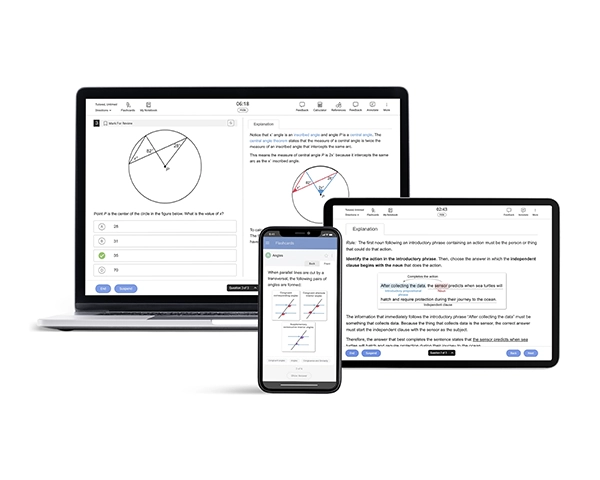
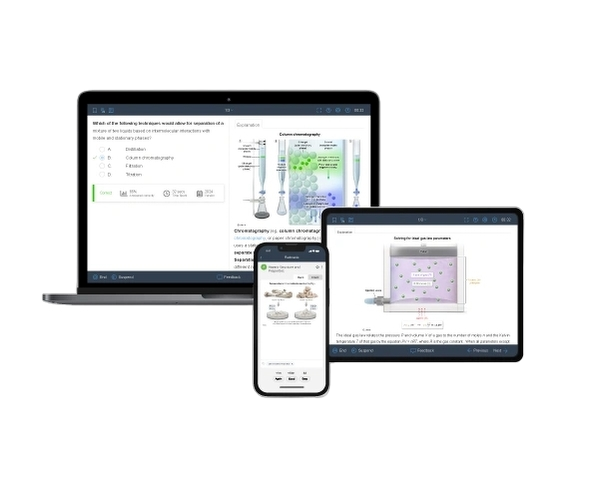
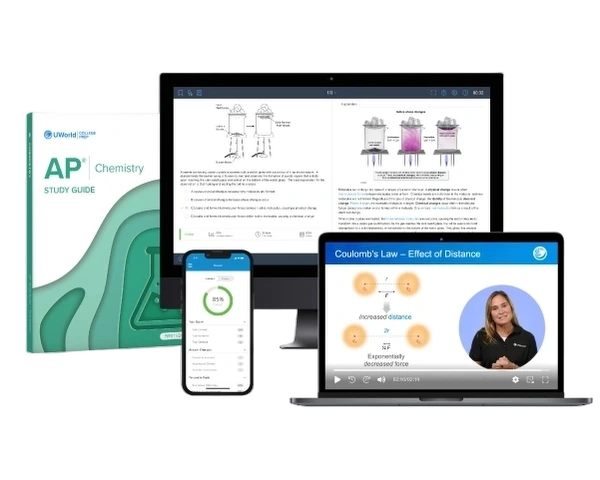
- Quality Prep Courses: Use UWorld's AP Chemistry prep course, which comes with a comprehensive study guide and an extensive question bank to help students achieve their desired scores. UWorld also offers digital study tools such as flashcards, notebooks, a built-in timer, a calculator, and a progress tracker to help students maximize their retention of concepts and keep their performance in check.
Frequently Asked Questions (FAQs): How to Study for AP Chemistry
How many hours should I study to get a 5 on AP Chemistry?
There is no fixed number of hours that guarantees a 5. High scorers focus on consistency and quality rather than total time spent. Regular practice with exam-style questions, timely review of mistakes, and gradual coverage of all units matter more than long, infrequent study sessions.
What should I focus on during the final two weeks before the AP Chemistry exam?
The final weeks should prioritize review and application, not learning new content. Focus on practicing mixed-topic questions, revisiting commonly missed concepts, and strengthening free-response strategies. Reviewing past mistakes and timing your practice helps improve accuracy and pacing under exam conditions.
Is it better to study one AP Chemistry unit at a time or mix topics?
Both approaches matter, but mixing topics is more effective closer to the exam. Studying units individually helps build understanding early, while mixed practice improves recall and prepares you for how questions appear on the actual exam. Alternating between the two helps reinforce connections across topics.
How do top scorers study for AP Chemistry differently?
Top scorers focus on active practice rather than passive review. They spend more time analyzing mistakes, practicing under timed conditions, and explaining their reasoning clearly in free-response questions. Instead of rereading notes, they test their understanding frequently and adjust their approach based on performance.
References
- AP Chemistry: About the Course. (2026). apstudents.collegeboard.org. Retrieved from
https://apstudents.collegeboard.org/courses/ap-chemistry - AP Chemistry: About the Exam. (2026). apstudents.collegeboard.org. Retrieved from
https://apstudents.collegeboard.org/courses/ap-chemistry/assessment - AP Chemistry Course and Exam Description. (Fall 2024). apcentral.collegeboard.org. Retrieved from
https://apcentral.collegeboard.org/media/pdf/ap-chemistry-course-and-exam-description.pdf