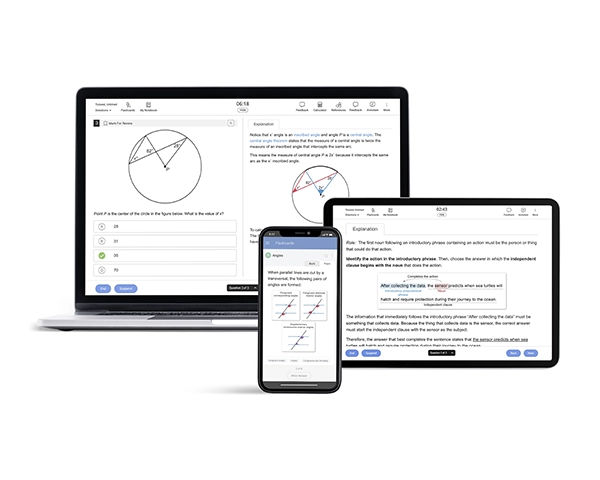
Learn how ESAs work, who qualifies, and how families can use their funds.
How Do Education Savings Accounts Work?
Education Savings Account programs give families greater control over how a portion of their child's education funding is used. Instead of limiting those funds to a traditional public school setting, participating families can direct them toward educational products and services permitted by their state's program.
Although Education Savings Account is one of the most common names, states use different terminology for similar programs. You may encounter Education Freedom Account (EFA), education scholarship account, education scholarship program, or a unique name such as Alabama's CHOOSE Act.
Each state establishes its own program, including how much funding students receive and how that money can be spent. The process generally works like this:
- A family applies to its state's ESA, EFA, or scholarship program.
- The state or program administrator determines whether the student qualifies.
- Education funds are allocated to the eligible student.
- The family accesses the funds, often through a digital education wallet.
- The parent purchases approved educational products or services using the payment methods permitted by the program.
Families don't necessarily receive ESA funds as cash deposited into a personal bank account. Many programs instead use platforms such as ClassWallet or Odyssey to manage student accounts and ensure funds are spent on eligible educational expenses.
Depending on the program, purchasing methods can include Marketplace, Direct Pay, reimbursement, or other restricted digital payment options.
With Marketplace purchasing, parents shop from approved vendors and products within an education marketplace.
With Direct Pay, the education program pays an approved provider using the student's available funds. Some programs require parents to submit a vendor invoice, while newer systems can connect the parent and vendor digitally.
With reimbursement, parents purchase an eligible item or service themselves and submit documentation to be reimbursed from the student's education account.
The options available depend on the individual program. A digital-wallet provider may support several payment methods, but the state determines which methods its families can use.
Who Qualifies for ESA or EFA Funds?
There is no single national eligibility standard for state ESA or EFA programs. Each state determines which students can participate.
Eligibility requirements may consider:
- State residency
- Student age or grade
- Public, private, or homeschool enrollment
- Household income
- Previous public school attendance
- Disability or special education status
- Participation in other education programs
This is particularly important for homeschool families.
Some state programs specifically allow homeschool students to participate. Others require students to enroll in a participating private or nonpublic school or follow another designated educational pathway.
As a result, parents shouldn't assume that an ESA advertised as broadly available to K–12 families automatically applies to their particular homeschool arrangement.
Before enrolling, changing your student's education status, or purchasing products, check your state's current eligibility and participation requirements.
How Homeschool Families Use ESA Funding
For homeschool families, Education Savings Accounts can provide funding for many of the resources used to build and support a student's education at home. Depending on the state program, ESA funds may help pay for homeschool curriculum, online courses, instructional materials, tutoring, educational services, testing, and other approved learning expenses.
The exact process varies by state, but homeschool families generally use ESA funding through these steps:
- Check your eligibility. Every state has its own requirements for who can participate in an ESA program.
- Apply through your state's program. Families submit an application and any required documentation.
- Receive ESA funding. Once approved, education funds are allocated to the student. The award amount and funding schedule vary by state and program.
- Access funds through an education account or digital wallet. Many states use platforms such as ClassWallet or Odyssey to manage student funds, approved purchases, and payments to education providers.
- Choose eligible homeschool products and services. Parents can use available funds for expenses permitted by their program, which may include homeschool curriculum, online learning programs, textbooks, tutoring, testing, and other instructional resources.
- Purchase using an approved payment method. Depending on the program, homeschool families may purchase through an online marketplace, Direct Pay, reimbursement, or another approved digital payment method.
With an education marketplace, parents can shop approved products and providers using funds from their student's account.
With Direct Pay, the program pays an approved education provider directly. Some programs require parents to obtain and submit an invoice, while others connect the family and provider digitally to complete the purchase.
With reimbursement, homeschool parents purchase an eligible product or service with personal funds and then submit the required documentation to be repaid from the student's account.
The available payment methods depend on the individual state program. Even when two states use the same digital wallet, their eligibility requirements, approved homeschool expenses, purchasing processes, and funding amounts may be different.
This flexibility can make ESA programs especially useful for homeschooling families who build their student's education from multiple resources rather than relying on a single school or curriculum provider.
Why Families Choose an ESA
ESAs give eligible families more flexibility in how they support their child's education. Depending on your state's program, ESA funding can help cover approved educational expenses that complement your student's learning plan.
- Greater Flexibility: Use approved funding for educational expenses such as curriculum, education technology, and testing costs.
- Personalized Learning: Choose educational resources that match your student's learning style, academic needs, and future goals.
- More Educational Choice: Build a customized learning experience with approved materials, educational providers, and other qualifying educational opportunities.
What Can ESA Funds Be Used For?
One of the biggest benefits of an ESA is the flexibility it can provide. Before making a purchase, be sure to review your state's guidelines to understand which expenses are eligible.
| Examples of Educational Expenses | Potential Uses |
|---|---|
| Curriculum and Instructional Materials | Print and digital curriculum, textbooks, and workbooks |
| Tutoring | Subject-specific or general academic support |
| Educational Testing | Standardized testing fees, including AP® exam fees where the program allows them |
| Educational Technology | Computers, software, calculators, and other approved technology |
| Testing and assessments | Fees for educational tests that measure a student's academic achievement, grade-level proficiency, or college readiness. |
| Other Approved Educational Resources | Online learning programs and supplemental educational resources, depending on your state's program |
Who Qualifies for ESA Funding?
Requirements for ESA funding vary depending on where you live. Some states have broad ESA programs that are available to most K-12 students, while others limit eligibility based on factors such as grade level, household income, disability status, or previous school enrollment.
If you're interested in applying for an ESA, your first step should be reviewing your state's eligibility requirements. Most state program websites explain who qualifies, how to apply, and what documentation you'll need to get started.
Keep in mind: ESA programs continue to evolve as new state legislation is introduced. Always refer to your state’s official program for the most up-to-date eligibility requirements and application information.
How to Find Your State's ESA Program
Because every ESA program is administered by the state, it's important to review specific guidelines before applying.
Before applying, take time to:
- Confirm your family's eligibility
- Review approved educational expenses
- Understand application deadlines and required documentation
- Learn how purchases are made and managed through your state's program
The easiest way to learn about your state's ESA program is to visit its official website. Below is a table with eligible states, the name of the program, and the official link to learn more.
| State | ESA Program |
|---|---|
| Alabama | CHOOSE Act Alabama |
| Arizona | Empowerment Scholarship Account |
| Arkansas | Education Freedom Account |
| Florida | Personalized Education Program + Family Empowerment Scholarship for Unique Abilities |
| Georgia | Georgia Promise Scholarship Act |
| Indiana | Education Scholarship Account Program |
| Iowa | Students First Education Savings Accounts |
| Louisiana | LA GATOR Scholarship Program |
| Mississippi | Equal Opportunity for Students With Special Needs Education Scholarship Account Program |
| Montana | Montana Special Needs Equal Opportunity Education Savings Account Program |
| New Hampshire | Education Freedom Accounts |
| North Carolina | ESA+ Scholarship |
| Ohio | EdChoice |
| South Carolina | Education Scholarship Trust Fund Program |
| Tennessee | Tennessee Education Savings Account Program |
| Texas | Texas Education Freedom Accounts |
| Utah | Utah Fits All Scholarship |
| West Virginia | Hope Scholarship Program |
| Wyoming | Steamboat Legacy Scholarship Program |
Didn't see your state? Not every state currently offers an ESA program. Visit your state's Department of Education or school choice website to learn about other education funding opportunities that may be available.
Can I Use ESA Funds to Purchase UWorld College Prep Products?
UWorld College Prep is available through a growing number of state ESA, EFA, and education scholarship programs, giving eligible homeschool families another way to fund college-focused learning. Depending on your state, education funds may be used toward approved UWorld SAT®, ACT®, and AP® courses and exam prep.
Use the table below to see where UWorld is currently approved or coming soon, the education program available in each state, and the platform or purchasing method families use to access UWorld products.
| State | Program | UWorld Approved? | Wallet Platform + Method |
|---|---|---|---|
| Alabama | CHOOSE Act, formally the Creating Hope and Opportunity for Our Students' Education Act | YES - Direct Pay Coming Soon - Marketplace |
ClassWallet Request Invoice |
| Arkansas | Education Freedom Account (EFA) Program | YES - Direct Pay Coming Soon - Marketplace |
ClassWallet Link & Approve |
| Florida | Step Up For Students | Coming Soon - Direct Pay + Marketplace |
EMA - Education Market Assistant Get Notified |
| Iowa | Students First Education Savings Account (ESA) Program | Coming Soon - Marketplace |
Odyssey - Marketplace Get Notified |
| New Hampshire | Education Freedom Account (EFA) Program | YES - Direct Pay Coming Soon - Marketplace |
ClassWallet Request Invoice |
| South Carolina | Education Scholarship Trust Fund (ESTF) Program | YES - Direct Pay Coming Soon - Marketplace |
ClassWallet Request Invoice |
| Texas | Texas Education Freedom Accounts (TEFA) Program | Coming Soon - Marketplace |
Odyssey - Marketplace Get Notified |
| West Virginia | Hope Scholarship | Coming Soon - Marketplace |
TheoPay Get Notified |
FAQs About Education Savings Accounts
Can I combine ESA funding with my existing homeschool curriculum?
Can ESA funds be used for college prep resources?
Is ESA funding provided per student or per family?
What happens if my state doesn’t offer an ESA program?
Where can I find the most up-to-date information about my state’s ESA program?
Can homeschool students qualify for ESA funding?
What can homeschool families buy with ESA funds?
Do ESA funds have to be paid back if they aren’t used?
References
- EdChoice. (n.d.). What Is an Education Savings Account (ESA)?
https://www.edchoice.org/school-choice/education-savings-account/
- EdChoice. (2026). ESAs are Full of Guardrails: A State by State Guide.
https://www.edchoice.org/2026-esas-are-full-of-guardrails-a-state-by-state-guide/